
MONETABRIEF - Vietnamese firms have to move beyond competing mainly on price and volume and build standards, transparency and technical capacity needed to enter global value chains, speakers at a business forum in Ho Chi Minh City said.
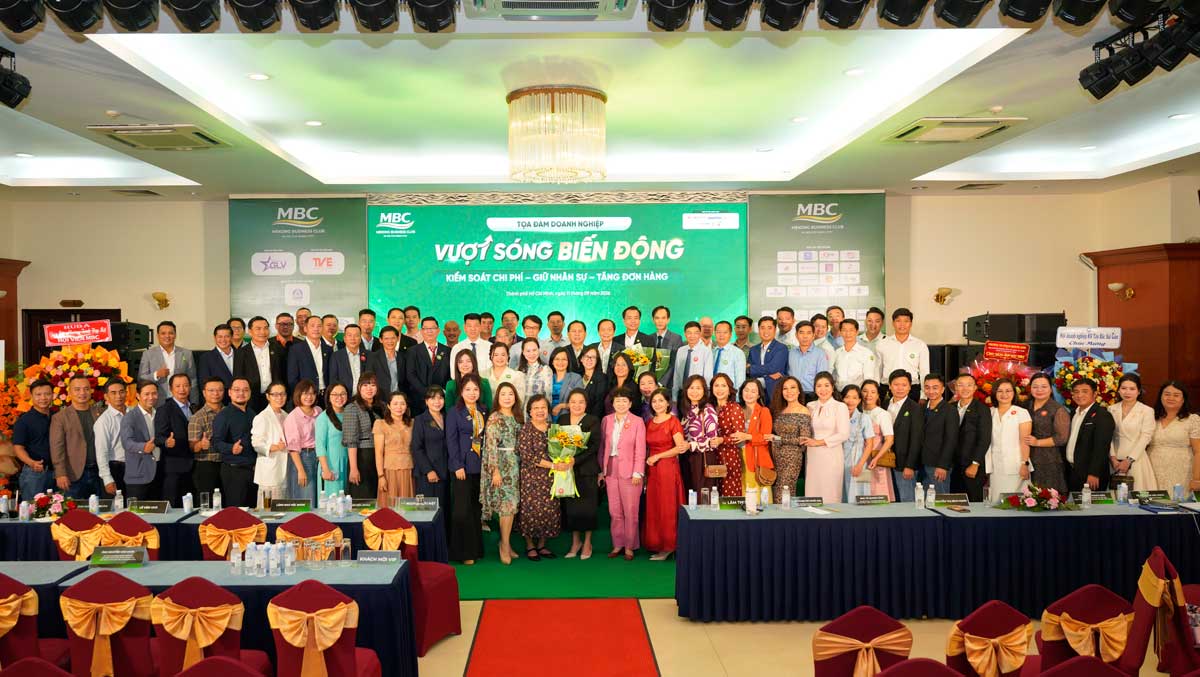
The Mekong Business Club's Mekong Business Connect 2026 brought together more than 100 businesspeople, speakers and guests for a discussion on navigating market volatility.
Beyond Traditional Markets
The discussion also pointed to a wider opportunity for Vietnamese companies to look beyond their established markets in the US and Europe.
Global capital was continuing to shift towards Asia and the Indian Ocean region, while manufacturers were increasingly seeking locations closer to consumer markets, Huynh Thanh Dien, a lecturer at Nguyen Tat Thanh University, said
Asia and the Indian Ocean region was increasingly becoming important in the global stage, Huynh Thanh Dien, a lecturer at Nguyen Tat Thanh University, said
"Capital flows continue to shift towards Asia and the Indian Ocean region," Điền, said.
"At the same time, relocating production closer to consumer markets is emerging as a new global trend."
Businesses facing inflation, weaker global growth and geopolitical uncertainty were also giving greater weight to security and resilience instead of pursuing profit alone, he said.
Vietnam was well placed to benefit from the shift. The country exported large volumes of goods while also importing heavily to sustain production.
Vietnamese firms therefore could improve their ability to serve foreign-invested manufacturers operating in the country, capturing part of business now served by foreign suppliers, and take a larger share of value of exported goods.
Standards and Market Access
Market access increasingly depended on the origin of materials, carbon emissions, labour practices, data systems, traceability, corporate governance and financial transparency.
Agricultural exporters faced similar pressure. Traceability requirements were tightening, including in China, requiring producers to provide clearer records of origin and more consistent production controls.
Green and digital transformation, together with brand development, had to be supported by genuine operating capacity.
Firms would have to improve their procedures and environmental performance as public procurement and export supply chains became more transparent and standards-based.
A gap remained between the present capabilities of many small and medium-sized enterprises and the requirements of major buyers, Le Nguyen Duy Oanh, deputy director of the Centre for Technical Support and Sustainable Development, said
She cited efforts to identify smart factories and qualified suppliers for Samsung as an example.
Businesses needed stronger technical systems, quality management, digital capacity and sustainability practices if they wanted to enter the supply chains of large corporations.
Closer cooperation among companies and industry associations could help smaller firms combine complementary capabilities and respond more quickly when buyers sought qualified suppliers.
Business-to-business brands had to be built on awareness, authenticity and authority, Nguyen Hai Minh, chief executive of Wisdom Agency, said.
Companies should identify a clear customer problem, develop a credible solution and communicate their expertise consistently until trust translated into partnerships and orders.
New Strategies
Bui Van Be Sau, general director of Lamberet Vietnam Company Limited, said firms had to balance immediate cost reductions against the need to protect their long-term competitiveness.
Cutting too little might not resolve financial pressure, while cutting too deeply could weaken the ability of a business to compete.
Companies should instead remove recurring operational waste and scrutinise investments that could not demonstrate a credible path to cash flow.
Vietnam businesses could work more with untapped markets like Sri Lanka, Nguyen Kim Ha, a new member of The Mekong Business Club told MonetaBrief.
MBC admitted 50 new members during Mekong Business Connect 2026, taking its membership to nearly 200.
She represented VietLanka, an education and business advisory initiative to Vietnam and Sri Lanka.
Sri Lanka had excellent links to the rest of South Asia and beyond could be used by Vietnamese firms to make their supply chains more efficient in addition to seeking domestic markets, she said.
India, Pakistan and Bangladesh had a combined population of 1.89 billion with an expanding middle class with spending power, especially in India, Kim Ha said.
Vietnam manufacturers could also explore supplying materials to Sri Lanka's export businesses.
Sri Lanka GSP+ benefits and Enhanced Preferences under the UK's Developing Countries Trading Scheme.

Updated UK rules allow Sri Lanka, subject to the relevant product requirements, to source materials from other Asian nations to claim Sri Lankan trade preferences when exporting qualifying finished goods to Britain. (Colombo/Sept16/2026)