
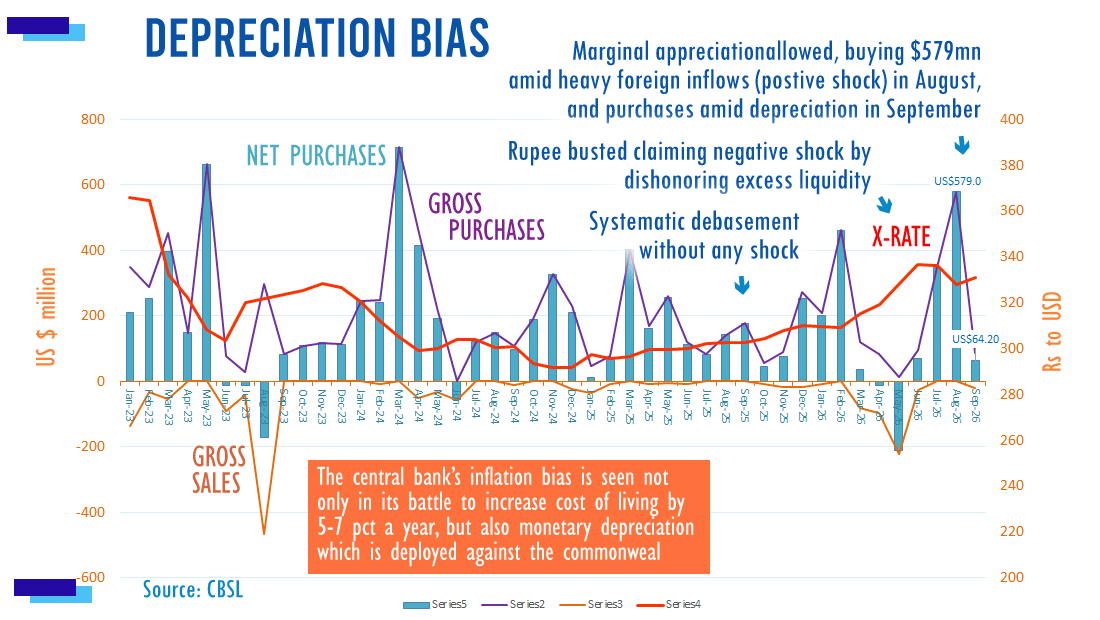
MONETABRIEF – Sri Lanka's central bank bought 64.2 million US dollars from banks in September 2026 data showed, while selling 20.8 million dollars as the rupee came under pressure from excess liquidity turning into credit.
The central bank still bought 64.2 million dollars, depreciating the rupee from 328 to 330 to the US dollars.
The central bank was able to buy 579 million US dollars in August as confidence returned to forex markets after a rate hike and marginal appreciation allowed by the inflation depreciation biased monetary authority.
The marginal appreciation sends a signal of 'positive confidence shock' to markets, making importers cover bills late and exporters to sell down their holdings, with both parties unwinding credit.
Banks which have built long positions in dollars (Net Open Positions) also cut them, fearing appreciation allowing the central bank to buy dollars.
In August there were also foreign investors purchases of bonds, but the monetary authority blocked appreciation and monetized the balance of payments surplus building up a mountain of excess liquidity.
The unsterilized excess liquidity, then turns into credit and if the central bank then dishonors the excess liquidity (does not sell dollars) the currency collapses as it did in April
If there are unsterilized purchases, they have to be followed by unsterilized sales, or the currency collapses and then the excess liquidity is used to take credit, pay import bills early as the negative confidence shock hits the market.
Exporters also use the excess liquidity to take packing credit, while banks will build up their net open positions as the confidence shock worsens.
The wild swings in confidence have happened several times since the default, but worsened as oil prices rose in 2026, exposing the fragility and deep flaws in the operating framework of the central bank which amplified external shocks.
The flexible exchange (lack of rules that give arbitrary, dictatorial and discretionary powers to a few bureaucrats) is inimical to democracy, analysts say.
Monetary inflation itself is undemocratic, while budgeting is democratic, they say. (Colombo/Oct04/2026)