
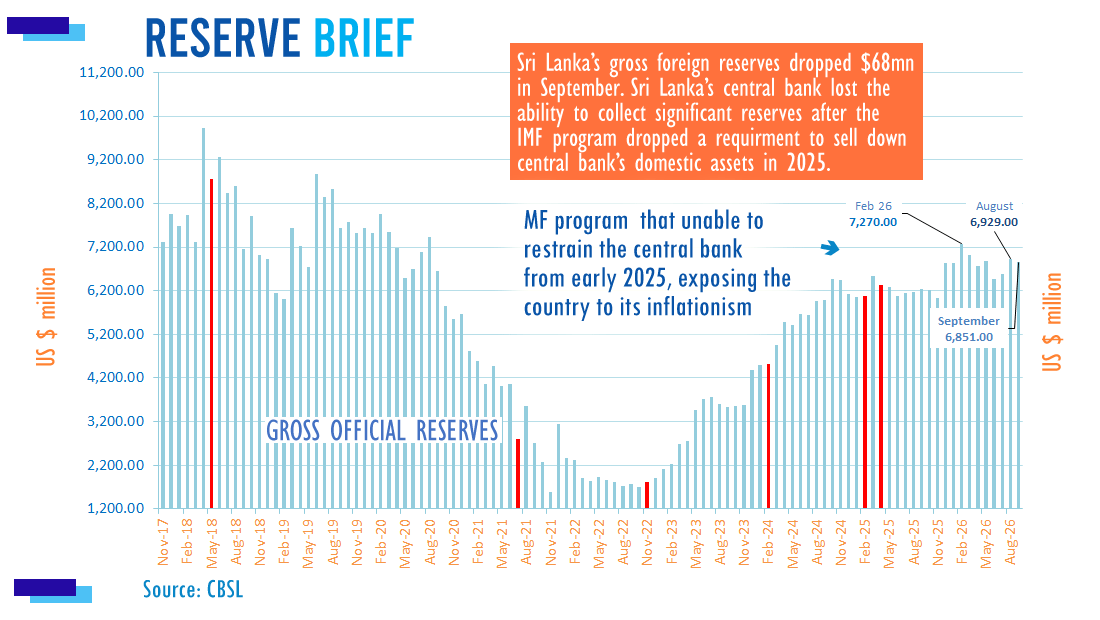
MONETABRIEF – Sri Lanka's gross foreign reserves fell 85 million US dollars to 6,851 million in September, data shows as the rupee came under renewed pressure from excess liquidity turning into credit.
Sri Lanka missed already relaxed International Monetary Fund reserve targets in March after rate cuts and excess liquidity largely from monetizing a balance of payments surplus, which was then repudiated to bust the currency and amplify an external crisis.
Sri Lanka hiked mis-targeted rates suddenly in May, bringing some stability to the external sector.
In September the central bank bought 64 million dollars from the interbank market, after buying 579 million dollars a month earlier.
When confidence returns to forex markets after a collapse, exporters usually sell, importers cover late and banks sell down their long open positions, allowing the central bank to buy dollars and bloat reserve money.
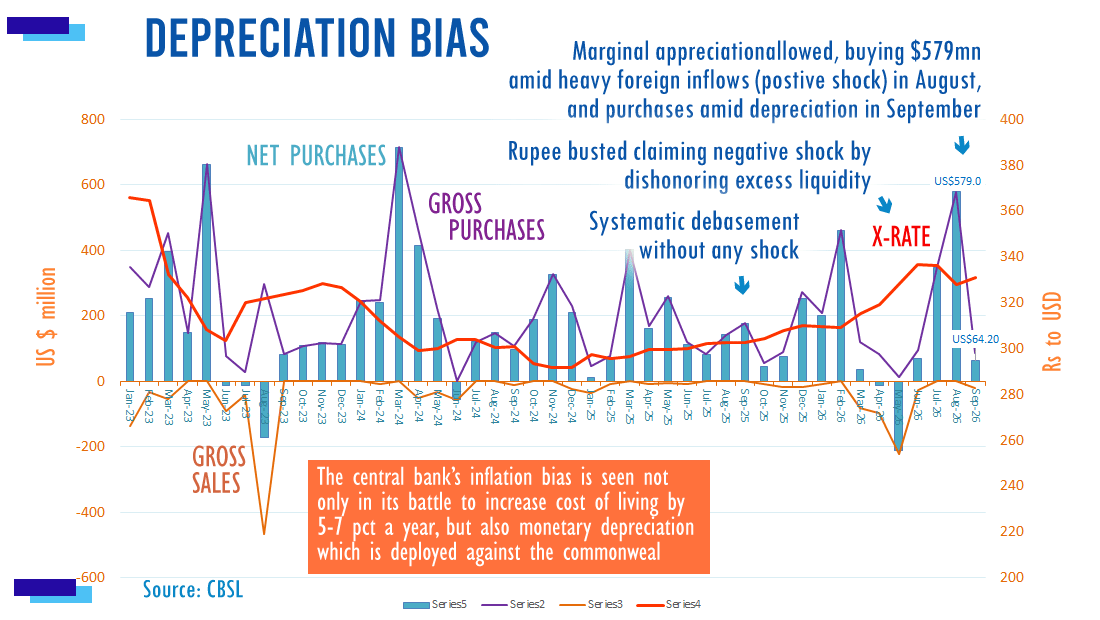
MONETIZING : The central bank bought $579mn in August as positions built up to protect themselves from flexible exchange rate (importers) or to speculate on its volatility were cut and foreigners bought bonds, but the purchases reduced in the following month
Sri Lanka's central bank has been unable to substantially build gross reserves over 2025 after the IMF lifted a requirement for deflationary policy (a falling quantitative performance criteria on net credit to government) allowing macro-economists to build up excess liquidity and dishonor it when the redundant circulating medium turned into credit.
The IMF program in 2025 lost most of its usefulness in restraining the central bank from early 2025 and making the country vulnerable to the inflation and depreciation bias of the central bank, analysts say.
Triggering inflation and external instability and putting pressure on the most vulnerable sections of society through monetizing the balance of payments is a new technique developed by the central bank, which was largely absent in earlier crises which were due to dishonoring reserve money created from domestic assets.
Some of the gross reserves shown in 2025 were also from swaps, built up by monetizing dollar balances of banks.
The 2026 monetary depreciation from dishonoring excess liquidity was significant as it came amid a budget surplus. Since 1952, the central bank has blamed budget deficits for external trouble, not its own inflation bias.
Its inflation bias was further exposed in 2026 after it won powers to raise cost of living by 7 percent a year and escape accountability.
Though inflation shot up to 8 percent in 2026, there has been no punishment for the harm done to the people showing that the monetary law lacks accountability, analysts say.
Though gross reserves have fallen by 85 million dollars in September a net reserve requirement in an IMF program can still go up.
Gross reserves can go down when the central bank pays down its reserve related liabilities including loans to the Reserve Bank of India (about 75 million dollars a month) and the IMF.
Banks which unwind swaps with the central bank can also help build reserves by reducing excess liquidity and domestic investment credit, which drive up imports and make it difficult to build reserves or repay debt.
To deny an opportunity for macro-economists to inflate its note issue, and depreciate the currency by dishonoring the new notes, there have been calls for the Treasury to buy reserves.
The treasury can buy reserves without printing money (reserve money neutral) and reduce the risk of social unrest, expanding debt that comes from monetary depreciation. (Colombo/Oct08/2026)