
MONETABRIEF – The Sri Lankan government has appointed a committee to consider closing or amalgamating 34 state institutions deemed unnecessary or inefficient, President Anura Kumara Dissanayake said.
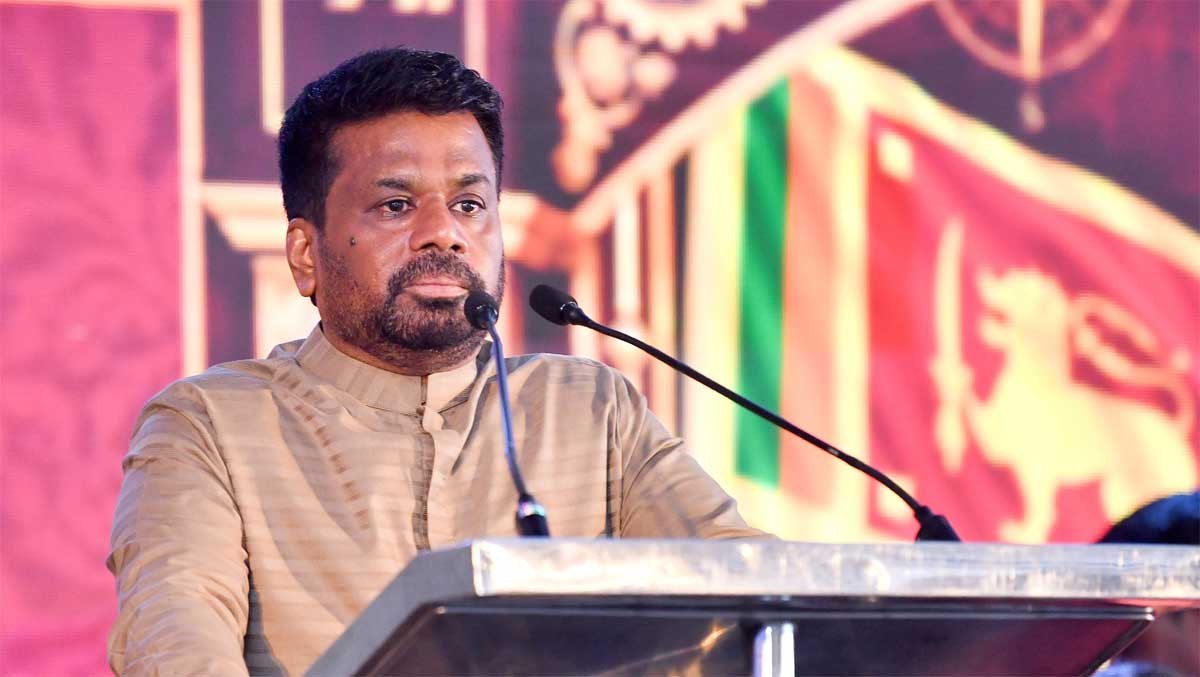
Addressing the 100th Annual Conference of the government Surveyors’ Association at the Waters Edge Hotel in Battaramulla on Friday, the President said the move was part of a broader effort to create a smaller, more efficient and professionally capable public service.
“Political appointments made in the past have resulted in excessive staffing at lower levels of the public service, creating a substantial financial burden,” Dissanayake said.
He said the Ministry of Finance had appointed a committee to examine the institutions and determine whether they should be closed or merged.
The initiative, he added, was intended to reduce inefficiency and ensure that public resources were directed towards essential services and national development.
He did not name the institutions, but the Finance Ministry has previously compiled a list of 148 state-owned enterprises, of which 85 were classified as commercial while the others were marked “non-commercial”.
There is also a list of 52 strategic enterprises, including Hotel Developers, the owning company of the Colombo Hilton, banks, media institutions, and the hugely loss-making SriLankan Airlines.
Under the IMF bailout programme agreed in March 2023, Sri Lanka must ensure that these state-owned enterprises do not burden the national balance sheet. Attempts to sell the national carrier have ended in failure, with no serious buyer willing to take it over.
During Friday’s ceremony, the President said the government was seeking to build an attractive public service capable of recruiting and retaining engineers, information technology professionals, managers and other highly qualified personnel.
He acknowledged that public-sector employment had lost some of its appeal over the years, making it increasingly difficult for the state to attract professionals with the skills required to modernise public administration.
The proposed restructuring comes as the government attempts to improve fiscal management while meeting its commitments to public-sector employees. Dissanayake said the 2025 Budget had provided for a phased increase in the basic salaries of public servants, to be implemented in 2025, 2026 and 2027.
Each phase is expected to cost approximately Rs 110 billion, bringing the total additional annual burden to Rs 330 billion by 2027, he said.
While no further increase in basic salaries is planned under the 2028 Budget, the government may consider additional allowances, the President added.
Dissanayake said the government was making a major effort to stabilise the economy and ensure that the benefits of recovery reached people at the grassroots level.
He said government revenue collection in 2025 reached 110 per cent of the projected target — the first time in Sri Lanka’s history that revenue had exceeded the annual estimate.
He also said the Treasury account, which had recorded a deficit of approximately Rs 700 billion in 2022, now had a surplus approaching Rs 1 trillion.
The President said the improved fiscal position had helped reduce pressure on the rupee and lessen the government’s dependence on money printing and borrowing from the banking sector.
However, he warned that foreign-exchange pressures remained a concern, particularly because of rising oil import costs and the impact of the conflict in the Middle East.
Sri Lanka spent US$4 billion on oil imports last year and had reached the same amount by the end of August this year, he said.
Dissanayake also pledged to provide the facilities needed to modernise the surveying service, including new technology and support for professional development.
He said the government would review the service’s human-resource requirements and consider necessary amendments to ensure that it could contribute more effectively to national development. (Colombo/Oct 23/2026)