
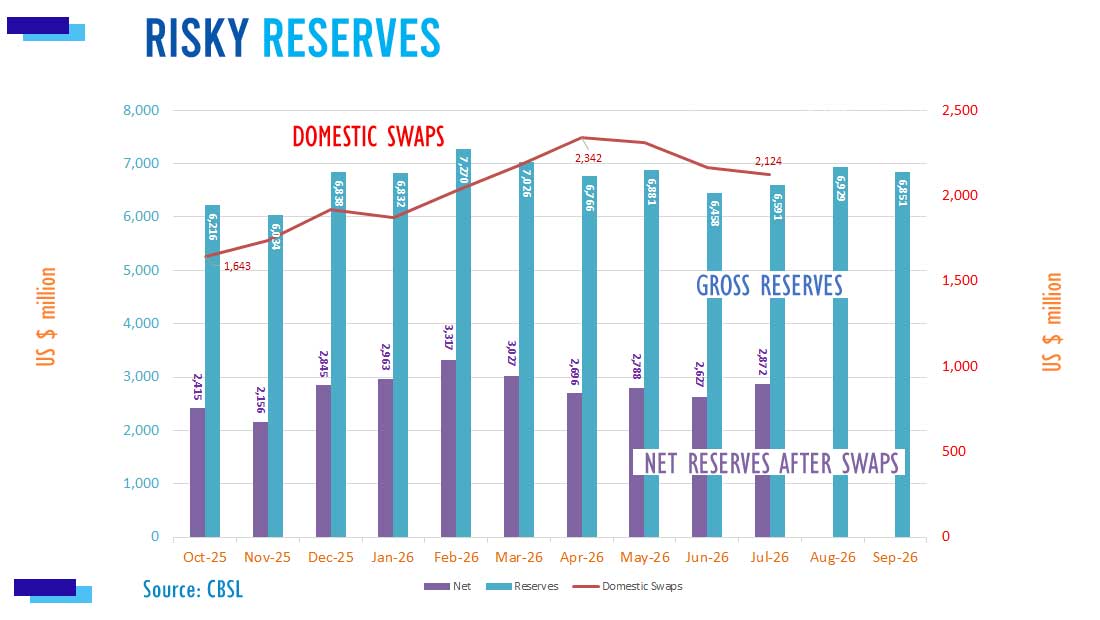
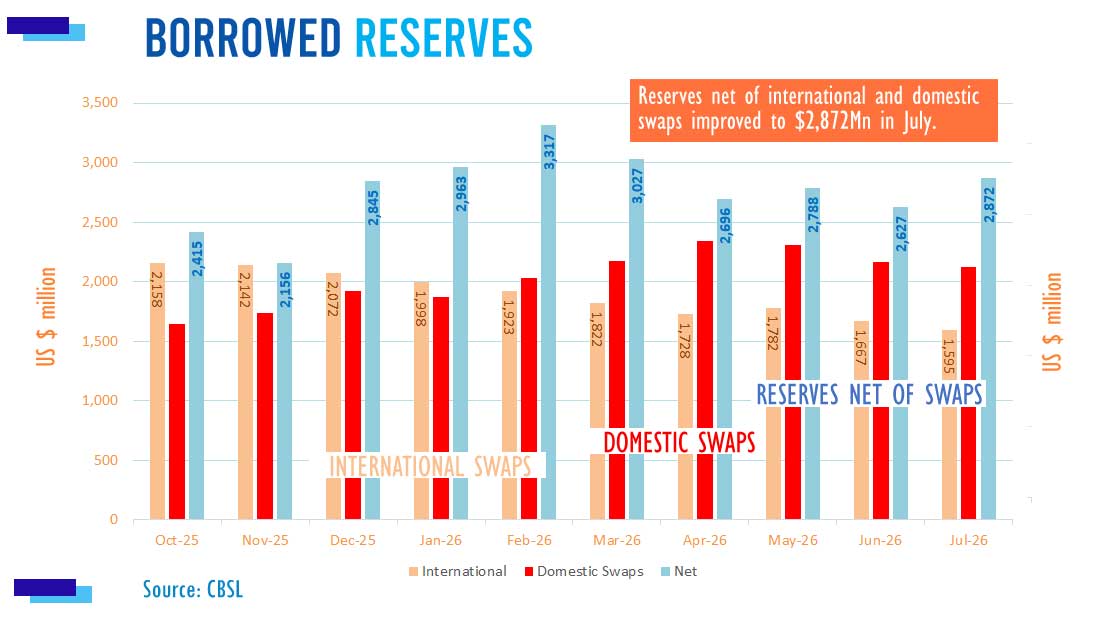
MONETABRIEF – Sri Lanka's foreign reserves after swaps were only 2,872 million dollars in July 2025 compared to reported gross reserves of 6,591 million US dollars, official data show.
After cutting rates in 2026, based on flexible inflation targeting (historical statistical inflation was low) domestic swaps had been used to boost reserves in 2025.
Domestic swaps grew from 1,643 million dollars in October 2025 to 2,342 million by April.
Domestic swaps monetize foreign assets of banks, helping them give investment credit which generates imports without raising deposits.
If the dollars are not returned to the market, the rupee depreciates against the US dollar.
The central bank has been paying off foreign loans to both India and the IMF, improving the net reserves position.
Concerns have been raised from early 2025, the key restraint from the IMF program on the central bank's inflationism, in the form of a falling ceiling on domestic assets (QPC on Net Credit to Government) was taken off, reducing the usefulness of the program.
As a result, the ability of the central bank to build reserves had been limited to coupons that the Treasury pays on its bonds.
Instead swaps started to grow.
Any unsterilized swaps or dollar purchases could turn into credit at any time.
If the central bank dishonors the notes, to 'safeguard' reserves, the rupee depreciates, prices go up, and democracy is undermined as inflation discredits the incumbent government.
There have been calls to allow the Treasury to buy dollars to repay debt as the action does not create money and the reserves are 'safeguarded' from day one.
The net reserve position does not include unpaid IMF loans from the last program.
The IMF loans related to the previous currency crises in 2015/16 from rate cuts and debt monetization under data driven monetary policy.
In the current program, the IMF has given loans to the Treasury and the central bank is no longer responsible for settling the loans, taken as a result of currency crises coming from inflationary rate cuts and swaps.
The central bank had initiated swaps as the Middle East crisis took off in February and March and created money.
The 2026 currency collapse and high inflation was engineered mostly by monetizing the balance of payments (surpluses), a technique of de-stabilizing money that classical economist B R Shenoy dismissed in 1966 as being of 'academic interest' as macro-economists mostly printed money against domestic assets, creating BoP deficits at the time.
The rupee collapsed steeply and is now around 330 to the US dollar, destroying financial savings including Employees Provident Fund and bank deposits.
Construction costs have risen indicating the destruction of capital and some government contractors who did not anticipate the central bank's inflation bias have sought extra funds to complete projects.
Dollar debt has bloated, in line with the deterioration of monetary stability seen from 2015 to 2019, though some reserves are still being generated. (Colombo/Oct28/2028)