

MONETARY INSTABILITY : Sri Lanka started to raise both income and import taxes from 1953 as the central bank created the first currency crisis, diverging then Ceylon from East AsiaMONETABRIEF – Sri Lanka could reduce taxes once revenue targets are reached Deputy Finance Minister Anil Jayantha has said a business forum while acknowledging problems with tax rates.
Though there were challenges with corporate and personal income taxes, tax rates could not be reduced at this stage, if doing so would reduce government's revenue targets, he was quoted as saying at a capital markets forum.
The government could consider reforming the existing tax structure once the required revenue targets had been achieved, he said said.
Sri Lanka has high income (capital decumulation) taxes in particular compared to East Asian nations with monetary stability, very high border taxes (a tax on imports is a tax on exports).
Corporate taxes in East Asian export powerhouses with monetary stability is around 20 percent, there is very low import duties or zero, and lower value added tax rates.
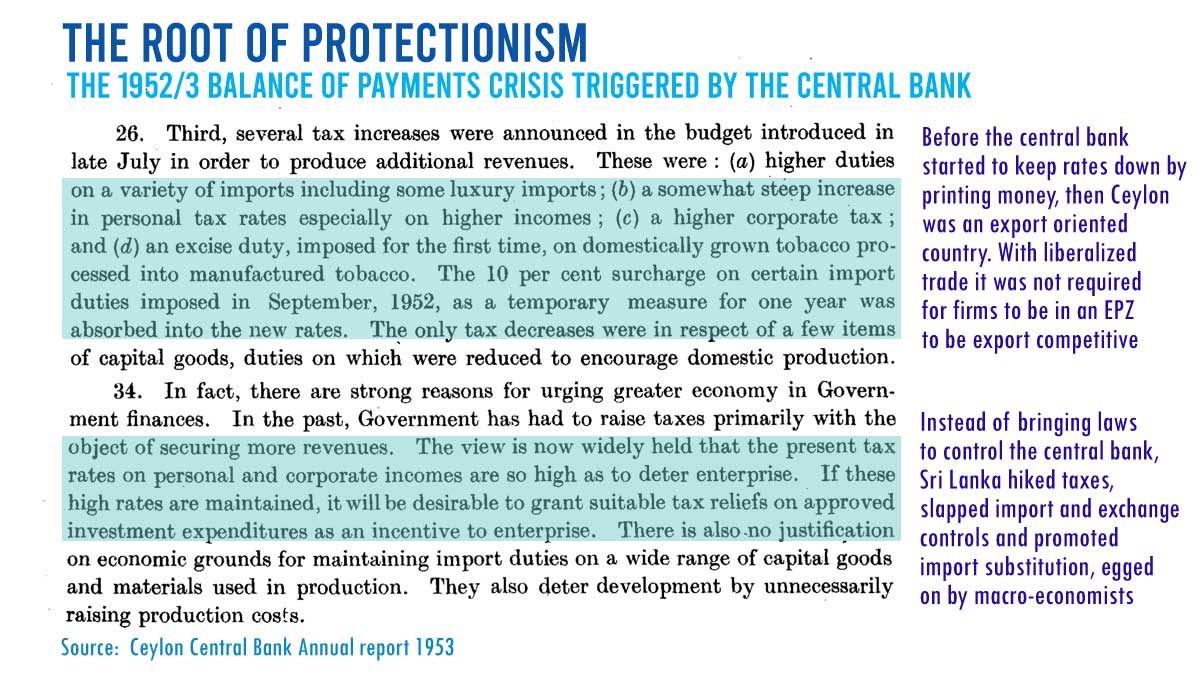
Sri Lanka started raise taxes (both income taxes and import duties) after the first currency crisis in 1952 created shortly after the central bank was set up on the doctrine that 'It Must be Fiscal' (IMF), critics say.
The term rate cuts had not been invented at the time. Two years later Sri Lanka experience the first 'Aragalaya' style uprising as taxes were hiked again and subsidies cut amid inflation.
Income taxes have two problems, they destroy capital, undermining job creation and long-term growth and by blocking economic choice, allow bureaucrats to mis-direct spending and economic direction.
Levies like value added taxes however, preserve economic choices of wage earners and do not mis-direct economic activities. (Colombo/Oct29/2026)