
MONETABRIEF – Sri Lanka's Bairaha Farms Plc, a poultry firm has warned that and import controls on maize is has hit the sector, as feed costs went up once again and a feed milling unit lost money.
In the September 2026 quarter Bairaha Farms profits fell 48 percent to 219 million rupees in part due to higher tax charges. But pre-tax profits also fell from 436 million rupees to 417 million.
The contribution from joint venture went to a loss of 75 million rupees in the September 2026 quarter, from a profit of 32 million rupees last year.
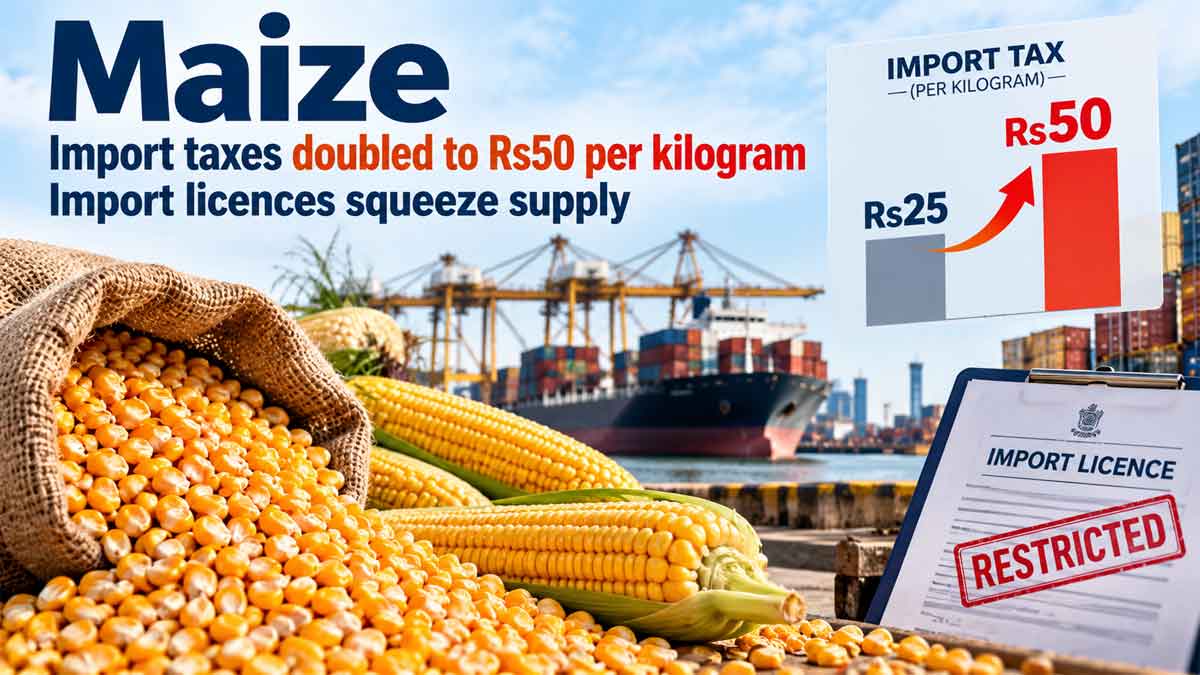
This was due to a food tax called special commodity levy on imported maize being doubled from 25 to 50 rupees a kilogram and import licensing also being squeezed.
"As only 20 percent of approved quantity of corn was permitted to be imported during the period, approval was instead granted for the use of local rice as an alternative, which resulted in higher input costs," Bairaha told shareholders in the quarterly report.
"As feed represents a significant share of the cost of poultry production, we trust that a stable and predictable raw material import policy framework will support the competitiveness of the feed industry and the wider poultry sector."
Sri Lanka also has high taxes on rices, which has kept prices above regional levels.
Rice only gives energy, not proteins unlike maize.
Sri Lanka intensified controls on foods, during the ousted Rajapaksa regime, expanding the profits of politically connected collectors, promoting low yielding agriculture and expanding malnutrition among the children of low income families, critics have said.
Then import controls are promoted by the so-called maize mafia of collectors.
The malnutrition problem worsens when macro-economists who reject economics depreciate the currency and pushes up all prices.
The rupee was busted 10 percent over the past year by macro-economists. (Colombo/Oct30/2026)