
MONETABRIEF – Loan demand has increased in the September 2026 quarter as inflation drove up working capital demand, a central bank survey has found, while bad loans continued to fall.
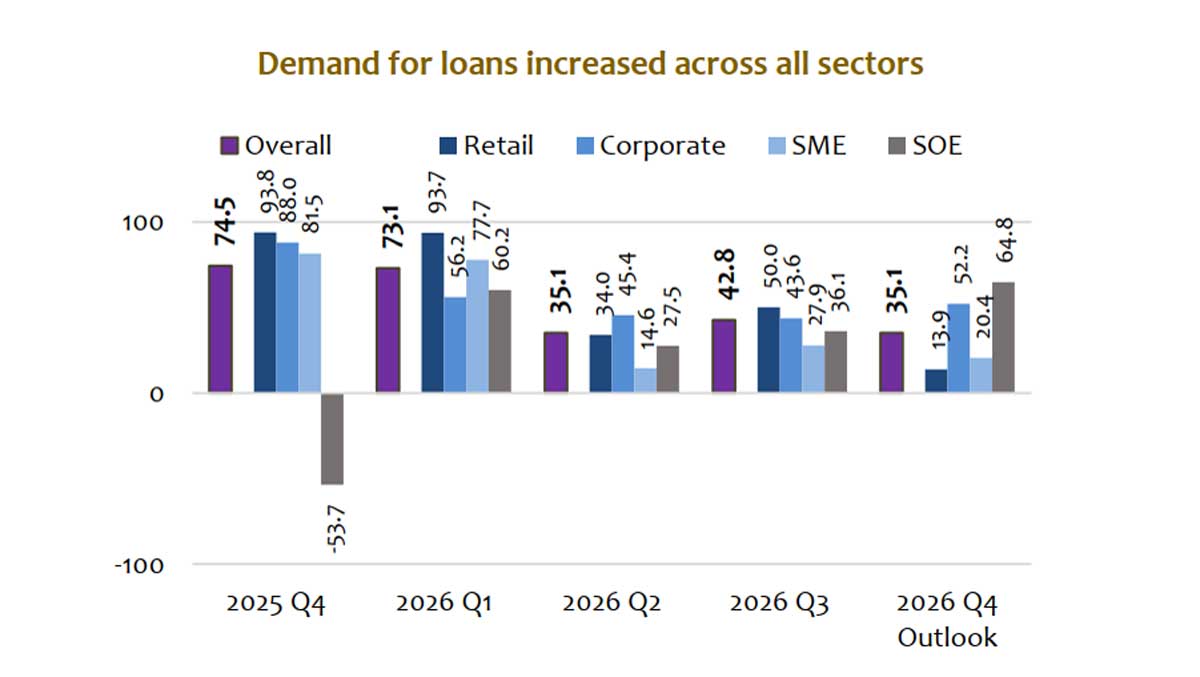
An index compiled by the central bank increased to 42.8 points from 35.1 points in the previous quarter despite willingness to lend had declining in the September quarter.
"This increase in demand for loans was largely driven by the expansion in working capital requirements, demand for short term loans, and demand for essential and consumption-related financing and continued recovery in economic activities during the quarter, "the central bank said.
"The demand for loans in the banking sector is expected to increase across all four sectors during Q4 2026, as well," the central bank said.
"The anticipated increase is primarily attributable to higher import financing requirements, seasonal demand, increased working capital needs to manage higher operating costs associated with inflationary pressures, and the expected improvement in overall economic activities."
The central bank met its controversial 7 percent inflation target in 2026, after missing it in previous years amid exchange rate stability.
Sri Lanka's rupee collapsed in the June quarter of 2026, driving inflation up to 8.3 percent by October, after keeping the exchange rate stable and inflation at around 1 percent or negative, making all credit real.
But when the central bank increases the cost of living, more credit is required to do the same volume of work.
Housing construction costs or consumer durables jump suddenly. People may cut down spending or abandon or partially construct houses if they are unwilling to get into more debt or banks are unwilling to lend at current incomes.
In a small open economy, macro-economists cannot easily push up the cost of living without destroying the currency. Sri Lanka's central bank failed to create higher inflation than the US until 1978.
Any money printed tends to draw in imports a reserve collecting (pegged) exchange rate triggering increased imports and balance of payments deficits, rather than continuous inflation.
In 2026 the central bank busted the rupee by monetizing balance of payments surplus, especially money coming from migrant labour.
In Sri Lanka currency depreciation and inflation had deprived several million people the opportunity to live and work in the country. People leave the country for the Middle East where traditional rulers (Kings and Emirs) have banned money printing and depreciation by Royal decrees under classical economic principles.
As a result of following classical economics in line with Hume's price-specie-flow mechanism. they do not go to the International Monetary Fund unlike in Sri Lanka.
Ironically more people left to work in currency board like regimes in the Middle East during the current war, while the currency collapse pushed people to the wall in Sri Lanka.
Sri Lanka economic crises and political instability is a result of a belief by macro-economists that they can control interest rate while operating a reserve collecting central bank, and the parliament's failure to temper the inflation bias of the agency, analysts have said. (Colombo/Nov16/2026)