
MONETABRIEF – Sri Lanka risks more isolation with India striking a trade deal with Europe on the back of an earlier agreement with the UK, economists said even as early efforts are being made to reduce protectionism at home.
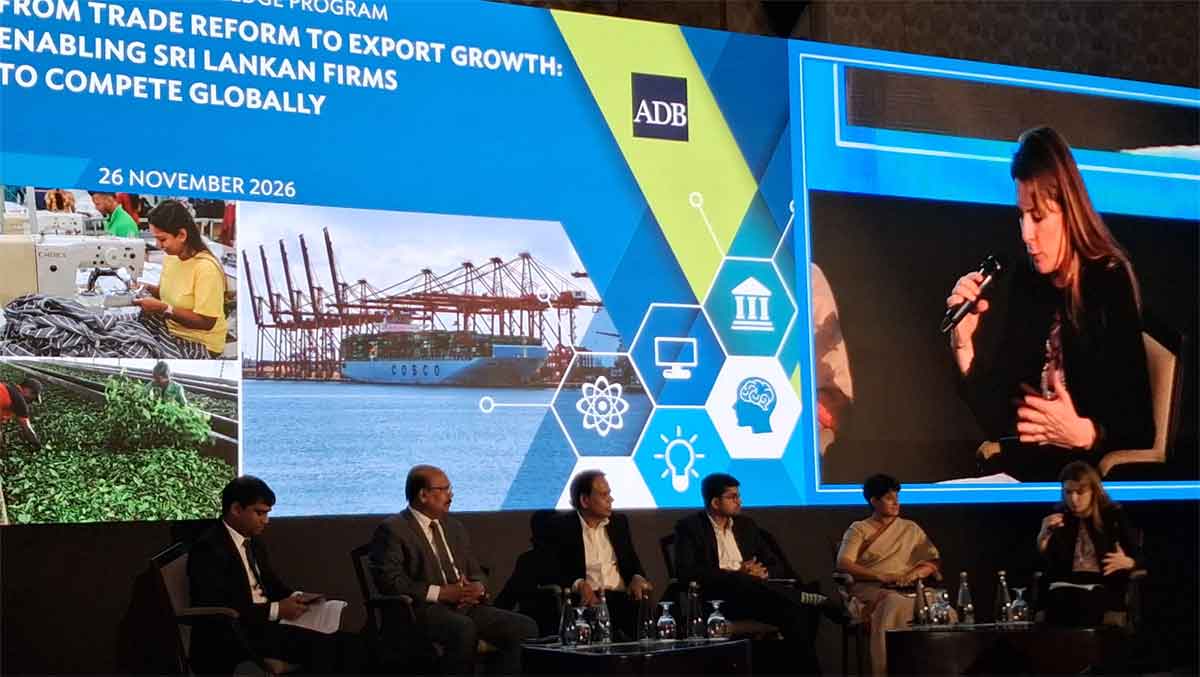
"As competitors gain preferential access to key markets, Sri Lankan exporters risk losing ground unless the country pursues deeper trade integration and improved competitiveness," Asian Development Bank Country Director Shannon Cowlin told a forum in Colombo.
"Standards are also rising with exporters expected to meet higher requirements on quality, traceability, and sustainability."
Sri Lanka's exports to Europe are already hit with China focusing on the region, as its companies are blocked from the US.
Para-Tariff
Sri Lanka has started to phase out so-called CESS taxes which were broadened steadily from November 2004 after a 25-page midnight gazette raised taxes on so-called non-essential items as forex shortages emerged from inflationary rate cuts.
Unlike now when the central bank is promoting reflation with high 5-7 percent annual target to raise the cost of living deliberately with International Monetary Fund backing, the then central bank was against printing money but rate hikes were blocked by the Treasury.
In 2026 the rupee was busted amid a budget surplus, showing that there was neither de facto nor de jure fiscal dominance.
Then Treasury Secretary P B Jayasundera, a macroeconomist who was an ex-central banker, then promoted "import replacement", triggering a new class of rent seeking businessmen who hit customers with high tariffs hiding behind high tariffs and funded politicians, critics say.
Ironically the CESS came with the setting up of the Export Development Board as a tool to discourage export of primary goods, and deny farmers or others the global market price for their produce and give special benefit to final goods producers.
The budget for 2027 has announced a phased reduction of CESS taxes.
RCEP
Meanwhile Cowlin said Sri Lanka was making efforts to integrate with the rest of the world.
"Sri Lanka is making efforts towards ascension to the Regional Comprehensive Economic Partnership, or RCEP, to open further regional opportunities," she said.
"But greater market access does not automatically translate into greater exports. It must be accompanied by domestic reforms that reduce trading costs, improve the investment climate, and help firms innovate, diversify, and become more productive."
"Sri Lanka is moving in this direction. Earlier this year, the country launched the National Export Development Plan, covering 2026 to 2030. And this provides a framework for that export diversification pathway."
ADB is supporting government efforts under its Trade, Investment, and Industry Development Program.
ADB was also providing technical assistance for the RCEP ascension process, she said.
"But ultimately, the value of these initiatives will depend on their implementation and whether they translate into tangible improvements in export performance, investment, and productivity," Cowlin said.
Global Protectionism
Sri Lanka is also facing challenges from protectionism in the US.
Countries were also trying to de-risk away from depending too much on China, Jodie Keane, Principal Research Fellow at ODI Global, a UK based advisory said.
India was moving to a trade deal with the EU as Europe was trying to produce more at home.
"The UK has already agreed to the FTA with India," Keane said.
"And it's a new type of FTA because it really places at the forefront issues around technological cooperation.
"So there's text within the agreement around supporting energy decarbonisation and co-technological development.
"So this is important when we think about the future of value chains and the implications for Sri Lanka.
"There may be opportunities to plug into EU and UK-specific value chains as EU and UK companies expand trade and production linkages. Sri Lankan firms can position themselves as complementary regional suppliers potentially."
The EU GSP + facility could also be eventually phased out as per capital income is restored after the 2022 currency collapse.
"But the fact that Sri Lanka moved back into an upper-middle income status, this poses challenges for the implications for the ability to benefit from the EU's GSP plus," Keane said.
"And so that also needs to be monitored quite carefully.
"If the status is maintained for three years, then it means that Sri Lanka may lose that GSP plus. So, you know, you've got this complex environment, but you've also got new opportunities if you look into some specific value chains." (Colombo/Nov27/2026)