
Share your email and we'll share the latest news
Exclusive economic intelligence, political and business coverage
Thursday, September 24 2026
Thursday, September 24 2026
MONETABRIEF - Attempts by the central bank to keep pushing up the cost of living by 5 percent a year, has been backed by the International Monetary Fund, despite growing calls to reign in the agency's inflationism through a tighter limit.
Under cover of the 5 percent target, Sri Lanka suffered serial currency crisis, a default without war and a currency collapse in 2026 amid budget surplus.
"At the first statutory review, it would be prudent to maintain the 5 percent inflation target and the current accountability band," a mission statement said at the end of a visit.
"The current target preserves the flexibility Sri Lanka needs amid high food and energy price volatility, and once a track record of low and stable inflation is established, convergence toward a lower target could be considered at the next review."
Critics have pointed out that the macro-economists frequently overshoot the already high target, hurt lower income families in particular and turn voters against democratically elected governments using the high inflation target and flexibility (discretion) in the central bank's operating framework.
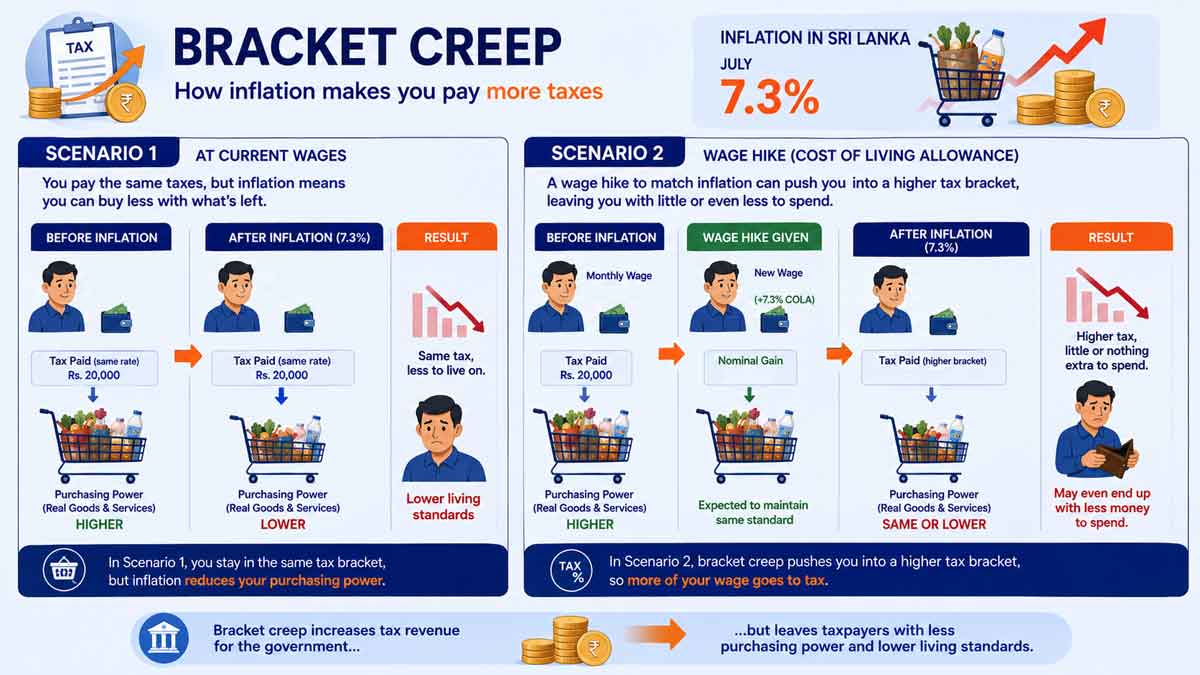
Inflation has up to 8.0 percent in 2026, despite the central bank being given 'independence' and rates were hiked only after the currency collapsed, amplifying the effect of a war in the Middle East.
Macro-economists in Sri Lanka and elsewhere, have long blamed both budgets and the supposed lack of 'independence' for inflation and social unrest, not inflation biased operating frameworks that reject classical economic principles.
Sri Lanka started to experience high levels of inflation and depreciation in the 1980s after the IMF's Second Amendment to its articles, torpedoing the most radical economic reforms ever attempted in the country and triggering social unrest.
The visit concluded without a staff level agreement for the next review of the IMF program.
"Discussions are continuing with the goal of reaching staff-level agreement in the near term to pave the way for timely completion of the Seventh Review," the statement said.
The full statement is reproduced below:
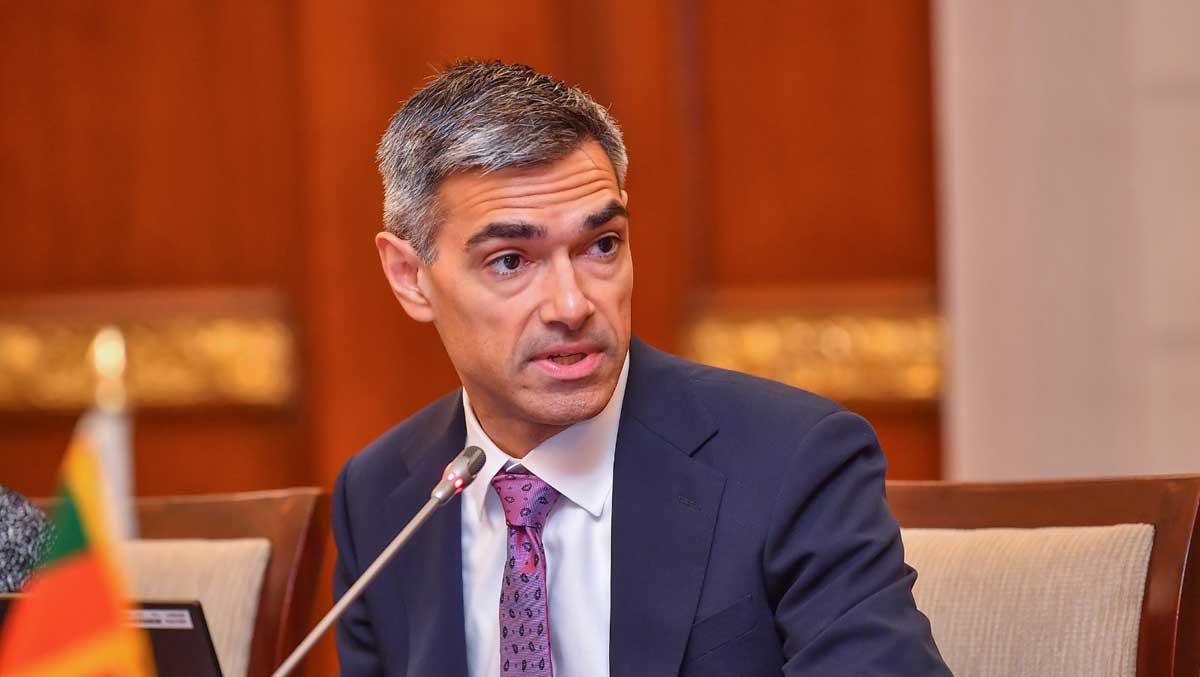
Washington, D.C.: An International Monetary Fund (IMF) team led by Mr. Evan Papageorgiou visited Sri Lanka during September 10-23, 2026, to discuss (i) recent macroeconomic developments and progress in implementing economic and financial policies under the Extended Fund Facility (EFF) arrangement, and (ii) policy recommendations in the context of the 2026 Article IV Consultation. At the end of the mission, Mr. Papageorgiou issued the following statement:
“Sri Lanka’s economy has proved remarkably resilient to successive shocks. Economic activity expanded by 4.2 percent in 2026Q2, marking eleven consecutive quarters of strong growth. While headline inflation rose to 8 percent y/y in August due to the global oil price shock, expectations are broadly anchored. Gross official reserves have increased, reaching US$6.9 billion at end-August 2026. Banks remain well capitalized and profitable. Fiscal outturn in 2026H1 was strong and debt restructuring is largely completed.
“However, Sri Lanka continues to face downside risks from uncertainty over the duration and intensity of the Middle East war, global trade policy, and the impact of El Niño. Safeguarding macroeconomic stability in a shock-prone environment requires unwavering commitment to prudent policies and reforms to rebuild fiscal and external buffers, maintain price stability, and advance the governance agenda while strengthening social safety nets to protect the most vulnerable.
“In this regard, it would be critical to develop and implement a medium-term revenue strategy to sustain revenue mobilization while improving the efficiency and fairness of the tax system. Steadfast efforts are needed to broaden the tax base and rationalize tax exemptions and incentives. Strengthening revenue administration would further improve tax compliance and support durable revenue gains. Upholding cost-recovery energy pricing will help minimize fiscal risks arising from state-owned enterprises. It is also important to address bottlenecks to capital spending execution, including to accelerate cyclone Ditwah-related recovery and reconstruction.
“Monetary policy should stand ready to address inflationary pressures and ensure price stability within the medium-term period in line with the flexible inflation targeting framework. Greater exchange rate flexibility is key to absorbing shocks and supporting reserve accumulation.
At the first statutory review, it would be prudent to maintain the 5 percent inflation target and the current accountability band. The current target preserves the flexibility Sri Lanka needs amid high food and energy price volatility, and once a track record of low and stable inflation is established, convergence toward a lower target could be considered at the next review.
“Preserving the integrity of the anti-corruption legislative framework is critical to enhance public trust. Select clauses from the recently tabled amendments could weaken transparency and accountability.
“Shifting from stabilization to transformation requires sustained momentum on structural reforms to foster an enabling business environment and attract investment, including by liberalizing trade, modernizing business and labor regulations, broadening access to finance, and advancing digitalization. Ultimately, establishing a track record of sound policy and reform implementation will help strengthen resilience, durably restore confidence, and lift living standards through strong and inclusive growth as our research suggests.
“The IMF team visited Jaffna and learned first-hand about the Northern Province’s economic potential. Discussions with the private sector and civil society highlighted opportunities to unlock growth and create jobs through investments in connectivity, skills, and sectors such as agriculture, fisheries, tourism, and renewable energy, while strengthening social protection so that the benefits of Sri Lanka’s economic transformation are shared more broadly.
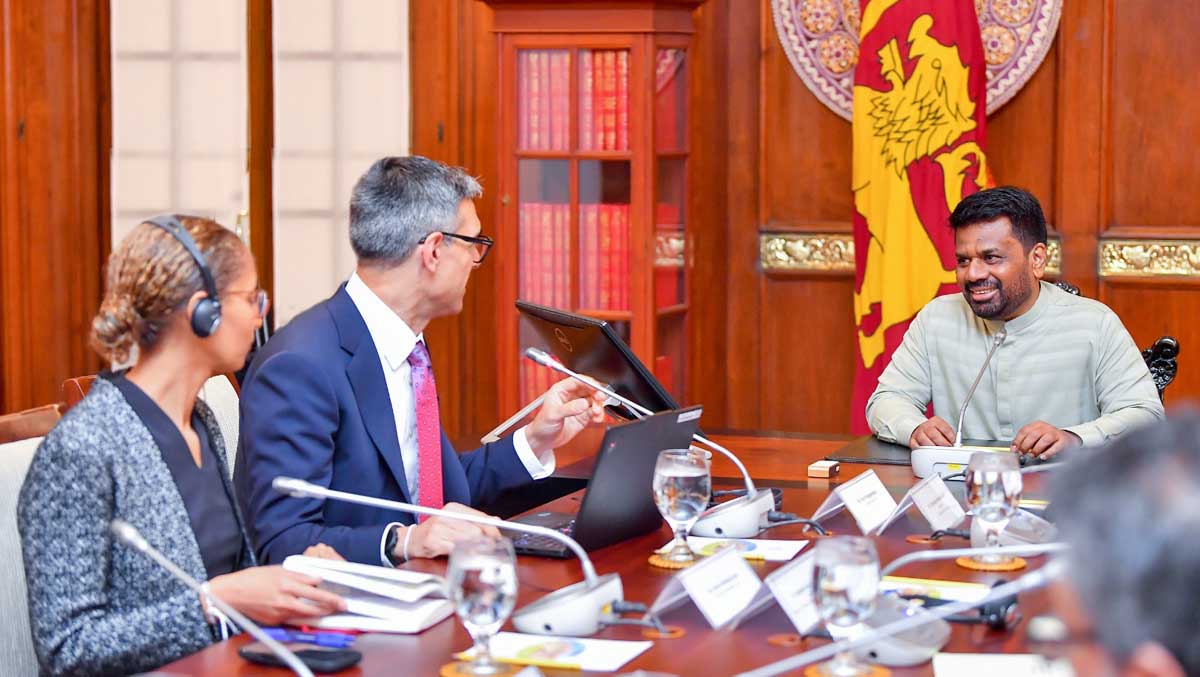
“The IMF team held meetings with His Excellency the President and Finance Minister Anura Kumara Dissanayake, Honorable Prime Minister Dr. Harini Amarasuriya, Honorable Labor Minister and Deputy Minister of Finance and Planning Prof. Anil Jayantha Fernando, Central Bank of Sri Lanka Governor Dr. P. Nandalal Weerasinghe, Secretary to the Treasury Dr. Harshana Suriyapperuma, Senior Economic Advisor to the President Mr. Duminda Hulangamuwa, Chief Advisor to the President on Digital Economy Dr. Hans Wijayasuriya, Governor of Northern Province Honorable Nagalingam Vethanayahan, and other senior government and CBSL officials. The IMF team also met with parliamentarians, representatives from the private sector, civil society organizations, and development partners.
“We would like to thank the authorities for the excellent collaboration during the mission. Discussions are continuing with the goal of reaching staff-level agreement in the near term to pave the way for timely completion of the Seventh Review. We reaffirm our commitment to continue supporting Sri Lanka.”

| 3 month bill | 9.22% | 22bp ▼ |
| 12-m bill | 9.91% | 10bp ▼ |
| Gold (Ounce) | $4602 | - - |






Comments
Be the first person to comment and join the debate