MONETABRIEF – Sri Lanka's government debt has expanded in the first quarter of 2026, despite a budget surplus as the rupee collapsed, inflating the foreign debt burden on taxpayers, an analysis of public debt data shows.
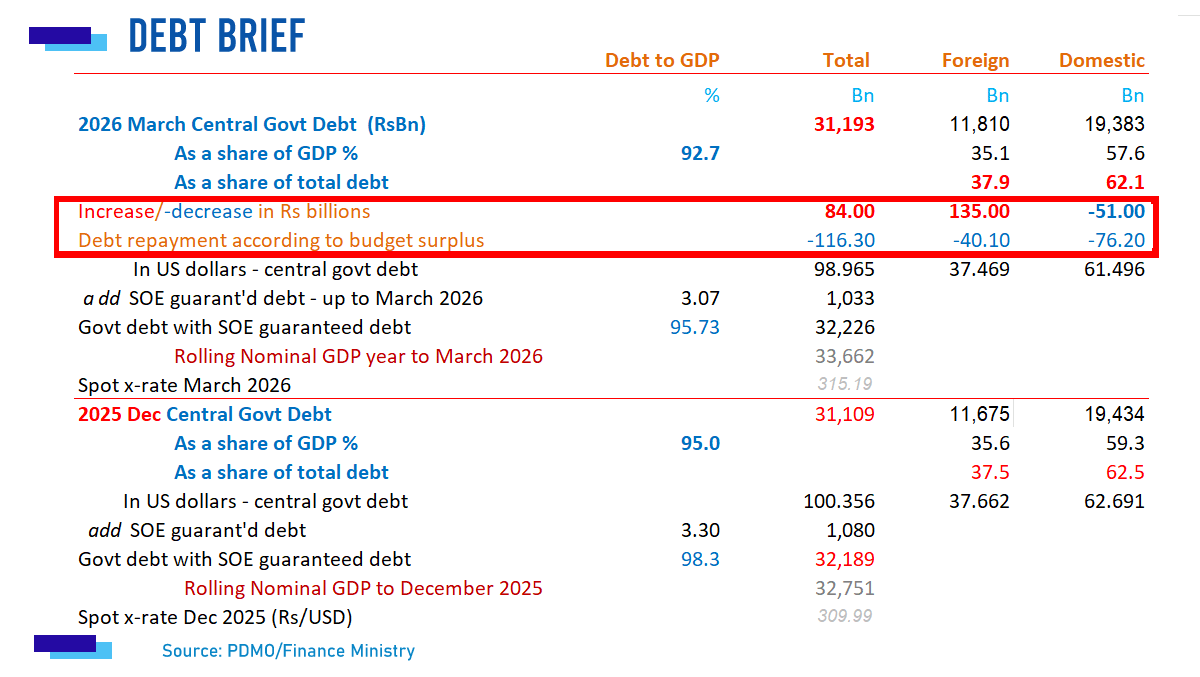
Sri Lanka posted a budget surplus of 116.3 billion rupees up to March, but debt expanded by 84 billion rupees from December to March, driven by monetary deprecation.
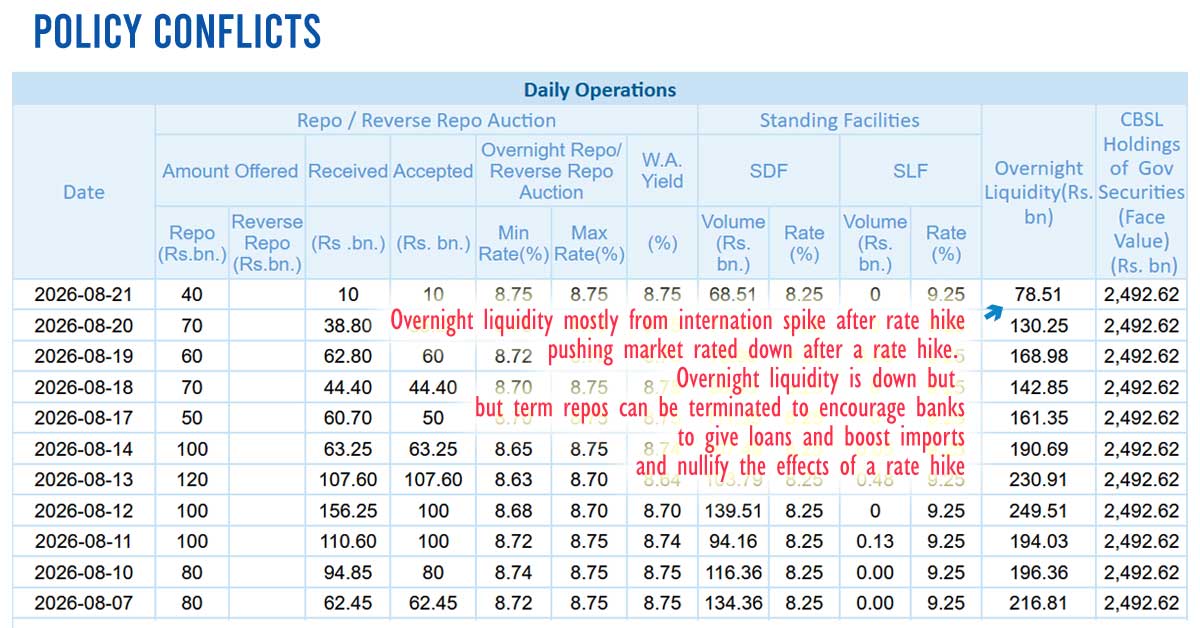
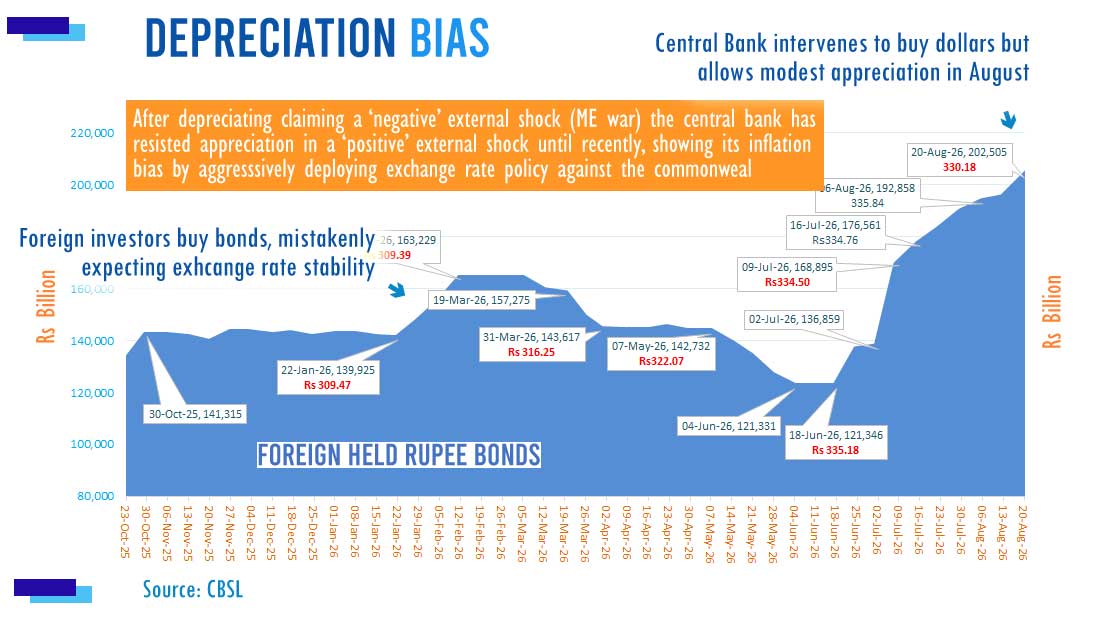
The rupee fell to 309 to the US dollar by end December 2026 and to 315 to the dollar by end March as the central bank denied convertibility to excess liquidity from dollar purchases and buy-sell swaps (anchor conflicts flared up).
Accelerating Foreign Debt Values
In the first quarter, foreign debt valued in rupee went up by 135 billion rupees and domestic debt fell 51 billion rupees. There is a small dollar domestic debt.
According to the budget, 76 billion rupees in domestic debt was repaid and 40 billion in foreign debt was repaid on a net basis in the first quarter.
But foreign debt expanded by 135 billion rupees in the first quarter in rupee terms and total debt by 84 billion rupees, despite the debt repayment on a net basis.
The share of foreign debt increased to 37.9 percent in March from 37.5 percent in December.
In steep depreciation driven external defaults such as in Latin America and in Sri Lanka, the share of foreign debt explodes.
Losses to Pensioners
When currencies depreciate steeply, foreign debt value inflate but domestic currency debt does not go up as fast, especially debt held by agencies like the Employees Provident Fund or insurance companies which have fixed rate debt.
The budget gets a benefit at the expense of the older citizens as some of the losses are never recovered unless transfers are made.
However foreign debt goes up as investors are protected from depreciation through a better currency. The US dollar however is also inflating now, amid bad Federal Reserve policy and US fiscal metrics are also bad.
Under fiscal accounting, depreciation is not brought into the budget deficit unlike in the accrual accounting system of private companies.
Second Amendment Inflationism
In any case before the International Monetary Fund's Second Amendment in 1978 which came in the wake of the collapse of the Bretton Woods, central banks were not allowed to depreciate and depreciation was not a problem.
Central banks had to seek special permission from parliament to depreciate money.
Sweeping defaults started in Latin America soon after the Second Amendment.
When currencies depreciate, traded goods in particular such as food and energy prices in particular go up, making life difficult for the public as wages do not catch up with the inflated money.
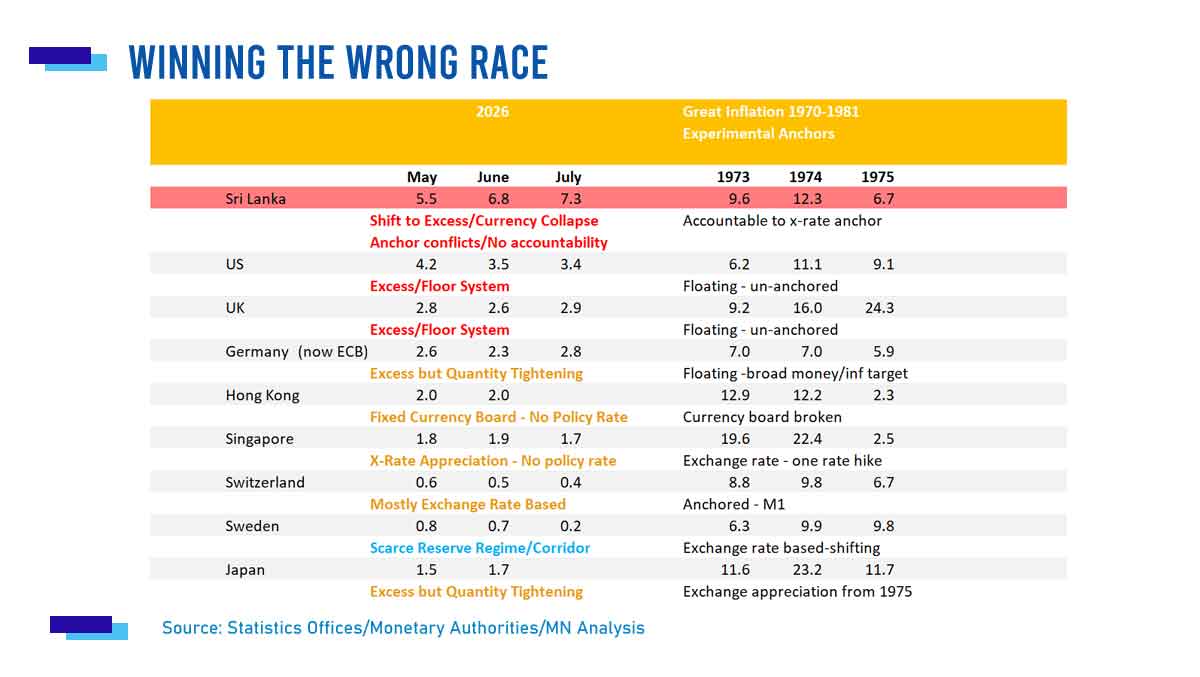
Macro-economists will say that is not inflation as they track core-inflation, a practice that started after the collapse of the Bretton Woods (especially the Smithsonian agreement) and floating rates made commodity prices volatile, unlike before 1971-1975.
As macro-economists destroyed the accounting concept of historical cost, inflation accounting was brought in by accountants in the 1970s.
When money depreciates, people will strike, seeking higher wages and reducing their real consumption of goods, reducing growth and economic activity.
However in the first quarter, gross domestic product grew nominally and in actual terms and debt to GDP ratio fell from 95.0 to 92.7 percent.
As desperate workers get compensated (usually partially) for the inflated money, macro-economists will say there is 'wage-price' inflation, though they may say in the same breath that money is 'neutral' since wages adjust to prices.
Inter temporal Political Unrest
But in the intervening periods, governments there could be political unrest and reversal of reforms. Sri Lanka in 2026 tightened controls on exporter conversions and trade taxes after the latest currency collapse.
In the classical days, before macro-economists legitimized inflation and began to run central banks, monetary depreciation – then carried out through coin clipping - was blocked by the introduction of the milled edge.
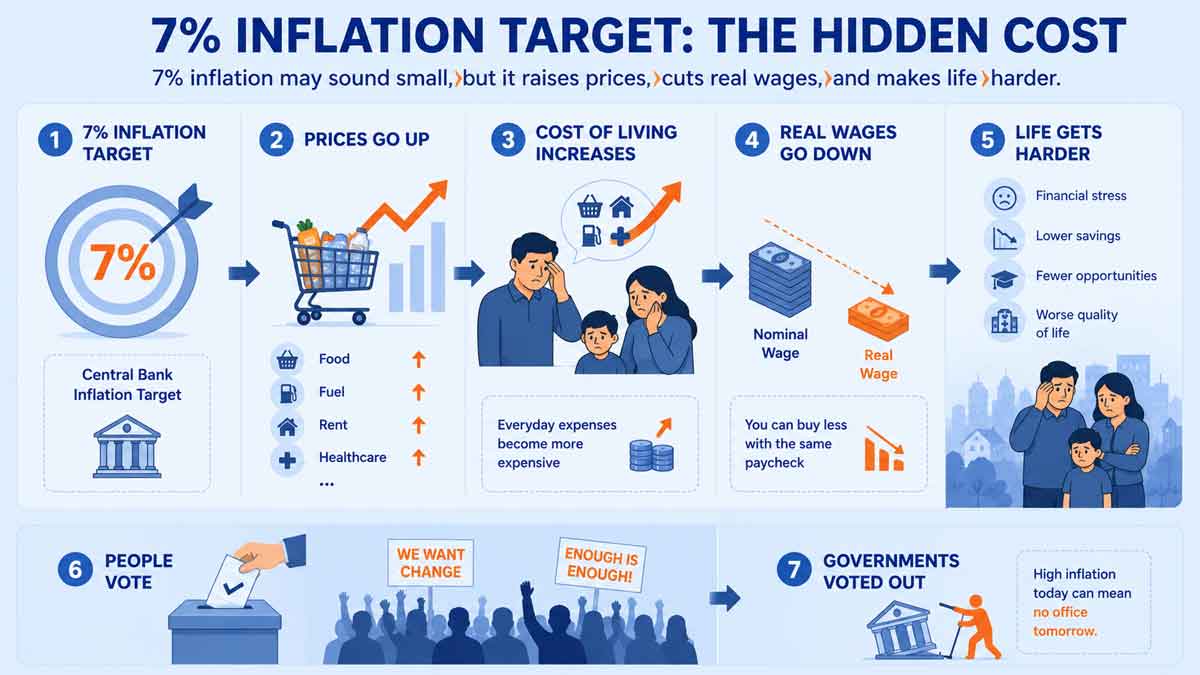
In the medieval period, monetary depreciation by coin clipping (which is seen in Sri Lanka as a 5 percent inflation target) was a capital offence (see Capitula de tonsura monete).
Rising prices led to revolt and ouster of kings and they ruled for long periods if there was sound money.
But 'independent' central banks with inflation and depreciation biases now escape accountability and governments get voted out of office.
The parliaments have no control over independent central banks intent on inflation and depreciation due to monetary fallacies involving full employment policies or 'competitive exchange' rates.
Sri Lanka has seen higher public discontent according to surveys, in addition to an expansion of debt stock value despite a budget surplus.
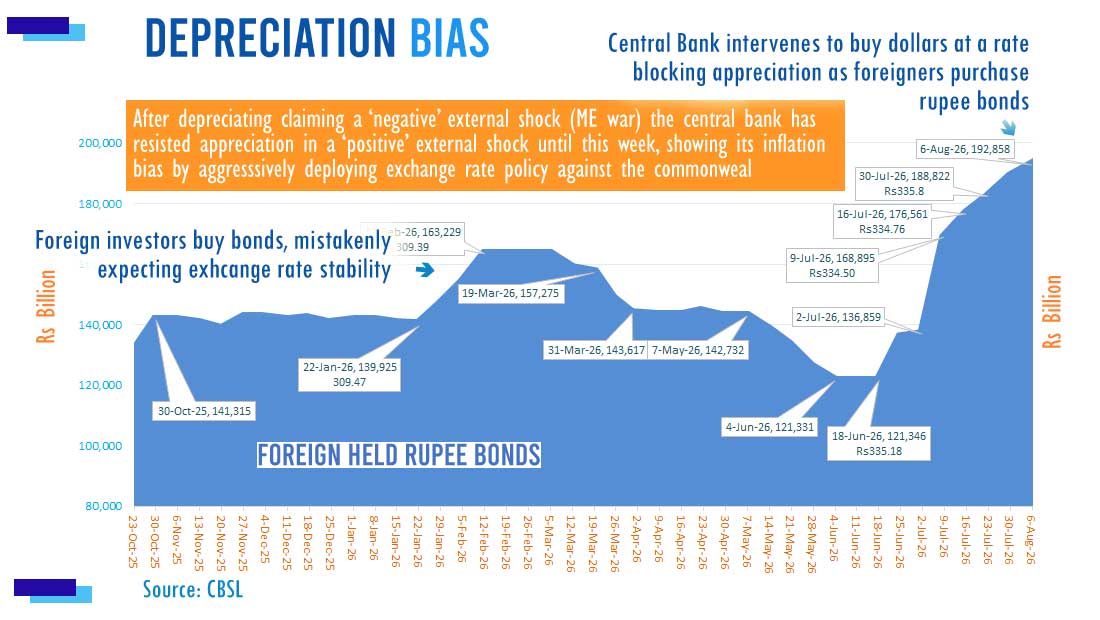
In the second quarter the deprecation was greater.
There are attempt to reign in the inflation bias of Sri Lanka's central bank, now that the first external default has occurred and reserve collections reduced after a change to the IMF program which ended deflationary policy.
There are also calls for the Treasury to buy dollars to repay debt, and not depend on monetization of the balance of payments, which leads to excess liquidity and monetary depreciation when the new notes are dishonoured.
But since 1952 there has been little success except in the period around 2000 to 2011. (Colombo/Aug31/2026)












Comments
Be the first person to comment and join the debate