
Share your email and we'll share the latest news
Exclusive economic intelligence, political and business coverage
Monday, November 9 2026
Monday, November 9 2026
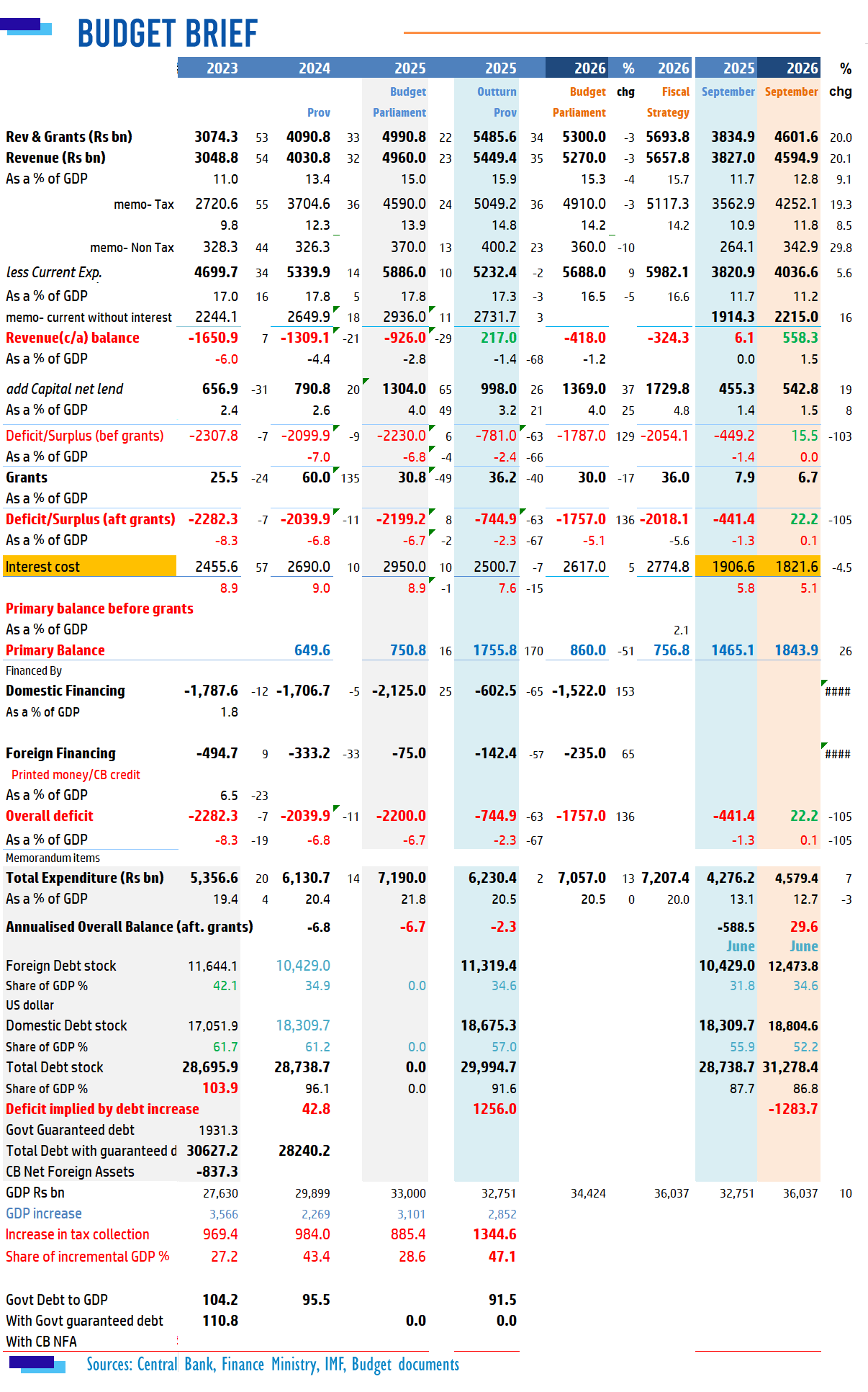
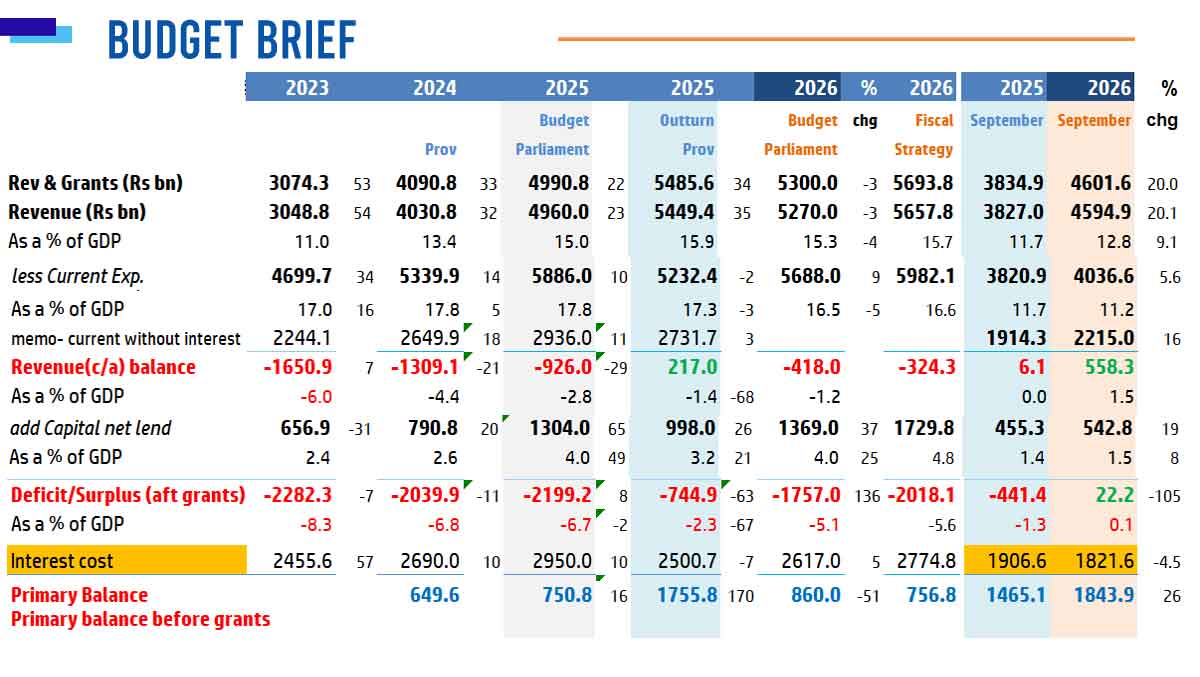
MONETABRIEF – Sri Lanka's budget reported a surplus of 22.2 billion rupees in September 2026, slightly narrower from 35.4 billion rupees a month earlier, while revenues rose 20 percent.
Tax revenues grew 19.3 percent to 4,252 billion rupees, and non-tax revenues grew 29.8 percent to 342 billion rupees.
Current expenditure grew 5.6 percent to 4,036 billion rupees with reduced interest costs. Interest costs fell 5 percent to 1,821 billion rupees up to September, down from 1,906 billion rupees last year.
Sri Lanka has high nominal interest due to inflationary policy of the central bank supported by currency depreciation which started around the 1980s.
Before the IMF's Second Amendment allowed central banks in developing countries to run inconsistent operating frameworks (money supply targeting without floating rates or inflation targeting without floating rates) triggering crises, Sri Lanka's inflation and interest rates were around the same level.
Non-interest costs rose 16 percent to 2,215 billion rupees.
When central banks depreciate currencies, trigger high inflation and escape accountability, some current expenditures do not go up immediately. Wages are controlled until the next budget. The same happens in private companies.
In the intervening period employers or governments are held accountable by the electorate.
As a result, there is political instability and policy reversals, in countries with un-accountable central banking dooming them to be 'miserable developing countries', critics say.
With total current spending lower than revenues, the budget reported a current account surplus of 558.3 billion rupees.
Last year the government ran a current account surplus for the first time since 1987.
Before inflation and depreciation Finance Ministers at least tried to run a current account surplus, which was called the golden rule of budgeting.
When countries run current account surpluses, capital spending can be financed by taxes in part or in full.
Before the collapse of the Bretton Woods system, and permanent inflation, budget deficits were temporary. After the first and second world wars for example, budgets were quickly brought into surplus.
In Sri Lanka in 2026, capital expenditure grew 19 percent to 542.8 billion rupees in line with revenue growth.
As the current account surplus of 558.3 billion rupees was higher than the reported capital expenditure of 542 billion rupees, there was a surplus in the budget.
Sri Lanka in 2026 initially allocated 1,369 billion rupees for capital expenditure which was raised to 1,729 billion rupees after Ditwah. There are usually delays in implementing capex projects.
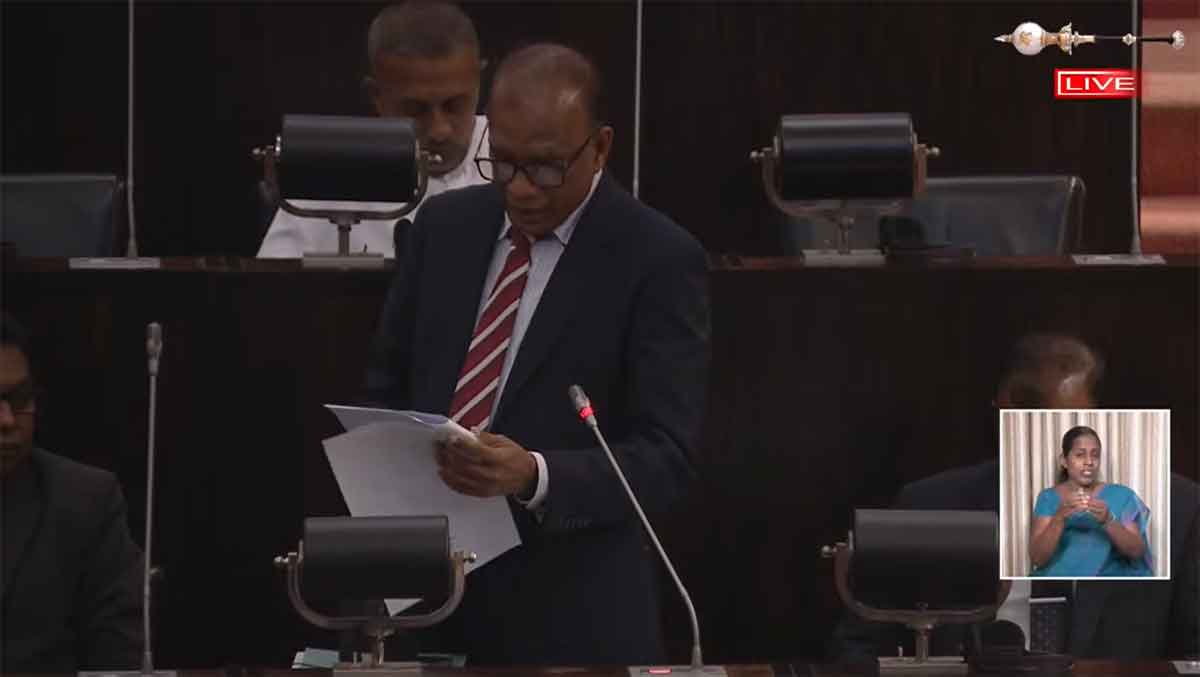
Many contractors also submit bills towards the end of the year, leading to a steep rise in reported capex in the last two months. As a result, physical progress of most projects are higher than the reported budget numbers in most months, Deputy Finance Minister Anil Jayantha has explained.
As a result the budget is expected to go into deficit by the year end.
The budget also reported a primary surplus of 1,843 billion rupees.
With inflation and depreciation from unaccountable central banking and flexible exchange rates, IMF programs now track a primary surplus before interest costs.
A country that goes to the IMF program has to reverse the 'rate cuts' that triggered the original economic crises. As a result, interest rates rise steeply widening the overall budget deficit.
Due to continuous depreciation under flexible exchange rates, nominal interest rates can continue to be high and the countries can be trapped in a 'Latin America syndrome' style model with unaccountable central banking.
Before rapid depreciation of the 1980s, which made budgets and interest rates uncontrollable, IMF programs were monitored under a Public Sector Borrowing Requirement (PSBR), and central bank money printing (net domestic assets) and reserves.
(Colombo/Nov09/2026)

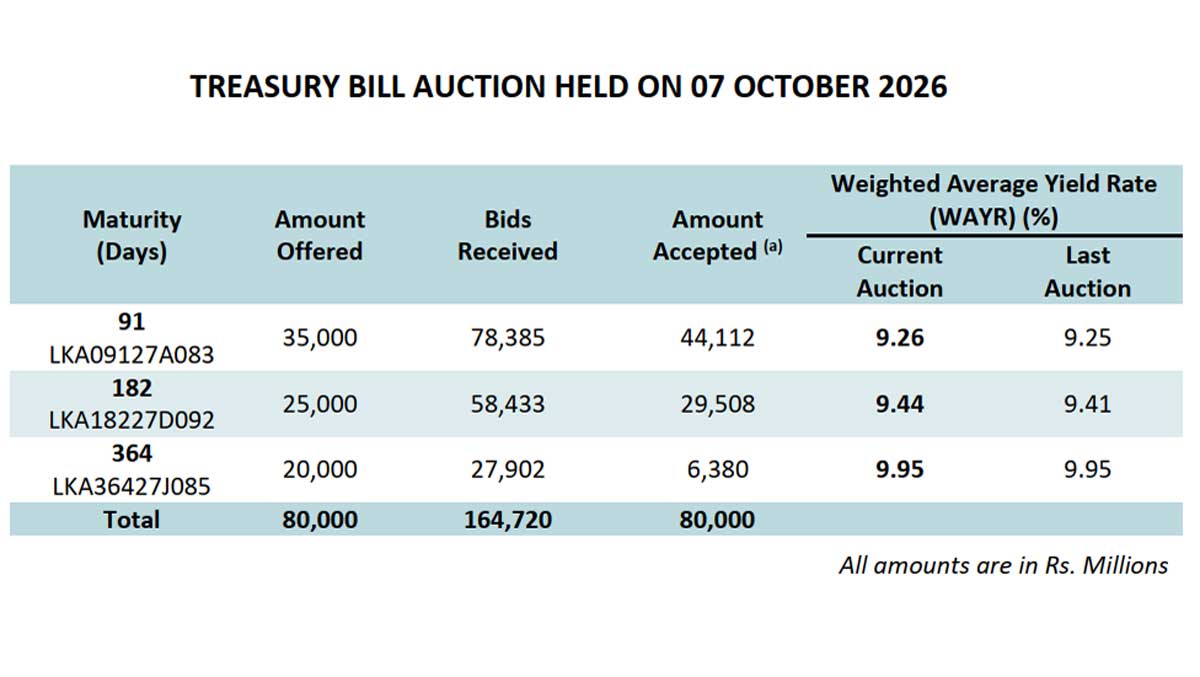
| 3 month bill | 9.26% | 1bp ▲ |
| 12-m bill | 9.95% | 2bp - |
| Gold (Ounce) | $4015 | - ▼ |














Comments
Be the first person to comment and join the debate