
Share your email and we'll share the latest news
Exclusive economic intelligence, political and business coverage
Monday, November 23 2026
Monday, November 23 2026

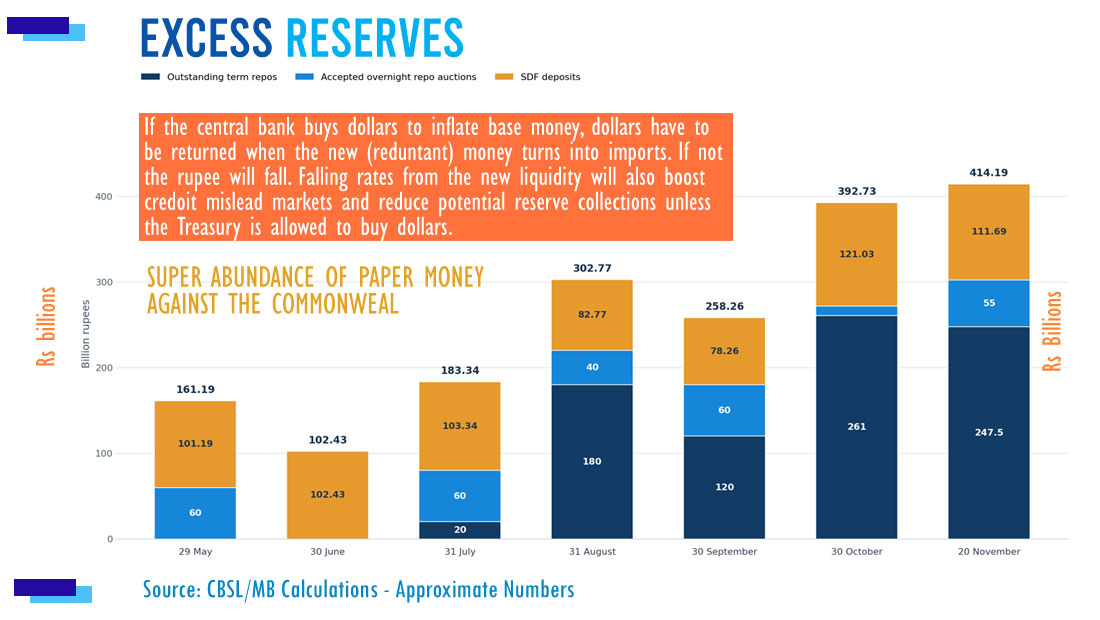
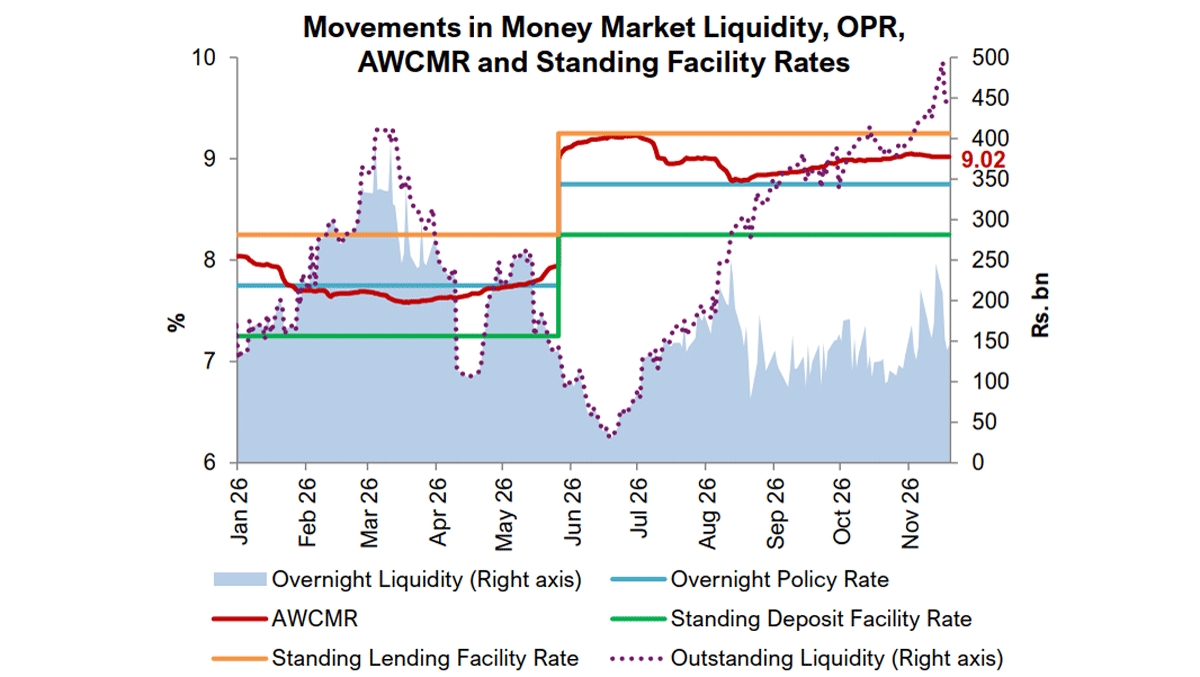
The central bank created over 400 billion rupees buying dollars (monetized the balance of payments), and kept them in the interbank market temporarily mopped up or with banks simply depositing them in the window, until they found customers to lend and drive imports.
"It is the central bank's responsibility is to build official reserves," Governor Weerasinghe said responding to a question whether there was any legal bar for the Treasury to buy dollars, to repay its own debt, given that dollar purchases compromise monetary policy.
"Government or the central bank both are official reserves. That's our responsibility in the law to build those official reserves.
"So that's why the central bank has a commitment to sell dollars to the government if they need to make the service payments."
The central bank on November raised the reserve ratio to mop up 150 billion rupees of the excess liquidity amid credit and inflation concerns (compromising monetary policy).
If the government bought the dollars using its own money no new money has is created, which then lead to the central bank held dollar reserves being demanded through credit and imports when the new money is loaned out.
Monetizing the BoP
The central bank's first Governor John Exter, who had knowledge of classical money and banking theory called it the monetization of the balance of payments.
The sale of around 450 million dollars of central bank reserves at around 335 to the dollar to the government will automatically kill 150 billion rupees excess bank rupee reserves (additional note issue or excess liquidity) without having to raise the reserve ratio.
If the dollars are returned to the Treasury at the same rate that they were bought from the people, the currency would remain stable.
If the Treasury bought the dollars from money it raised from taxes or borrowings (which automatically offsets the purchasing power of the public and reduces import demand making more dollars available in the fx market by compressing public consumption or credit or both and imports), no additional liquidity or demand is created.
Unlike the Treasury which buys dollars outright in a reserve-money-neutral transaction, the central bank purchases add loanable rupee reserves to banks in the form of what classical economists called redundant money (excess liquidity).
The treasury purchase of dollars for reserves also does not lead to an artificial fall in the short term interest rates as monetizing the balance of payment does. Treasury reserve collections represents a real transfer of wealth out of the country.
Dishnoring
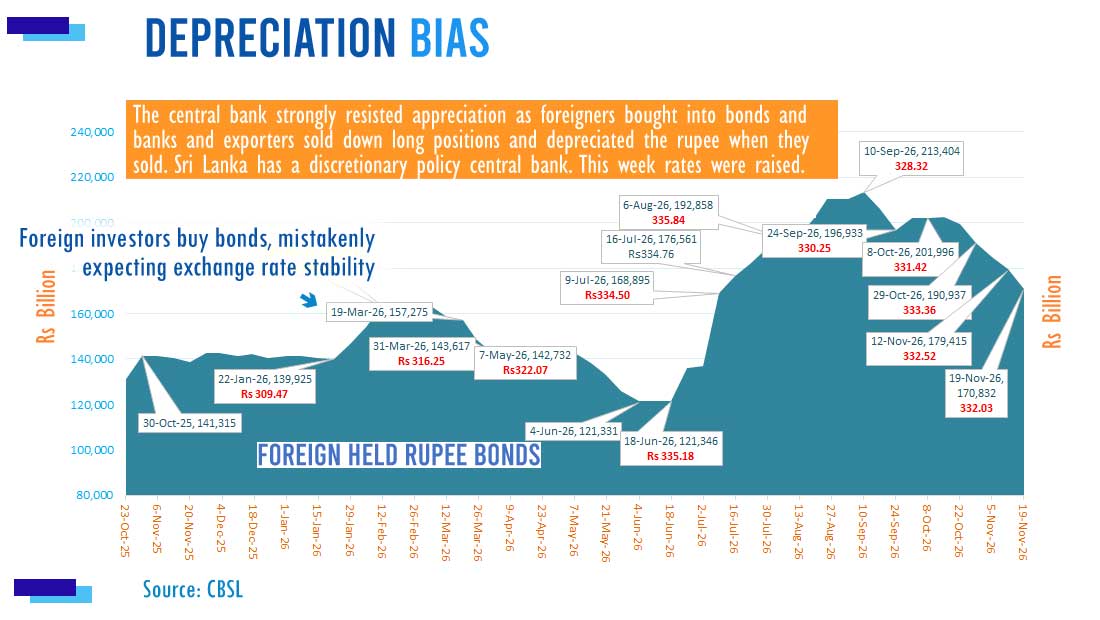
When the notes are used by private parties or SOEs (on top of a fall in rates from excess money), and the central bank does not return the dollars from which the money was created (dishonors its note issue) the rupee depreciates.
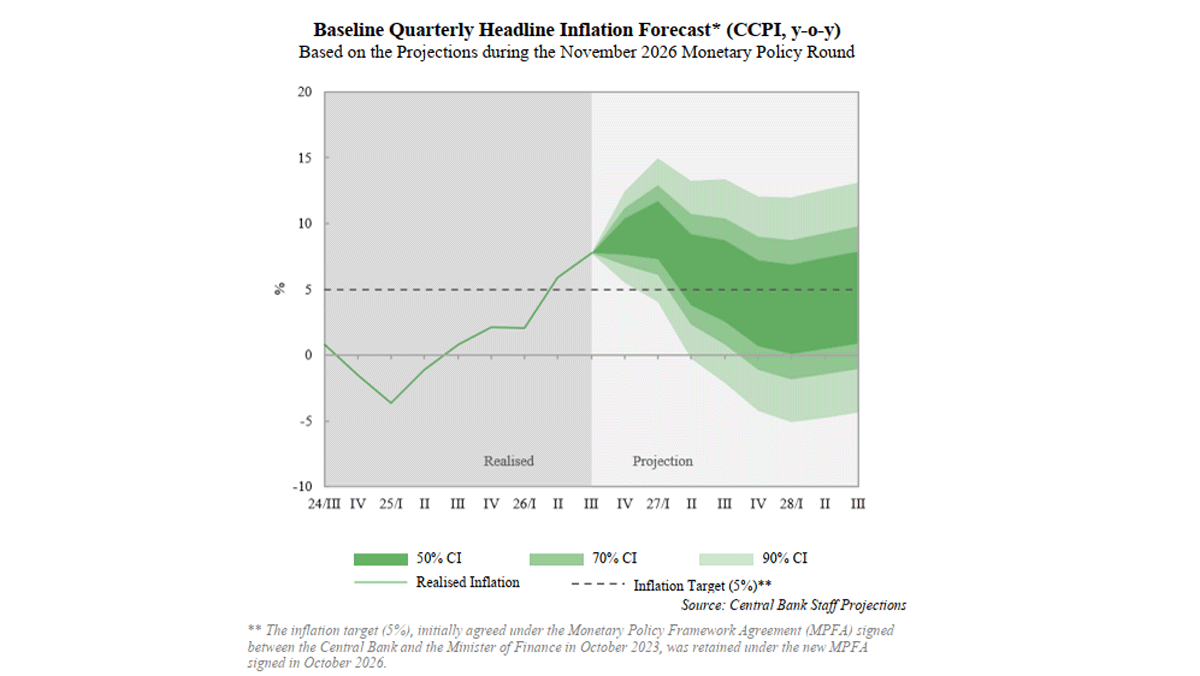
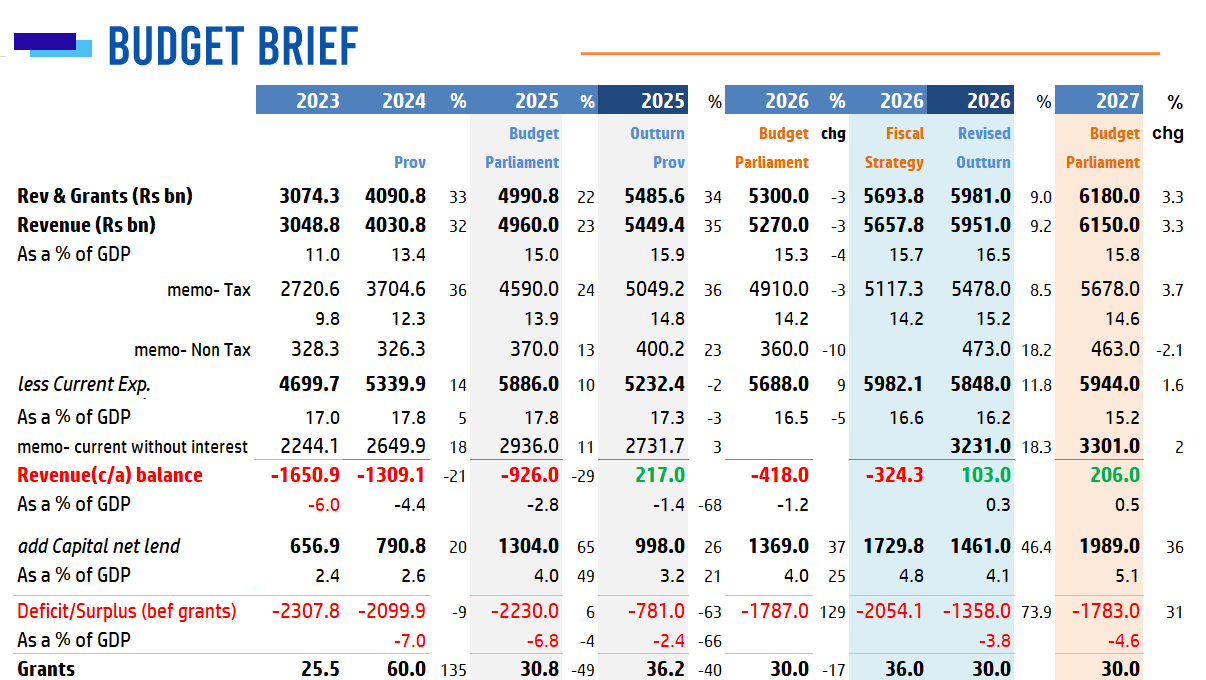
The 2026 currency collapse of around 10 percent from 300 to 330, and the reflation of the economy by over 8 percent so far shows was engineered amid a budget surplus.
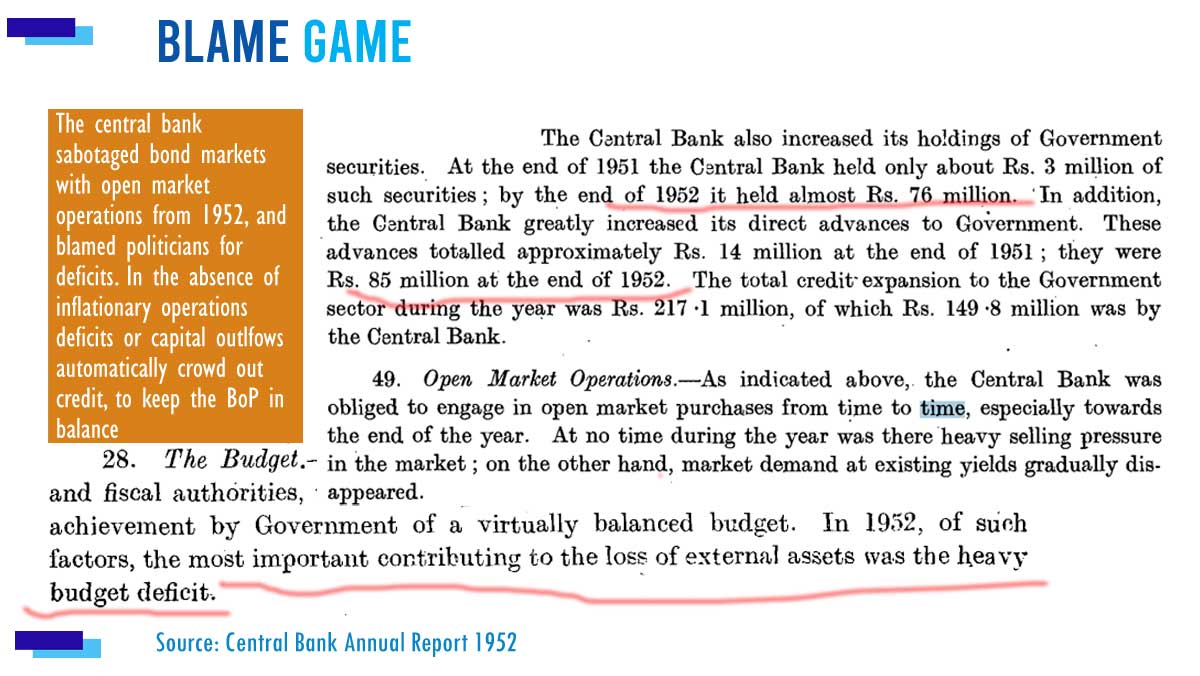
It showed that a seven-decade narrative spread by the central bank that budget deficits are the source of inflation and depreciation is not correct.
In democracy it is the parliament that can bring restrictions on a central bank to stop its inflation and depreciation bias, as was shown in the case of the UK.
The British parliament set up two Commissions which devised ways to control and reverse the Bank of England depreciation of the Sterling, resume and cash payments (honor the notes it creates by returning reserves when demanded) and help set up industries with long return periods.
Currencies depreciate when a central bank violates the classical economic principle of the price-specie-flow mechanism described by David Hume.
The ideas were revived and described in detail by David Ricardo, in his writings including the High Price of Bullion - A Proof of the Depreciation of Bank Notes, which was instrumental in triggering two Parliamentary Committees in 1811 and 1819 and also government pressure to deflate reserve money in 1825.
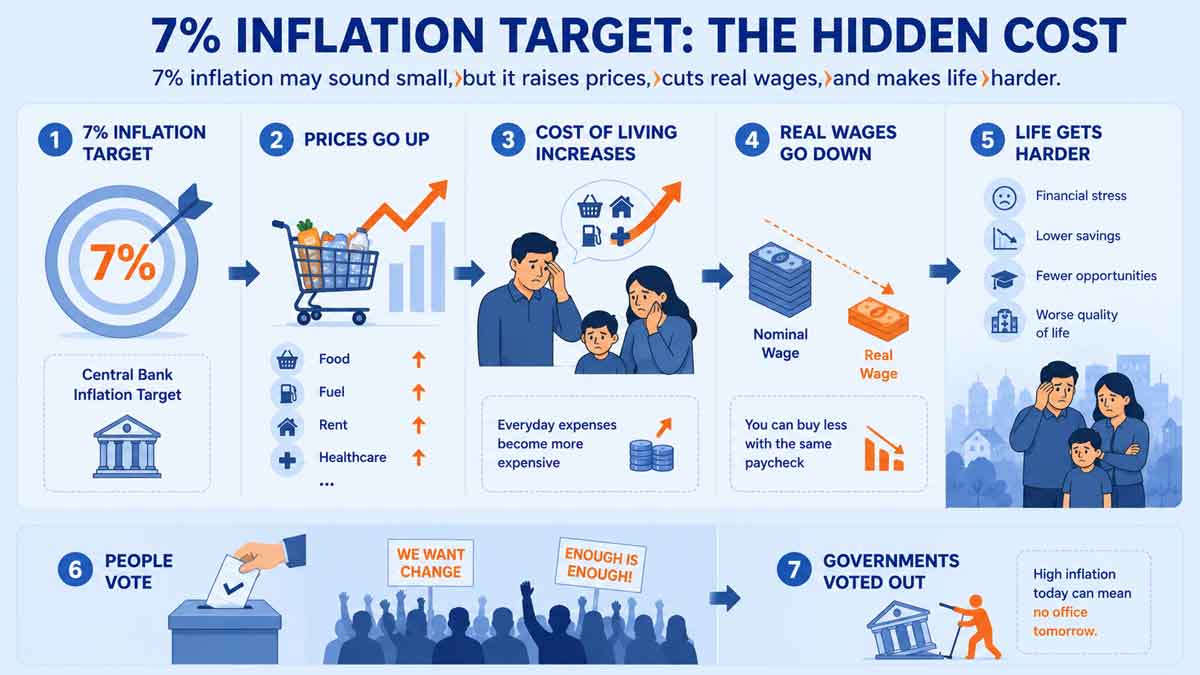
Sri Lanka's public sector unions in particular are now getting restive after the central bank achieved its objective of raising the cost of living by 7 percent, with the parliament having failed to control the inflation depreciation bias of the central bank.
Growing Classical Economic Knowledge
In Sri Lanka the parliament's Committee on Public Finance headed by legislator Harsha de Silva has already started raising questions on why the Treasury does not build reserves to repay debt.
Fiscal loans are ideally settled by fiscal sinking funds or a sovereign wealth fund, which does not compromise monetary policy or gives an opportunity for the central bank to dishonor redundant money (excess rupee reserves).
It was de Silva who took the matter of monetizing domestic assets public and helped increase public understanding of the earlier ways that the central bank pushed up inflation and met its controversial target, triggering strikes and social unrest.
Analysts have pointed out that because the central bank prints money to buy dollars it is 'supremely unqualified' to build reserves for debt repayment.
To stop the newly created money from creating credit and imports, the money has to be mopped up through a sale of central bank held domestic assets, its own securities sell-buy swaps or an outright reserve sale (rupee reserves deflated) to prevent imports and depreciation through dishonoring notes using flexible exchange rate doctrine of the International Monetary Fund.
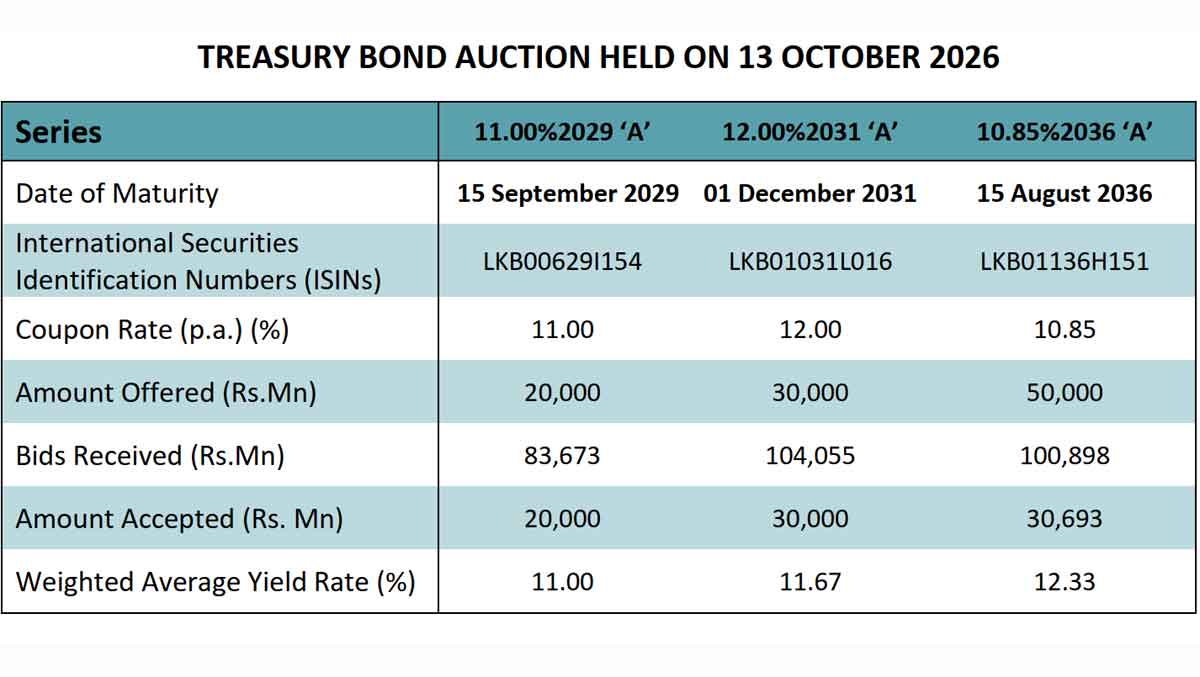
The central bank has said that the bonds will become fixed income securities and it can sell them down if required next year.
At the moment the coupons on the central bank's bond stock are deflationary.
The monetizing of the BoP (pegging or external anchoring) is also why analysts have said that the central bank cannot carry out an inflation targeting framework, which is a way of controlling a floating exchange rate which does have an anchor already.
Analysts have pointed out that the central bank reserve collections and the inflation target represents a fundamental anchor conflict.
A steady collection of reserves if there is no depreciation shows that the interest rates are not out of line with the balance of payments per se, though it may not be sufficient to collect reserves, since the Treasury is apparently barred from dollar purchases.
However the excess liquidity will make it difficult to collect sufficient reserves and may miss reserve targets, analysts had warned. In some countries with IMF programs with data driven reflation and depreciation, there are street riots on the 7th review.
Monitoring stabilization programs involving reserve collecting central banks was devised by the IMF around 2015 amid an unprecedented deterioration of monetary knowledge especially in Washington and the descent into single policy rate/floor systems.
The monitoring of a reserve collecting central bank through an inflation target (unless it is very low or deflating), leads to missed QPCs an inflation targets as soon as the economy recovers. (Colombo/Nov23/2026)

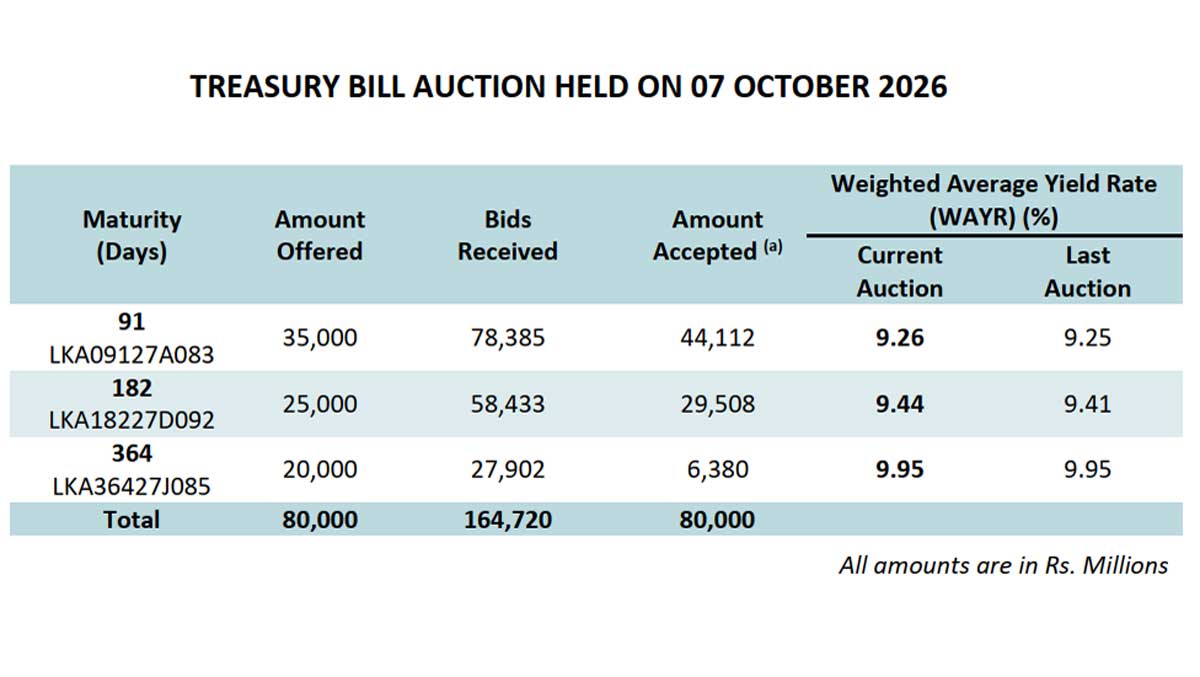
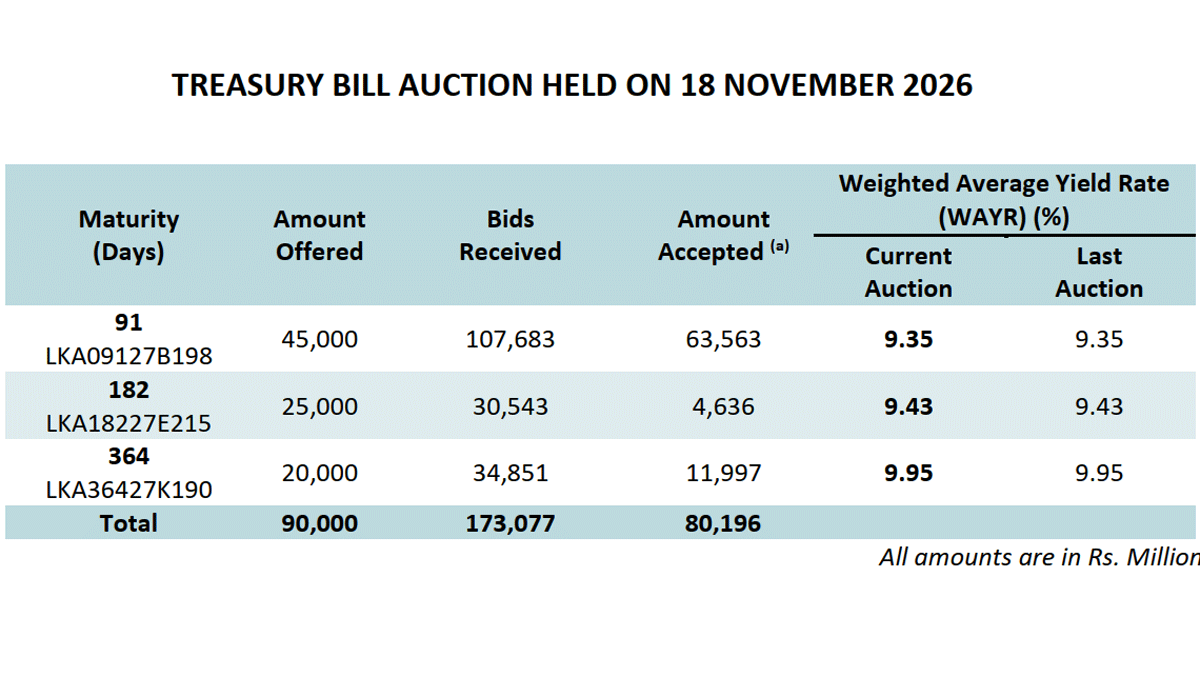
| 3 month bill | 9.26% | 1bp ▲ |
| 12-m bill | 9.95% | 2bp - |
| Gold (Ounce) | $4015 | - ▼ |
















Comments
Be the first person to comment and join the debate