
Share your email and we'll share the latest news
Exclusive economic intelligence, political and business coverage
Friday, September 25 2026
Friday, September 25 2026
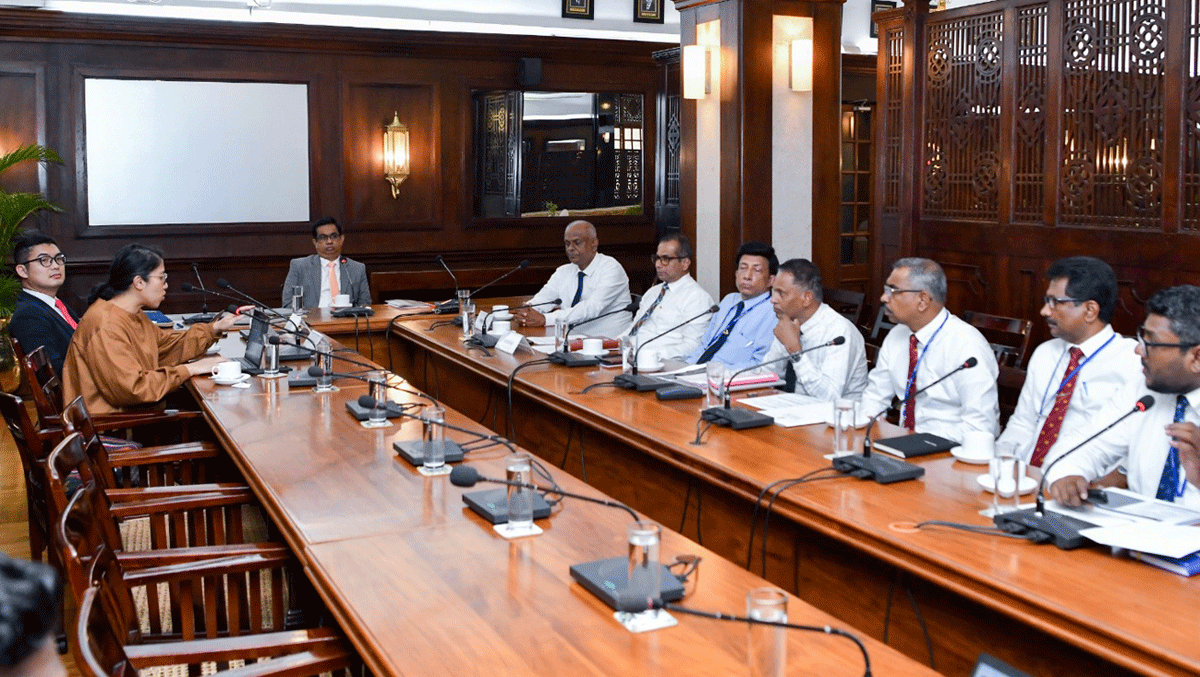
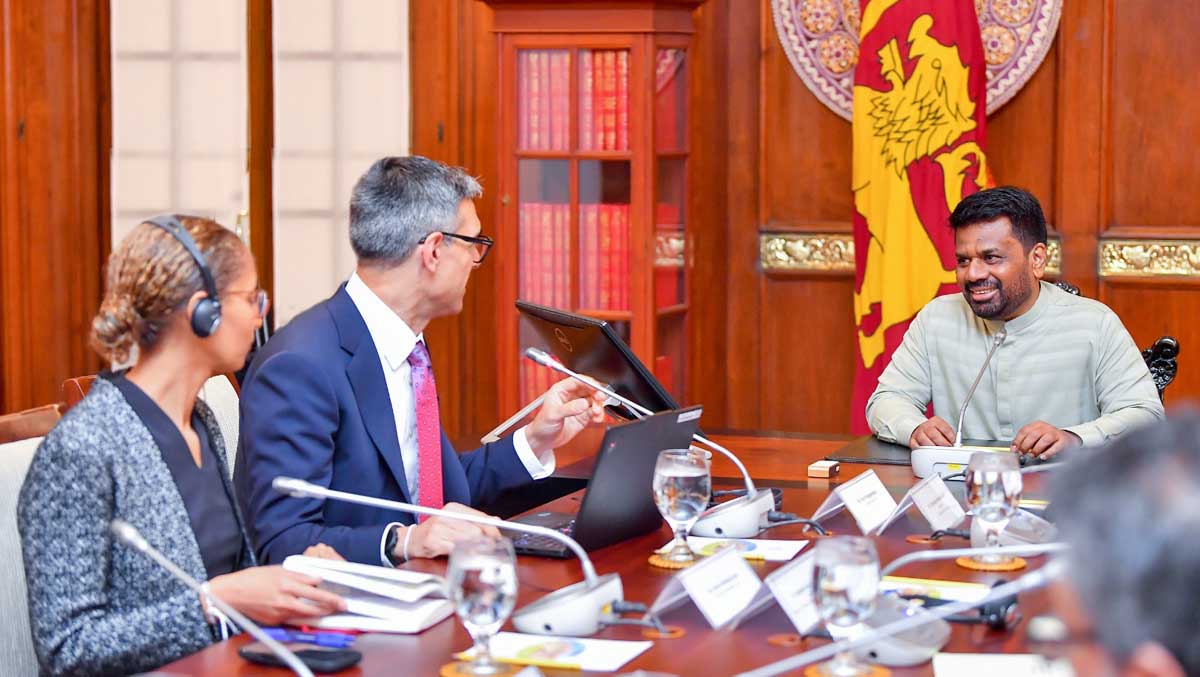
MONETABRIEF – Sri Lanka plans to hire 121,000 state workers to fill identified vacancies over the next year as part of plans to return tax money to the economy President Anura Kumara Dissanayake has said.
For many years employment was restricted to the state service.
Not Ad Hoc
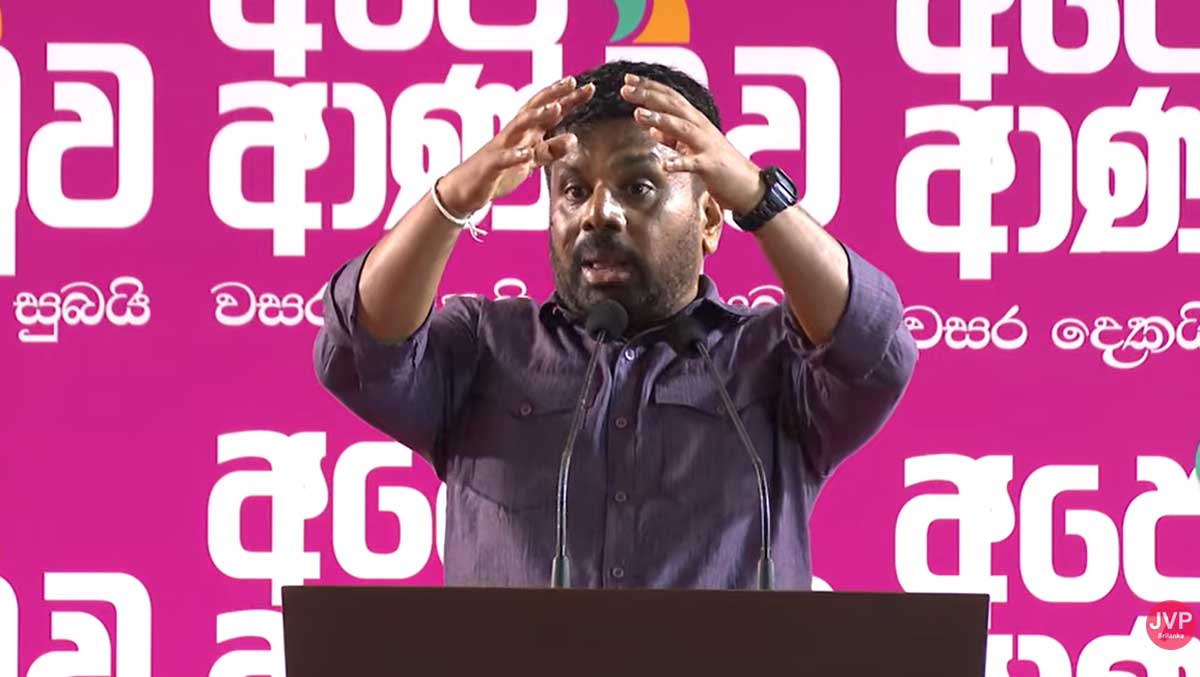
"We will not hire in a ad hoc manner (hithoo hithoo vidiyater)," President Dissanayake told a public rally in Akuressa.
"A committee under the Prime Minister and asked each agency what the vacancies were. Was it essential? Will these people stay with no work? We will hire 121,000 to the state service in that manner. This year. We have not hired all."
"10,000 for the Police. 23,000 teachers. Then a young person in the village will get a job. A teacher will be there. They will get an economic strength. They will join the police.
"Next year we will give a special allowance to police in the budget. They work 18 hours. They will get a uniform with a batton and kid. When the jobs are created, economic opportunities will be created.
"Then the benefits that the economy got will to the people."
When Sri Lanka defaulted around 80 percent of the tax revenues went to pay state worker salaries and pensions after rising to 50 percent when the stimulus for economic growth (potential output targeting) initially started.
With more money in the Treasury capital expenditure will also be increased to 2,000 billion rupees in the 2027 budget.
Sri Lanka is planning to build some expressways with domestic financing which may trigger more imports and require higher interest rates to maintain external stability.
Spurious Economic Doctrines
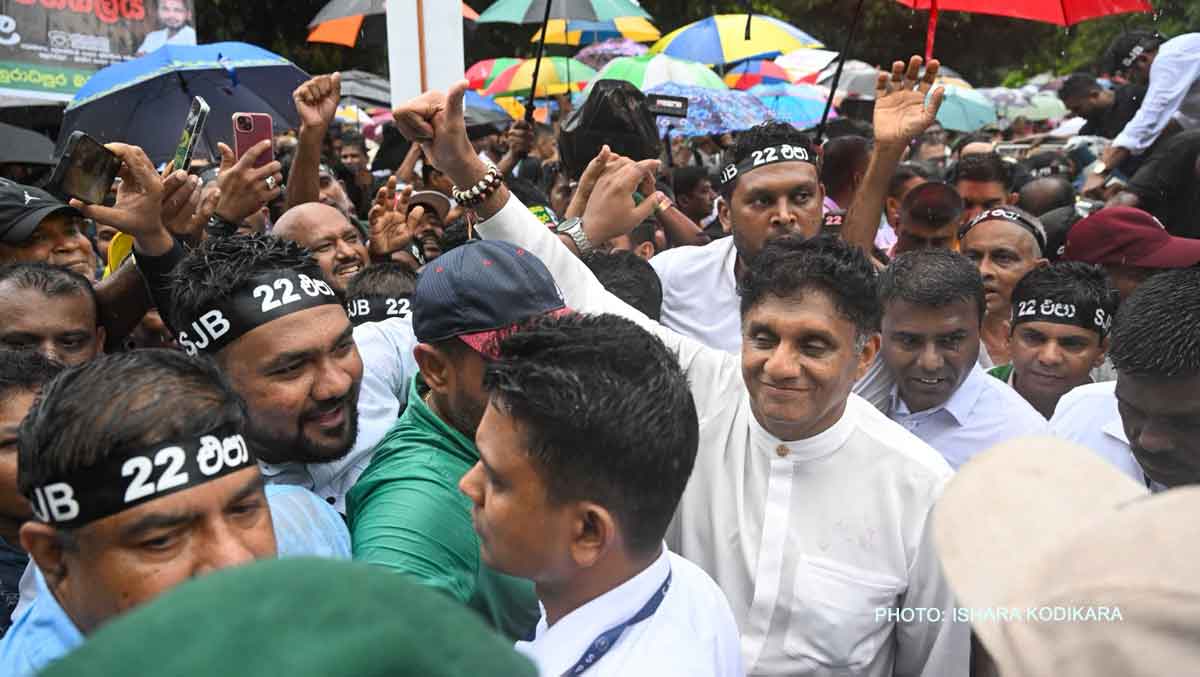
Opposition leader Sajith Premadasa also pushed to hire more unemployment graduate in parliament transferring more taxes collected from the people to able bodied population.
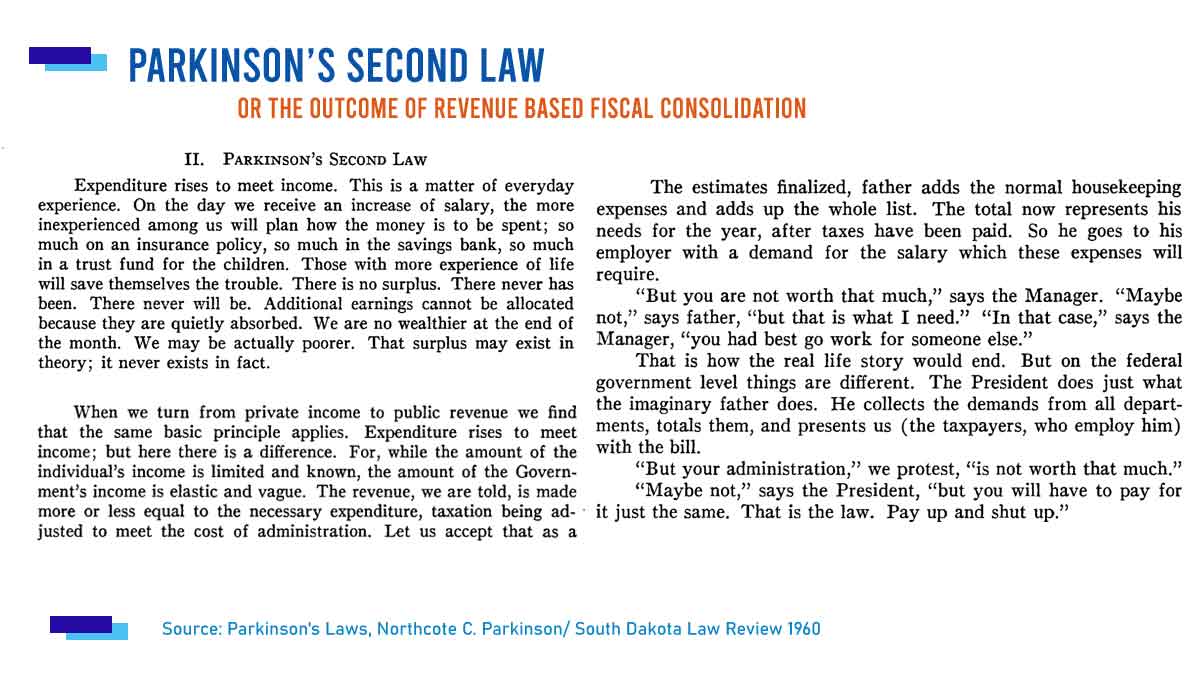
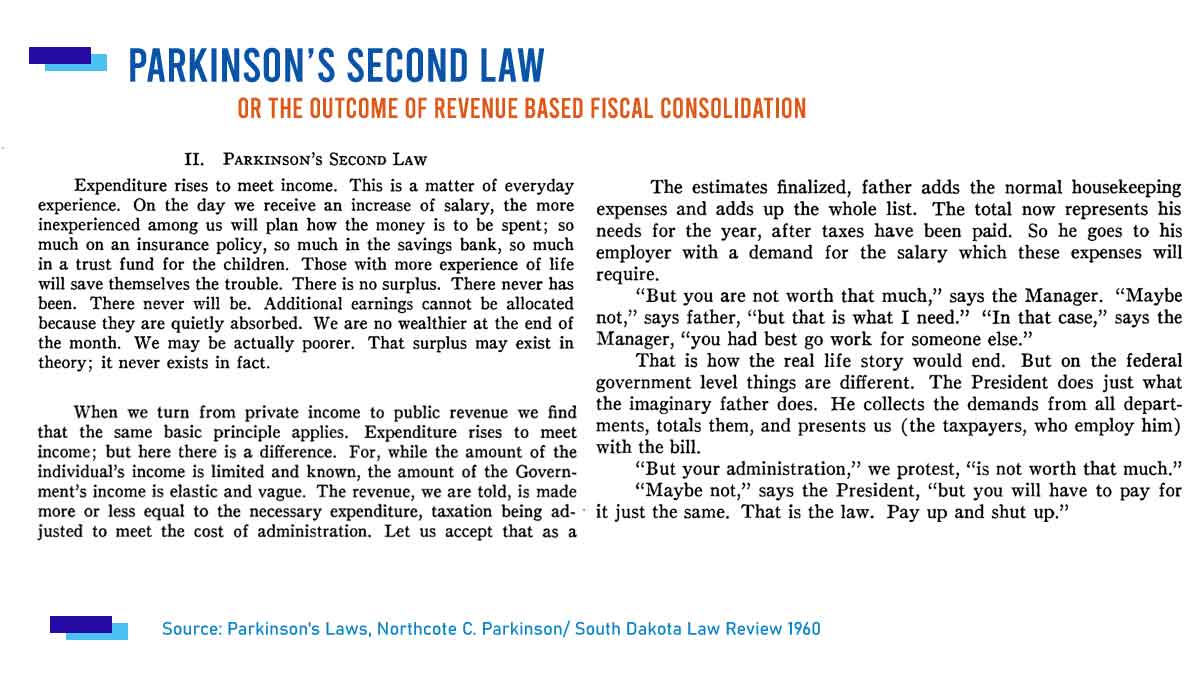
Analysts had warned that 'revenue based fiscal consolidation' was a spurious doctrine as spending will catch up to match revenue.
Generally called Parkinson's Second Law, the phenomenon was articulated by Nortcote C Parkinson in an article in the Economist magazine in 1955 when he was working at the Raffles University campus in Singapore (now NUS).
Sri Lanka went on a revenue based fiscal consolidation drive from 2015 and eventually defaulted as 'policy support' intensified with aggressive central bank activism under a 5 percent inflation target after the agency was taught by the IMF to calculate potential output targeting.
In Sri Lanka politicians are against printing money but macro-economists support high inflation and monetary depreciation. When people are impoverished by depreciation and the high inflation target of the central bank, Aswesuma (income support) benefits are increased.
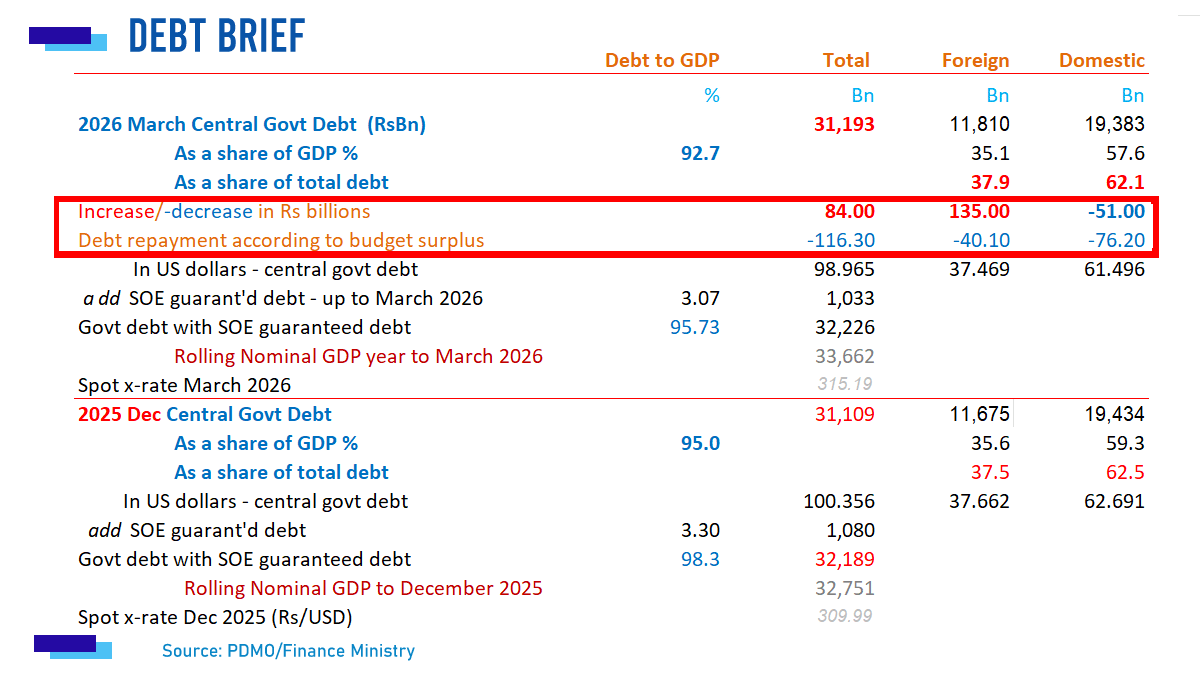
In 2026 the rupee collapsed to 330 to the US dollar from 300 a year earlier as the government ran a budget surplus.
Macro-economists who cut rates had blamed budget deficits for external trouble since money printing to suppress interest rates started in 1952. What is now called 'rate cuts' were not invented at the time.
Meanwhile another method of spending money in the Treasury was to give subsidies, President Dissanayake said. The subsidies will however be targeted to the deserving.
These included persons affected by kidney disease, orphans in care who will get 5,000 rupee a month deposited into their accounts and 2 million rupee when they leave the home to build a house.
The time in the care home had been extended from 18 to 21 years, he said.
It was not a good idea to give subsidies to all, President Disssanayake said.
However, even in rich countries there were a section of the population that had to be supported and others who faced sudden crises in their lives.
Politicians in Sri Lanka are against money printing and pushing up the cost of living, but are unable to do anything as the central bank is independent and has a 5-7 percent.
The International Monetary Fund has supported Sri Lanka's controversial 5-7 inflation target which was to have been revised in October, delivering a blow to advocates who want monetary stability, free trade and democratic rule for the country.
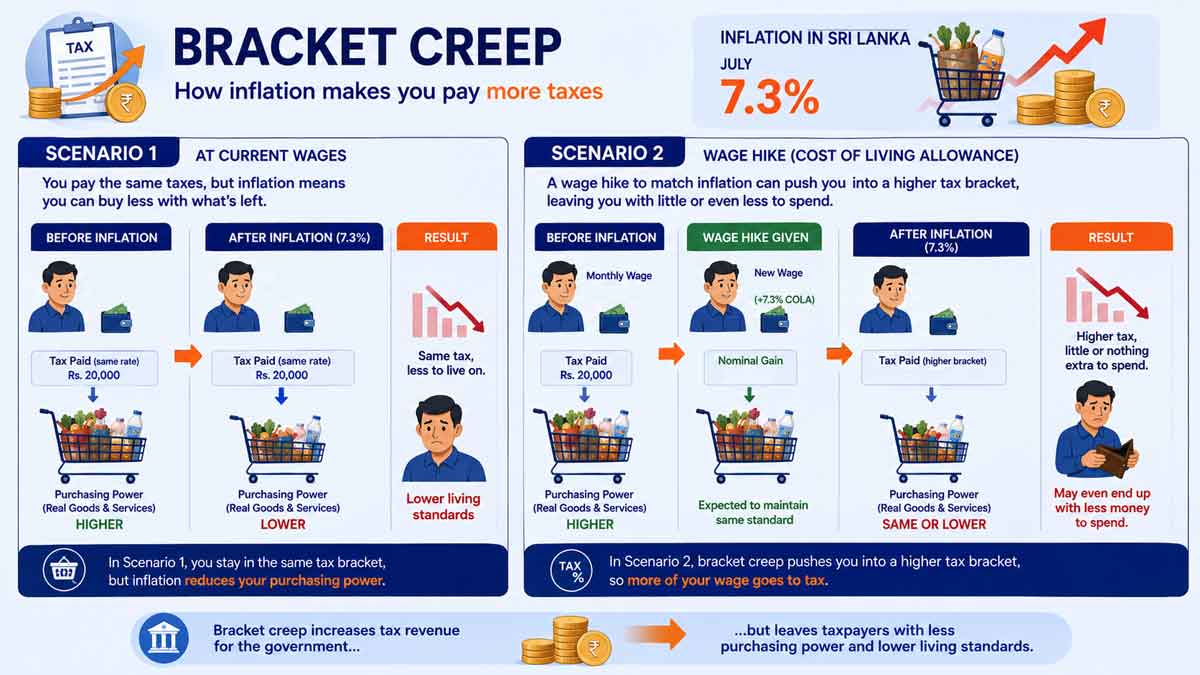
The central bank exceeded its target and pushed up inflation to 8 percent in 2026.
Spending their Way to Prosperity
Though opposed inflation and being prepared to raised taxes, politicians in a democratic set up dominated by are they are under pressure to spend, whenever tax revenues increase.
Macro-economists also push politicians to engage in capital spending not for benefits that come after a project is completed, as in the classical period, but for the instant gratification of the 'multiplier effect' of Keynesian stimulus or what is called 'policy support' by the IMF.
The thinking of macro-economists well-articulated in 'revenue based fiscal consolidation' which was rejects the classical 'spending based consolidation' match political needs.
Politicians Misled by Macro-economists
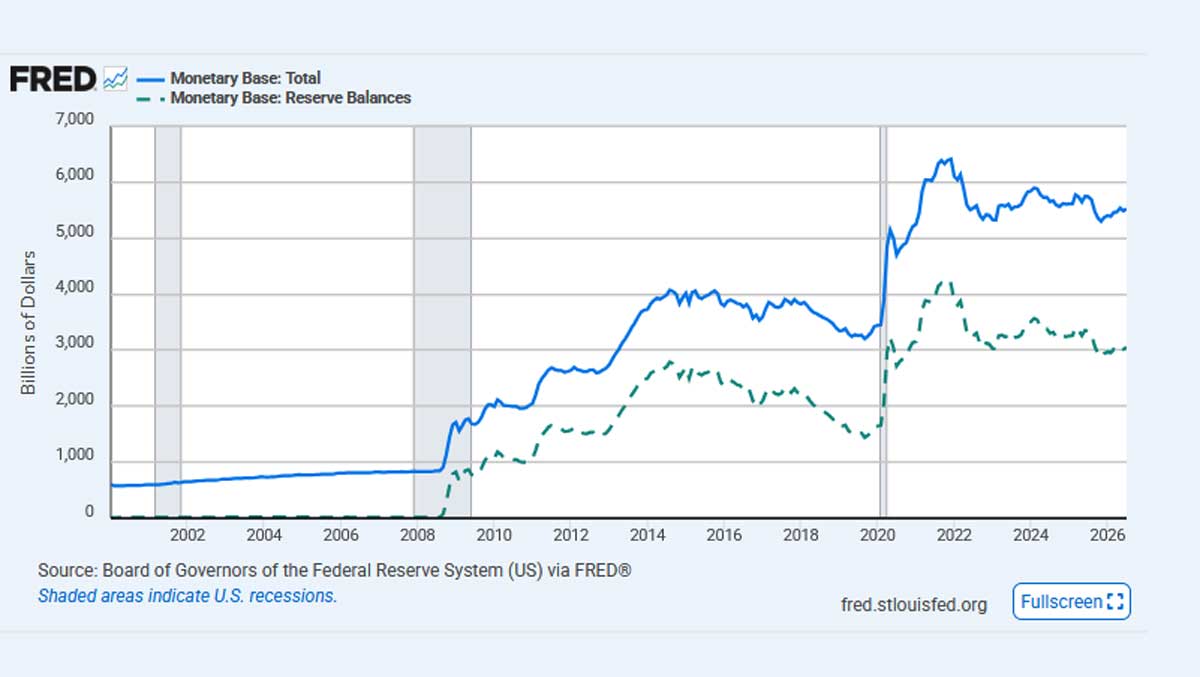
Many western nations including the US, which has been in the grip of stimulus advocates over over 20 years are now drifting towards debt crises with uncontrollable inflation under so-called ample reserve regimes operated by central banks.
Sri Lanka first started to go to the IMF in the 1960s as US macro-economists in particular started to push 'full employment' policies leading to the collapse of the Bretton Woods a few year later.
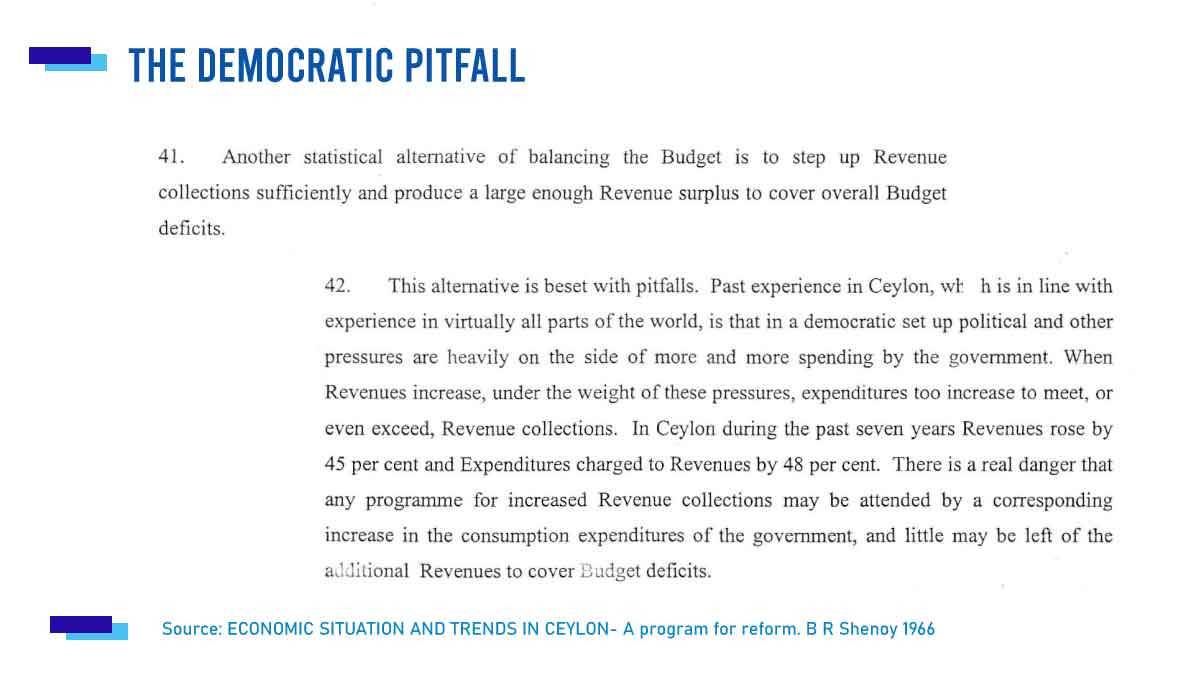
"Past experience in Ceylon, which is in line with experience in virtually all parts of the world, is that in a democratic set up political and other pressures are heavily on the side of more and more spending by the government," B R Shenoy, a classical economist told the then Ceylon government in a policy document in 1966.
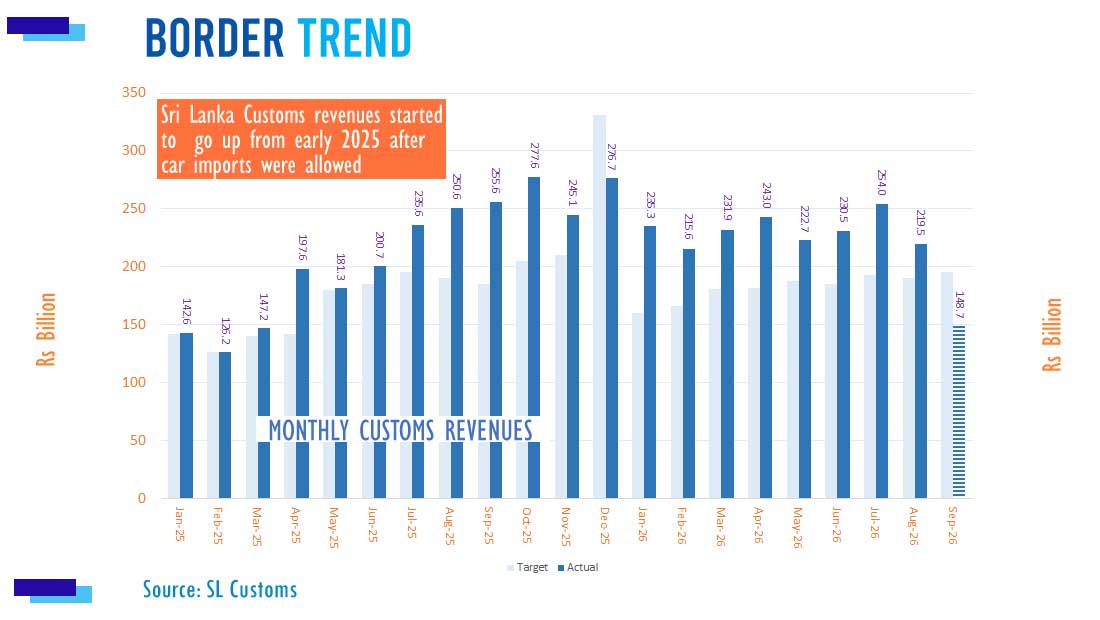
"When Revenues increase, under the weight of these pressures, expenditures too increase to meet, or even exceed, Revenue collections. In Ceylon during the past seven years Revenues rose by 45 per cent and Expenditures charged to Revenues by 48 per cent.
"There is a real danger that any programme for increased Revenue collections may be attended by a corresponding increase in the consumption expenditures of the government, and little may be left of the additional Revenues to cover Budget deficits."
(Colombo/Sep25/2026-Update II)

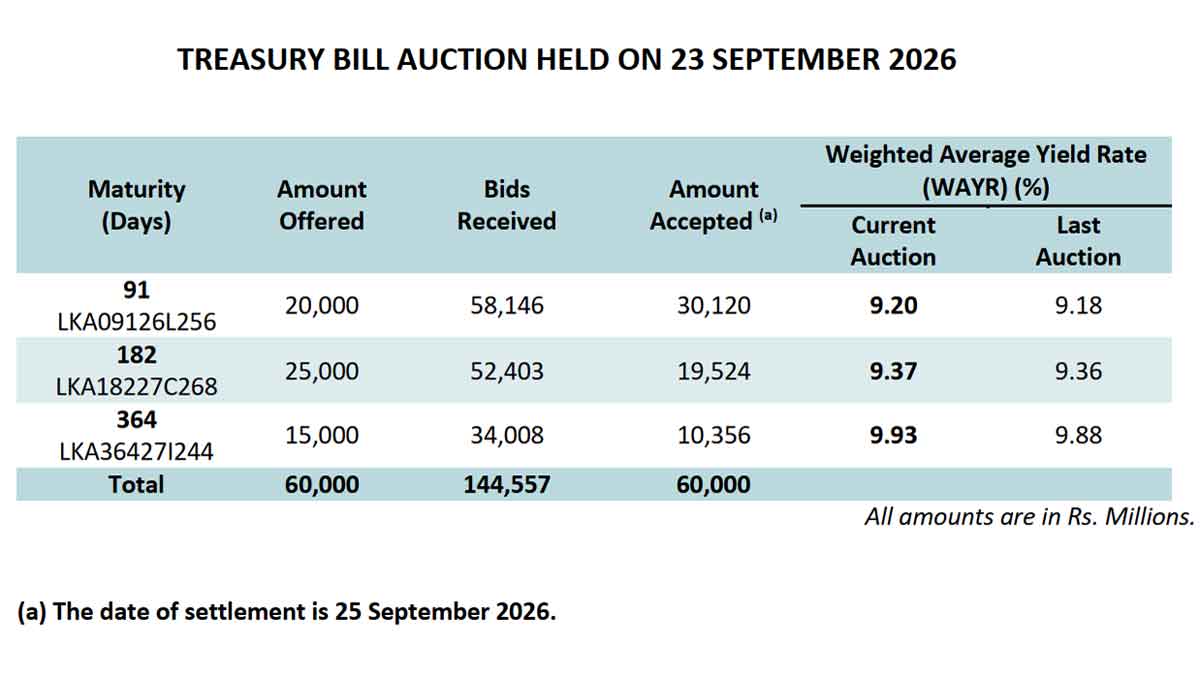
| 3 month bill | 9.22% | 22bp ▼ |
| 12-m bill | 9.91% | 10bp ▼ |
| Gold (Ounce) | $4602 | - - |







Comments
Be the first person to comment and join the debate