
Share your email and we'll share the latest news
Exclusive economic intelligence, political and business coverage
Wednesday, October 7 2026
Wednesday, October 7 2026
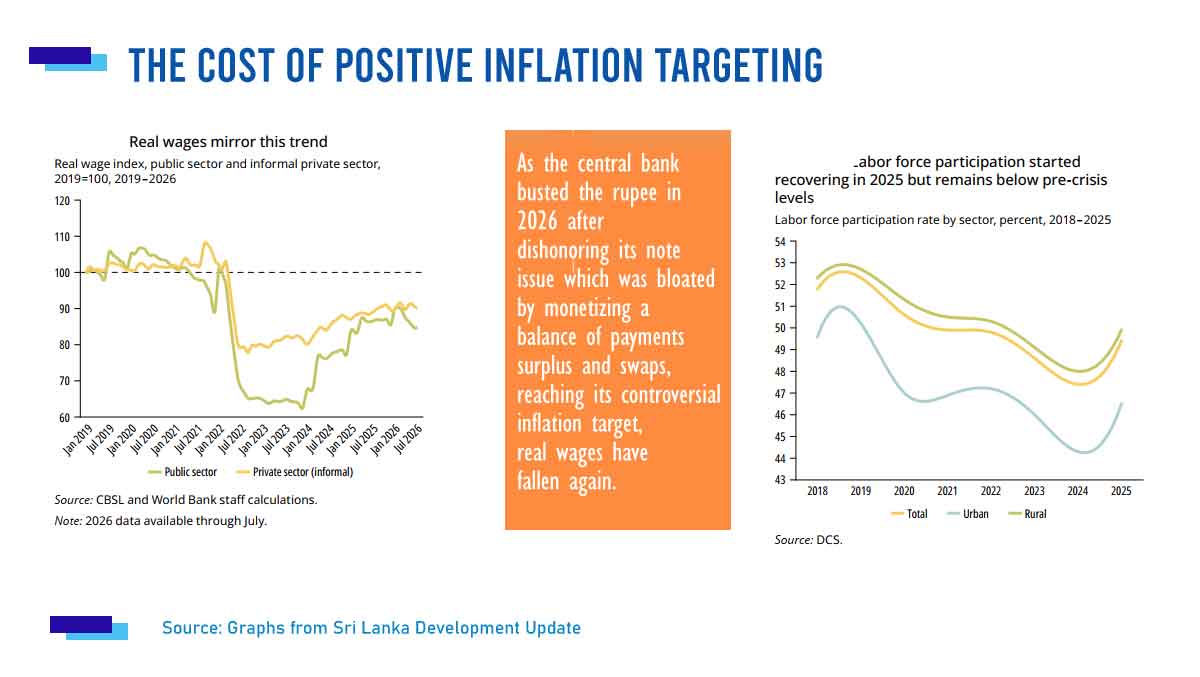 PRICE DISTORTION : The inflation target creates relative price distortions, especially between wages which are 'sticky' and food and energy and can create artificial profits for companies and political unrest for democratically elected governments.
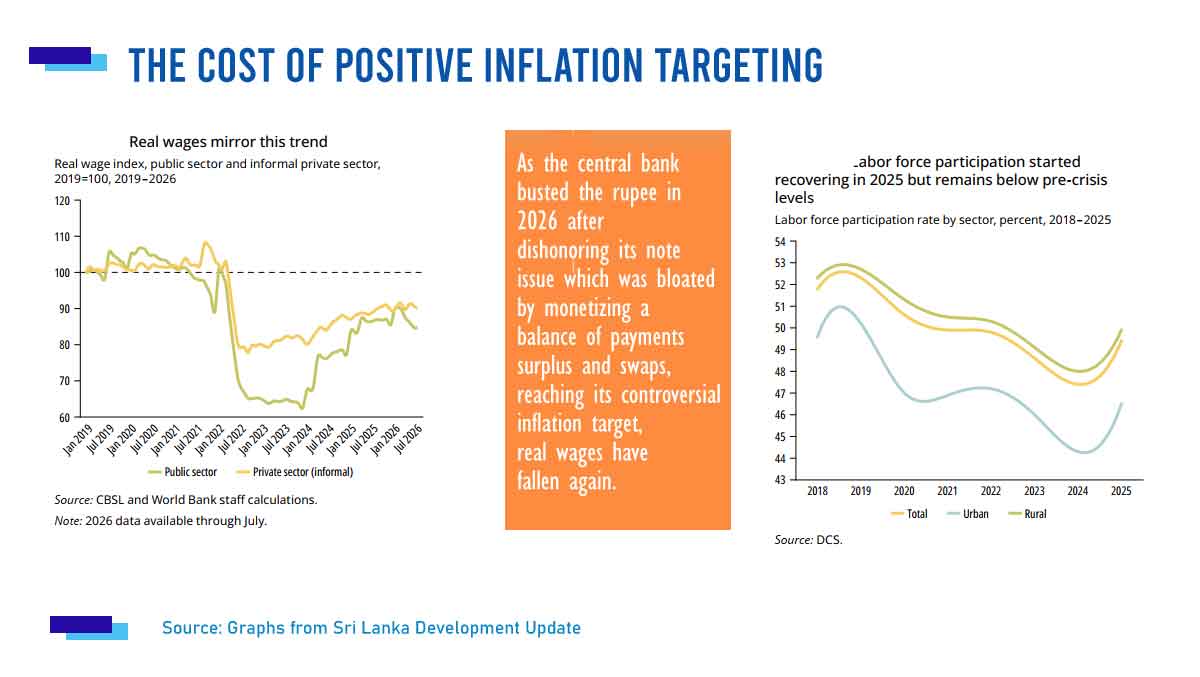
MONETABRIEF – Sri Lanka's real wages which were slowly recovering but was still below 2019 had fallen again in 2026, a World Bank report has shown, as the central bank busted the rupee again and reached its controversial inflation target.
Real wages remain about 12 percent below 2019 levels, and labor force participation is about 3 percentage points lower," the World Bank said in a Sri Lanka Development Update.
Sri Lanka's central bank deployed aggressive rate and SRR cuts from 2020 to close an 'output gap' triggering a steep currency collapse in 2022 in self-sabotaged by a surrender rule, and pushed a 20 million population into poverty.
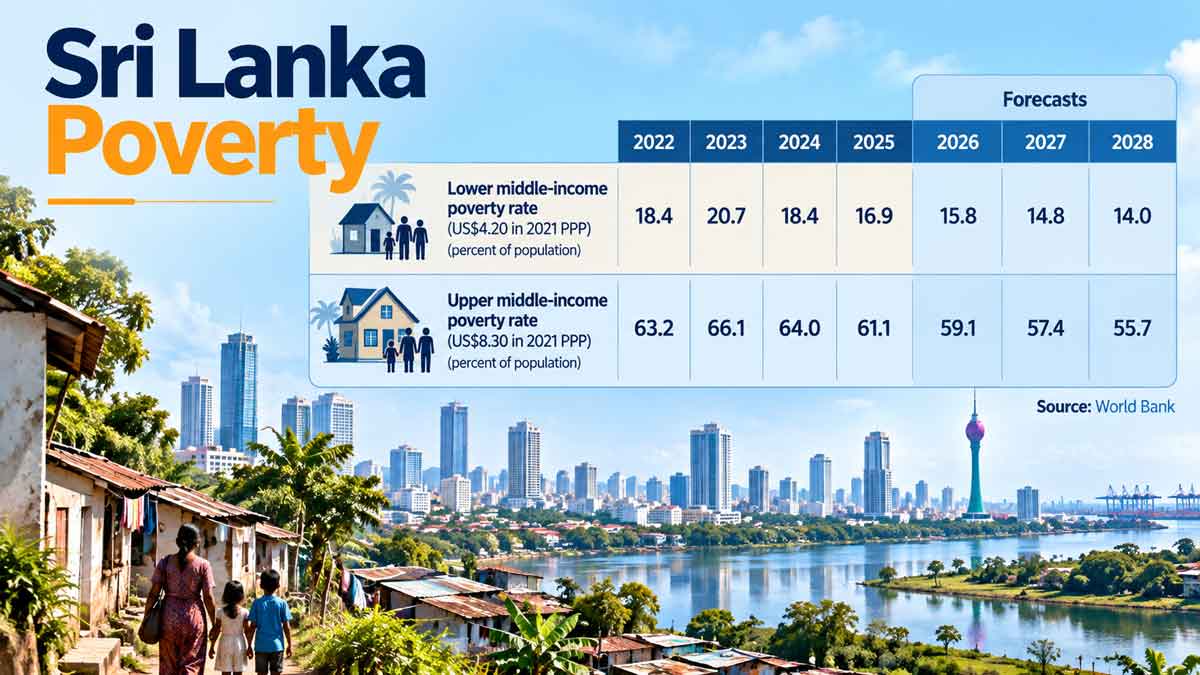
Poverty (4.2 dollars a per day) was estimated at 16.9 percent in 2025, down from 20.7 percent in 2023,in the wake of currency collapse from 184 to around 300 but was still below 11.5 percent in 2019.
As real wages collapsed from the monetary depreciation created by the central bank, many families skipped meals, girls stopped going to school as they could no longer afford sanitary pads.
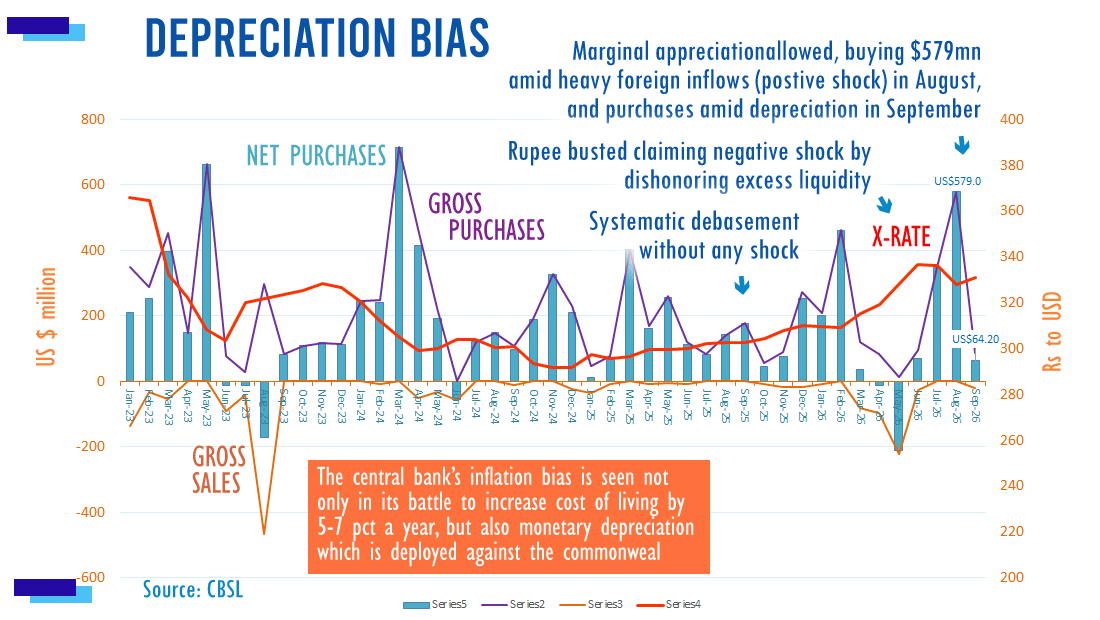
The central bank again collapsed the rupee 2026, as it repudiated its own note issue, under 'flexible' exchange rate, where all monetary policy errors which kills the credibility of the currency is cleared by devaluation.
Meanwhile the World Bank report said labor market conditions softened in the first half of 2026, with labor force participation falling to 49.2 percent in the first quarter.
"Growth in real wages also stalled, particularly among formal sector workers," the World Bank report said.
Labor market conditions softened in the first half of 2026, with labor force participation falling to 49.2 percent in the first quarter. Growth in real wages also stalled, particularly among formal sector workers
Cheating with Inflation Target
The belief by inflation-biased central bankers that rising cost of living brings about growth comes from cheated workers who have not correctly anticipated the loss of real wages in wage negotiations due to wrong 'inflation expectations'.
"Inflation thus can never be more than a temporary fillip, and even this beneficial effect can last only as long as somebody continues to be cheated and the expectations of some people unnecessarily disappointed. Its stimulus is due to the errors which it produces," explained Friedrich Hayek, who won a Nobel Prize in 1974 shortly after macro-economist collapsed the Bretton Woods, triggering Great Inflation.
"It is particularly dangerous because the harmful ,aftereffects of even small doses of inflation can be staved off only by larger doses of inflation."
The doctrine that inflation reduces unemployment was championed at first at Cambridge University (Keynes) then picked up at Harvard (Alvin Hansen) and taken to new heights at MIT (Paul Sameulson).
In the run up to the Housing Bubble, the doctrine was revived initially as 'reflation' by academic inflationists including Joseph Stiglitz and Ben Bernanke and got boost through stimulus, quantitative easing, and abundant reserve regimes (single policy rates) after its inevitable collapse.
After nearly two decades of heedless spending for stimulus, several industrial nations including the US, the key promoter of inflationist policy in this century, is heading towards a debt crisis as did Britain in the 1970s from so-called Cambridge economics.
Malinvestments
The falling wages may boost profits at companies who may invest thinking that a particular business, which would not have been very profitable without the central bank's inflation, appear to be good bets.
The principle of historical costs no longer applies and new inflation adjusted accounting have to be devised to make sense, as macro-economists succeed in their quest for high inflation.
"The basis for all business planning would soon lose all meaning," Hayek explained. "Real costs, profits, or income would soon cease to be ascertainable by any conventional or generally acceptable method."
Eventually demand falls off as inflation spikes and the credit system collapses, either triggering an inflationary collapse, hyperinflation or deflation if breaks are applied in time. Business failures and bad loans rise as a consequence of the previous inflation triggered by macro-economists.
As workers strive to demand full or partial loss of their wages, especially from food and energy price hikes which are excluded from 'çore inflation' by inflationists, the macro-economists turn on the workers and blame them for wage-price inflation.
Either way there are large job losses from the original inflation.
Driven From Their Country of Birth
In Sri Lanka, there is large out migration to countries without a policy rate in the Middle East, when the central bank succeeds in its flexible inflation targeting and flexible exchange rate, leading to a faster fall in unemployment and a quicker recovery in the economy as remittances flow in.
Skilled workers who already have a job may also leave and macro-economists make it difficult to make ends meet, as 'inflation expectations' have turned out to be wrong.
In 2026 the inflation expectations of government contractors and medicine suppliers have also turned out to be wrong.
"When incomes don’t keep up with rising prices, living standards fall and poverty increases," explained Ravi Rathnasabapthy, in an essay on the effects of central bank's inflation target ahead of a periodic revision of the central banks inflation target, Rethinking Inflation Policy in Sri Lanka : When Prices Rise Faster Than Incomes.
"Inflation also affects different people in different ways based on the nature of their employment and spending patterns.
"It may take many years for incomes to catch up with rising prices, particularly housing which can become unaffordable.
"If inflation keeps rising, there may never be a full catch-up, creating permanent gaps in the economic well-being of people.
"Older people whose savings are decimated may never be able to recover their living standards."
The World Bank report shows that even six year after the aggressive rate and SRR cuts, wages are still below 2019. Anecdotal evidence show that wages in some sectors measured in US dollar terms are below 2015 levels.
"The central issue is not whether Sri Lanka should pursue low inflation in the abstract, but whether the present inflation target protects ordinary households from a persistent erosion of real income," W A Wijewardene, who ran monetary policy in Sri Lanka as a housing bubble collapsed and civil war intensified, avoiding default and responded to the essay.
"Ravi Ratnasabapathy’s argument is strongest when read through that distributional lens: inflation is not neutral in practice, and both loose and tight monetary conditions can redistribute income in ways that favour the financial sector over wage earners, depositors, borrowers, and small businesses."
Before the central bank was set up and started creating forex troubles and amplifying external shocks, Sri Lanka was a stable country without a policy rate that imported labour and made outward remittances. As inflationary policy picked up, quotas were set for outward remmittances.
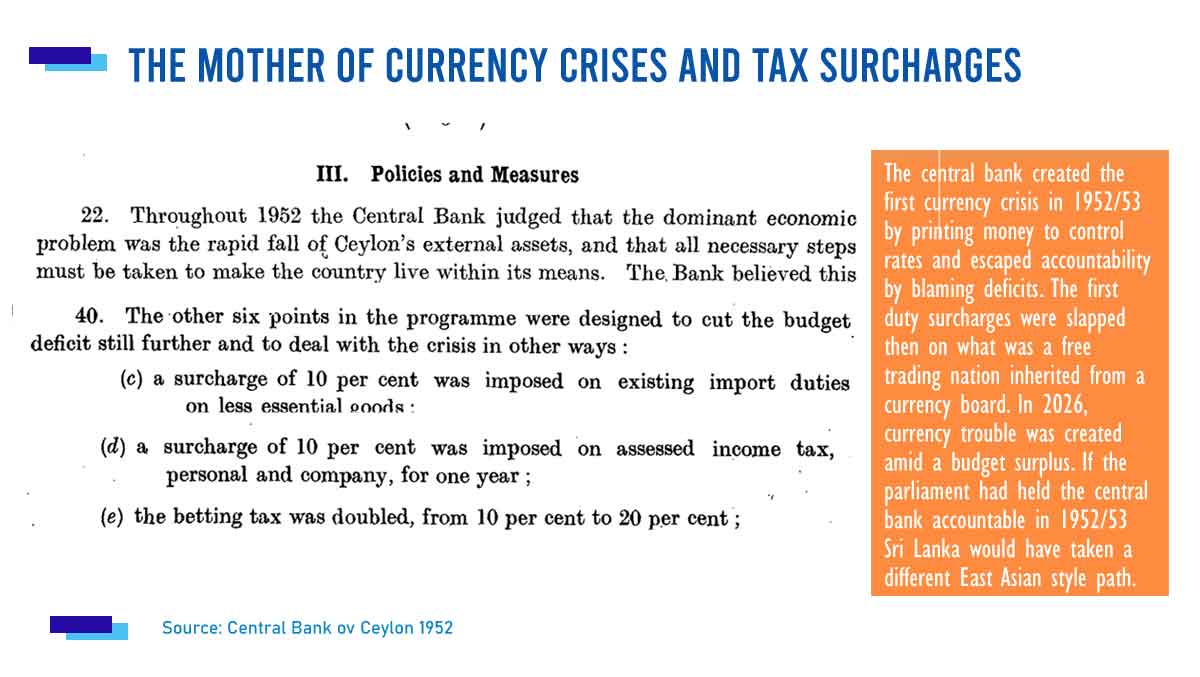
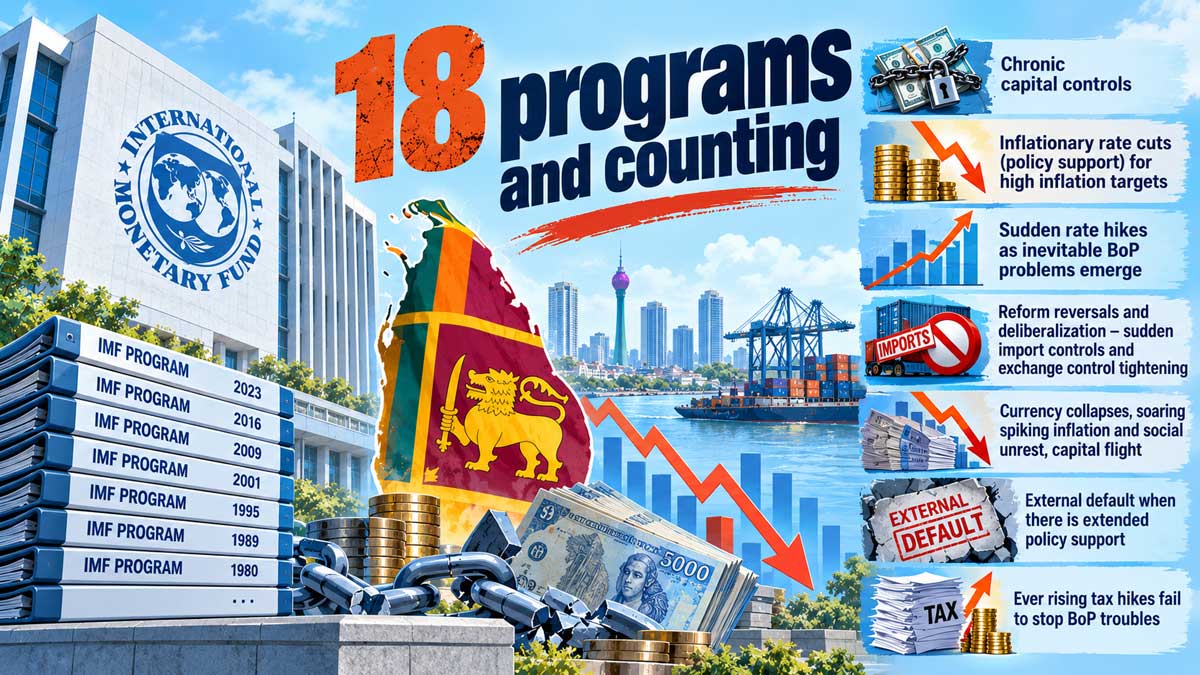
THE BEGINNING : Sri Lanka's central bank began deploying inflationary tools and triggered the first external crisis from 1952, leading to higher taxes and trade controls, kicking off the de-liberalization of the country and social unrest.
The first crisis that led to Sri Lanka's de-liberalization through import duty surcharges and tightened exchange controls was created by the central bank in 1952.
At the time, the term 'rate cut' was not invented and inflationary policy was created through more blunt means.
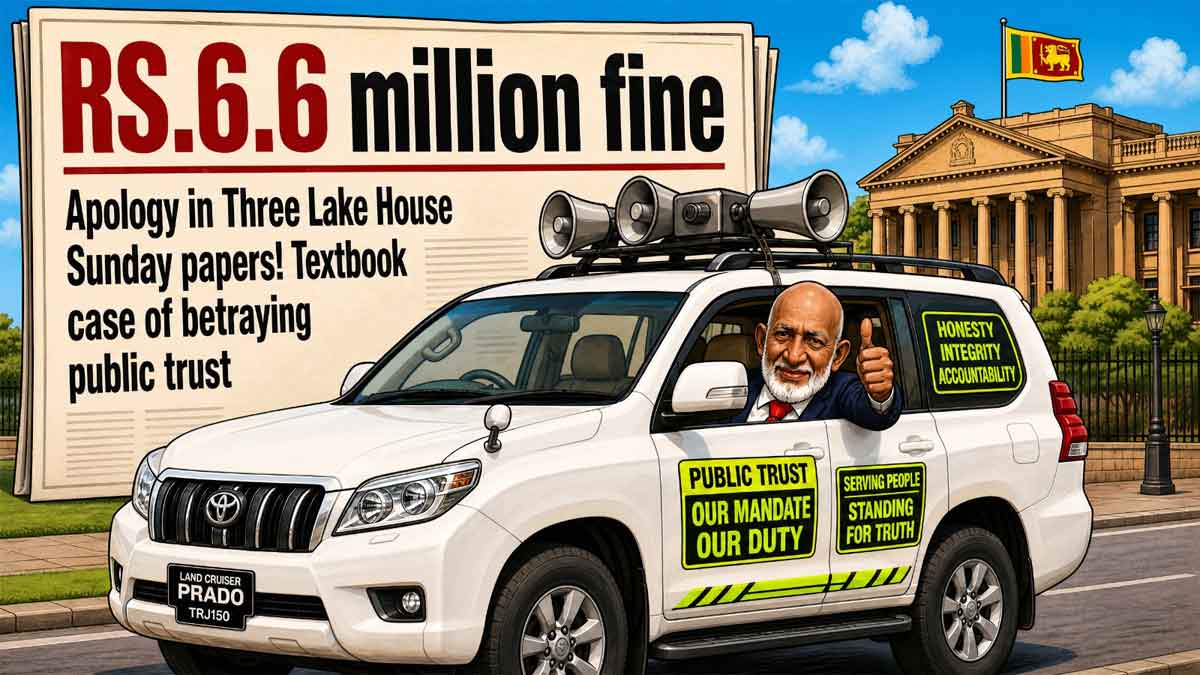
There has been no accountability for the central bank for exceeding its already high inflation target under cover of which the agency has triggered currency crises and excessive foreign borrowings from 2015 in particular.
Instead the central bank won powers from the government to trigger high inflation for another three years shortly after vehicle import duties were hiked, LTV ratios were lowered, and exchange controls tightened in a throwback to 1952 and other currency crises.
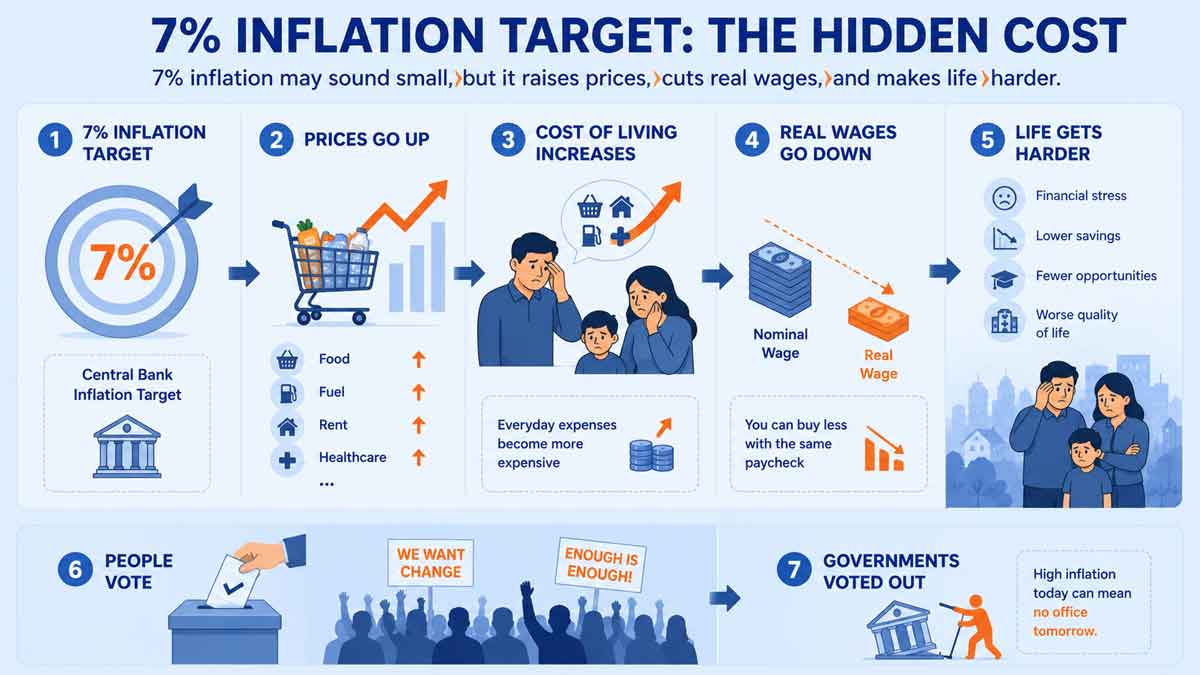
Allowing annual 7 percent inflation, especially after it was exceeded shows the reflection of grip that inflationists have on the Sri Lankan polity, and which led to the first default and persistent inflation, and exchange and trade controls, observers say.
Inflation also destroys lifetime savings in the provident funds and bank deposits, destroying capital which can create future growth and jobs as capital expenditure escalate suddenly.
The electorate does not know that their economic troubles and lack of private investment comes from the inflation bias of the macro-economists them blame elected governments.
Macro-economists may also blame the lack of reforms, though the most reformist government in Sri Lanka - since perhaps the Colebrooke-Cameron reforms - were discredited by depreciation that came in the wake of the IMF's Second Amendment to its Articles in the 1980s. (Colombo/Oct07/2026)

| 3 month bill | 9.25% | 5bp ▲ |
| 12-m bill | 9.95% | 2bp ▲ |
| Gold (Ounce) | $4602 | - - |
















Comments
Be the first person to comment and join the debate