
Share your email and we'll share the latest news
Exclusive economic intelligence, political and business coverage
Monday, October 26 2026
Monday, October 26 2026
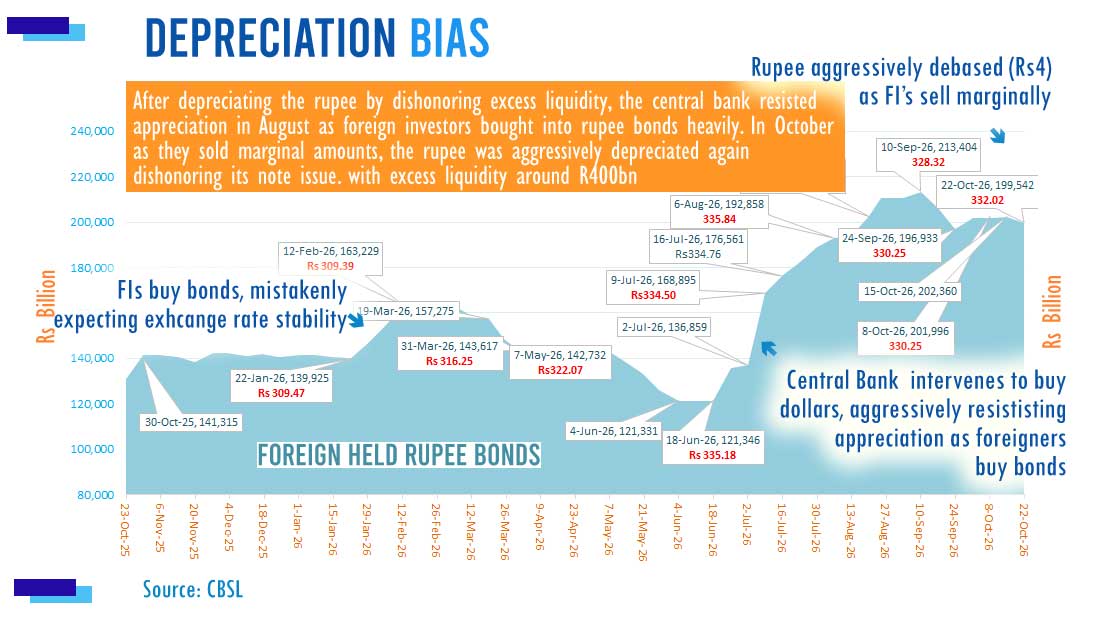
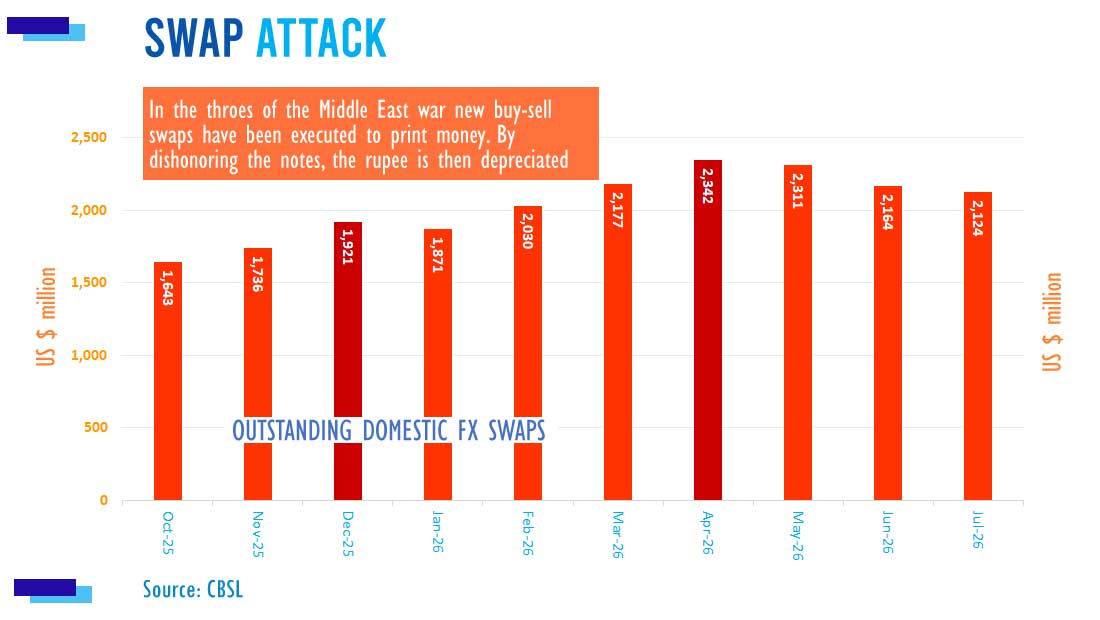
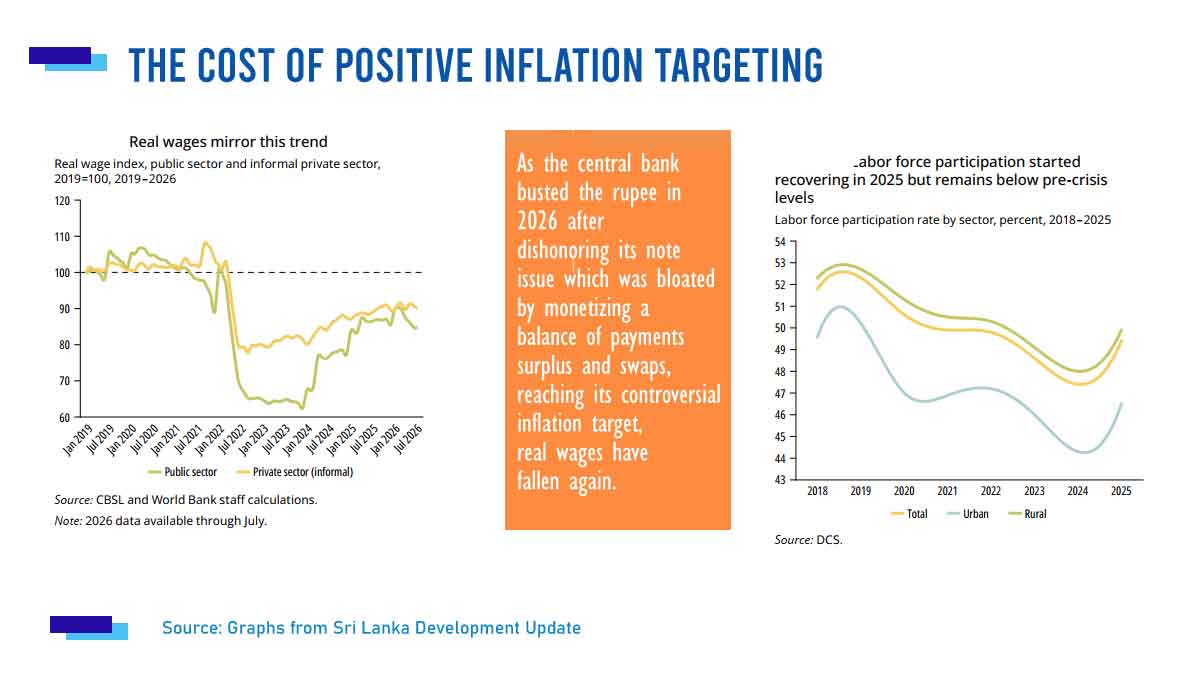
MONETABRIEF – Sri Lanka's central bank has depreciated the rupee dishonoring its note issue, which has been bloated by previous dollar purchases, as foreign investors exited rupee bonds in marginal amounts.
Foreign investor holdings in rupee bonds peaked at 213 billion rupees on 10 September 2026, when the rupee was at around 328 to the US dollar.
Two weeks later, the rupee has been debased to 332 to the US dollar. The central bank previously bloated its note issue buying dollars, as foreign investors aggressively bought into rupee bonds.
The rupee was kept at 335 to the US dollar as foreign investor holdings climbed from 121 billion rupees to 192 billion, showing the inflation and depreciation of the central bank, as it monetized a balance of payments surplus aggressively.
Interest rates then fell, showing why a pegged exchange rate central bank which intervenes in forex markets to build reserves (exchange rate policy) cannot also conduct monetary policy exposing a key flaw in the operating framework of so-called flexible inflation targeting.
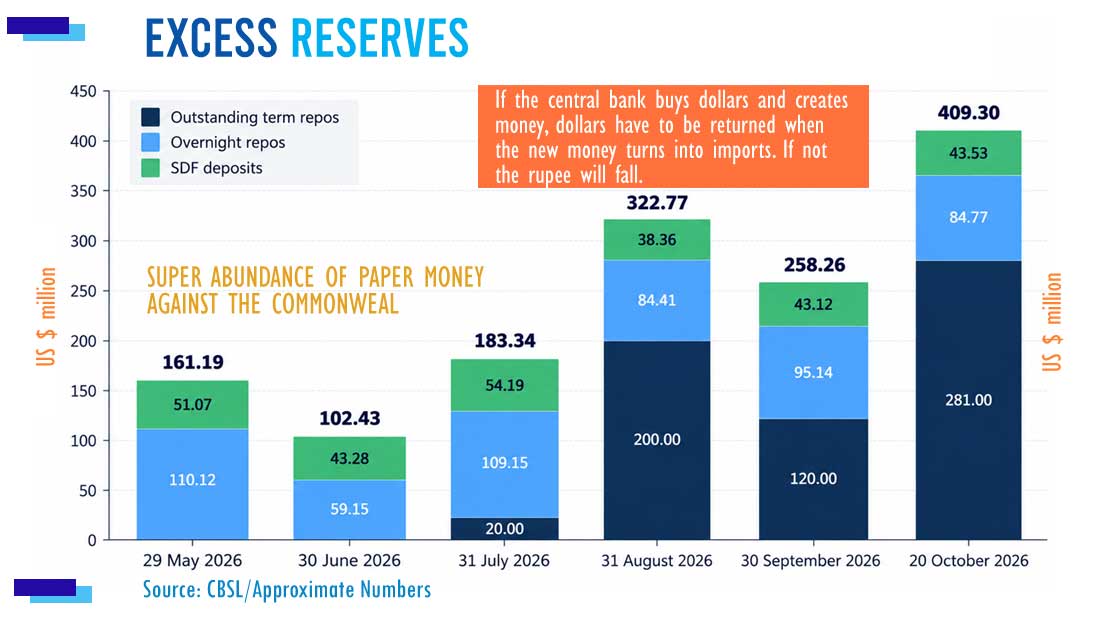
The excess liquidity from monetizing the BoP rose to almost 400 billion in October and it was partially sterilized overnight and through term repos.
When foreign investors exit, banks can terminate the term repos and use the liquidity to buy the bond from exiting investors without crowding out other credit and imports
To maintain monetary stability and social cohesion the central bank then has to return the dollars and honor the new money it created and left unsterilized or partially sterilized.
When it dishonors the notes, under flexible exchange rate doctrine, the rupee the rupee depreciates.
From 2015 to 2019 after printing money by outright purchases of bonds, violating a bills only policy and monetizing Hambantota Port sales proceeds the rupee was debased and foreign investors were put to flight. Then foreign investors were blamed for the instability.
Analysts and the Committee on Public Finance has called for the Treasury to buy dollars to build reserves to prevent macro-economsists from monetizing the balance of payments, which can then be dishonhored to debase money and push up the cost of living.
For many decades the central banks blamed the budget deficit for foreign exchange troubles, but the note issue was dishonored to depreciate the rupee in 2026 amid a budget surplus exposing a 74 year old myth spread by macro-economists against.
Then an 'external shock' was blamed as exchange rates in Dubai, Qata, Oman and Saudi Arabia, where monetary authorities follow classical economics remained rock solid.
The 333 to the US dollar level was the intervention rate the central bank used during the currency collapse of April to June, after dishonoring the notes from 309 to the US dollar in January. How the rate has been arrived at has not been disclosed.
Dollars were sold at the rate without an active spot market.
There have been calls for many years to curb the central bank's discretion which has been institutionalized under 'flexible' exchange rate and 'flexible' inflation targeting, as such practices against democratic norms which require the state to operate under predicable rules.

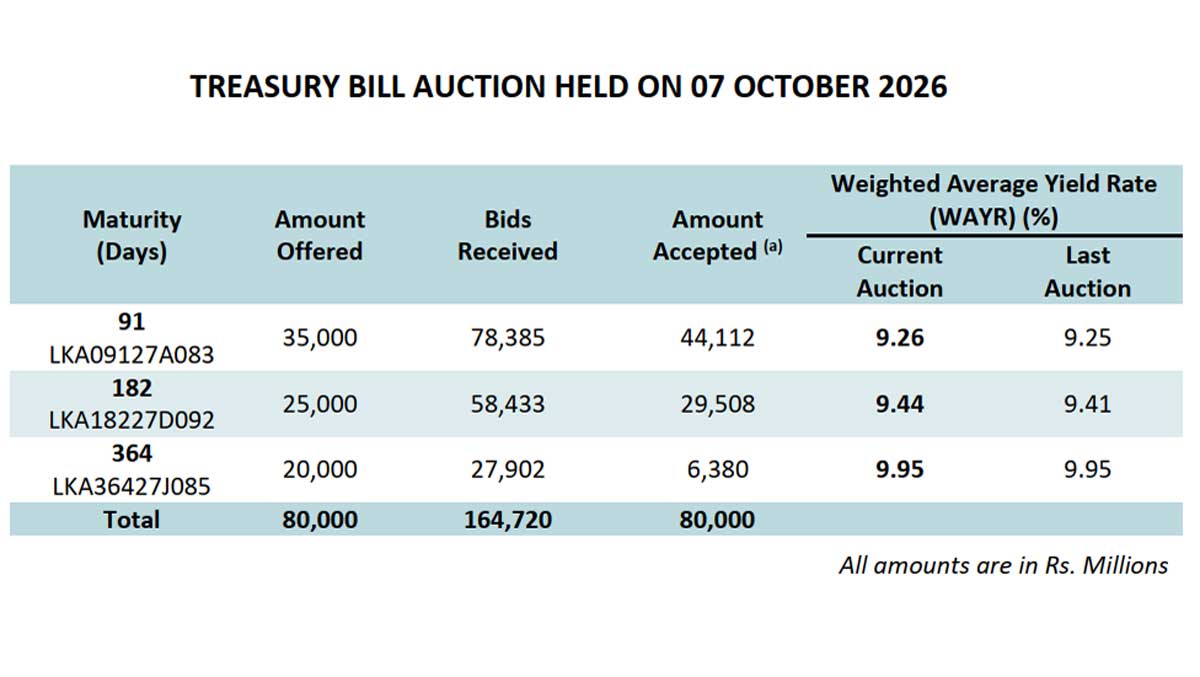
| 3 month bill | 9.26% | 1bp ▲ |
| 12-m bill | 9.95% | 2bp - |
| Gold (Ounce) | $4187 | - ▼ |




















Comments
Be the first person to comment and join the debate