
Share your email and we'll share the latest news
Exclusive economic intelligence, political and business coverage
Wednesday, October 21 2026
Wednesday, October 21 2026
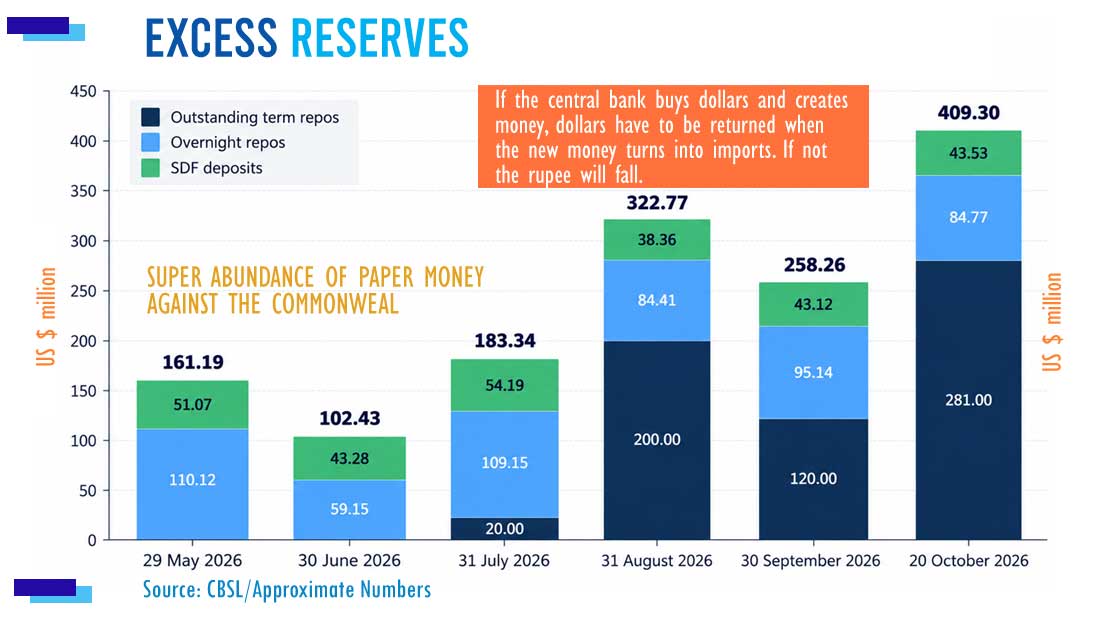
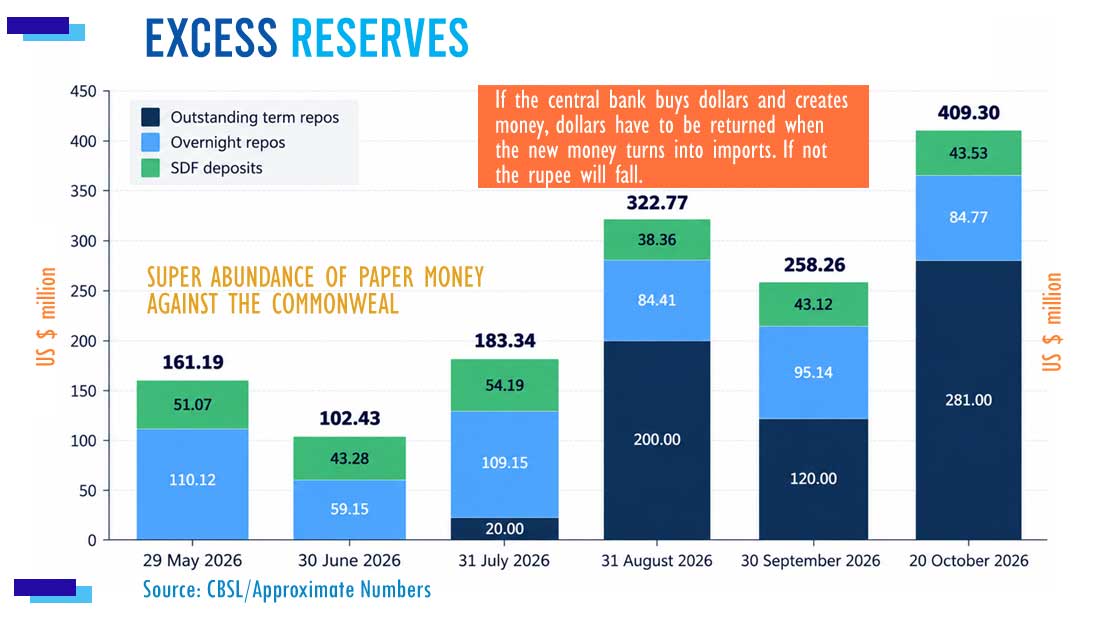 EXCESS MONEY : Redundant or excess money, can be dishonored by the cenrtral bank to 'safeguard reserves' and bring down democratically elected governments with depreciation
MONETABRIEF – Sri Lanka's rupee closed at 331.75/85 to the US dollar in the spot market Tuesday down from 331.60/70 a day earlier, while the excess liquidity in money markets rose to about 409 billion rupees.
The rupee closed around 331.25/35 Friday.
Overnight liquidity deposited the central bank's SDF window was 78.3 billion rupees and another 50 billion rupees was placed on overnight right repo.
The central bank has separately done term repo deals of 281 billion rupees, which banks can refuse to roll over and give investment credit, which will generate imports.
Monetizing the BoP
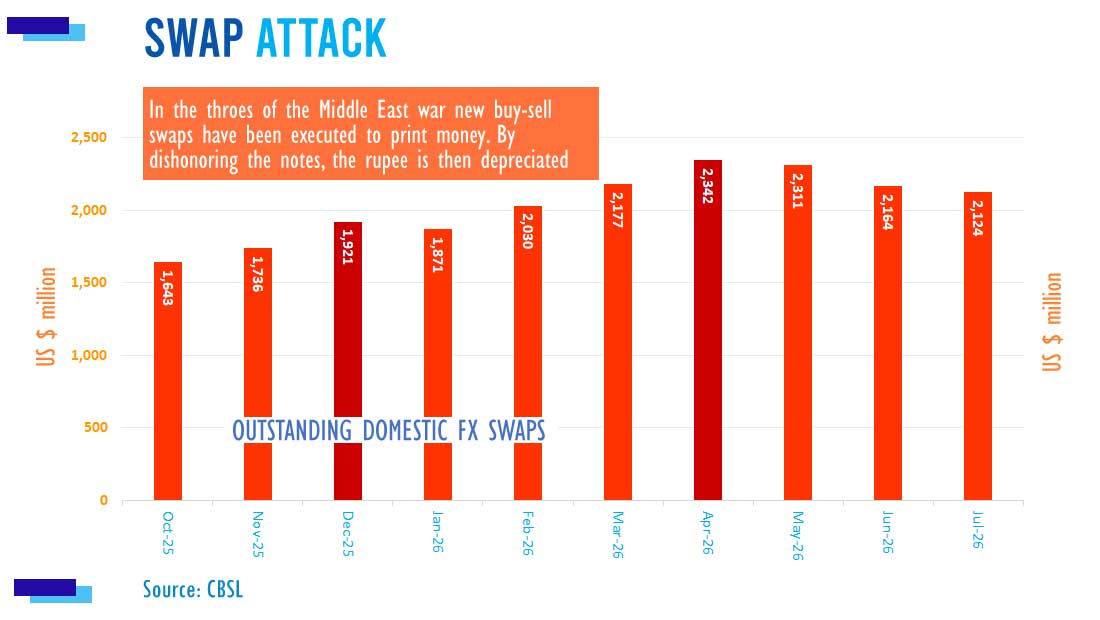
The liquidity was built with dollar purchases (monetizing the balance of payments), a pegging operation, and money printing fx swaps with banks.
If the liquidity remains unsterilized or partially sterilized with term repos, the central bank has to make unsterilized sales (dollar have to be returned to the owners of the new rupees) to prevent depreciation.
If the central bank dishonors the notes, like a businessman without honor that issues a 'rubber checque' which bounces, the rupee will depreciate.
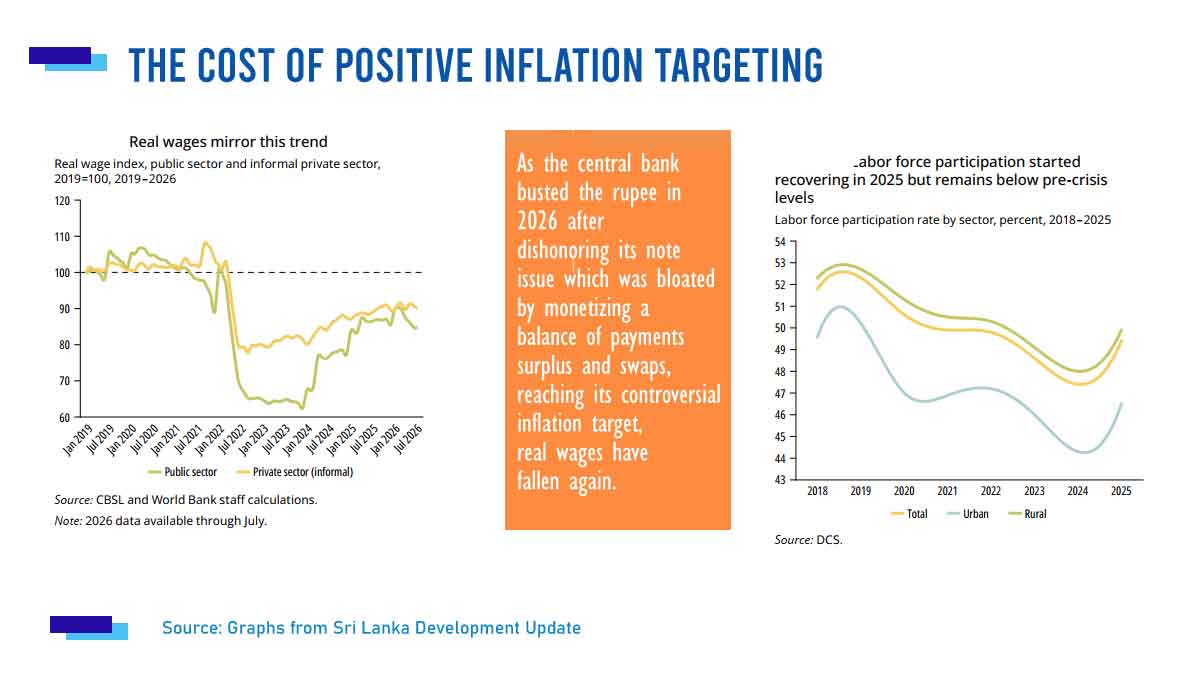
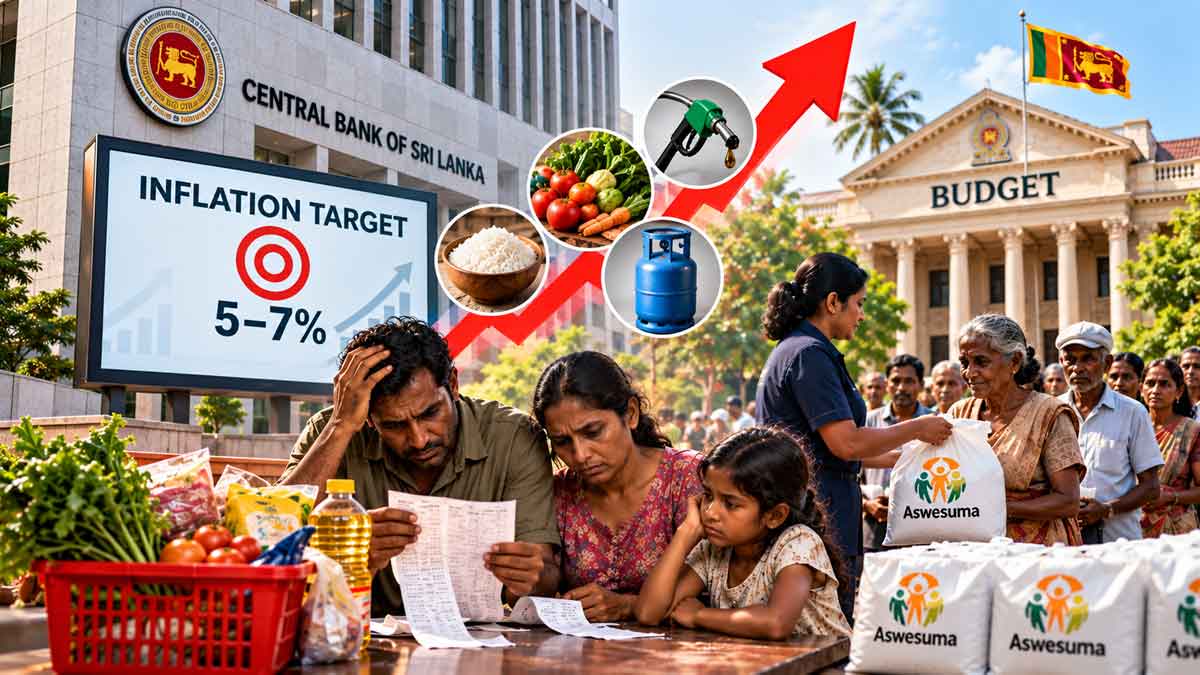
By dishonoring the notes when they turn into imports the central bank busted the rupee over the past year from 300 to 330, pushing up inflation by over 8 percent so far.
The central bank can dishonor the excess money when it turns to imports and escape accountability for defaulting on the rupee using its flexible exchange rate doctrine.
Loss of Honor
Before macro-economics, classical economics was based on moral philosophy, not inflating reserve money and dishonoring notes, analysts say.
The problem started with the IMF's Second Amendment to its Articles from the early 1980s, shattering JR Jayewardene's economic reforms with high inflation and social unrest.
Sri Lanka defaulted in 2022 with similar policies.
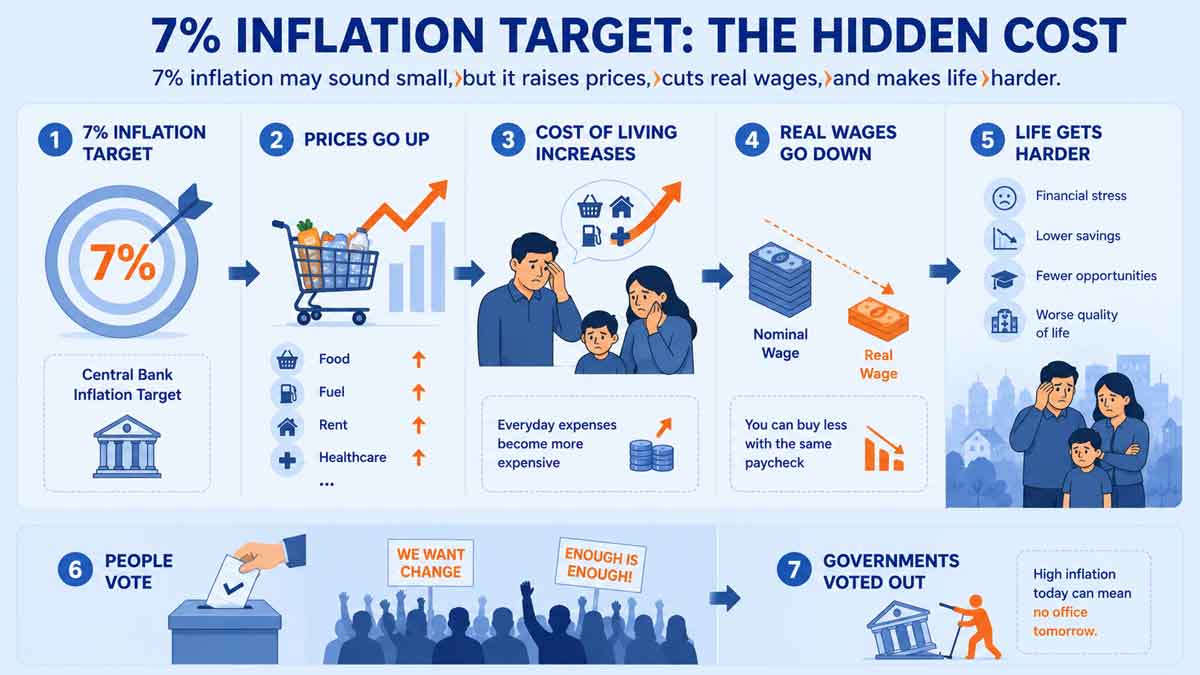
Positive inflation targeting also involves cheating workers with 'sticky wages', as macro-economists make businesses believe that there are artificial profits in the gap between the time that wages catch up with commodity prices.
However people then vote against elected governments and take to the streets.
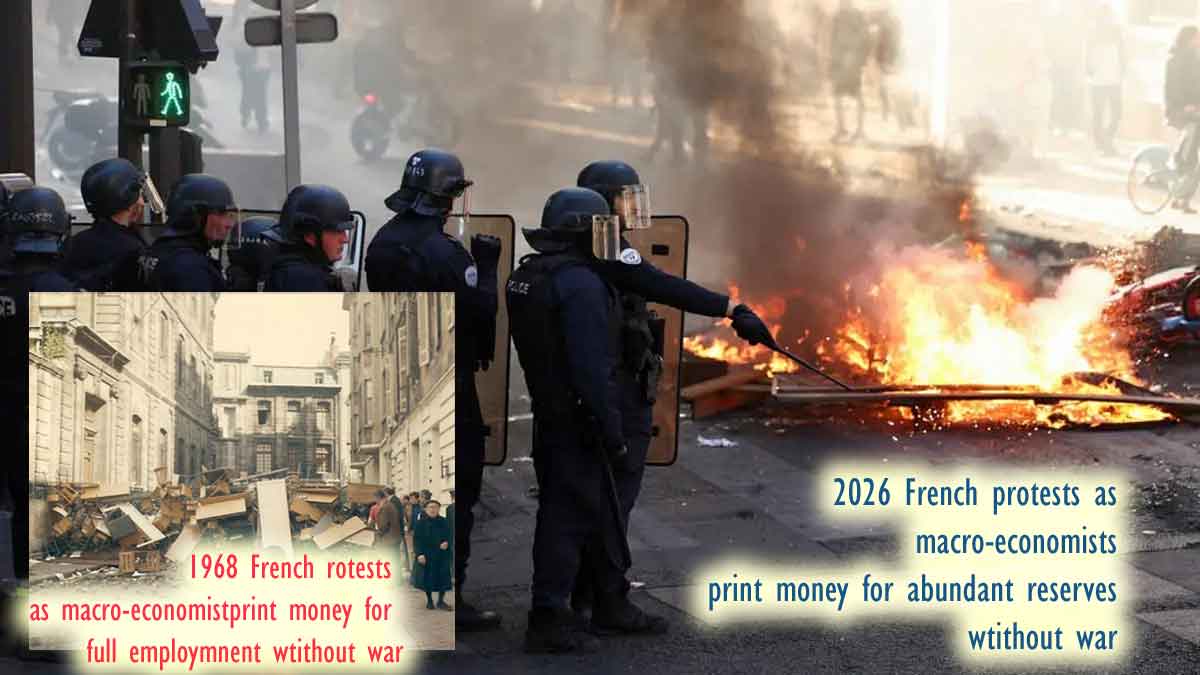
Europe is now shaken with protests due to high inflation from similar policies involving the single policy rate and abundant reserve regimes (excess reserves).
Classical economists decried such monetary operations as 'super abundance of paper money'.
Sri Lanka's forex shortages, external trouble and high inflation stems from a rejection of economics in Anglophone universities and the revival of Mercantilism by John Maynard Keynes.
Cutting rates to satisfy the beliefs of central bankers then led to external trouble, for which they escaped accountability by de-liberalizing the economy through trade and exchange controls.
However since the operating framework is wrong (buying dollars and not returning them in Sri Lanka now) or printing money without dollars, countries continue to have high inflation and monetary debasement, overturning the social fabric.
No Longer of 'Academic Interest'
The way the rupee was busted in 2026 by the central bank without active inflationary domestic operations and only monetizing the balance of payments is rare in this country.
"The other possible sources or inflation, namely, expansion of money through balance of payment surpluses.... are but maters of academic interest," classical economist B R Shenoy said in a 1966 economic report for then Ceylon, written for J R Jayewardene, when back-to-back IMF programs started.
At the time monetizing the budget deficit by the central bank was blamed for BoP troubles. In the past the central bank usually monetized maturing debt in auctions (from past deficits) or engaged in inflationary open market operations to suppress rates and create external trouble and trade controls.
Opposition legislator Harsha de Silva, an economist who originally took the issue of monetizing domestic public public, over a two decades ago, has questioned why the Treasury is not buying dollars.
Treasury buying dollars will prevent the inflation of the note-issue and deny the opportunity for the central bank to dishonor the notes and create external trouble.
When the central bank dishonors the unsterilized notes, described by 19th century classical economists as 'redundant' to 'safeguard reserves' under IMF tutelage, debasing money, democratically elected governments are discredited and eventually overturned.
Ironically opposition members of the Parliaments Committee on Public Finance, are pushing to maintain monetary stability, though the anti-incumbent operating framework of the central bank can turn the electorate against the current government, as it did to the current opposition in 2015-2019, observers say.
Sri Lanka's central bank is now deliberately creating monetary instability with a high inflation target and advocating subsidies to reduce impoverishment.
The IMF has also supported the inflation bias. (Colombo/Oct20/2026)

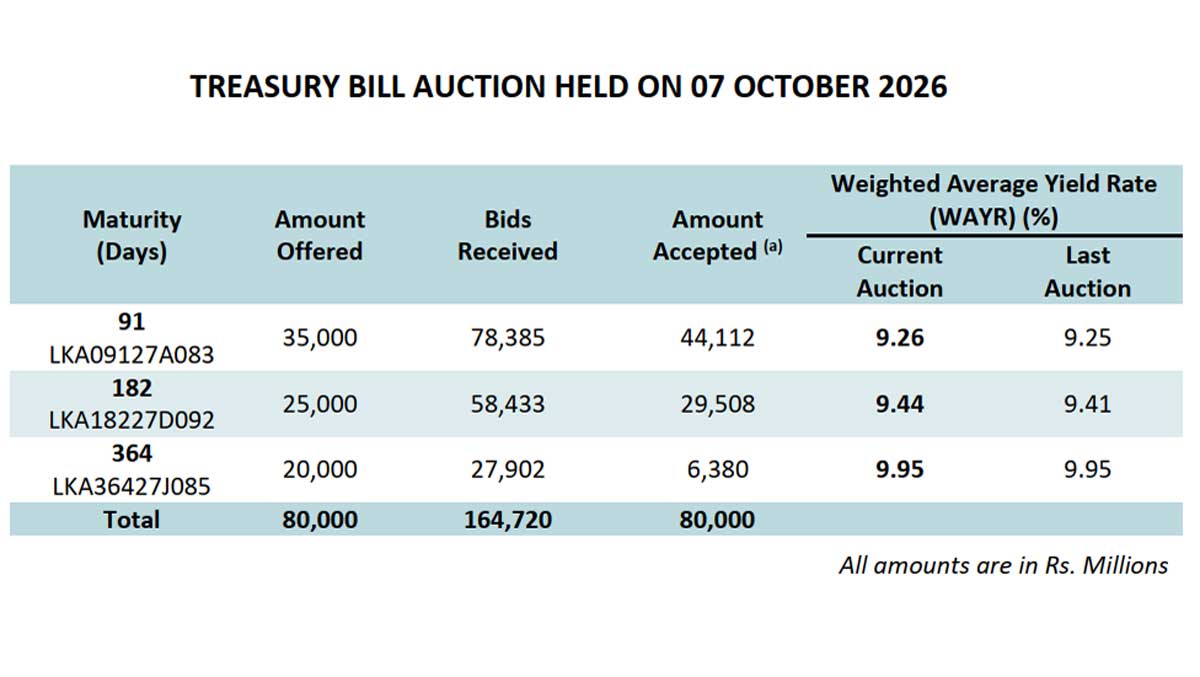
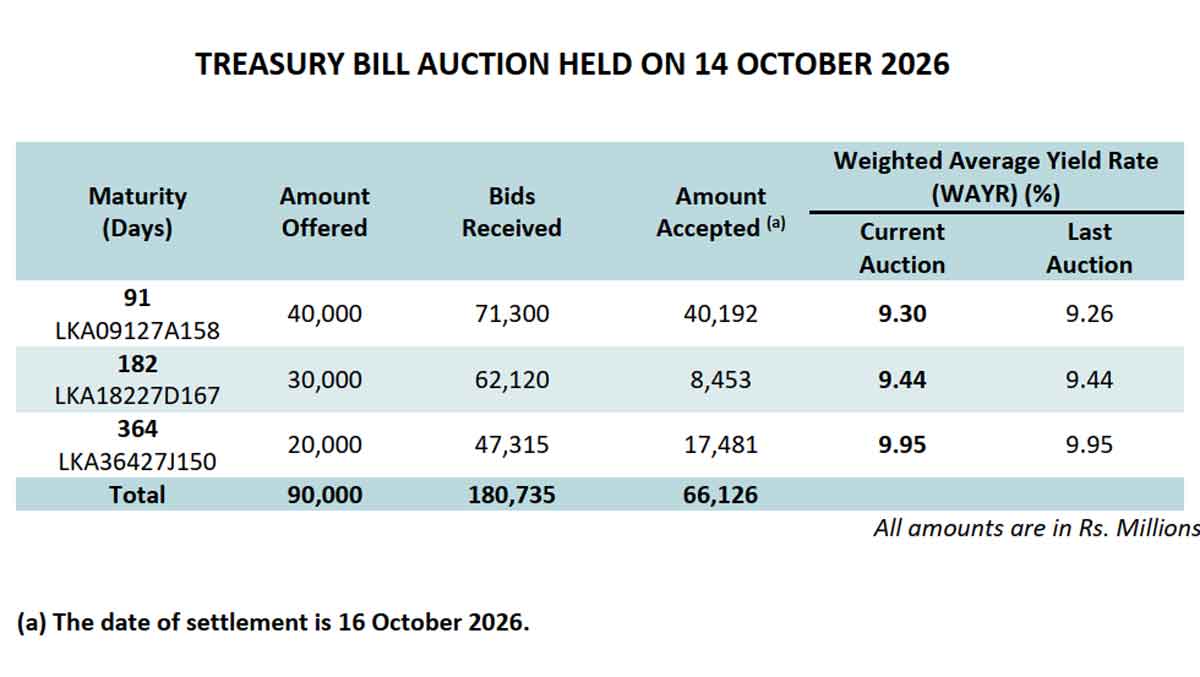
| 3 month bill | 9.26% | 1bp ▲ |
| 12-m bill | 9.95% | 2bp - |
| Gold (Ounce) | $4187 | - ▼ |










Comments
Be the first person to comment and join the debate