
Share your email and we'll share the latest news
Exclusive economic intelligence, political and business coverage
Monday, October 19 2026
Monday, October 19 2026

MONETABRIEF – Street protests in France which included students, have turned into riots with torched buildings and looting, recalling the Aragalaya in Sri Lanka after the worst currency collapse engineered by the central bank in its history.
The French protests are coming amid high inflation generated for years by macro-economists who have operated abundant reserve regimes (a single policy rate, created with excess liquidity).
They are among the worst since the May 1968 French civil strife, when macro-economists, mostly in the Anglophone West (US, UK) printed money to boost inflation, sending gold prices higher and collapsing the Bretton Woods system.
Mercantilism Corrupts Economics
The current abundant reserve regime and jettisoning the classical scarce reserve regime, was an invention of the Fed, after it fired the housing bubble in 2000 by trying to 'reflate' the US economy, as was the original policy rate/open market operations in 1920s that led to the Great Depression and currency collapses of the 1930s.
Though strikes against employers is the usual result of high positive inflation targeting, which is cumulative, the triggers for broader civil unrest and civil strife can outwardly manifest through young people through different triggers.
The protest are among the worst in France since 1968.
The 1960s saw severe corruption of economics with Anglophone economists (MITs Samuelson and Solow in particular) promoting stimulus on the doctrine that there was a trade-off between inflation and employment.
However the consequence of cumulative inflation is currency and economic collapses, default and eventual higher unemployment.
Unlike in pegged exchange rate regimes, floating regimes do not have currency crises, and macro-economists may be halted only in a debt crisis or default. Most Western nations that abandoned scarce reserve regimes for abundant ones are now in fiscal trouble as well.
The original paper that led to the trouble was written by Alan William Phillips of New Zealand (Phillips Curve) in 1958 with statistics defeating classical economic principles.
Inflationist Doctrine Revived with Potential Output
The spurious doctrine was revived as targeting potential output and high inflation target in Sri Lanka from 2015, which eventually led to sovereign default with the 2022 currency collapse and Aragalaya, and the new 2026 currency collapse.
The central bank recently openly admitting that it wanted high inflation to boost growth.
Ironically the central bank was supposedly given 'independance' to maintain stability not create external trouble and out of control inflation even higher than its controversial inflation target.
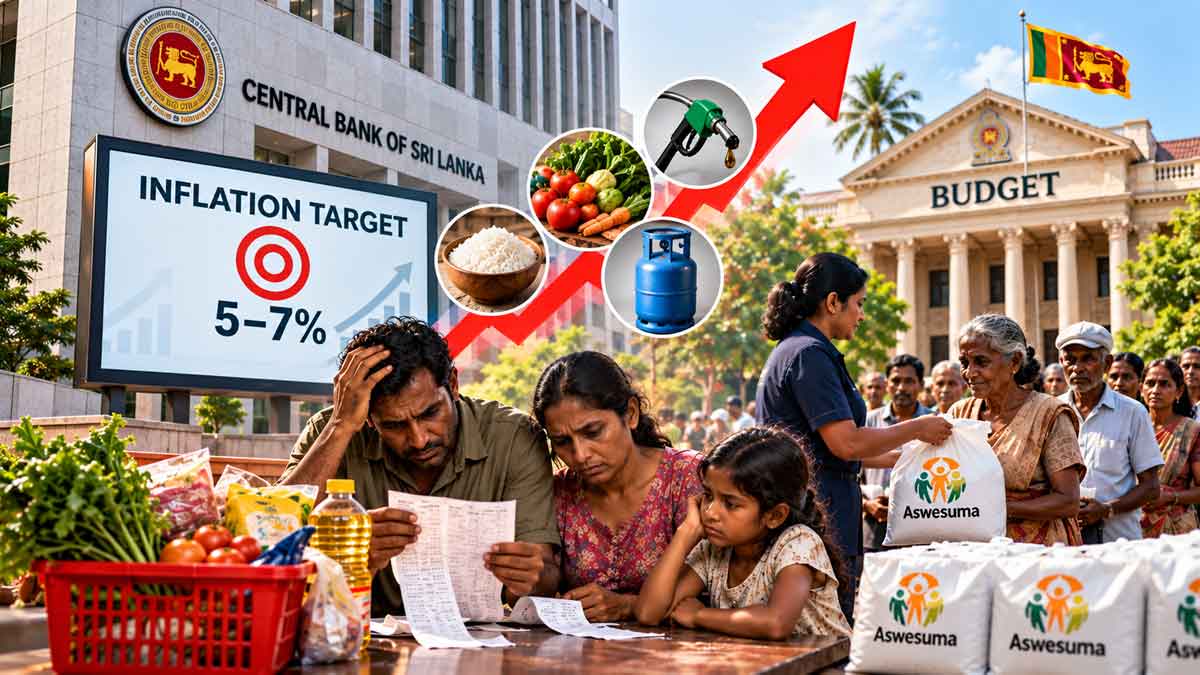
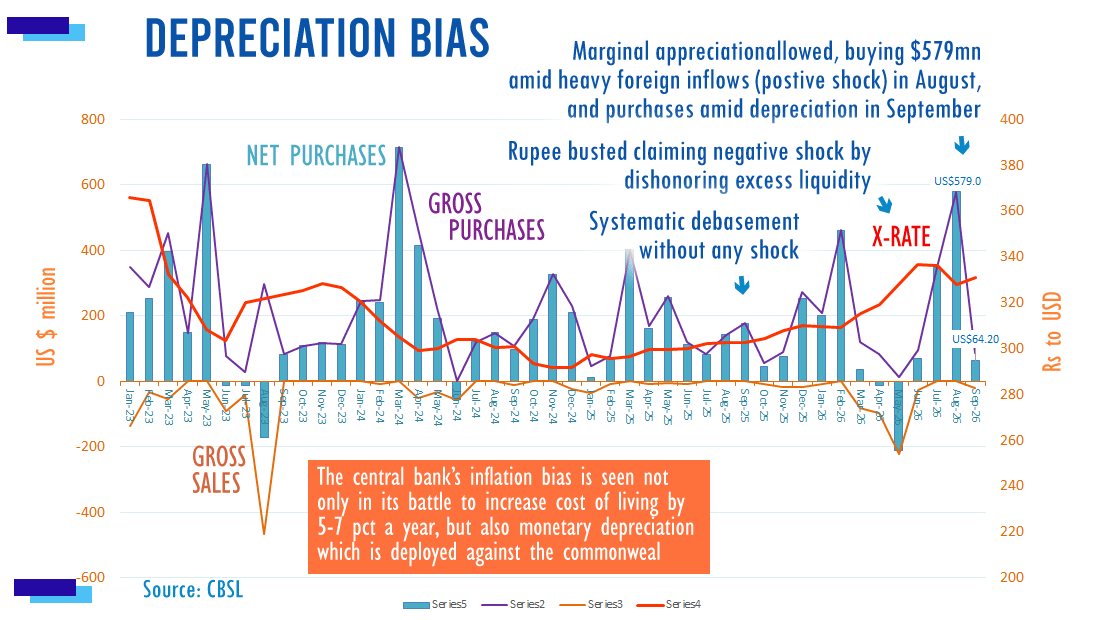
The 5-7 percent inflation target was renewed for another three years shortly after it amplified a shock from the Middle East war by busting the rupee to 330 from 300.
Ironically the 2 percent margin, through which it is allowed to escape accountability for exceeding the 5-percent target is called the 'accountability margin'.
There has been no punishment for macro-economists in Sri Lanka for creating 8 percent inflation.
1968 French Protests After Gold Price Soar
Though monetary knowledge in the French speaking nation was greater in the 1960s, compared to the Anglophone US and UK, it also got hit as the Federal lit a fuse under the Bretton Woods system.
In May 1968, France erupted in protests orginally triggered by students at Nanterre University, which evolved into a general strike involving leftists and broader civil unrest.
President De Gaulle left for a military base in Germany briefly as civil strife intensified, and wage hikes were negotiated.
France re-imposed exchange controls on May 31, 1968.
Inflation in France was 4.54 percent in 1968 and topped 6 percent the next year, but the underlying problem, like in 2026 had been festering for several years.
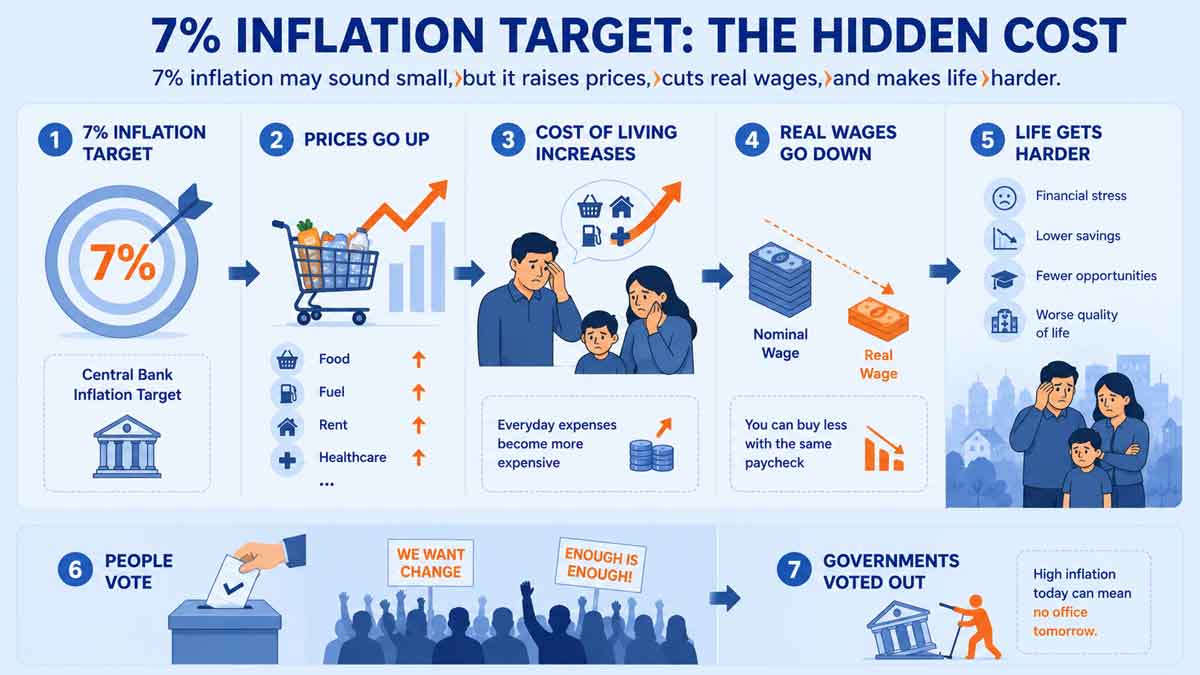
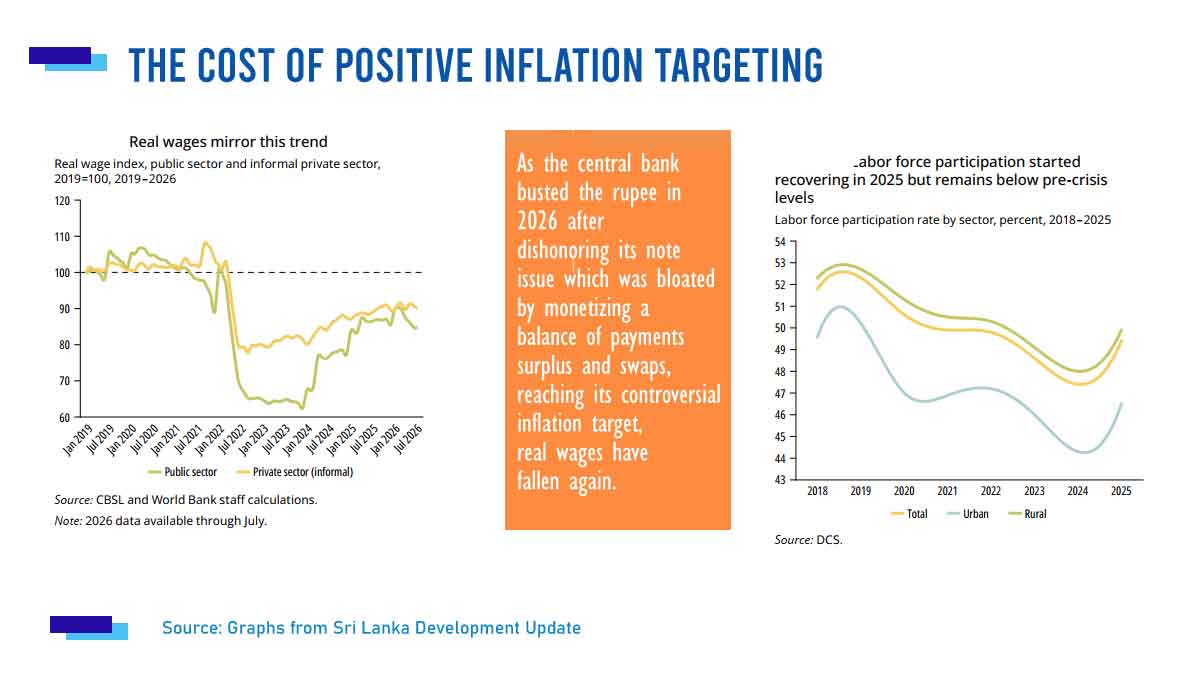
When wages do not match the inflation created by macro-economists, people turn against the government, not the central bank and macroeconomists who support expanding money and excess liquidity, which is what classical economists called inflation.
As the US continued to print money misled by macro-economists, from the early 1960s, disregarding the gold peg at 35 dollars, prices came under pressure worldwide.
The London Gold Pool collapsed in March 1968 gold hit 45 dollars before easing.
The London Gold Pool was created by macro-economists to keep 'official' central bank gold price at 35 dollar in a futile action.
The Bretton Woods collapsed two years later and gold and oil soared higher.
Sri Lanka by then had started to go to the IMF and the administration of Dudley Senanayake, which wanted to free trade, had to go for back-to-back IMF programs and pass the import control law.
Excess Liquidity and Single Policy Rates
Under the abundant reserve regimes/single policy rate in the Fed and ECB (now headed by Christine Largarde who was at one time in the IMF in Washington), gold is now 4000 dollars an ounce.
The IMF gave technical assistance to the central bank to calculate potential output, giving incentives from 2015 for the note-issue bank print money to 'close' the gap.
Macro-economists in Sri Lanka, cut rates and taxes to close an output gap triggering default in 2022 after triggering serial currency crises from 2015 by trying to target inflation without a floating rate. Unsurprisingly the anchor conflicts led to a currency collapse in 2026 as in 1960s France.
The IMF also gave technical assistance to the central bank for a single policy rate, despite the nation defaulting once and also for liquidity injections by trying to boost growth through 'policy support'.
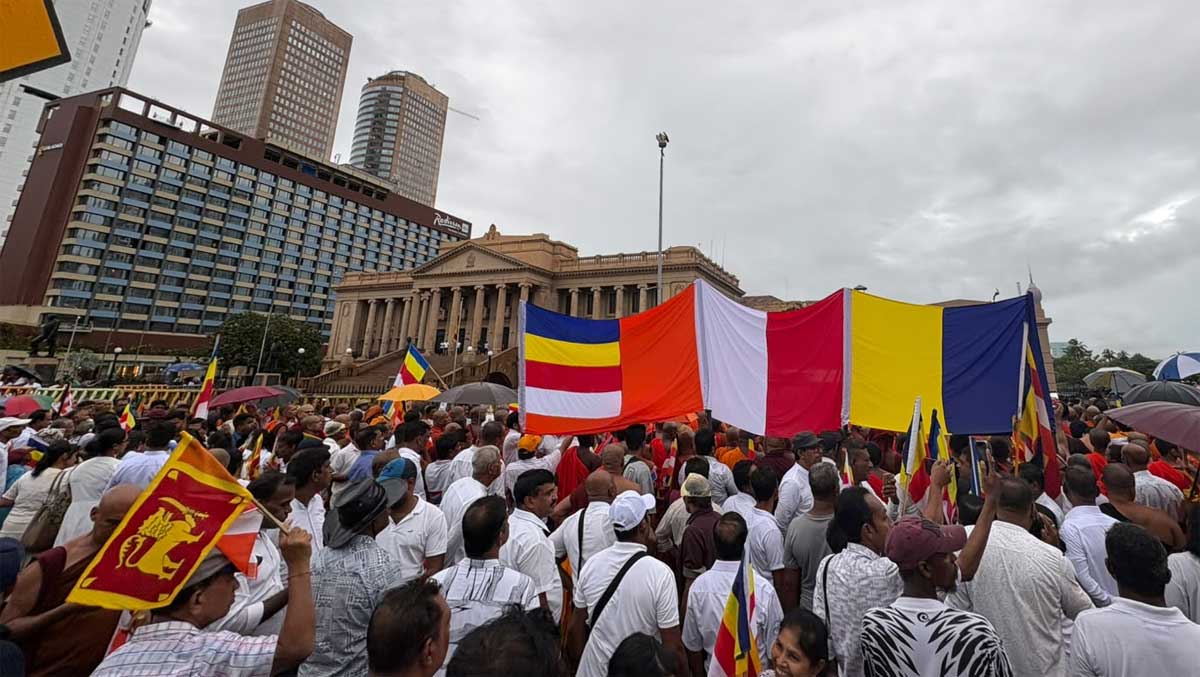
In Sri Lanka in 2026, there has been a resurgence of nationalism with some monks coming to the streets accompanied by protestors holding a lion flag sans the coloured lines signifying minorities.

Sri Lanka's 'Sinhala Only' Act was the result of inflation and stabilization crisis and high taxes that came after the first currency crisis triggered by the central bank from February 1952, which was blamed on deficits.
Europe has also seen a resurgence of nationalism under the high inflation of the ECB coming from the abundant reserve regime.
In Sweden however – where inflation is low and has been for some time – the nationalists lost ground in an election in September. (Colombo/Oct18/2026)

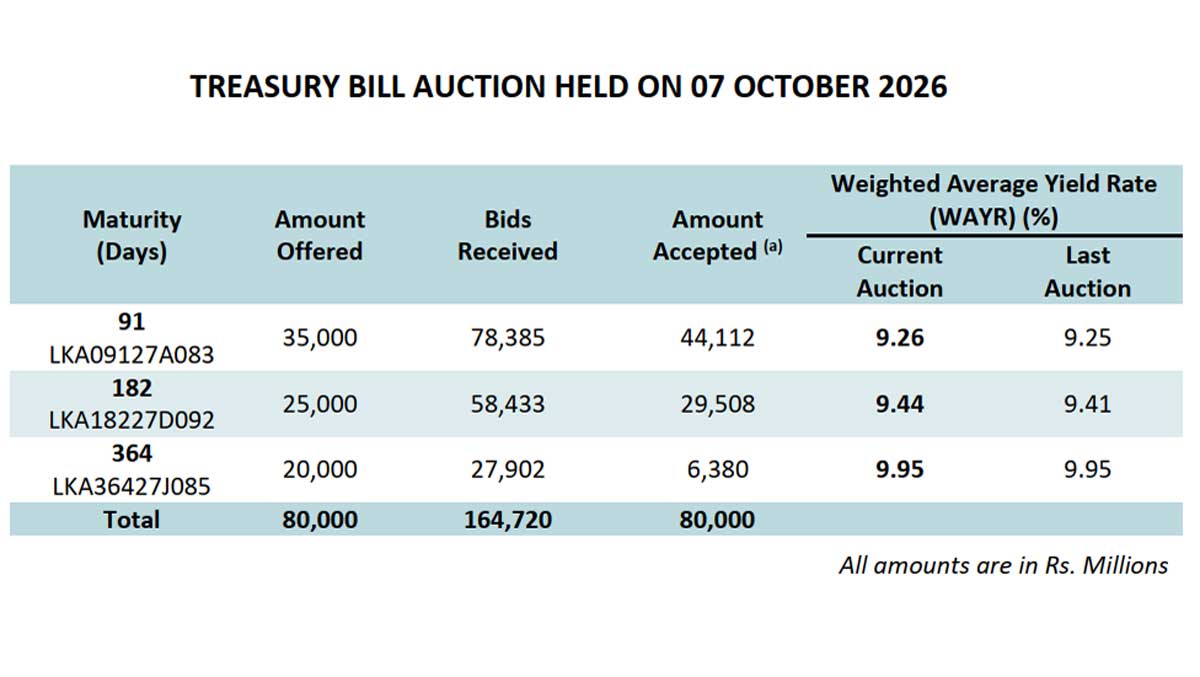
| 3 month bill | 9.26% | 1bp ▲ |
| 12-m bill | 9.95% | 2bp - |
| Gold (Ounce) | $4187 | - ▼ |














Comments
Be the first person to comment and join the debate