
Share your email and we'll share the latest news
Exclusive economic intelligence, political and business coverage
Thursday, October 8 2026
Thursday, October 8 2026
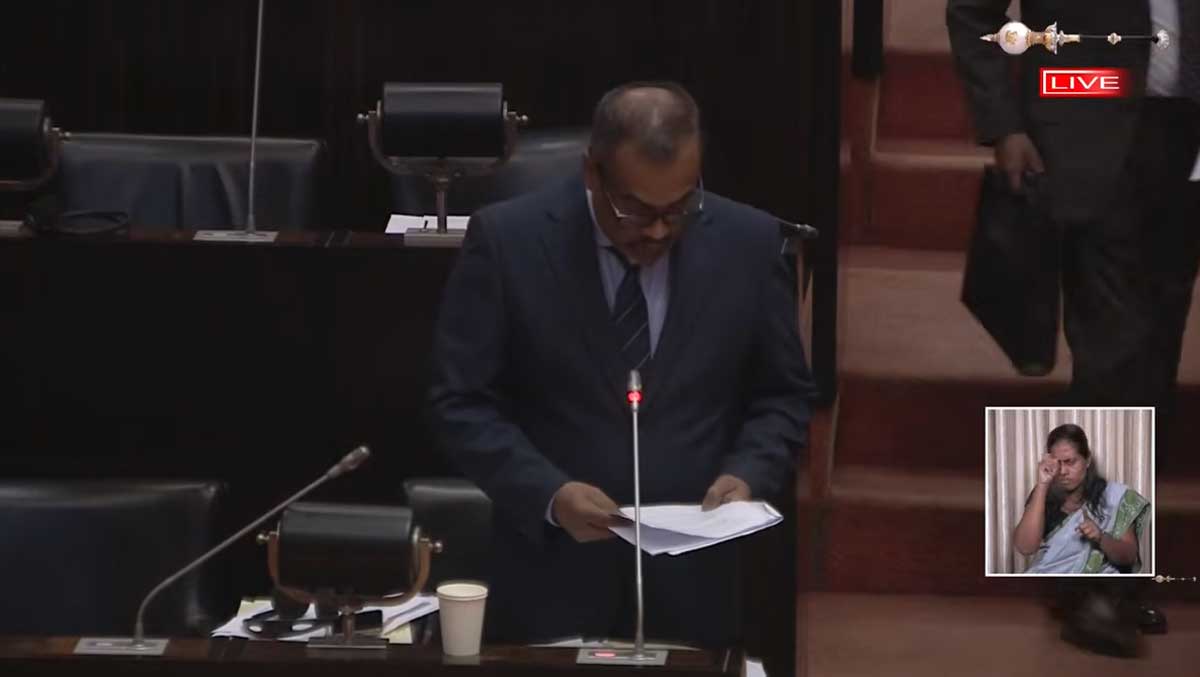
MONETABRIEF – Sri Lanka is discussing an "engagement model" with the International Monetary Fund when the current Extended Fund Facility involving recovery and reform ends, Deputy Finance Minister Anil Jayantha Fernando said.
"In parallel, discussions are currently underway regarding the options beyond the current programme, reflecting a shift from crisis-driven support towards a more sustainable long-term growth-targeted engagement model," Fernando told parliament Thursday.
The IMF has arrangements such as Post Financing Assessment (PFA) for countries that have big loans.
There are also non-financed programs with targets such as the one currently on with Zimbabwe.
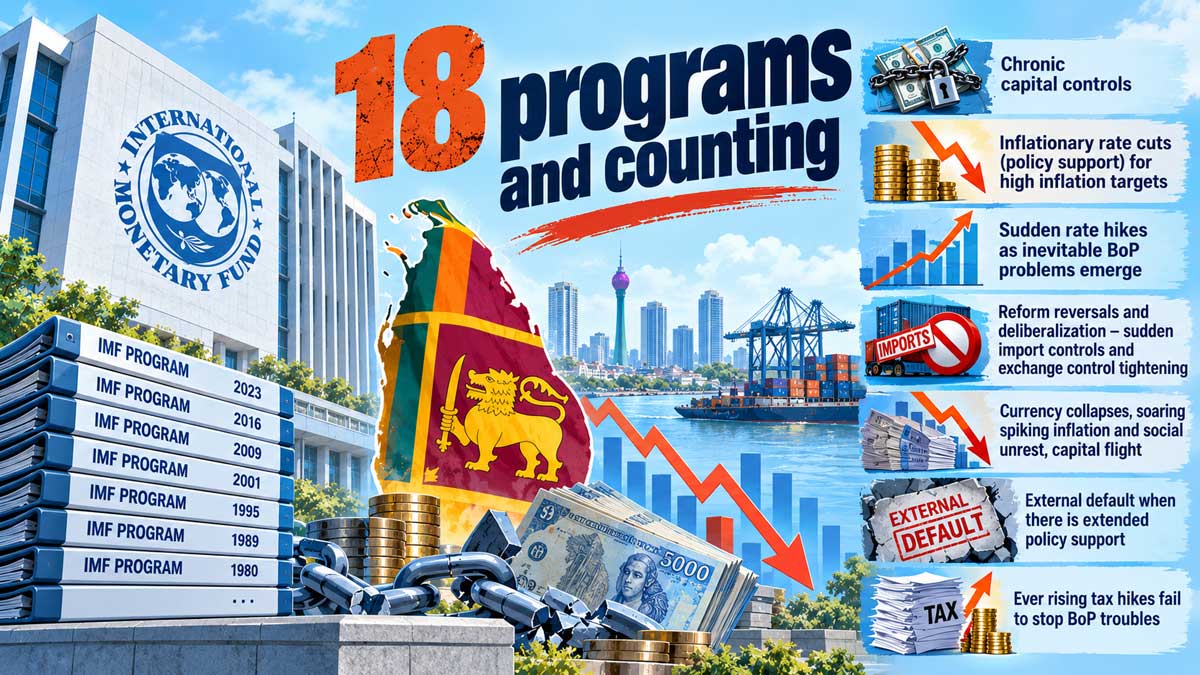
Sri Lanka runs into balance of payments crises and currency collapses frequently including within IMF programs, due to a deep flaws in the operating framework of the central bank and a general belief that inflation brings growth.
Rejecting Economics
Forex shortages and balance of payments trouble emerge when macro-economists reject classical economics and violate laws of nature, clearly described in detail by David Hume as the price-specie-flow mechanism and later classical including Ricardo and Smith (in relation to Scottish free banks) as banking expanded and formed the basis of money and banking until the Fed invented the policy rate in the 1920s (monetary policy) triggering the Great Depression.
The knowledge was revived in the 1960s, as the Mundel-Fleming model or the Monetary Approach to the Balance of Payments.
The IMF itself had an early framework that worked (the Polak Model), rather than the crisis-prone flexible inflation targeting where the currency collapses midway in a program due to excessive discretion given to inflation-biased macroeconomists.
The loss of knowledge of balance of payments is attributed to John Maynard Keynes who revived debunked Mercantilism in his book The General Theory of Employment, Interest, and Money.
Rehabilitating Debunked Mercantilism
In Chapter 23 (Notes 0n Mercantilism) Keynes crudely and explicitly rehabilitated Mercantilism, claiming classical economists were wrong to say that the balance of payments was self-adjusting and interest rates should not be manipulated, critics point out.
He rejected the classical idea that worrying about balance of payments or trade deficit is a waste of time (puerile obsession) and there was no problem as long as note issuing banks were blocked from mis-targeting rates.
Keynes said he was now turning his back on the economics "which I was brought up and which for many years I taught;— against the notion that the rate of interest and the volume of investment are self-adjusting at the optimum level, so that preoccupation with the balance of trade is a waste of time."
Economists were wrong to treat as "a puerile obsession what for centuries has been a prime object of practical statecraft", he said, placing Mercantilists on a pedestal.
"Since, in practice, it is impossible to neglect the balance of payments, a means of controlling it was evolved which, instead of protecting the domestic rate of interest, sacrificed it to the operation of blind forces," he added.
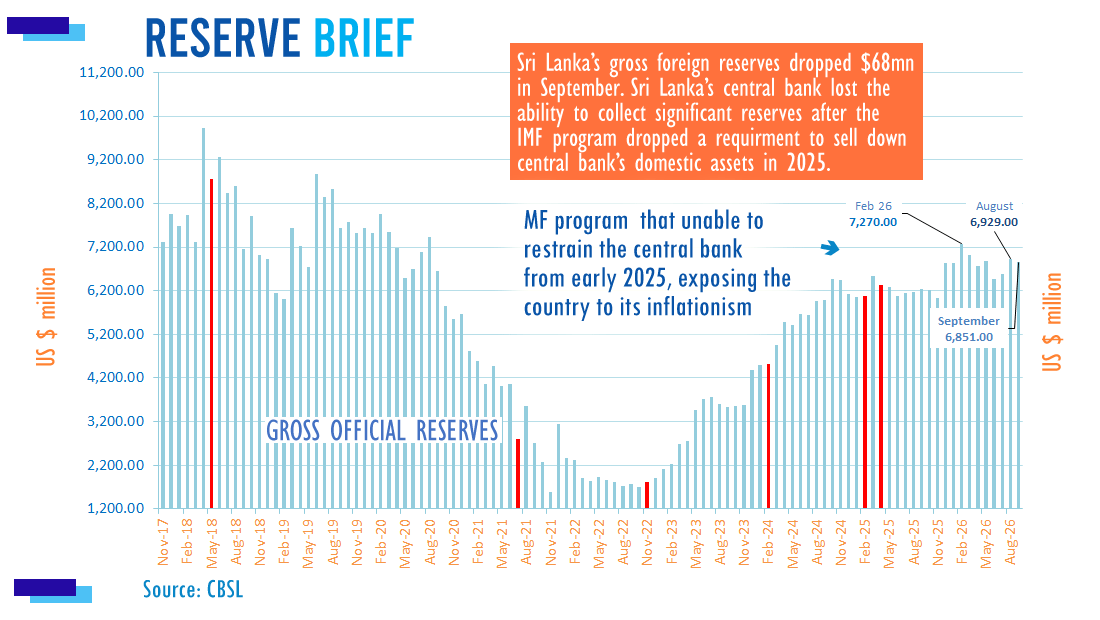
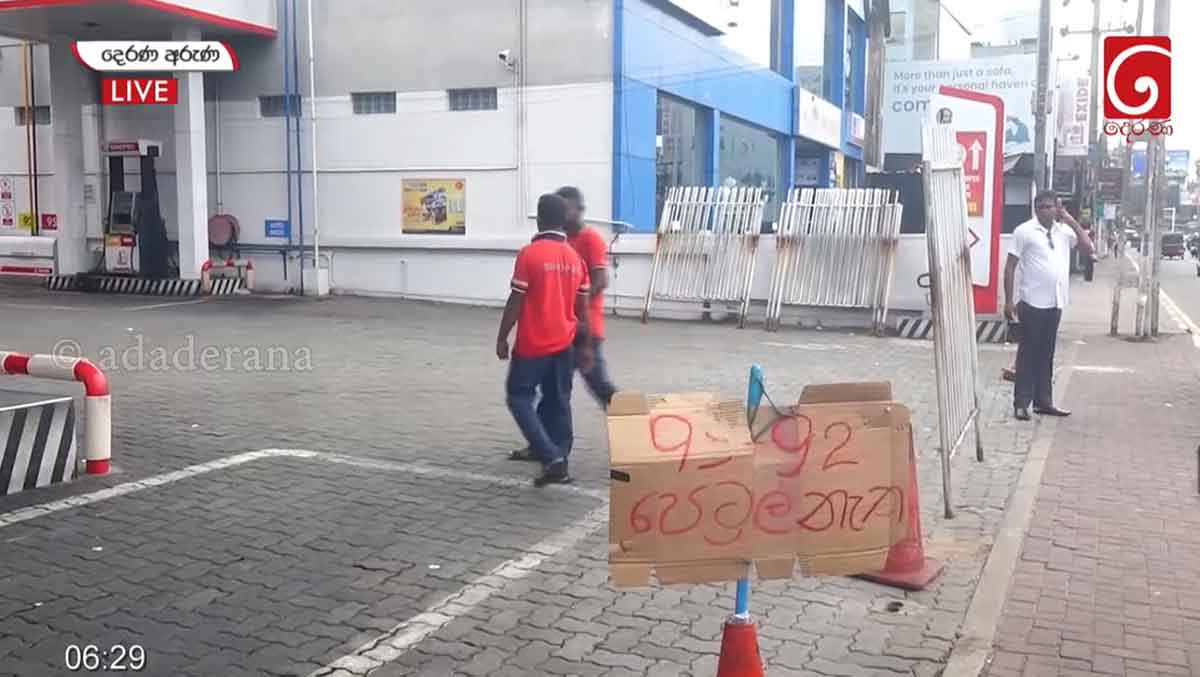
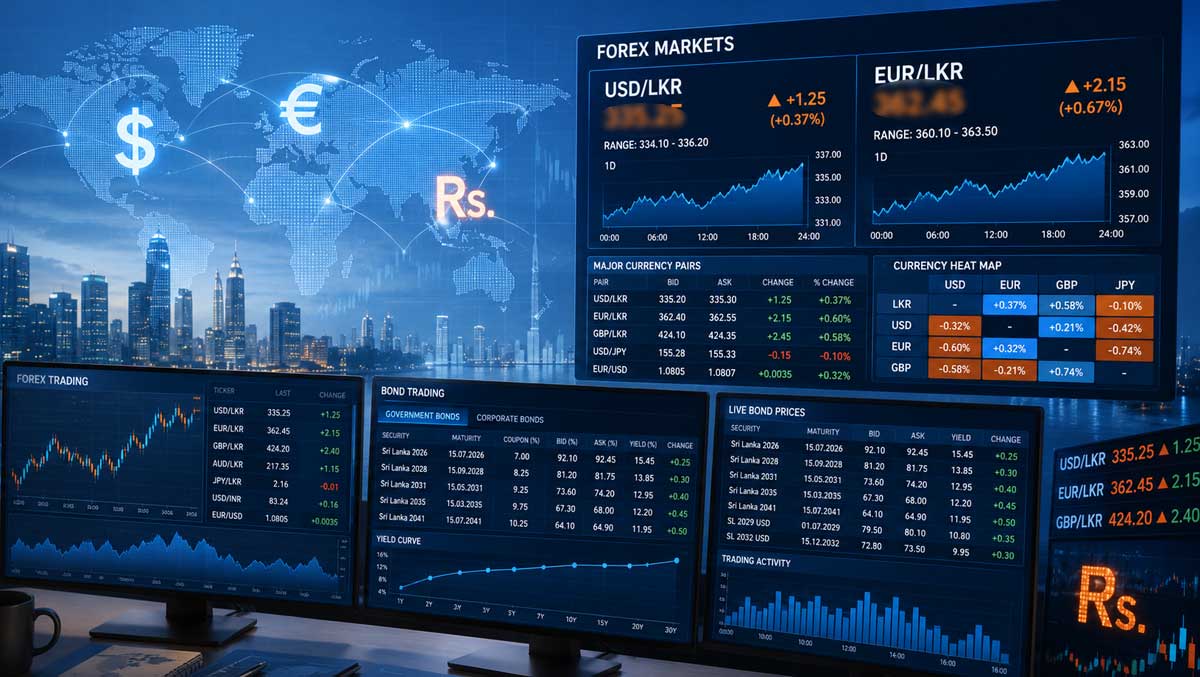
Sri Lanka also had to hike rates suddenly responding to the 'operation of blind forces' in May as the BoP gave way and the rupee collapsed to 330 to the US dollar due rate cuts enforced with money printed through buy-sell swaps and also 'signalling'.
The ideas were spread to Anglophone academics (Cambridge Circus) even before he wrote The General Theory and were formally taught to students and included in textbooks omitting direct references to Mercantilists and using more finesse.
Inflationist Magic Bullets
As a result of rejecting economics, the so-called 'lost generation' of Cambridge economists who advocated state intervention in interest rates (central banks were progressively nationalized) came to prominence, and exchange and trade controls were slammed when inevitable balance of payments trouble emerged.
The macro-economists who believed in inflation and not monetary stability, later ended up running central banks and being the 'guardians' of people's money.
The IMF itself was co-founded by Keynes and came with Article IV permitting capital controls where macro-economists ruled, in line with the rejection of economics, dooming the nations to rate cuts, and trade controls, analysts say.
However in the early decades the IMF had a framework largely in line with economics (the Polak Model) unlike flexible inflation targeting which leads to currency collapses as soon as private credit recovers.
Flexible inflation targeting applies an operating framework that worked with mixed results in floating rate regimes to reserve collecting central banks.
Meanwhile countries that accepted economics, including Singapore, Hong Kong and a number of Middle East nations including Qatar, Dubai, Oman, Saudi Arabia, or Bhutan in South Asia that have restrained inflationary rate cuts by law, do not have balance of payments troubles or IMF programs.
Ironically, countries that did not control interest rates have ended up importing massive amounts of foreign labour, while countries with rate cuts, high inflation (and high interest rates from destroyed capital) have ended up exporting people who are impoverished with unaccountable central banking.
New Cycle
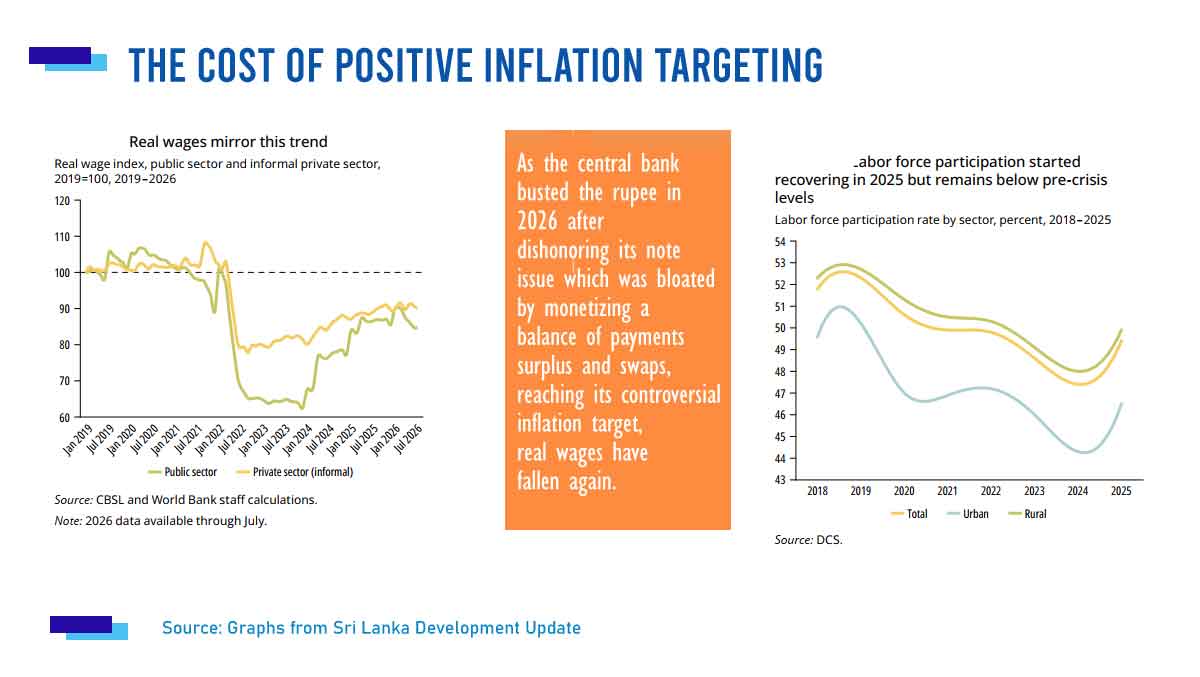
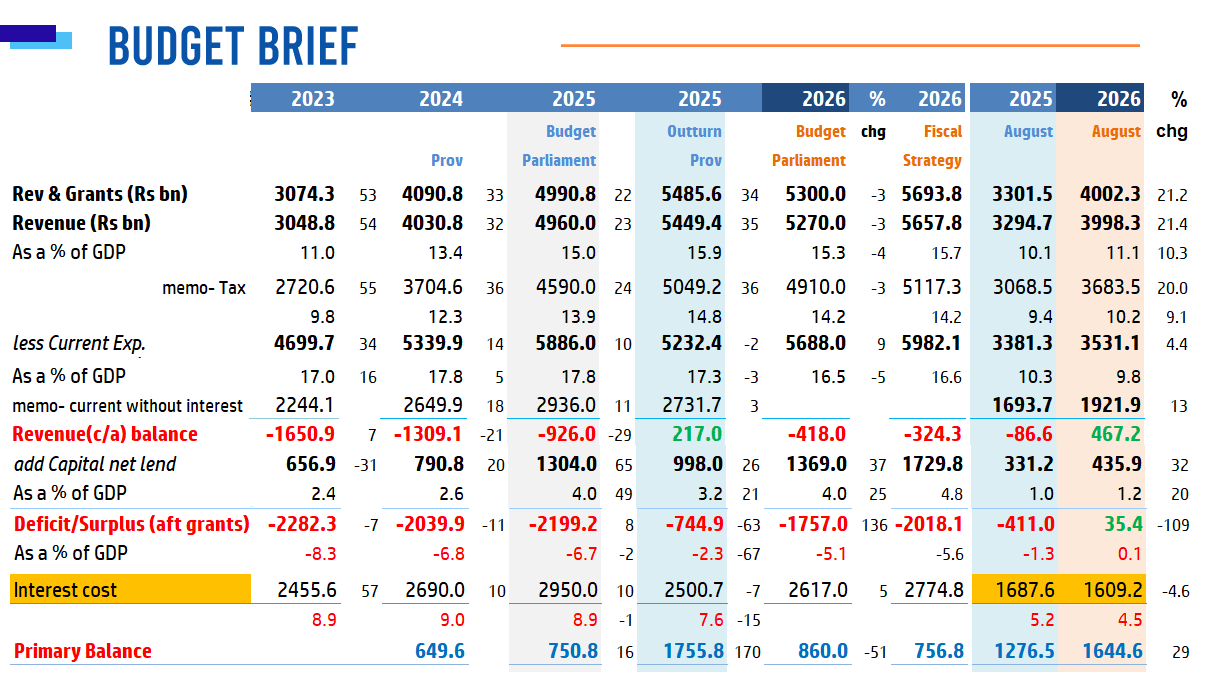
Sri Lanka's rupee collapsed in 2026 amid a budget surplus, and a external shock was blamed by rate cutting macro-economists, who also monetized a balance of payments surplus barely two months earlier.
Sri Lanka in 2026 tightened exchange controls in a reversing economic reforms.
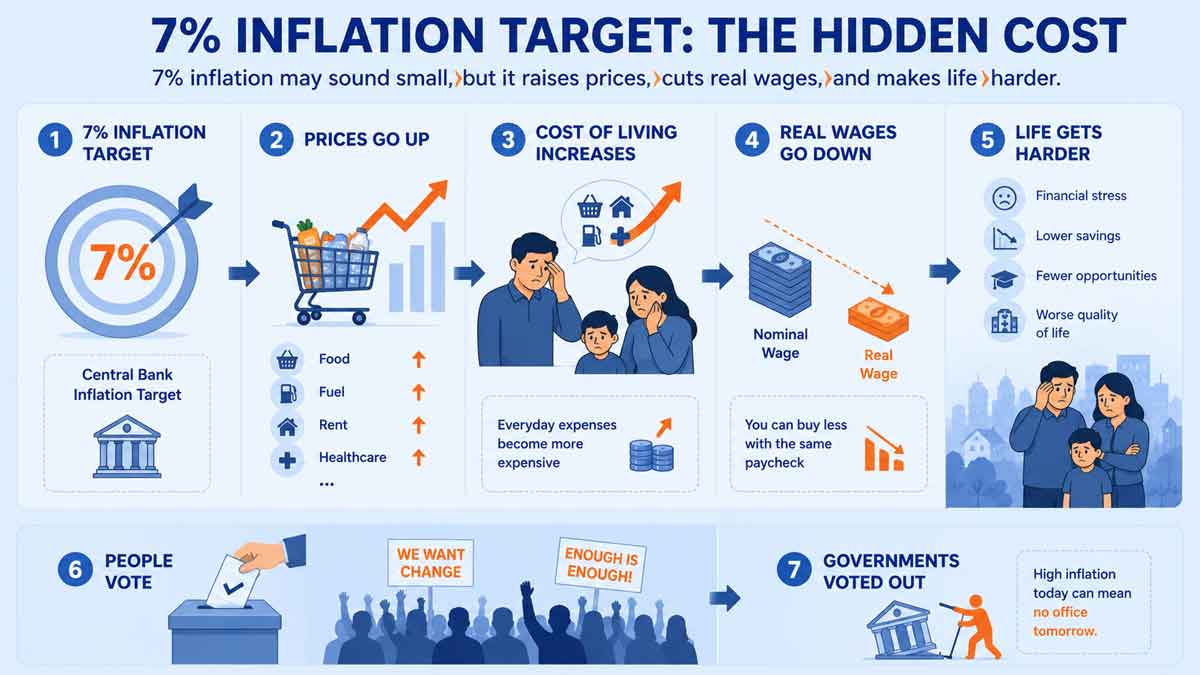
The central bank also won the right to inflate the economy up to 7 percent without any punishment, though inflation is cumulative.
The usefulness of the IMF program to stop the central bank from triggering external troubles diminished from early 2025 after a requirement to sell down its domestic assets was taken away, analysts had warned.
A 5-7 inflation target was also renewed, in a further blow to monetary stability and increasing risks of a second default, critics had warned. (Colombo/Oct08/2026)

| 3 month bill | 9.25% | 5bp ▲ |
| 12-m bill | 9.95% | 2bp ▲ |
| Gold (Ounce) | $4602 | - - |










Comments
Be the first person to comment and join the debate