
Share your email and we'll share the latest news
Exclusive economic intelligence, political and business coverage
Saturday, October 17 2026
Saturday, October 17 2026
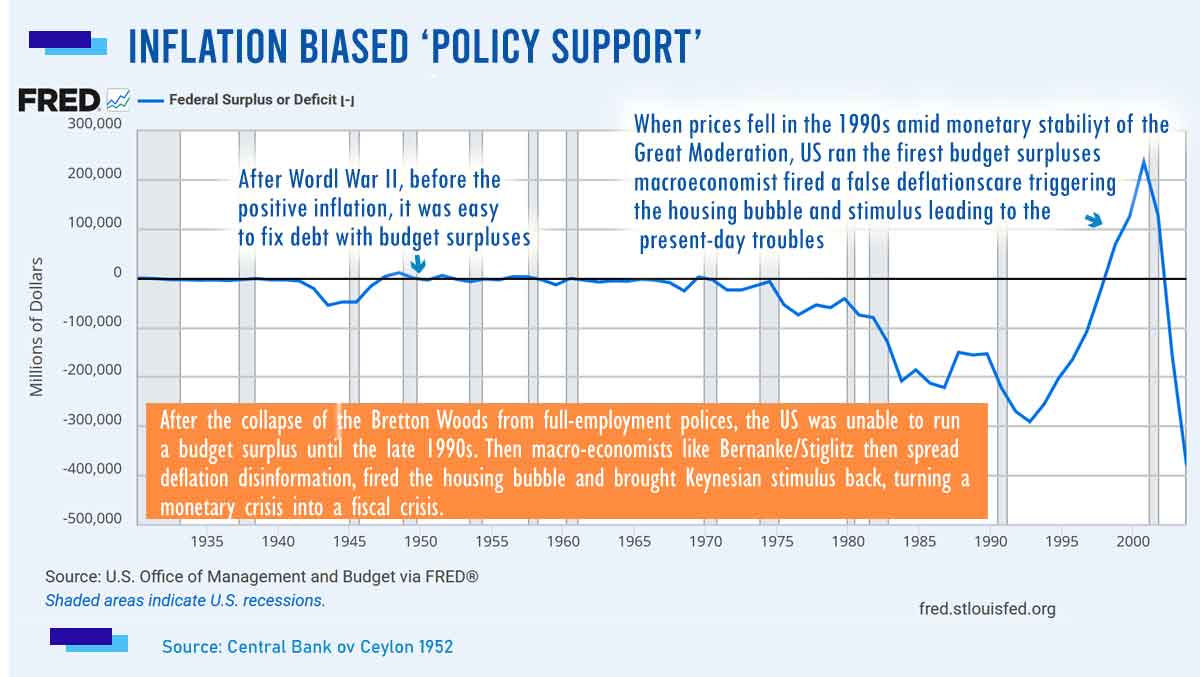 DEBT AND INFLATION : Sri Lanka also saw debt rise above 100 percent of GDP without war, after the IMF itself taught potential output mathematics to the central bank. Money was the printed under 'flexible' inflation targeting also on mathematics to 'close the output gap' until external default.
MONETABRIEF – Public debt is now higher than at the end of the World War II, International Monetary Fund Managing Director Kristalina Georgieva has said after the agency itself spearheaded 'policy support' for two decades busting fiscal metrics without war.
Sri Lanka's debt also rose above 100 percent of GDP without a war, purely on rate cuts and tax cuts to 'caliberate' macroeconomic policy and close an 'output gap'.
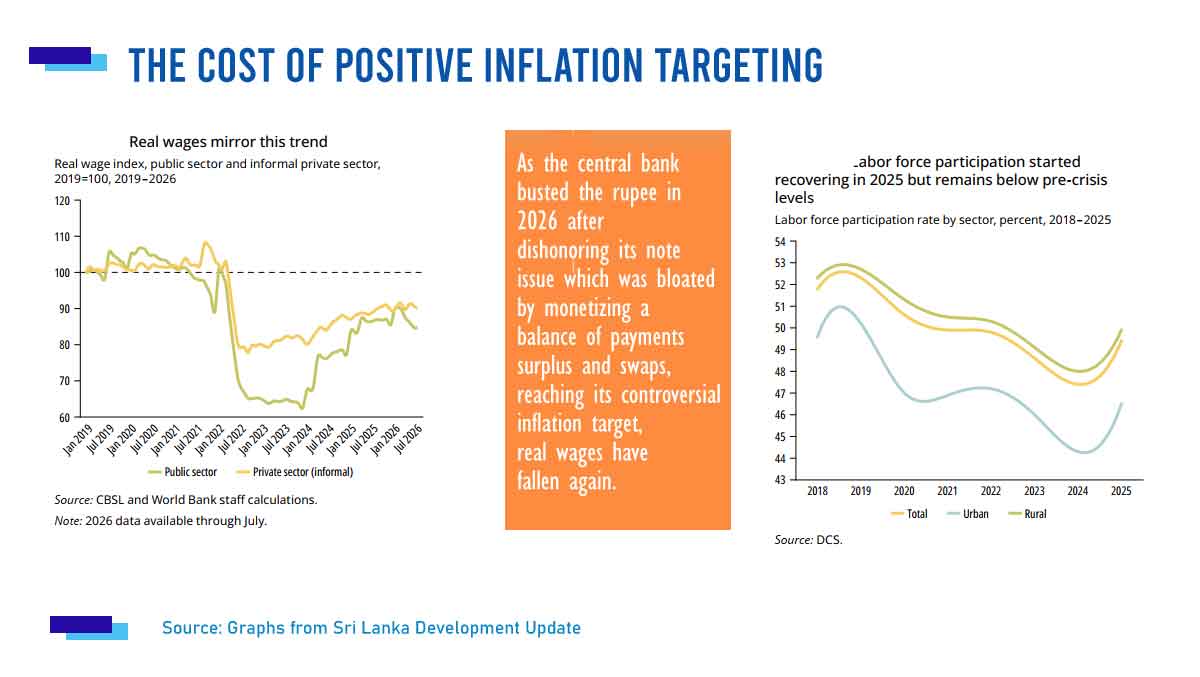
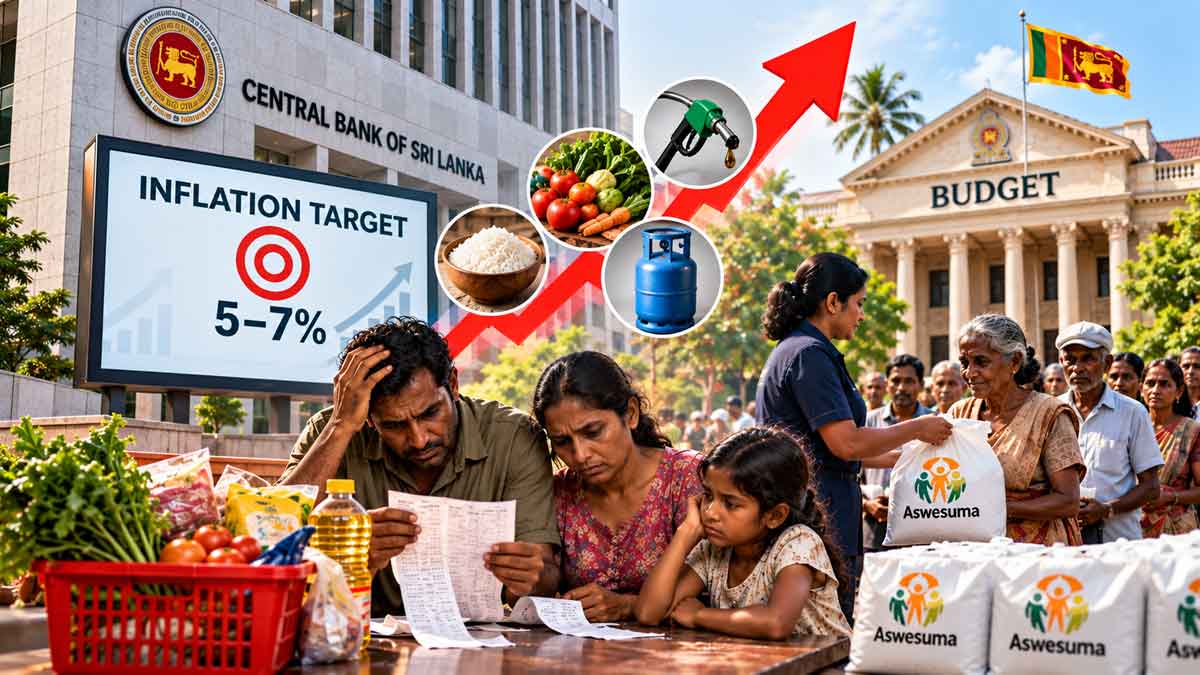
The 'policy support' under cover of a 5 percent inflation target, triggered Sri Lanka's first external default and gave a dress rehearsal of a second in the first half of 2026 as reserve targets were missed and the currency collapsed.
After the Fed cut rates to reflate, in the wake of claims that there was 'deflation' in the US in 2000 and fired the housing bubble, the Keynesianism which had been held at bay since 1980 came roaring back wit fiscal and monetary 'stimulus'.
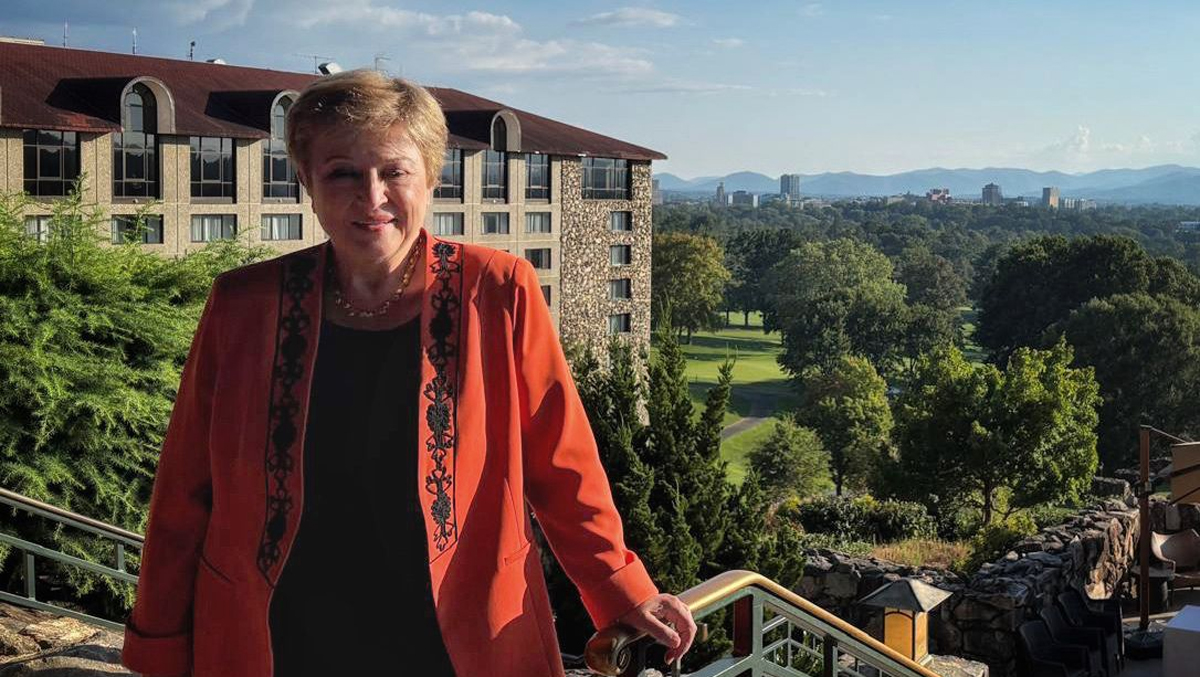
Public debt, at almost 100 percent of GDP worldwide, now exceeds its post-World War II highs and is set to climb further, Georgieva said at a speech in G20 Finance Ministers and Central Bank Governors Meeting in Asheville, North Carolina.
Debt Without War, Sri Lanka Style
"Looking back, the debt trajectory resembles a staircase: big vertical steps when shocks occur, little or no reduction afterward," Georgieva said after the agency she heads also peddled 'policy support' for years to boost 'growth' as inflation devastated the less affluent and stock prices boomed.
Policy support is a harmless sounding word for heedless spending that busted fiscal metrics and money printing, which culminated in the now deadly abundant reserve regime with a single policy rate.
The single policy rate, supported by excess liquidity that accommodates any shock, including the Middle East war – without one rising price crowding out other demand – has made it impossible to control rising prices and asset price bubbles, analysts say.
In the US interest rates are climbing like in Sri Lanka during the 1980s, after the IMF's Second Amendment lifted all restraints on the central bank making the 'open economy' a dirty word and fomenting social and political unrest at will.
Mathematical Prestige
In 2015, the IMF itself taught the central bank to calculate potential output – which was above 5 percent after some stability was given since 1995 under then governor A S Jaywardene and W A Wijewardene who ran monetary policy until 2011, amid a war.
After the IMF taught potential output and flexible inflation targeting – an idea that past historical 12 month inflation allows a central bank to print more money – led to serial currency crisis and heavy foreign borrowings.
To allow more foreign borrowings instead of repaying debt by reducing domestic investment, which was not possible as money was printed to boost growth and a 5 percent inflation as forex shortages emerged as the 1960s, when IS-LM (a kind of mathematical formula that rejected the theories of Hume, Ricardo and Smith) was promoted in universities.
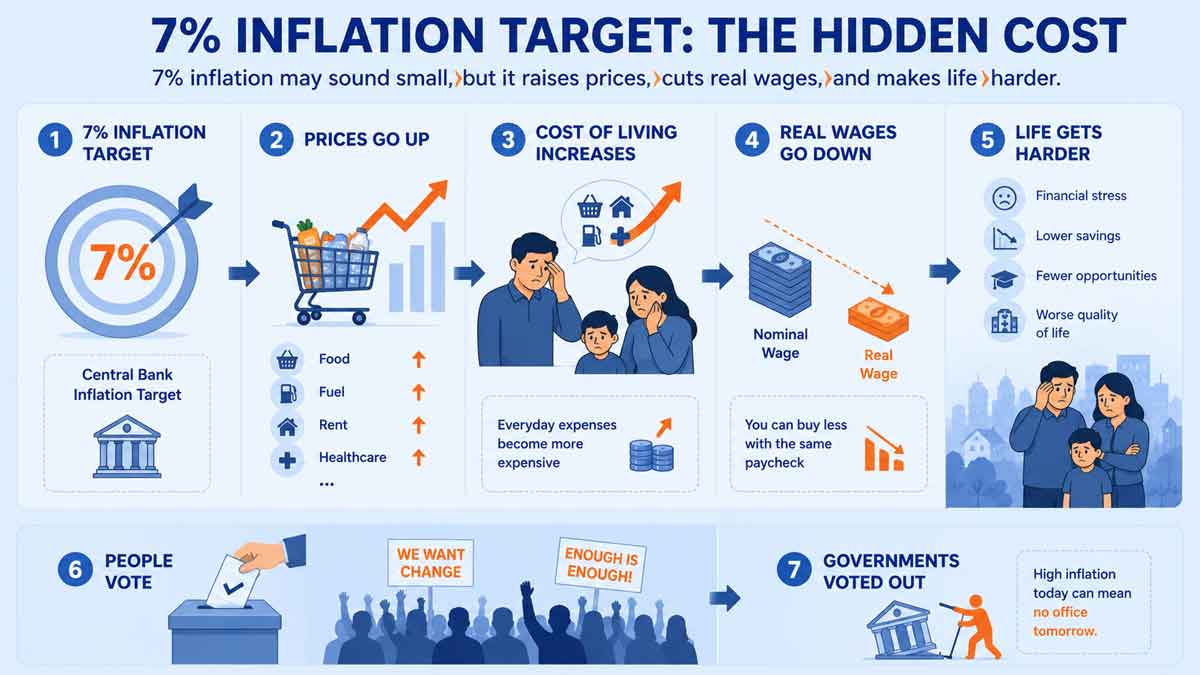
In Sri Lanka there is now a battle to restrain the inflation biased central bank through a 2 percent inflation target.
Calls by Central Bank officials for high inflation, has shown clearly that the country's problems are not in the political system but in the inflationist beliefs of the central bank, especially because the latest currency crisis was also brought under the cover provided by the high inflation target.
The 2026 currency and inflation crisis was engineered amid a budget surplus, making it difficult for the central bank to pass accountability to the politicians and the Treasury.
Rejecting Economics
Sri Lanka's problems and the ultimate default came from 'caliberating fiscal and monetary policy' from mathematical state interventions in the style taught at Cambridge, Harvard, MIT among others, following a fundamental rejection of economics by Keynes in his General Theory.
"..[F]or many years I taught;—against the notion that the rate of interest and the volume of investment are self-adjusting at the optimum level, so that preoccupation with the balance of trade is a waste of time," Keynes wrote in Chapter 23.
"For we, the faculty of economists, prove to have been guilty of presumptuous error in treating as a puerile obsession what for centuries has been a prime object of practical statecraft."
Sri Lanka recovered only after stimulus inflation was stopped and the country is now again under threat of political unrest and fiscal deterioration as money is destroyed.
In 2025 however, a target in the IMF program, which restrained the central bank's inflationary policy was dropped, leading to missed reserve targets and a dress rehearsal of what may come later in early 2026.
Masters of a Mathematical Universe
Keynes and especially Alvin Hansen (Harvard) Paul Samuelson, taught young graduates they could adjust interest rates precisely, change tax rates and 'caliberate' entire economies and supposed imbalances by state intervention becoming masters of a mathematical universe.
What some critics called 'mathematical prestige' gave the unimaginable powers to half a dozen central bankers to trigger economic crisis and unlike before the Fed, they also escaped accountability in what critics say is a failure of democracy.
However countries that did not mis-target rates, especially in East Asia and the Middle East ended up importing labour to fill shortages not unemployment, with and debt to GDP ratios below 40 percent.
Cannot Control Inflation
The "disinflation process has stalled in many countries," Georgrieva said. "Mounting fiscal pressures are pushing core bond yields upward and the interplay between fiscal and monetary policy worries markets."
Disinflation is also a word invented by inflation biased macro-economists that has legitimized their biases in the eyes of the politicians and the public and made them live in an age-of-perpetual-inflation.
In Europe, countries that escaped the single policy rate - for which the IMF gave technical assistance to Sri Lanka in 2025 - like Sweden also have low debt to GDP ratios.
In the current rise in energy due to the Middle East war, inflation in Sweden, where the Sveriges Riskbank is running a scarce reserve regime, was only around 0.2 percent.
End of the road for stimulus?
Georgrieva did not go as far as to blame "markets", which is what state interventionist do, and fundamentally what Keynesianism and stimulus state intervention is based upon.
"Central banks must focus on their price stability mandate," Georgrieva said.
"Fiscal authorities must hammer out credible medium-term consolidation plans.
"Structural policies should concentrate on cutting red tape and removing self-inflicted barriers to growth—because stronger potential growth would help address the fiscal problem, and addressing the fiscal problem would help lift growth prospects."
In pointing to fiscal policies, macro-economists can shift the blame to politicians, wiping out from people's memories that it was who planted seductive idea that that it is possible to 'spend their way out' of a credit collapse triggered by a central bank that believed it knew what the interest rate should be.
While there appears to some realization that stimulus had reached the end of the road, in the age of perpetual inflation, there is no remorse, no admission of guilt and no accountability for 'policy support' that destroy peoples' incomes budgets and democracy itself, critics say. (Colombo/Sept02/2026)

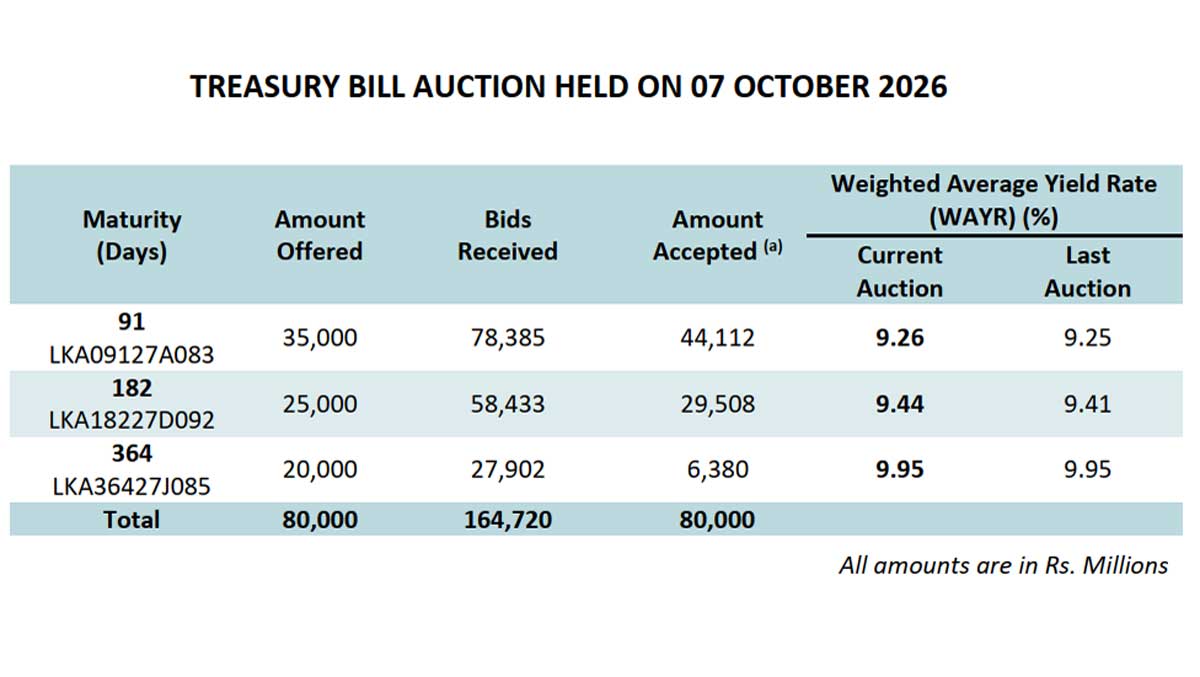
| 3 month bill | 9.26% | 1bp ▲ |
| 12-m bill | 9.95% | 2bp - |
| Gold (Ounce) | $4187 | - ▼ |












Comments
Be the first person to comment and join the debate