
Share your email and we'll share the latest news
Exclusive economic intelligence, political and business coverage
Friday, October 2 2026
Friday, October 2 2026
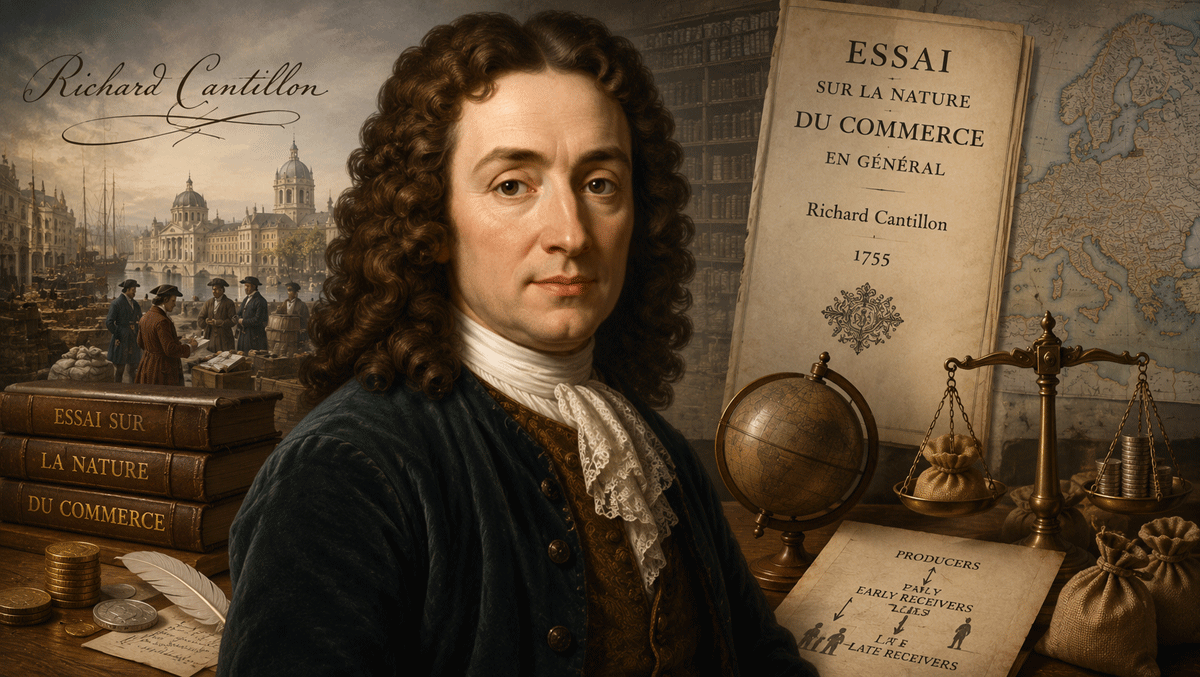 REASONING POWER - Richard Cantillon was an early classical who showed how central banks can blow asset price bubbles with their inflationism, favouring a few and harming many
MONETABRIEF - Richard Cantillon was an Irish-born banker, businessman, financier and economic thinker whose work clearly shows how modern central bank blow asset-price bubbles and devastate nations with inflation.
Cantillon's life and work occupy an important place in the transition from Mercantilism to modern political economy.
When most Western central banks are blowing asset bubbles, through abundant reserve regimes and single policy rates in this decade, making billionaires of some and impoverishing millions with inflation, and driving nations towards debt crises, his work shows how exactly the same effects were seen in France in the 18th century.
Although his exact birth date is unknown, he was probably born in the 1680s in County Kerry, Ireland, into a Catholic landowning family. He later lived and worked in England, France and Spain, becoming a genuinely cosmopolitan European.
As a young man he moved to France, becoming a French citizen. By 1711 he was in Spain, working in the office of James Brydges, the British Paymaster General, during the War of the Spanish Succession. His job involved arranging payments to British prisoners and troops. This appears to have been his practical education in accounting, foreign exchange, international payments and finance. Cantillon's early career provided him with an unusual practical education in economics. He remained in Spain until 1714.
He then returned to Paris, where he joined the banking business of his cousin, also named Richard Cantillon. On August 05, Chevalier Richard Cantillon died, with his bank insolvent. Cantillon took control paying off creditors.
He became a highly successful international banker, particularly in transferring money between Paris and London. He therefore accumulated his fortune primarily through banking, foreign exchange, lending and financial speculation, rather than through inherited wealth.
Cantillon and the Mississippi Bubble
Cantillon became involved in John Law's Mississippi System, the extraordinary financial experiment that transformed France's monetary and financial system in the late 1710s and early 1720s. He initially participated in the scheme and lent money to investors who purchased Mississippi Company shares.
The bubble was fired by Bank Royale, an early central bank which printed large volumes of Livre notes (paper money).
But Cantillon recognized that the enormous rise in share prices could not continue indefinitely. He sold shares as the bubble took hold. When the prices went up further, he short sold shares, supposedly kept in his custody.
He made a fortune from correctly anticipating the collapse of the Mississippi Company and the South Sea Bubble. His actions demonstrated a remarkable understanding of the relationship between monetary expansion, speculation and asset prices.
The Mississippi shares reached their extraordinary peak around early 1720, after which the system began to unravel.
Cantillon's profits, however, brought serious consequences. Investors who had kept shares in his custody, took him to court in France and England. One argument was that he did not return the exact shares that was kept with him. His legal troubles continued for years and became intertwined with his banking and speculative activities.
The Essai From these experiences emerged Cantillon's great economic work, Essai sur la nature du commerce en général (Essay on the Nature of Trade in General). It was probably written around 1730 and circulated in manuscript before being published anonymously in 1755, more than twenty years after his death.
The surviving work is in French, although its title page describes it as traduit de l'anglois, ("translated from the English"). The original English manuscript has never been found, so historians cannot establish conclusively whether Cantillon originally composed it in English or French.
The Essai is often regarded as the first systematic treatise on economics. Cantillon analysed population, production, wages, profits, rents, prices, money, international trade and exchange as interconnected parts of an economic system. He also gave the entrepreneur a central role, describing someone who commits resources at known costs while facing uncertainty about future selling prices.
The Cantillon Effect
One of Cantillon's most important monetary insights is now known as the Cantillon Effect. He argued that newly created money does not affect all prices simultaneously or equally. It enters the economy through particular people and institutions, who spend it before prices throughout the economy have adjusted. Consequently, monetary expansion changes relative prices, incomes and the distribution of wealth, not simply the general price level.
Influence and Political Economy
Cantillon's Essai strongly influenced the Physiocrats, including François Quesnay, and helped establish the analytical tradition from which political economy developed; Adam Smith may have encountered Cantillon's ideas directly or through the French intellectual circle surrounding Quesnay, and Smith was one of the few major economists of his generation to cite Cantillon explicitly.
Referring to the wages of a workman in Book I, in Wealth of Nations he says. "Mr. Cantillon seems, upon this account, to suppose that the lowest species of common labourers must every where earn at least double their own maintenance…"
Death and Mystery
Cantillon died in London in 1734 in mysterious circumstances. The conventional account is that he was murdered by a servant who then set fire to his house. However, because of the extensive litigation surrounding his financial affairs, some historians have proposed that Cantillon may have staged his death and escaped, possibly to Surinam, in order to evade his legal difficulties. Antoin Murphy, Cantillon's major modern biographer, has examined this possibility in detail. The legal troubles are well documented; the staged-death theory remains unproven.
Cantillon's achievement was remarkable: a successful international financier turned his practical knowledge of money, markets and speculation into a systematic theory of the economy. His work helped provide an intellectual bridge from Mercantilism to the Physiocrats, Adam Smith and the emergence of modern political economy.
Further Reading
• Antoin E. Murphy, *Richard Cantillon: Entrepreneur and Economist* — Oxford University Press
• Project Gutenberg – *Essai sur la nature du commerce en général*
• Library of Economics and Liberty – Richard Cantillon
• EconLib - Life and Work of Richard Cantillon, by Henry Higgs
• History Ireland – Richard Cantillon: The Father of Economics

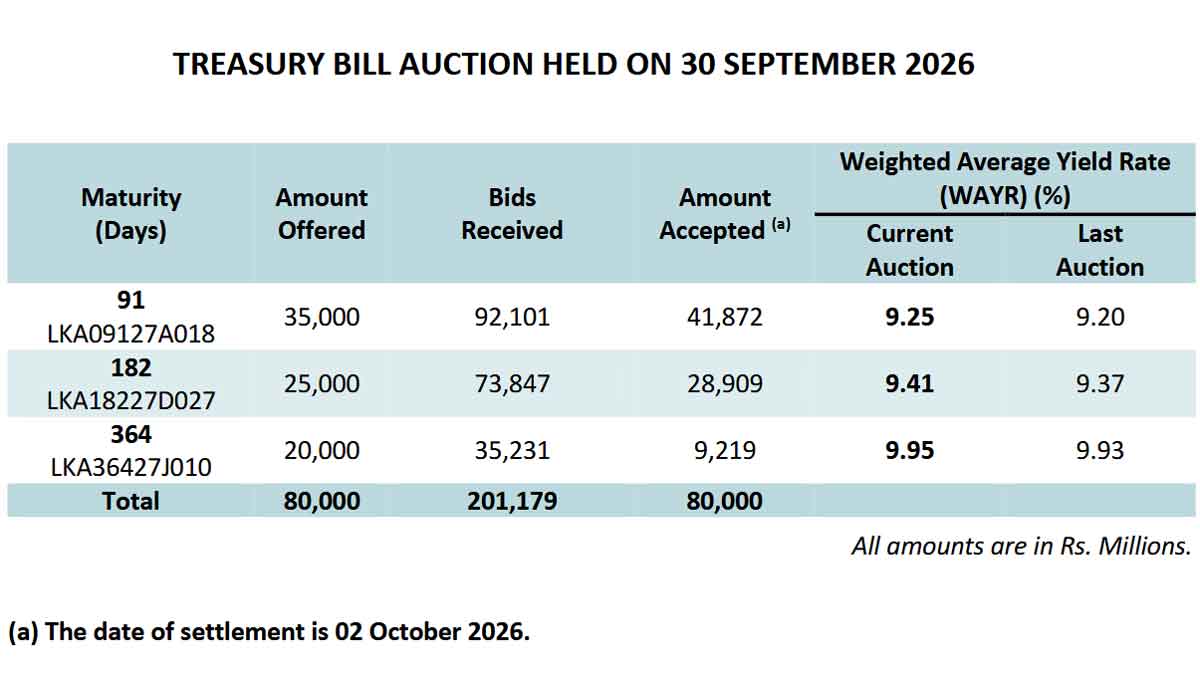
| 3 month bill | 9.25% | 5bp ▲ |
| 12-m bill | 9.95% | 2bp ▲ |
| Gold (Ounce) | $4602 | - - |





















Comments
Be the first person to comment and join the debate