
Share your email and we'll share the latest news
Exclusive economic intelligence, political and business coverage
Monday, October 5 2026
Monday, October 5 2026
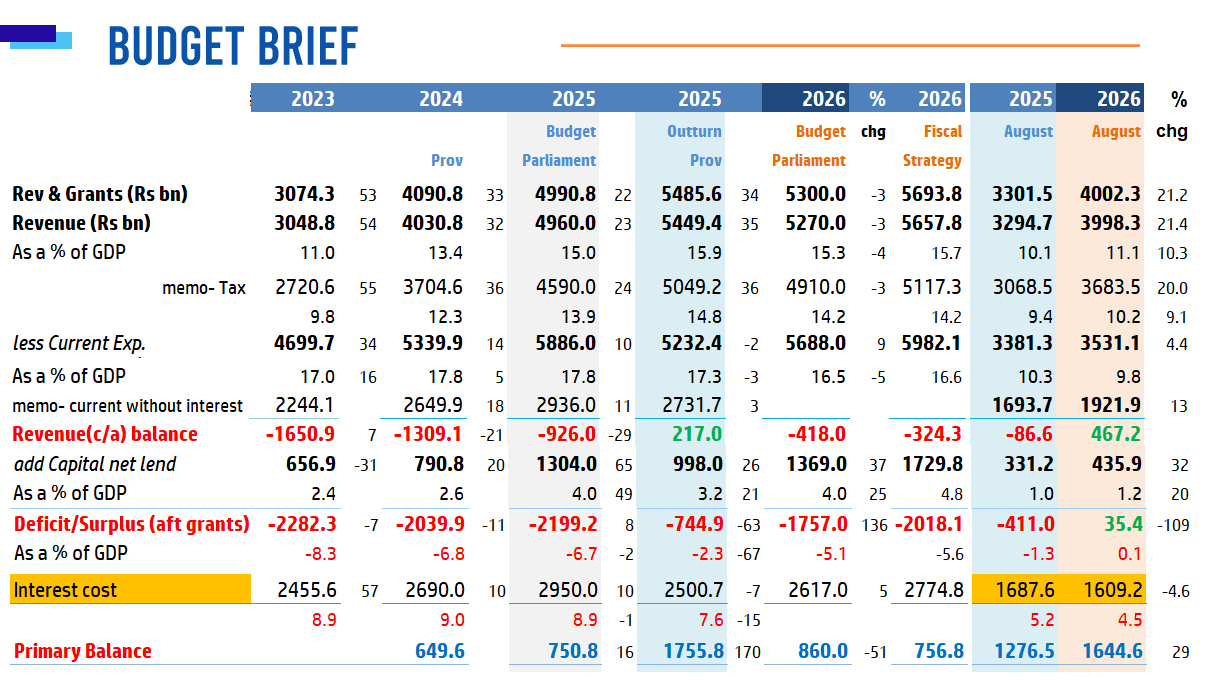
MONETABRIEF – Sri Lanka's budget swung back to a 35.4 billion rupee surplus, up to August 2026, from a small deficit a month earlier as strong revenue growth continued to outpace spending despite capital expenditure also picking up, official data show.
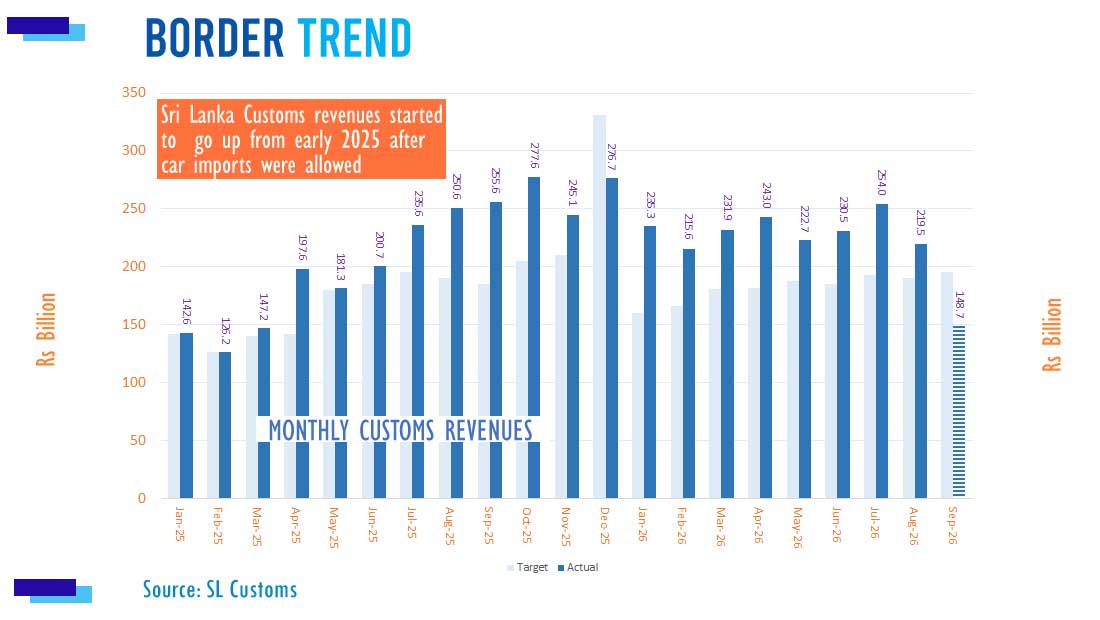
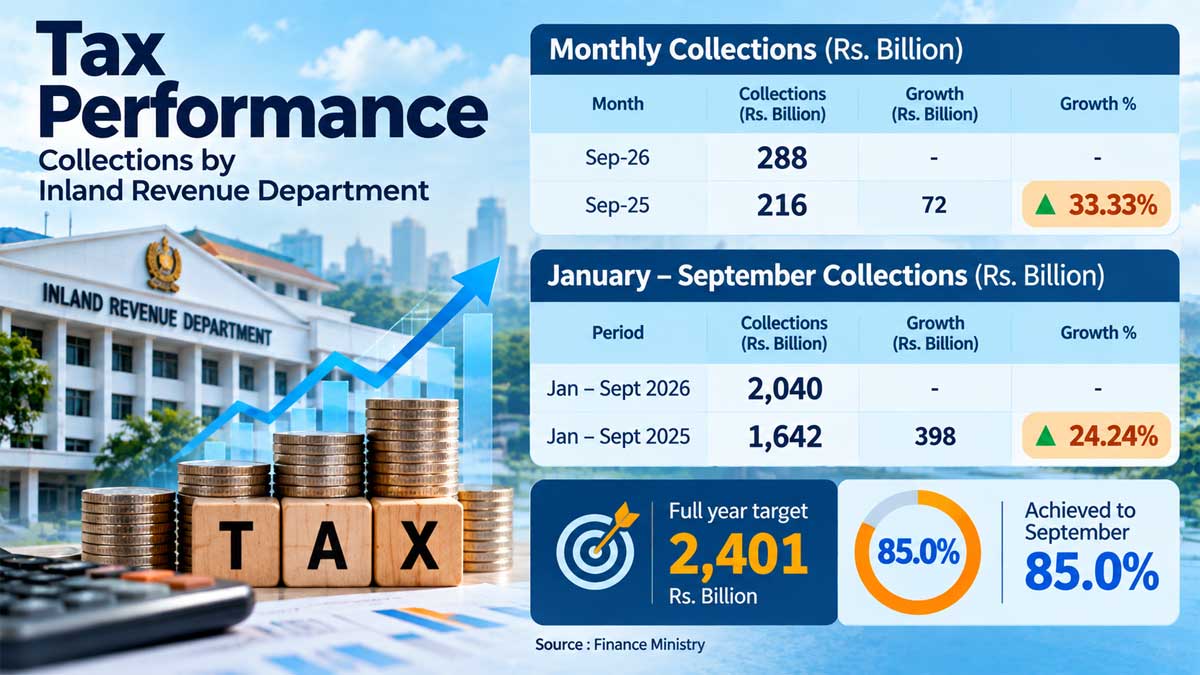
Tax revenues grew 20 percent to 3,685 billion rupees helped by motor vehicles in part helped by motor vehicle taxes, the Finance Ministry said.
Tax collections were up with voluntary payments and better tax administration, the Finance Ministry said.
Non tax revenues grew 39 percent to 314 billion rupees.
Non-tax revenues this year include central bank profit transfers, which macro-economists can dishonor under the 'flexible exchange rate', as credit picks up, or if there is any shock, depreciate the currency, push up the cost of living to undermine democracy.
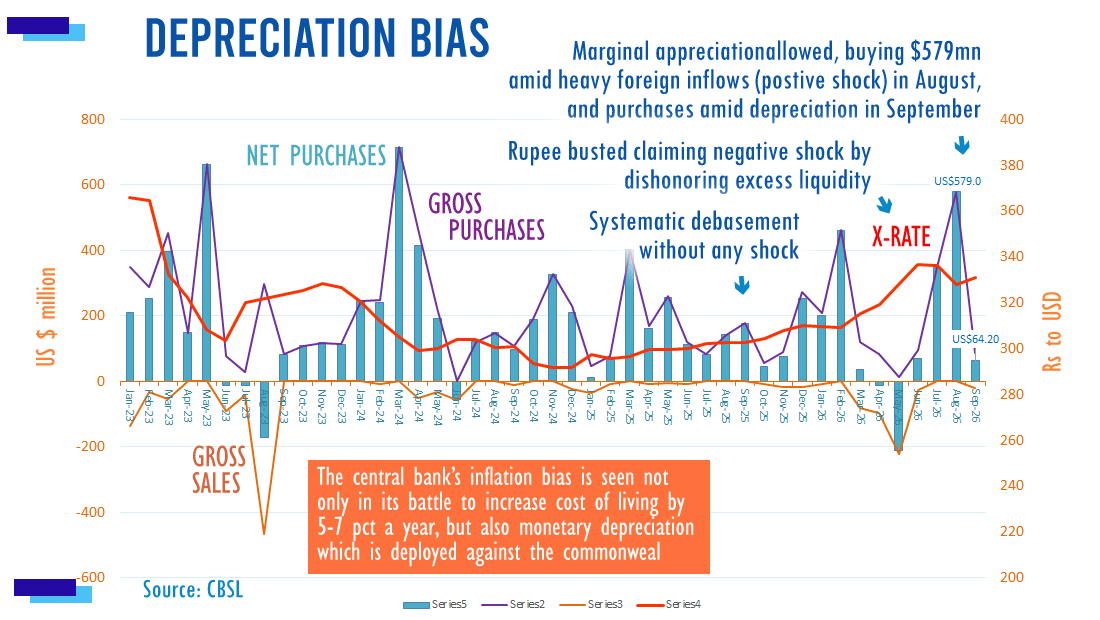
The rupee was busted to 333 from 300 over the past year with the steepest fall coming in the second quarter, driving inflation up 8 percent by August.
Income tax rose 18 percent to 825.6 billion rupees up to August, from a year earlier, while VAT increased 22 percent.'
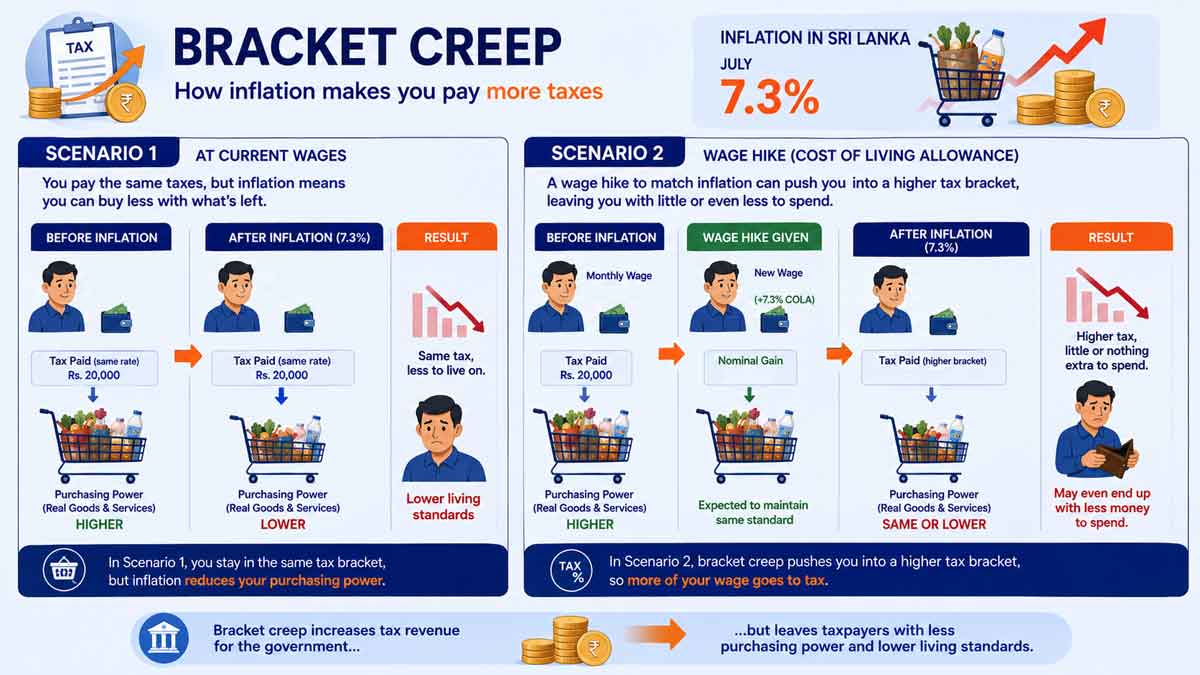
Inflation, False Profits and Bracket Creep
When inflation goes up, value added taxes can go up, but people will consume less goods, putting family finances under pressure, reducing real economic activity, and leaving less savings, making it more difficult to repay debt and reduce growth creating investments.
Companies can also report false profits, from underpaying workers and also depreciation that is lower than replacement costs, effectively distributing capital as dividends or paying them as taxes, killing long term growth creating investments.
If companies pay workers higher wages to offset higher prices coming from the central bank's inflation bias, they can be pushed into higher income tax brackets, requiring increases in tax thresholds to prevent further hits on their post tax income, even as real incomes fall.
Current expenditure rose only 4.4 percent to 3531 billion rupees with non-interest spending rising 13 percent to 1921 billion rupees, a pace lower than revenue growth.
Because governments keep to budget lines and salaries and subsidy payments are fixed as central bankers push inflation up, some current expenditures will not grow, but social unrest can intensify.
Meanwhile interest costs fell 4.6 percent to 1609 billion rupees. Interest costs may not go up with inflation initially, as long term bonds bought by the Employees Provident Fund or insurance companies are at fixed rates as the rupee depreciates.
Busted Budgets
Though wages can adjust up, the loss to the EPF or pension funds can never be recovered. However over the longer term, inflation drives up nominal interest rates.
Sri Lanka's budgets went astray and interest rates started to soar in the 1980s as the central bank started to depreciate the currency, after the IMF's Second Amendment to its articles allowed the agency to depreciate the currency for every monetary policy error.
In the 1980s, Sri Lanka did not have commercial debt.
Many advanced nations, including the US, are now moving towards debt problems after central banks pushed up inflation and engaged in heedless spending for 'stimulus' urged by macro-economists, also called 'policy support'.
The Golden Rule
With strong revenue growth, and lower interest bill, which can also be helped by the overall surplus, the budget recorded a current account surplus of 467 billion rupees.
Known as the 'golden rule of budgeting' the fiscal performance allows tax revenues to be used for capital expenditure, without additional borrowings.
Capital expenditure rose 32 percent to 435.9 billion rupees up to August 2026, from 331.2 billion last year.
In 2026, capital expenditure numbers are higher, with Ditwah reconstruction. Capex tend to pick up towards the end of the year as contractors submit bills.
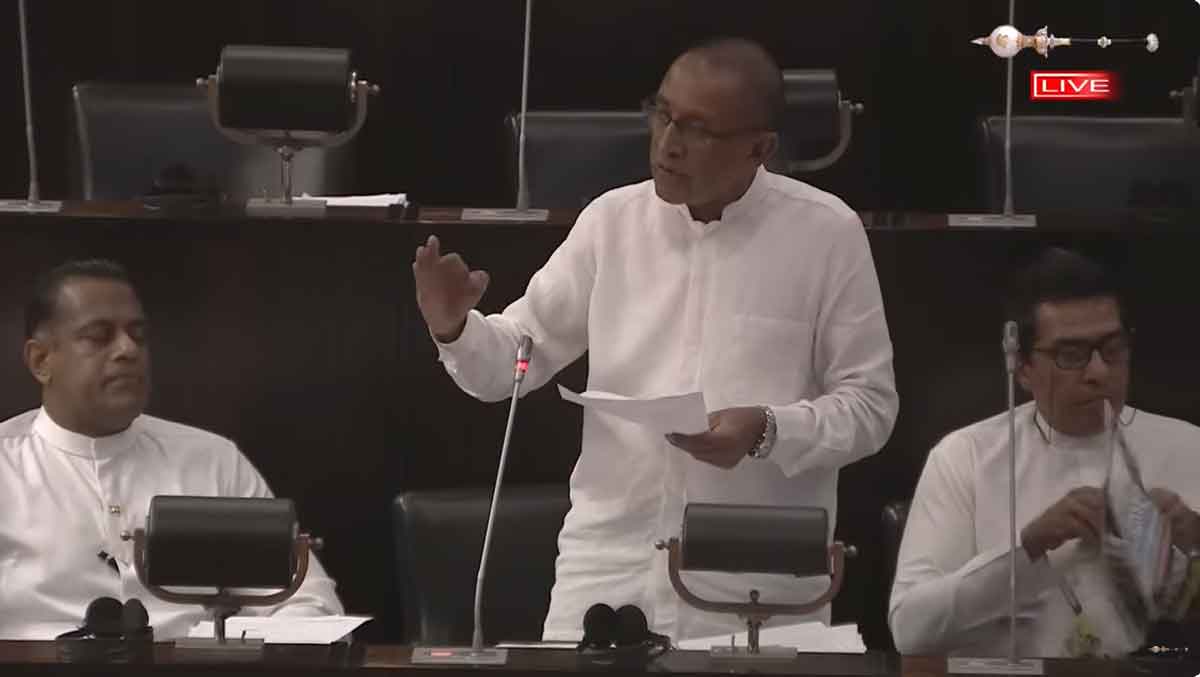
Actual physical progression of capital projects may be higher as contractors submit bills intermittently, Deputy Finance Minister Anil Jayantha has told MonetaBrief.
Capex also tends to move up faster than salaries when the rupee collapses, with cost escalations.
As a result there could be supplementary estimates as an inflationist central bank debases money.
Contractors have already sought cost escalations.
High Inflation and High Nominal Rates
In the 1980s, budgets were shattered by the central bank and supplementary estimates became the norm after the IMF's Second Amendment to its articles and competitive exchange rates.
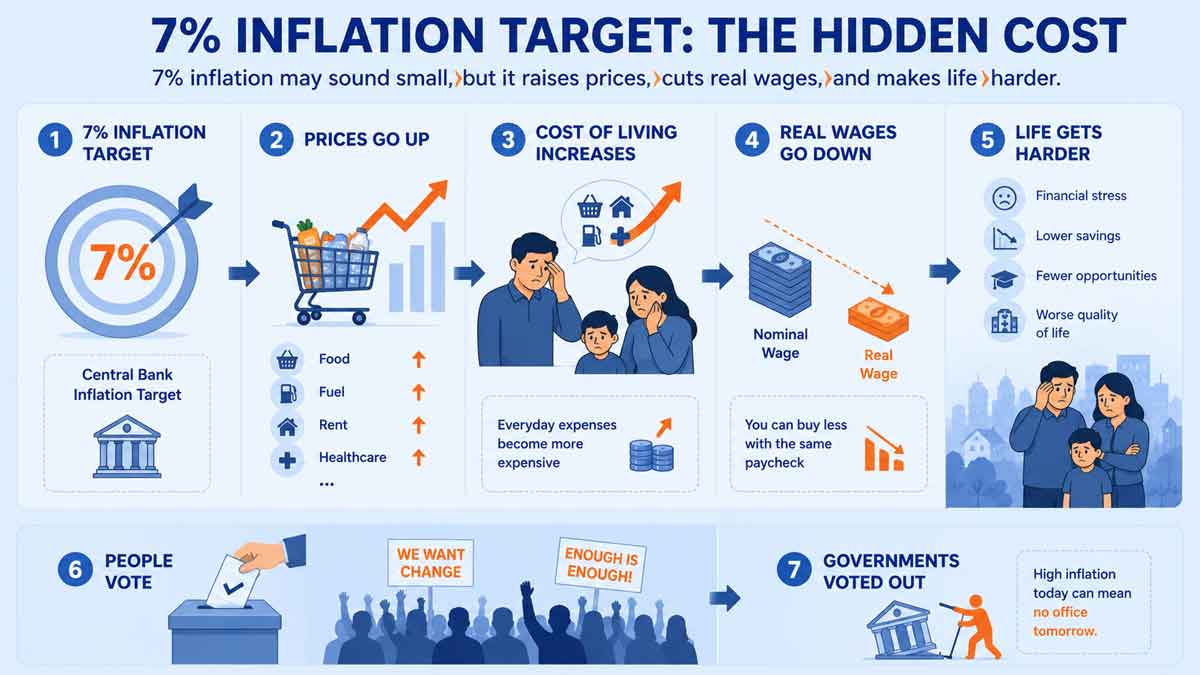
After years of depreciation and high inflation targets - which are invariably exceeded as private credit recovers and the rupee is busted - Sri Lanka has high nominal interest rates and a big interest bill.
Last year, the interest bill was 7.6 percent of gross domestic product, while capital expenditure was 3.2 percent.
This results in what is called a primary surplus, where the interest bill from past inflation and depreciation is higher than the overall budget deficit.
Many countries with well-managed budgets have a primary deficit where the interest bill is small and not bigger than the overall deficit.
Several East Asian nations rejected the doctrine, had monetary and political stability and became investment and export power houses and also exported capital which was not destroyed by inflation.
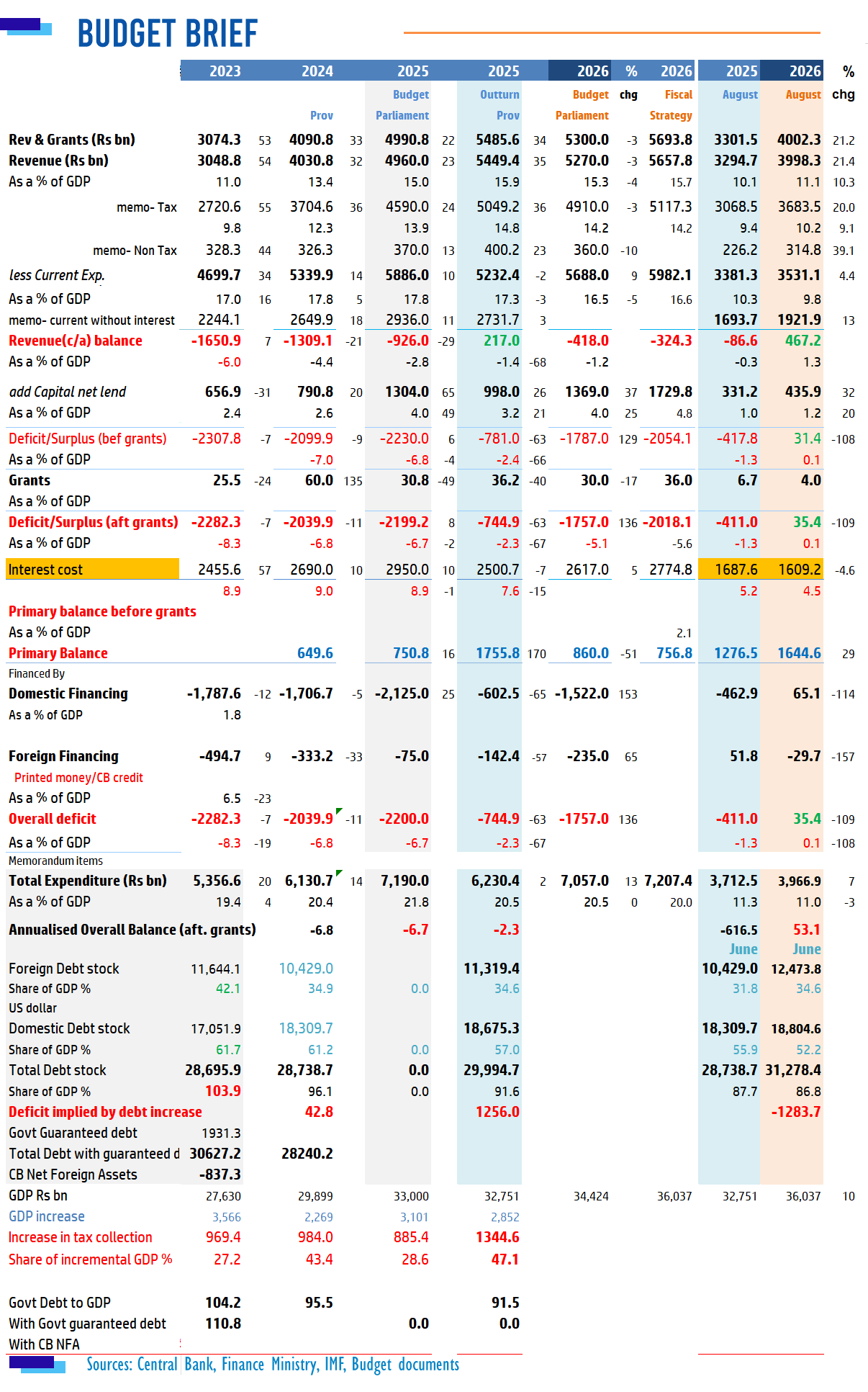
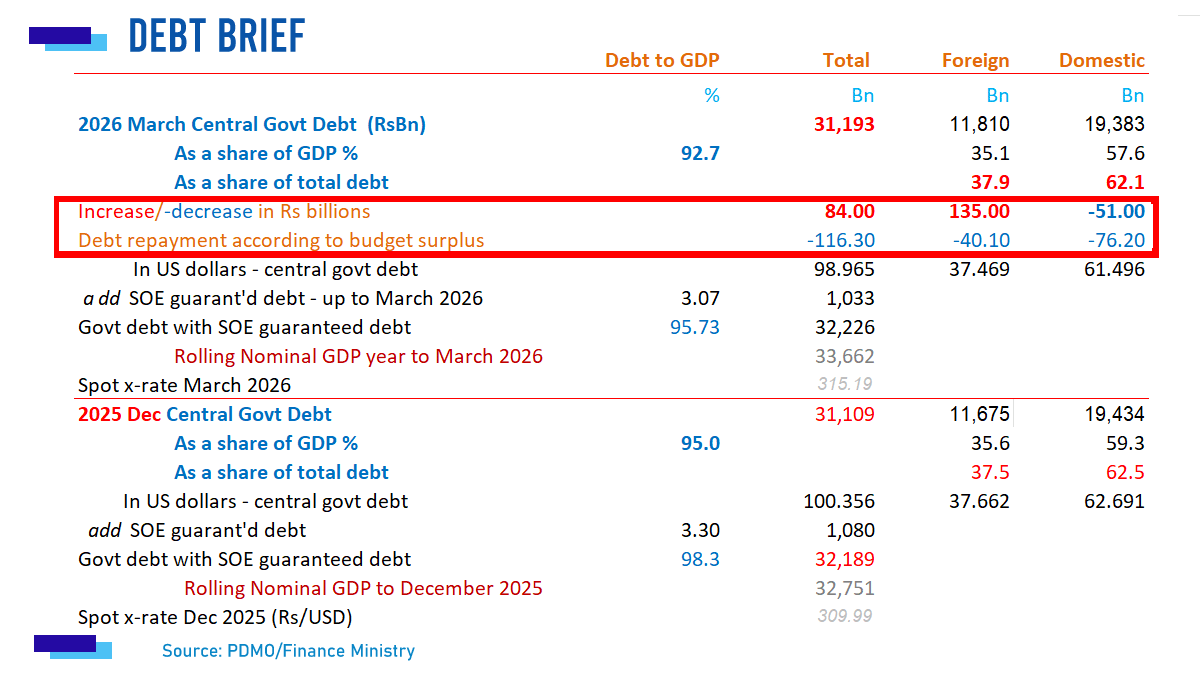
Meanwhile government debt reported in central bank data up to June 2026 also exploded from 28,738 billion rupees in December to 31,278 billion rupees, or an increase of 1,283 billion rupees.
Foreign debt bloated by 1,154 billion rupees, despite only 29 billion rupees in new borrowings as macro-economists busted the rupee. In 2026 SriLankan Airlines debt was also restructured, with sovereign bonds being issued for previously guaranteed debt.
Meanwhile domestic debt also grew by 129 billion rupees, despite net repayment of 51.8 billion rupees. It is not clear why, but there is also dollar denominated domestic debt, which can be inflated by monetary debasement.

| 3 month bill | 9.25% | 5bp ▲ |
| 12-m bill | 9.95% | 2bp ▲ |
| Gold (Ounce) | $4602 | - - |











Comments
Be the first person to comment and join the debate