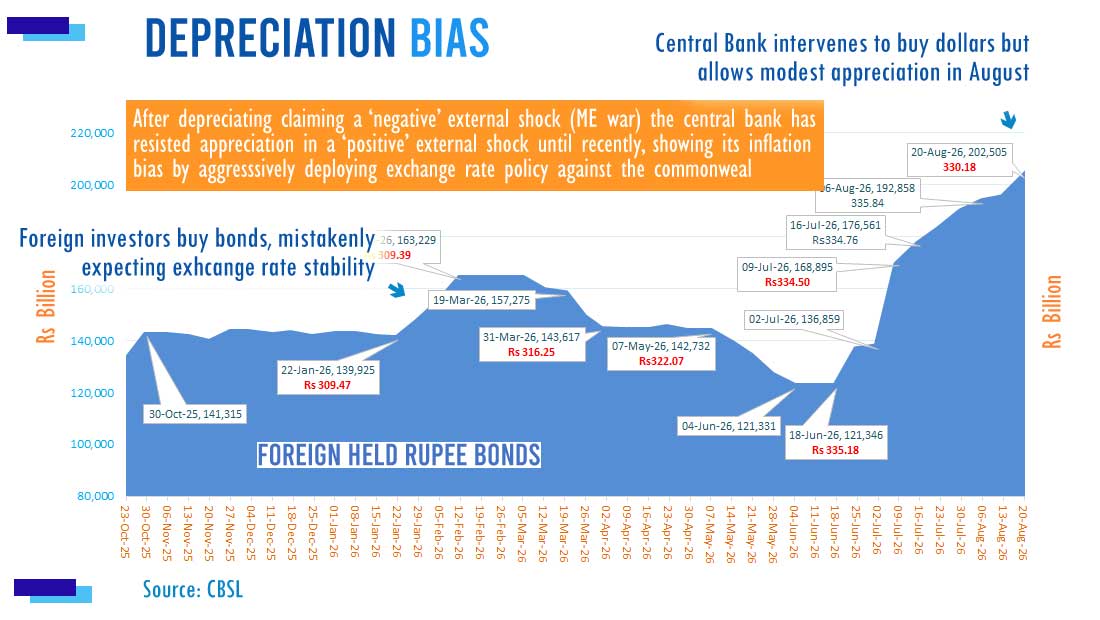
MONETABRIEF – Sri Lanka's central bank has allowed marginal appreciation of the currency, after strongly resisting currency strengthening over almost two months as foreign investors continued to by rupee bonds in a 'positive' external shock.
From August 10 to August 18, the rupee has been allowed to appreciate to 329 to the US dollar from 335 to the dollar.
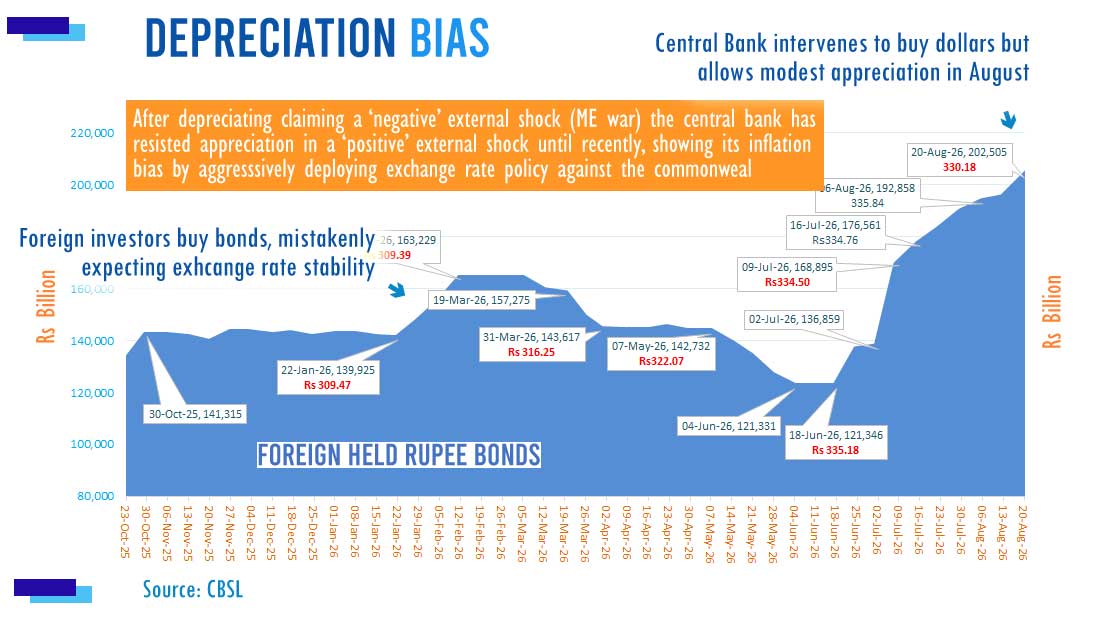
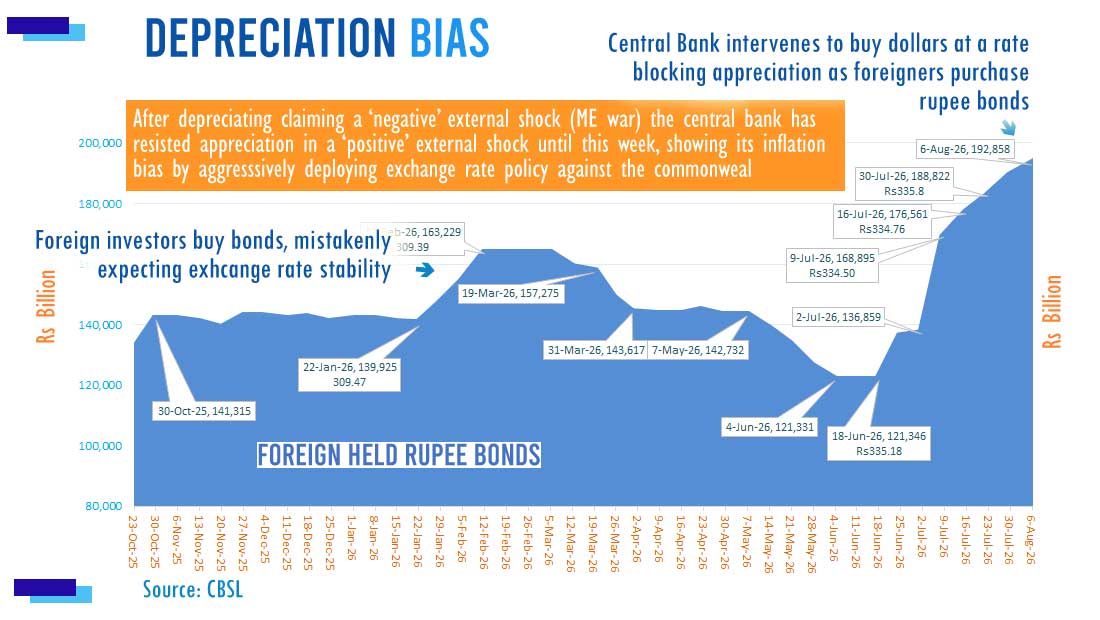
Since mid-June, foreign investors have bought about 250 million dollars into rupee bond markets, taking the outstanding stock from 121 million rupees to 202 billion rupees.
Anti-Appreciation Bias
By purchasing the dollars and creating money at 335, the central bank can block any appreciation, though a depreciation biased exchange rate policy.
Though foreign investors bought heavily into bonds June, the rupee was allowed to appreciate only in August.
In January and February 2026, when a Ditwah credit slowdown helped the rupee, appreciation was aggressively resisted by purchasing dollars (monetizing a balance of payments surplus, at 309 rupees to prevent appreciation.
At the time also foreign investors bought int to rupee bonds, but the depreciation biased exchange rate policy was also deployed at the time.
By January the rupee was already depreciated by selectively denying convertibility to the public for money created through buy-sell swaps (monetizing bank dollar balances), as well dollar purchases.
Note Issuer or Market?
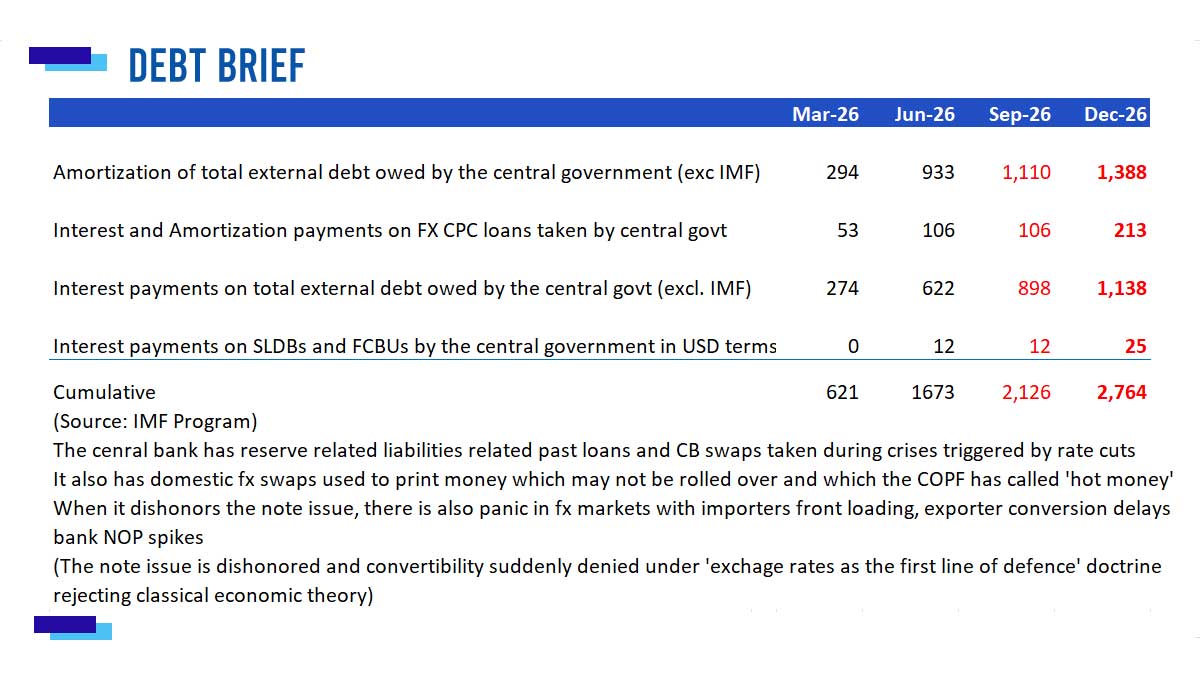
But when there is a sudden demand for dollars, such as through a rise in oil prices, the rupee is rapidly depreciated 'under exchange rate as the first line of defence', while simultaneously claims are made that the rupee is 'market determined'.
However, prices of goods are market determined, not money. Any 'market determined' money reduces a country to a primitive stage of barter, analysts say.
Exchange rates are purely determined by the policy of the note – issuing bank.
In clean floating regimes, the value of the currency against another is purely determined by monetary, purely exchange rate policy determines the value in currency boards, or a combination of exchange and money policies in intermediate regimes (soft pegs).
Soft-pegs or 'flexible' exchange rates which are not clean floats, can collapse suddenly when money and exchange policies conflict.
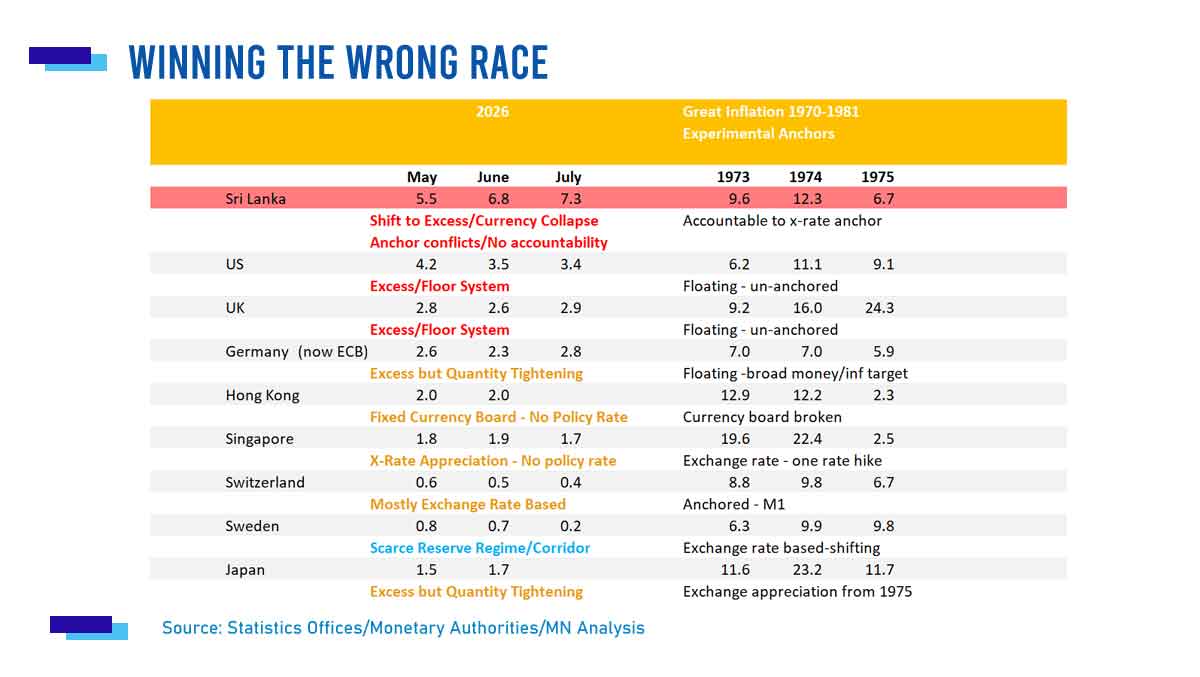
When rupee bond capital moves out however the exchange rate is steeply depreciated, in line with the observed inflation bias.
In the 2015-2019 period, foreign investor in bonds were blamed for rupee depreciation after capital flight was triggered as the rupee fell, though appreciation is resisted aggressively based on what happened in February and also July and August.
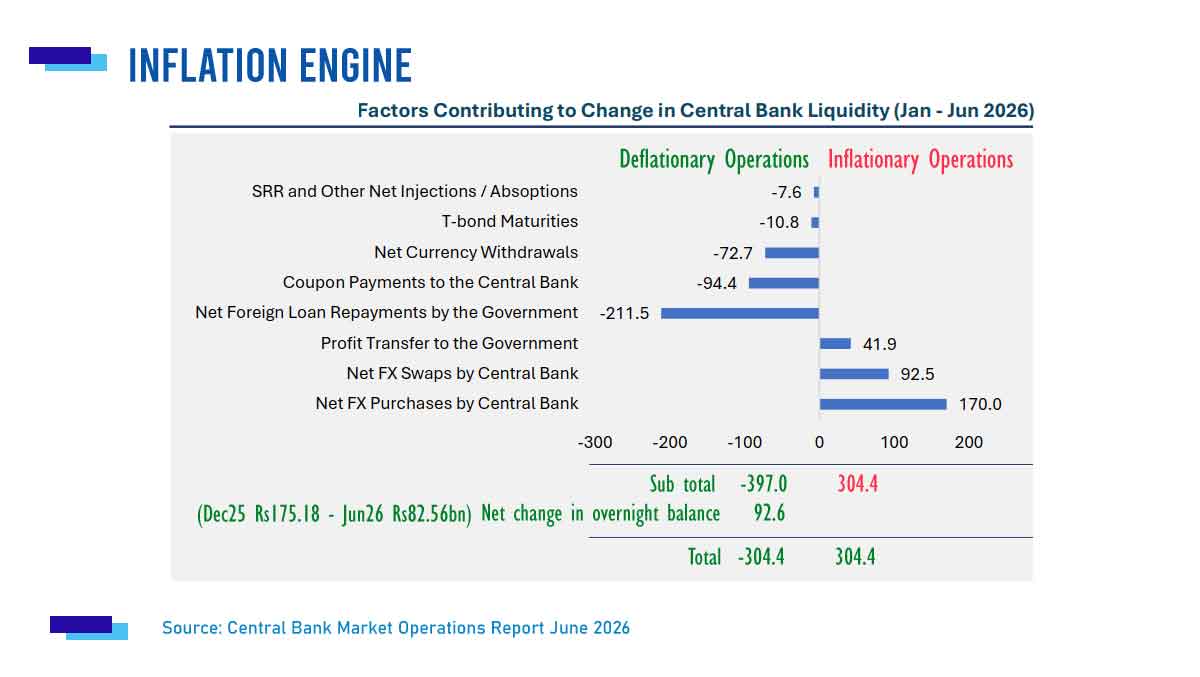
Meanwhile, the central bank has piled up excess liquidity, which in the past it has dishonored and allowed the rupee collapse at the slightest hint of trouble.
The liquidity can do down as dollars are sold to the Treasury. Last some of the excess liquidity dropped.
There have been calls fort Treasury to buy dollars, to stop the central bank from monetizing the balance of payments to 'build reserves' and then dishonor the notes and debase money, triggering social unrest, which then hits democratically elected governments.
The Treasury can buy dollars without creating money and immediately 'safeguard' them with no threat of renewed imports from bank credit given with new money.
By immediately requesting dollars for cash, the Treasury can also kill excess liquidity and reduce the risk of domestic credit driving up imports.
In a small trading nation, it is difficult to macro-economists to drive up inflation, trigger social unrest and undermine and discredit economic programs of democratically elected governments without depreciating the currency.
The rising prices from depreciation then pushes up capital costs, undermining budgets, though wages, pensions and subsidies take longer to adjust.
As nominal interest rise with the destruction of capital from depreciation, budgets go out of line.
Social Unrest, Political Instability
Though macro-economists may spread a narrative that inflation increases revenues, it comes at a social cost as wages do not adjust.
In the time gap between prices rising from depreciation and wage adjusting (the so-called the Cantillon effect) democratically elected governments get unpopular.
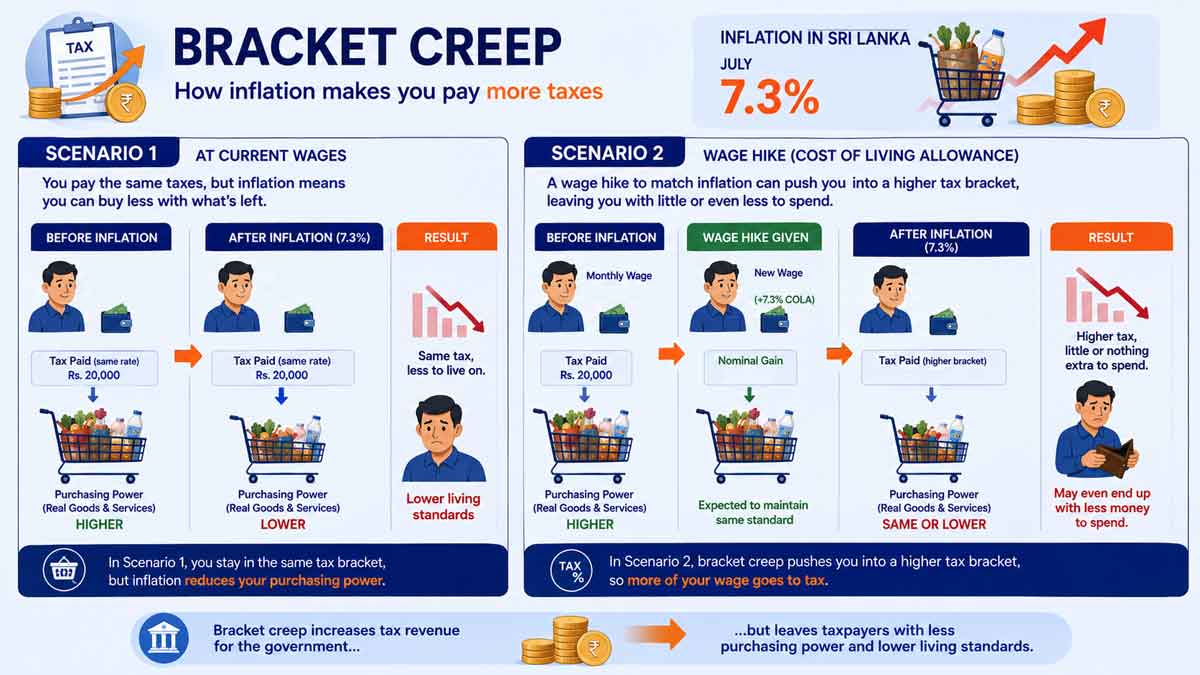
Income taxes can also go up by 'bracket creep", undoing any threshold rises given by the government.
If depreciation continue, they get voted out and people can come out to the streets.
Nominal interest rates can go to very high levels as inflation destroys capital, undermining budgets. In the US, aggressive macro-economic policy is driving up interest rates also.
Before macro-economics and the IMF's Second Amendment to its Articles, the discipline that was once called economics or political economy was based on moral philosophy.
In the classical period note issue banks that debased money went out of business.
However economic freedoms can be robbed and foreign investors discouraged or driven away by reversing reforms with intensifying exchange and import controls even without depreciation. As money supply is inflated, exchange and trade controls follow.
Exchange, trade controls and price controls, which block the workings of a market economy, and build up imbalances, also induce people to break the law.
Singapore economic architect Goh Keng Swee told JR economic controls and black markets created a "corrosive effect on personal integrity." (Colombo/Aug24/2026)


















Comments
Be the first person to comment and join the debate