MONETABRIEF – Currency depreciation has blocked equity investments in Sri Lanka, an official of a French development finance agency that is ready to invest in the country as it emerged from its first default said.
Proparco, the private sector financing arm of the French development agency AFD, is looking to invest in Sri Lanka.
It has in the past provided dollar credits mainly to banks which then on lent to smaller customers. It is once again looking at similar opportunities.
Proparco has not directly funded firms in Sri Lanka, but only financial institutions.
"We have not funded non-intermediated projects like direct investments," Vincent Vandenbussche, acting regional director for South Asia said during a visit to the island.
"We have only invested through debts, no equity. It's a pity because Proparco has also a mandate to invest in equity in its regions, in its countries.
"To do so, we would need to have more political stability and much more currency stability. Because as soon as you invest in equity, you take the currency risk that goes with it.
"And it's not a piece of cake to manage that".
After Sri Lanka emerged from default, Proparco can invest in dollar debt in qualifying companies especially in areas related to climate (renewable energy), poverty reduction and promoting gender equality.
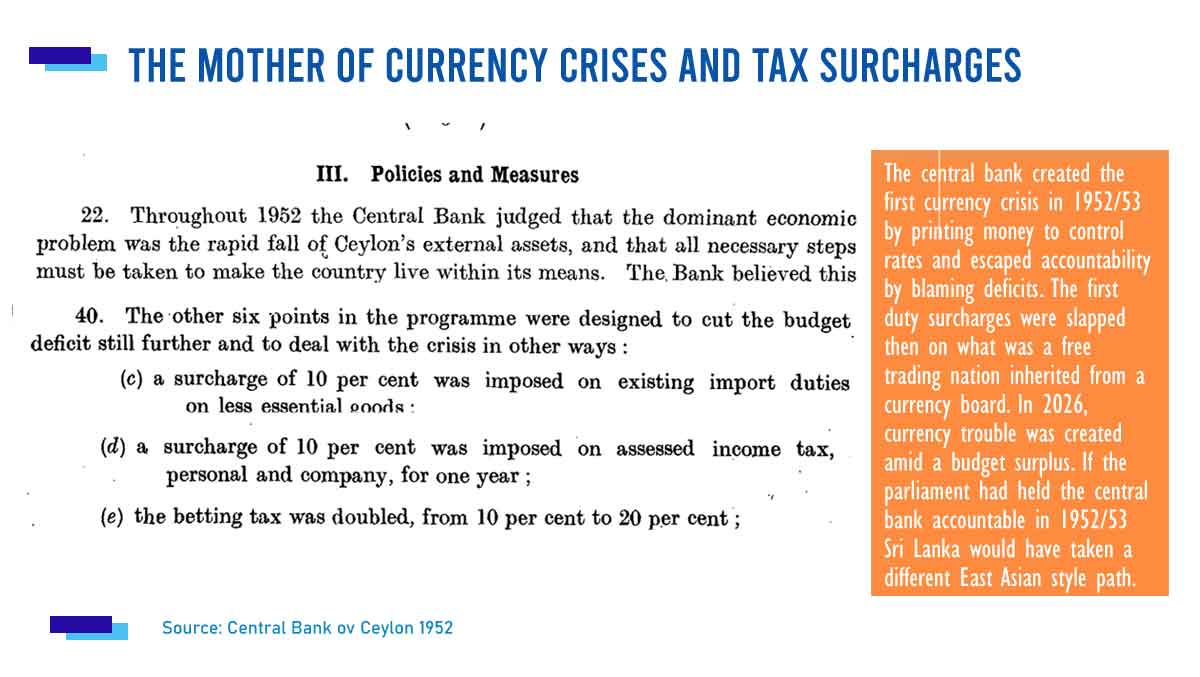
Sri Lanka defaulted in 2022 after serial currency crises from printing money to close an output gap under so-called flexible inflation targeting, where attempts are made to target a domestic anchor while running an external anchor to collect reserves, triggering crises when the anchors conflict.
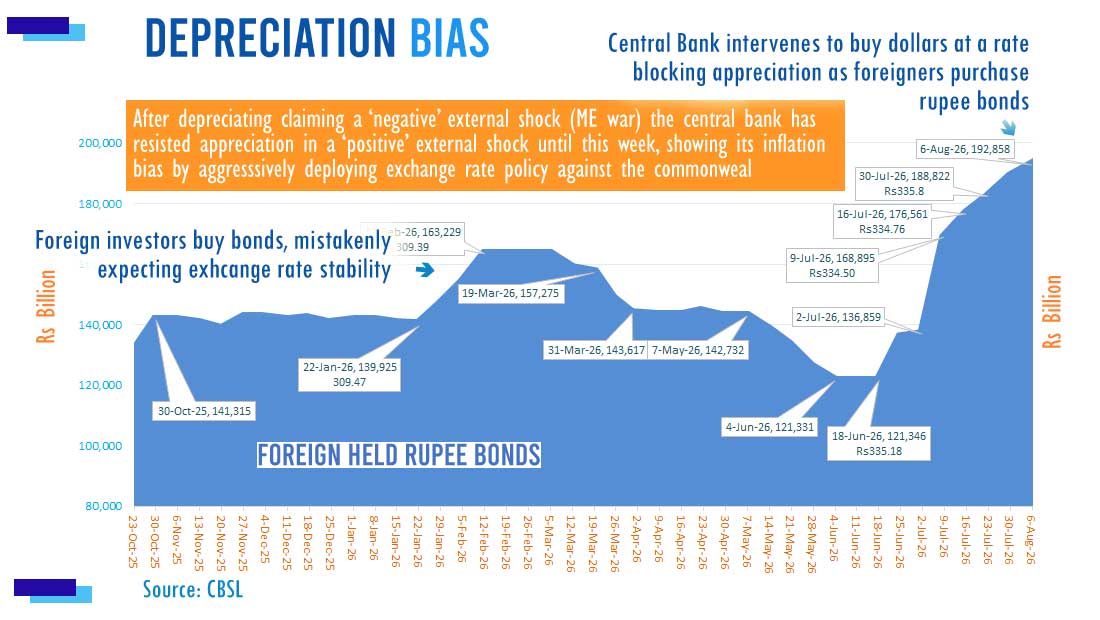
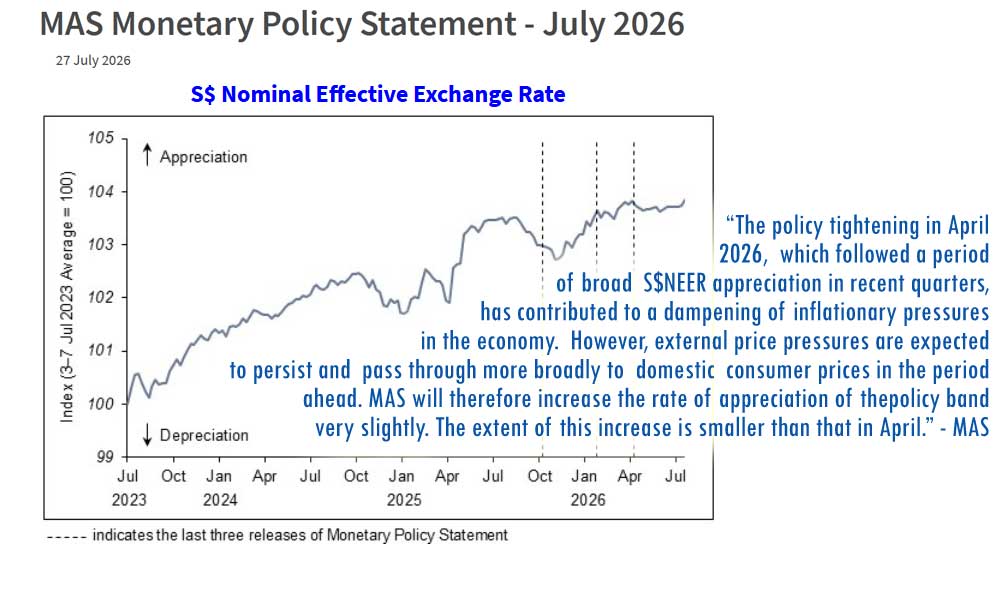
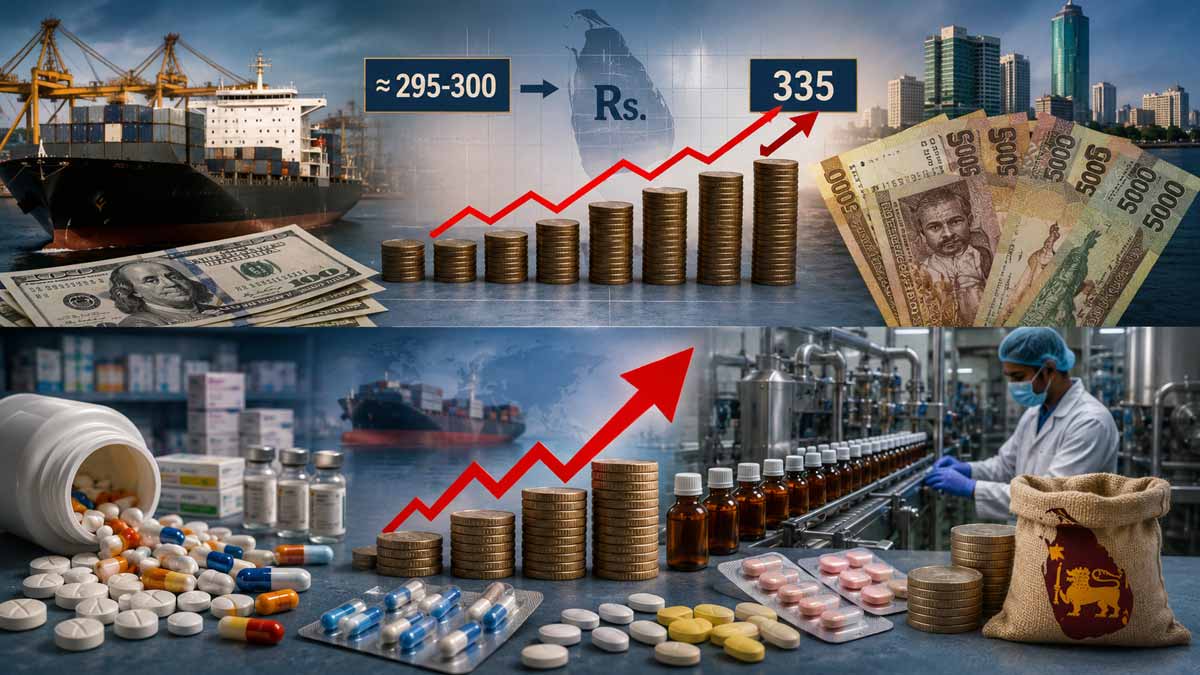
The rupee collapsed again in 2026 with a budget surplus as money was printed mainly through buy-sell swaps to cut rates just as credit recovered, repeating a trend seen for the last decade under flexible inflation targeting.
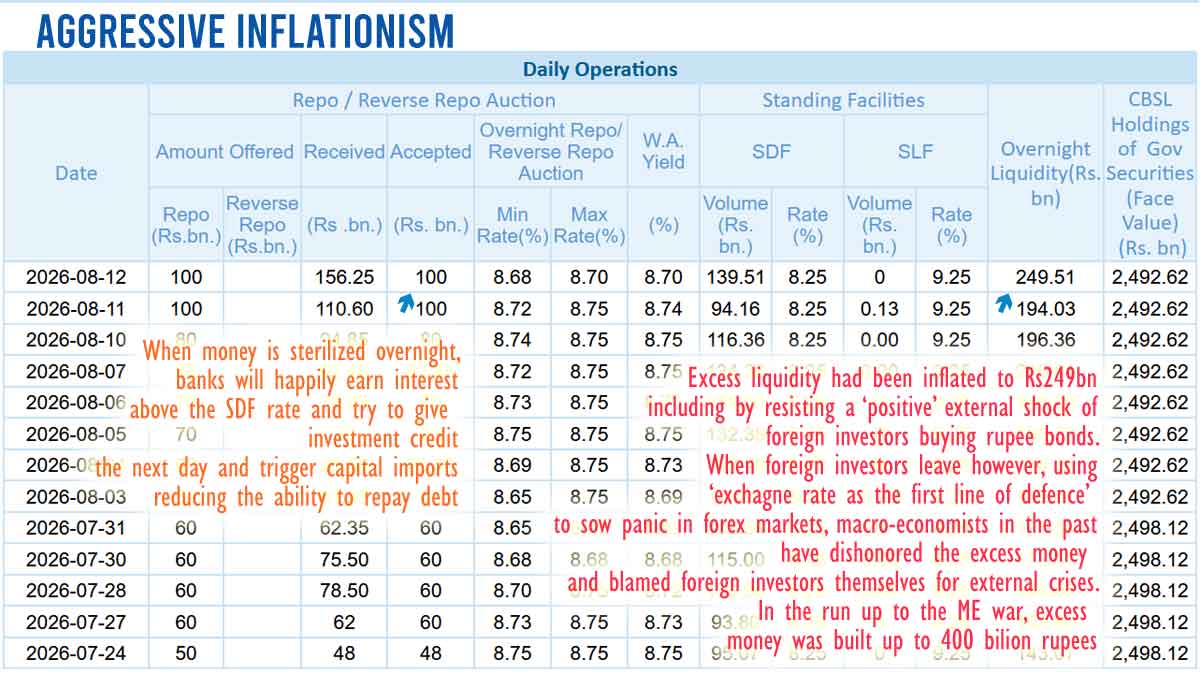
The central bank prints money to 'guide interest rates along the desired path', or buys dollars through its de facto peg to build up excess liquidity whenever there is a positive shock to the exchange rate (monetizes a balance of payments surplus).
It then dishonors the excess liquidity it has built up in money markets, whenever there is a demand or some 'negative shock' leading to panic in forex markets and collapse, analysts have shown.
Sri Lanka has recently offered dollar denominated tariffs, to renewable energy projects like wind and solar, giving some protection to the investors from monetary debasement.
"If local investors with USD fixed denominated revenue PPA (Power Purchase Agreements), are coming to us and proposing us to invest more on that field, we'll be happy to do so," he said.
"In the past it was not so. We'll be happy as well to look at and to develop that segment and that sector." (Colombo/Aug16/2026)








Comments
Be the first person to comment and join the debate