
Share your email and we'll share the latest news
Exclusive economic intelligence, political and business coverage
Wednesday, September 30 2026
Wednesday, September 30 2026
MONETABRIEF - Sri Lanka's central bank said it was keeping rates unchanged at 8.75 percent, as inflation reached 8.0 percent after currency collapse earlier in the year.
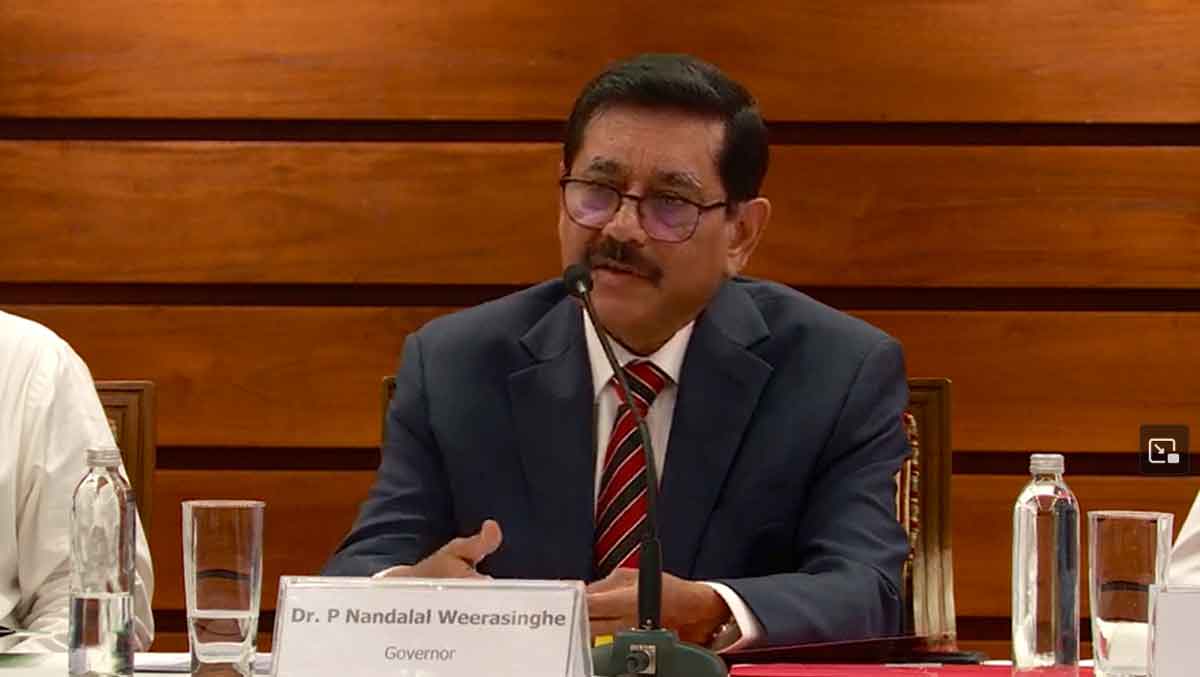
"The Board arrived at this decision after carefully considering the evolving conditions and outlook on the domestic and global fronts," the central bank said in its September monetary policy statement.
"The Board also recognised the uncertainty arising from evolving geopolitical tensions in the Middle East and potential risks associated with El Niño conditions on the economy."
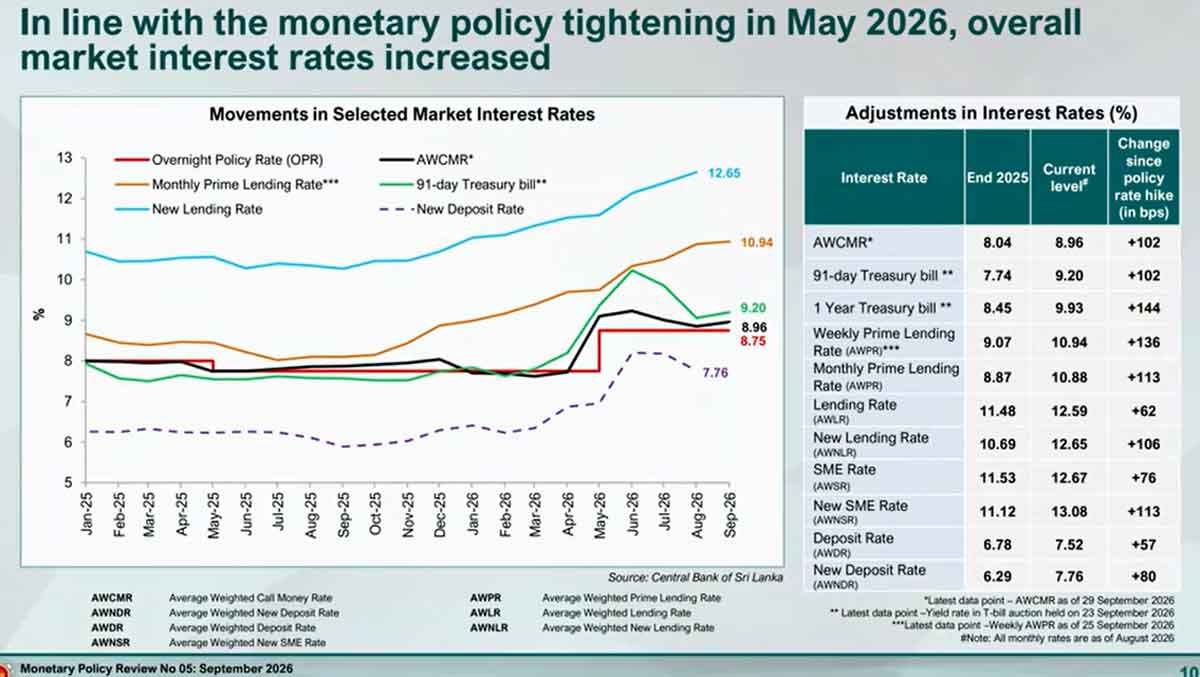
The central bank hiked rates in May after the rupee collapsed amid market panic from dishonored excess liquidity printed through dollar-rupee swaps and monetizing a balance of payments surplus.
The agency missed its already high and controversial inflation target, through which critics say repeated external trouble has been triggered.
The full statement is reproduced below:
The Central Bank of Sri Lanka maintains the policy rate at the current level
The Monetary Policy Board, at its meeting held yesterday, decided to maintain the Overnight Policy Rate (OPR) at the current level of 8.75%. The Board arrived at this decision after carefully considering the evolving conditions and outlook on the domestic and global fronts.
The Board paid particular attention to the effects of the proactive monetary policy tightening in May 2026 alongside other measures that had already materialised to a large extent. The Board also recognised the uncertainty arising from evolving geopolitical tensions in the Middle East and potential risks associated with El Niño conditions on the economy.
Domestic economic activity remained resilient, recording a real growth rate of 4.7% (y-o-y) in the first half of 2026. Leading economic indicators point towards continued momentum, although global and climate-related uncertainties could weigh on the outlook.
Although growth of credit to the private sector is gradually moderating in response to recent policy measures, credit flows are expected to remain sufficient to support economic activity.
Headline inflation rose to 8.0% (y-o-y) in August 2026, reflecting the pass-through of the energy shock across multiple sectors of the economy. Headline inflation is projected to remain in high single digits through Q1-2027, before easing towards the 5% target. Core inflation also increased as a result of spillovers from higher energy prices. In spite of the current spike in inflation, medium-term inflation expectations remain broadly anchored around the target.
Amid ongoing tensions in the Middle East, the external sector has remained resilient. The current account is estimated to have recorded a surplus in August 2026 after four consecutive months of deficits. This was supported by moderated merchandise imports, along with improved earnings from tourism and workers’ remittances.
Gross Official Reserves rose to USD 6.9 bn1 at the end of August 2026, supported by net foreign exchange purchases by the Central Bank. The Sri Lanka rupee, havingappreciated against the US dollar in July and August 2026, witnessed mixed movements in September.
The recent Sovereign rating upgrade is expected to further strengthen market sentiments.
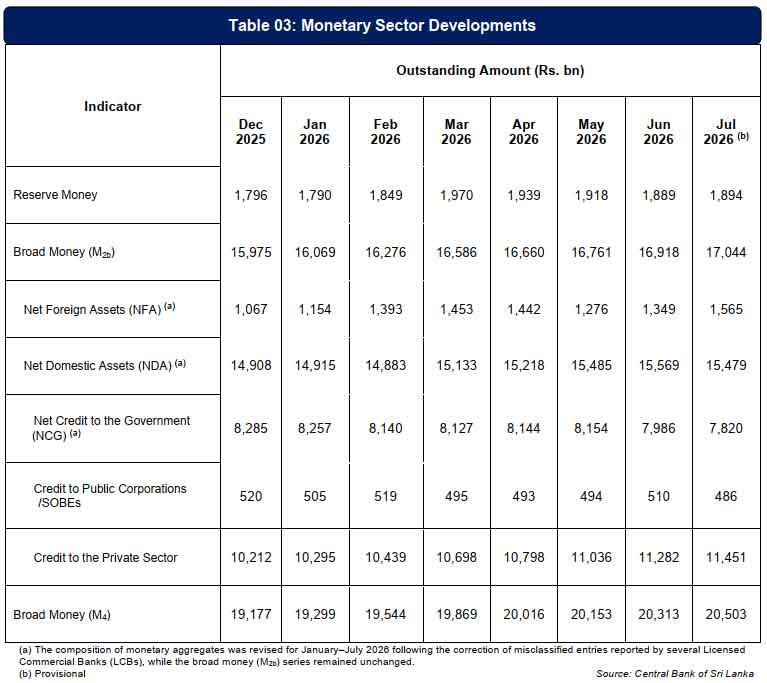
The Central Bank will remain forward-looking and data-dependent in its policy decisions. Should inflationary pressures intensify or inflation expectations show signs of de-anchoring, the Central Bank stands ready to take timely and appropriate measures to ensure that inflation stabilises around the target, while supporting the economy to operate around its potential over the medium term.
The release of the next regular statement on the monetary policy review will be on 20 November 2026.

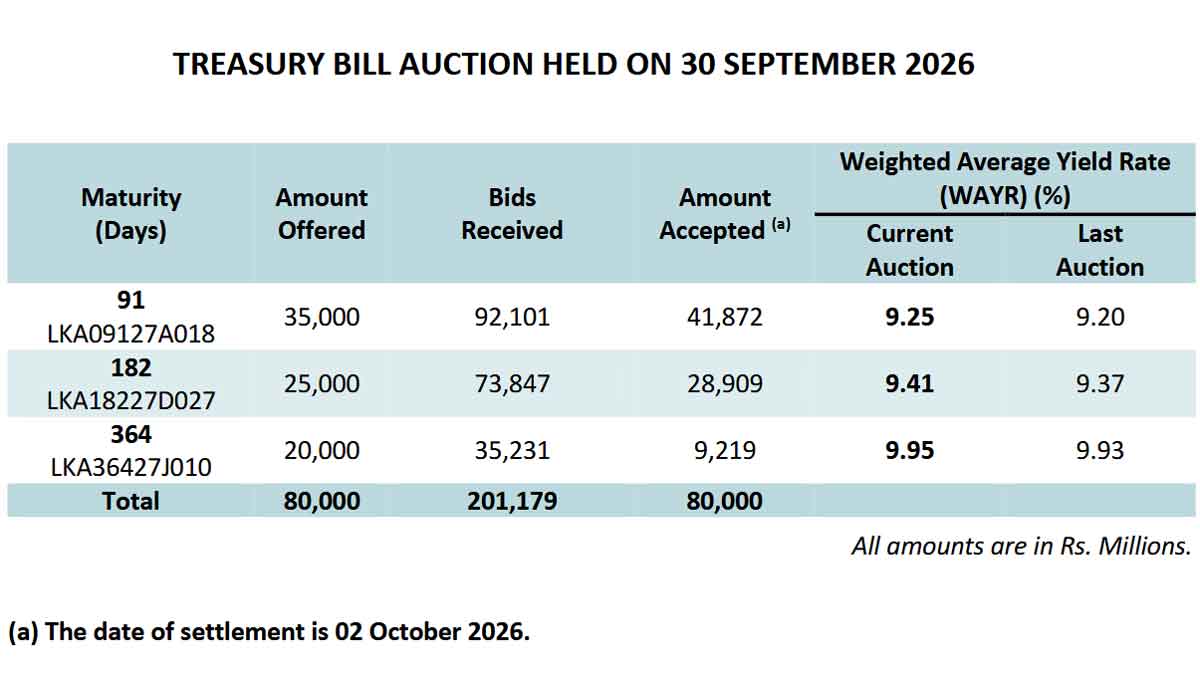
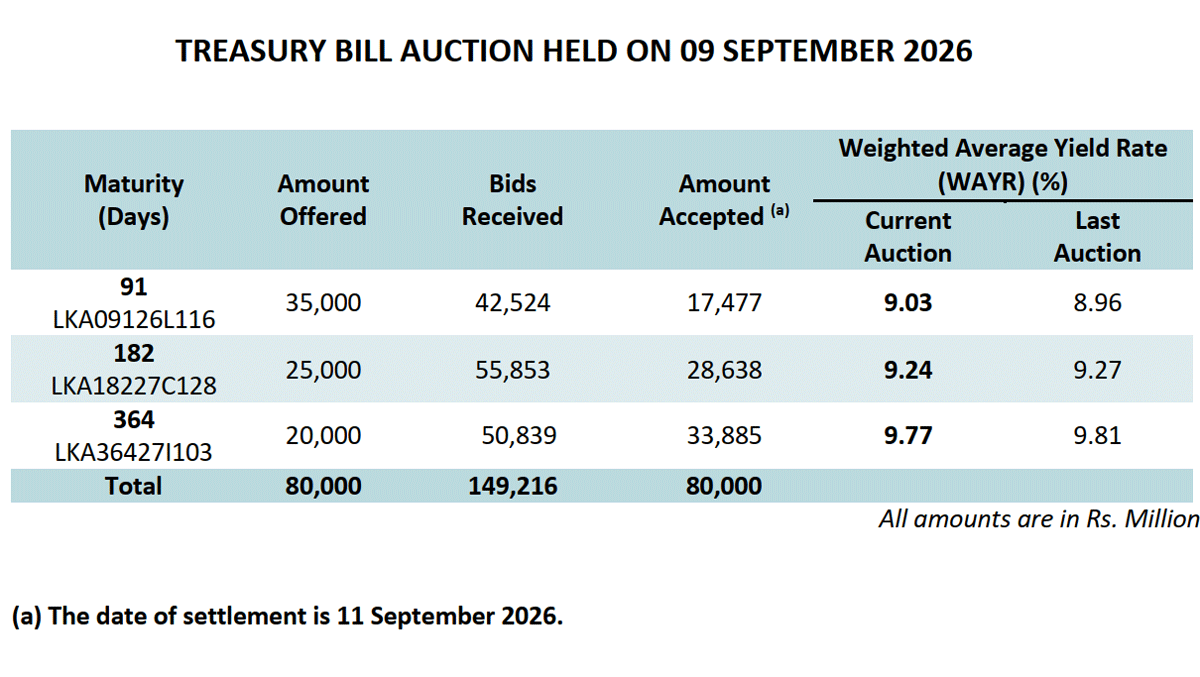
| 3 month bill | 9.25% | 5bp ▲ |
| 12-m bill | 9.95% | 2bp ▲ |
| Gold (Ounce) | $4602 | - - |











Comments
Be the first person to comment and join the debate