
Share your email and we'll share the latest news
Exclusive economic intelligence, political and business coverage
Monday, October 19 2026
Monday, October 19 2026
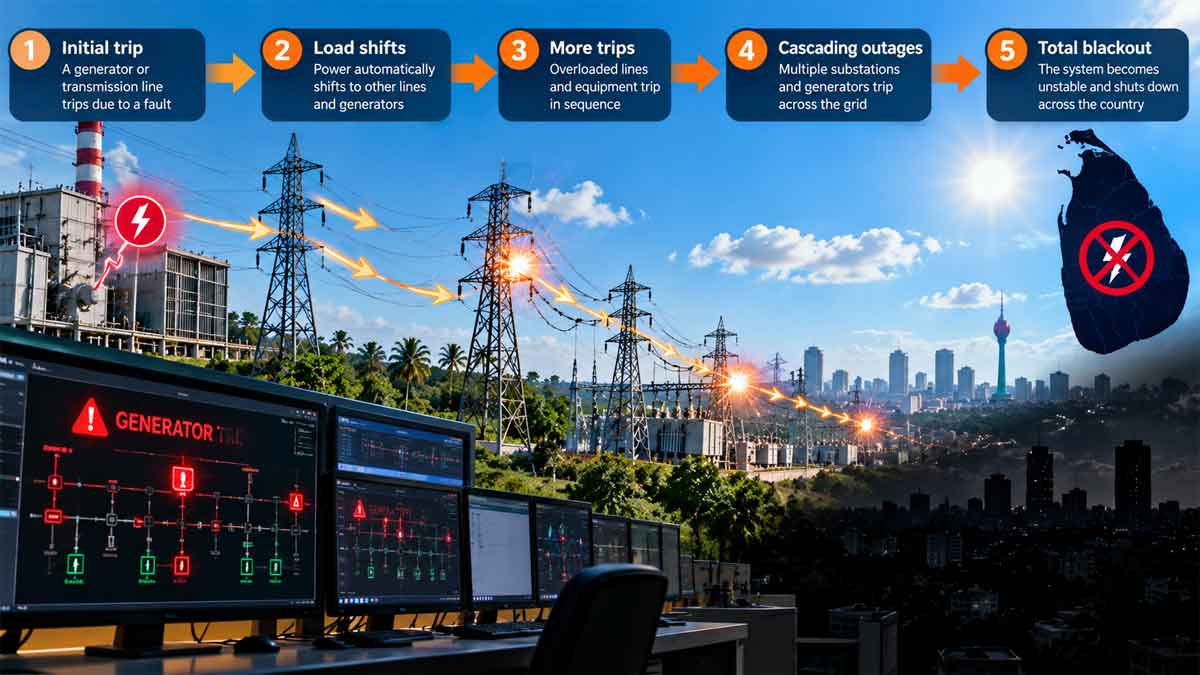 SUNNY SATURDAY: Sri Lanka has seen cascading failire due to high rootop solar in the past.
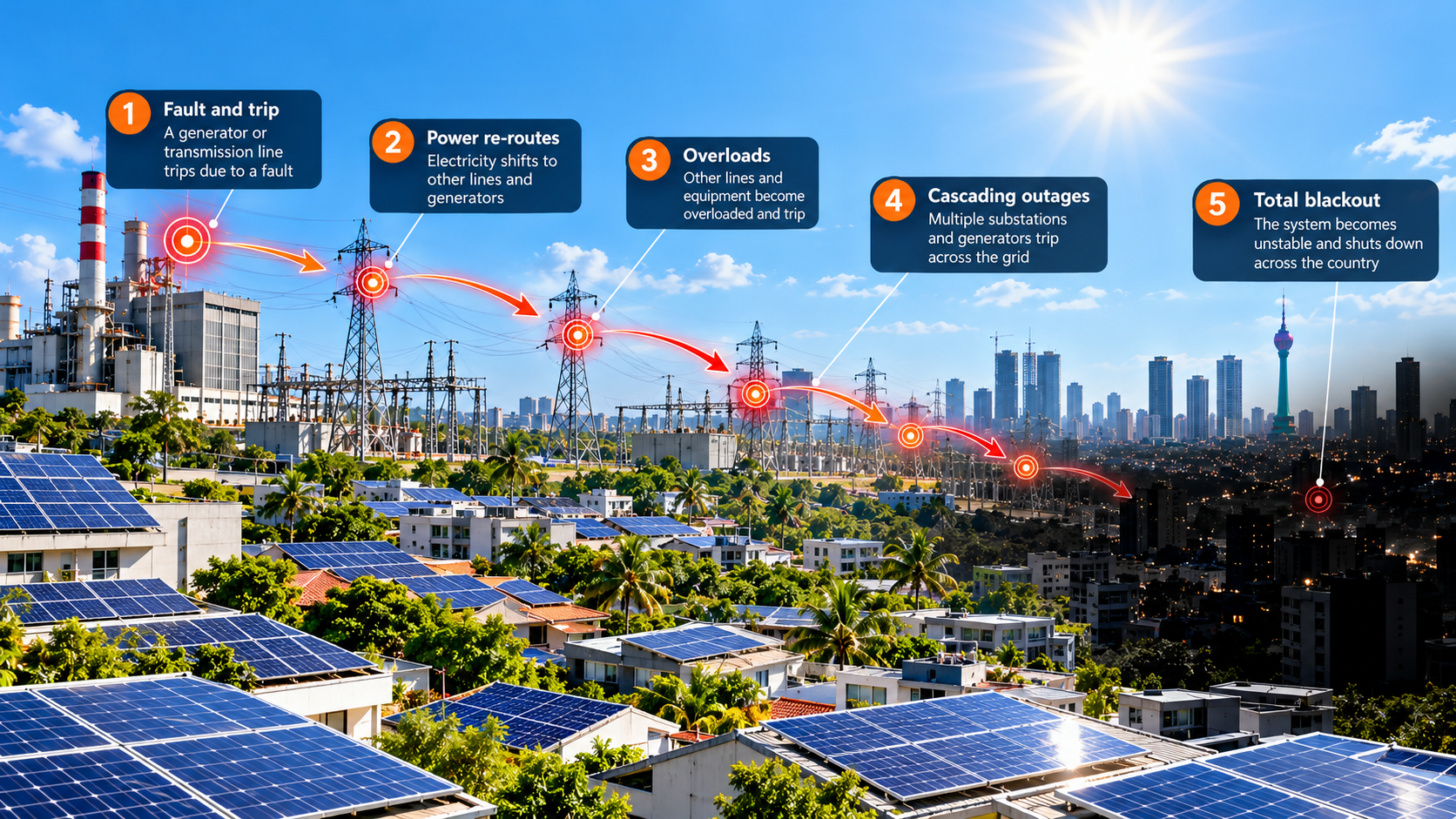
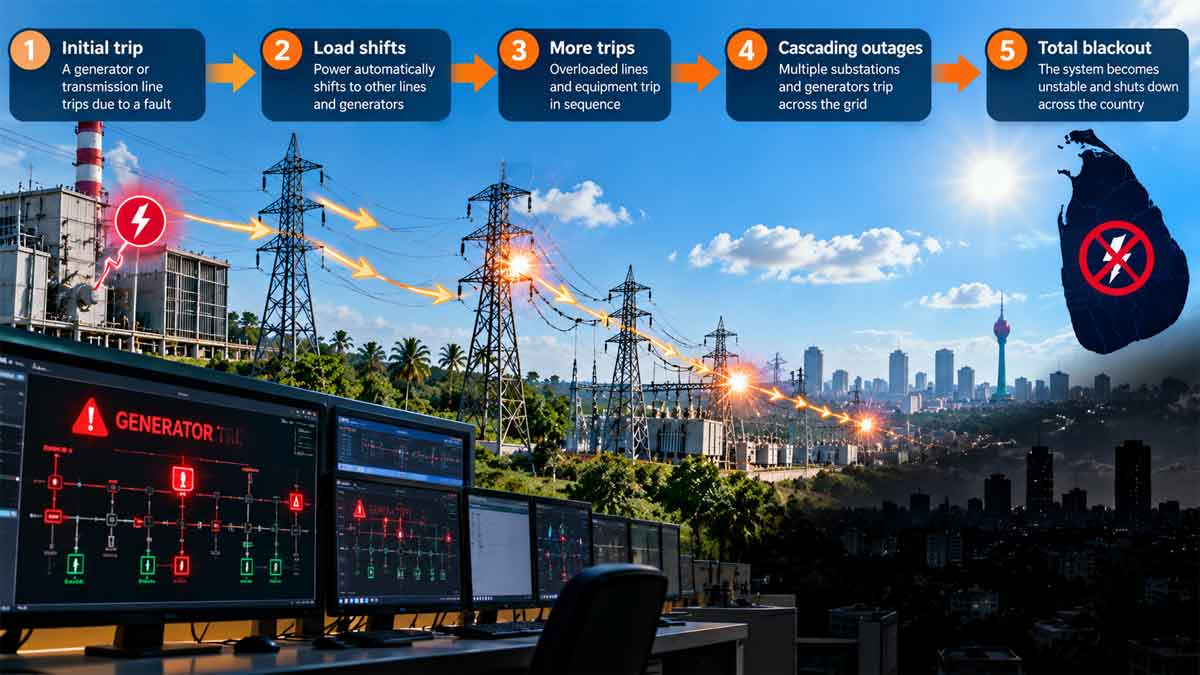
MONETABRIEF - Sri Lanka's electricity grid was hit by a cascading failure that has blacked out country, power utility sources said.
The exact cause has not yet been established, a top official said.
Power failed around mid-day with bright sun, especially in the Western province which has a high concentration of solar power.
Re-energizing the grid can also be difficult with high concentration of rooftop solar, as restored sections also fail with clouds passing.
Sunny Sunday?
Sri Lanka's power grid has a large share of rooftop solar and a relatively minor shock such as a wild animal strike can trip the system during a holiday when daytime demand is low, a phenomenon known as the 'Sunny Sunday' effect.
Usually when one generator trips, or a transmission line trips, rotating generators in the system can absorb the fluctuation.
But when the share of rotating generator is low, and the frequency drops, the entire system goes down.
The power grid tries to limit rooftop solar on holidays to reduce the risk of cascading failure.
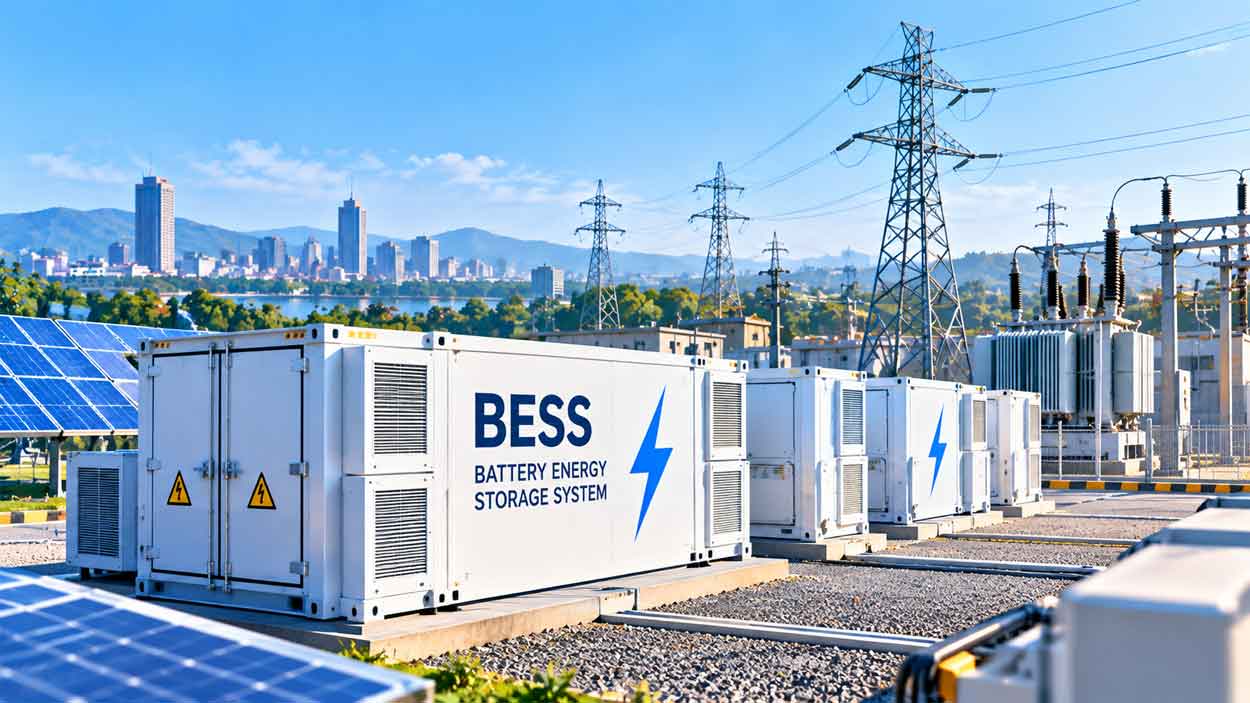
Battery energy systems are also being built.
Engineers were working to restore power as quickly as possible, an official said, while attempts were also made to establish the trigger.
Difficult to Restore on a Sunny Day
It can take several hours to fully re-energize the grid, with a high concentration of rooftop solar, as restored sections can also fail until the sun starts to go down.
System controllers had begun to restore Gampaha but the section failed again, utility sources said.
In the last so-called Sunny Sunday failure from an animal strike and high solar, engineers found it difficult to restore power until the sun started to go down after around 300 pm.
The power grid also requested rooftop solar owners to shut their systems and stop exporting power to the grid. (Colombo/Oct17/2026)

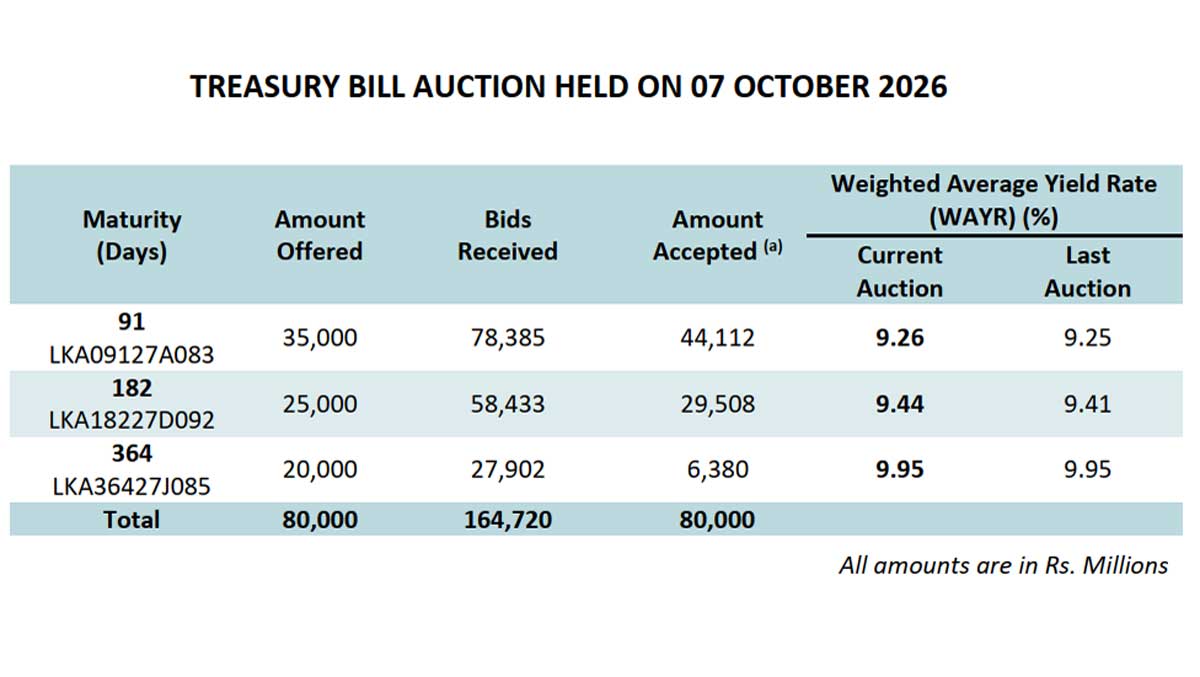
| 3 month bill | 9.26% | 1bp ▲ |
| 12-m bill | 9.95% | 2bp - |
| Gold (Ounce) | $4187 | - ▼ |














Comments
Be the first person to comment and join the debate