
Share your email and we'll share the latest news
Exclusive economic intelligence, political and business coverage
Saturday, October 10 2026
Saturday, October 10 2026
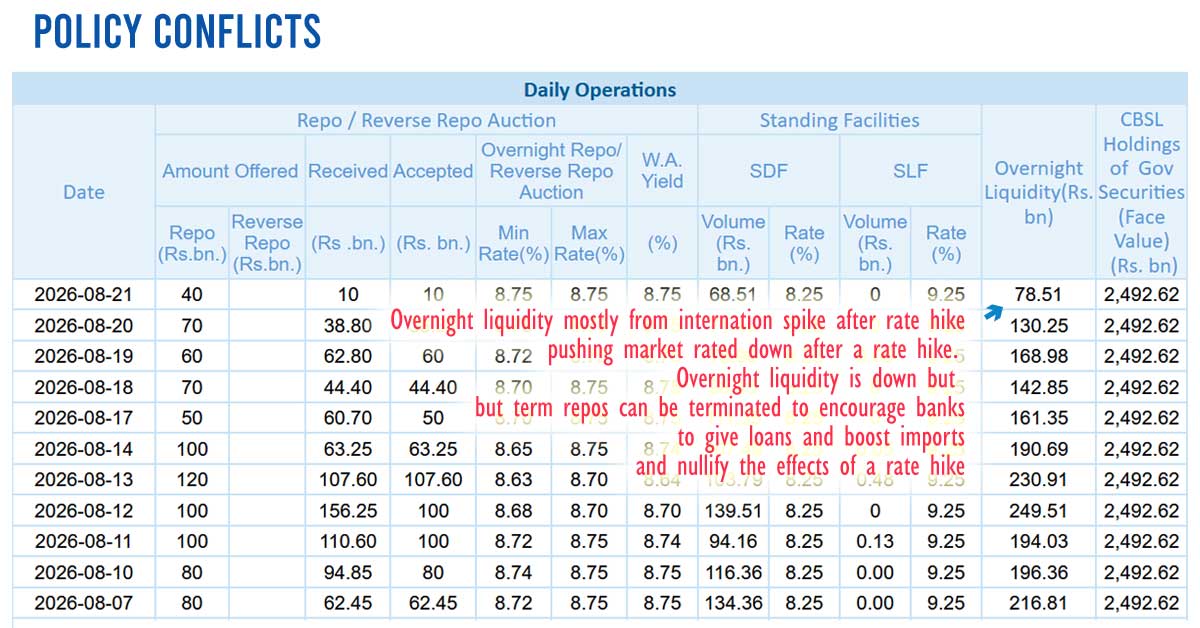
MONETABRIEF – Excess reserves in Sri Lanka's banks dropped on August 21, with overnight excess liquidity dropping in part due to term repurchase operations, official data showed as the monetary authority juggled with pegging while pursuing an inflation target.
Overnight excess liquidity dropped to 78.51 billion rupees on August 21, from 130 billion rupees a day earlier, and 168 billion rupees two days earlier.
By August 21 about 230 billion rupees were mopped up in term repo operations taking the total excess reserves to around 308 billion rupees.
The central bank is buying dollars from the market in a pegging operation and selling mostly to the government to repay debt also in a pegging operation.
On August 12, overnight liquidity was 249 billion rupees and term operations were around 110 billion rupees, taking the total excess reserves to 359 billion rupees.
Money was mopped up for periods of up to 30 days at 9.19 percent, below the overnight ceiling rate, encouraging banks to find customers to give investment credit and generate imports.
There has been foreign purchases of dollars and a slight appreciation allowed by the central bank also led to improved confidence, with other market participants also selling down long positions in dollars.
Juggling Conflicting Operations
In a market operations report up to June, the central bank said rates were raised by 100 basis points point in March to "was intended to contain inflationary pressures, anchor inflation expectations, moderate credit and import demand, and to safeguard domestic price stability and alleviate pressures on the external sector."
But market interest rates plunged as excess liquidity from pegging operations went up, and overnight mopping up was below the ceiling rate. However interbank lending activity went up Friday as liquidity dropped.
Term operations can be terminated to push up liquidity, push down rates to keep them at 8.75 percent, and give more bank credit for imports.
Excess liquidity generally falls and the system tightens when dollars are sold to the Treasury to repay debt for cash also in an unsterilized pegging operation.
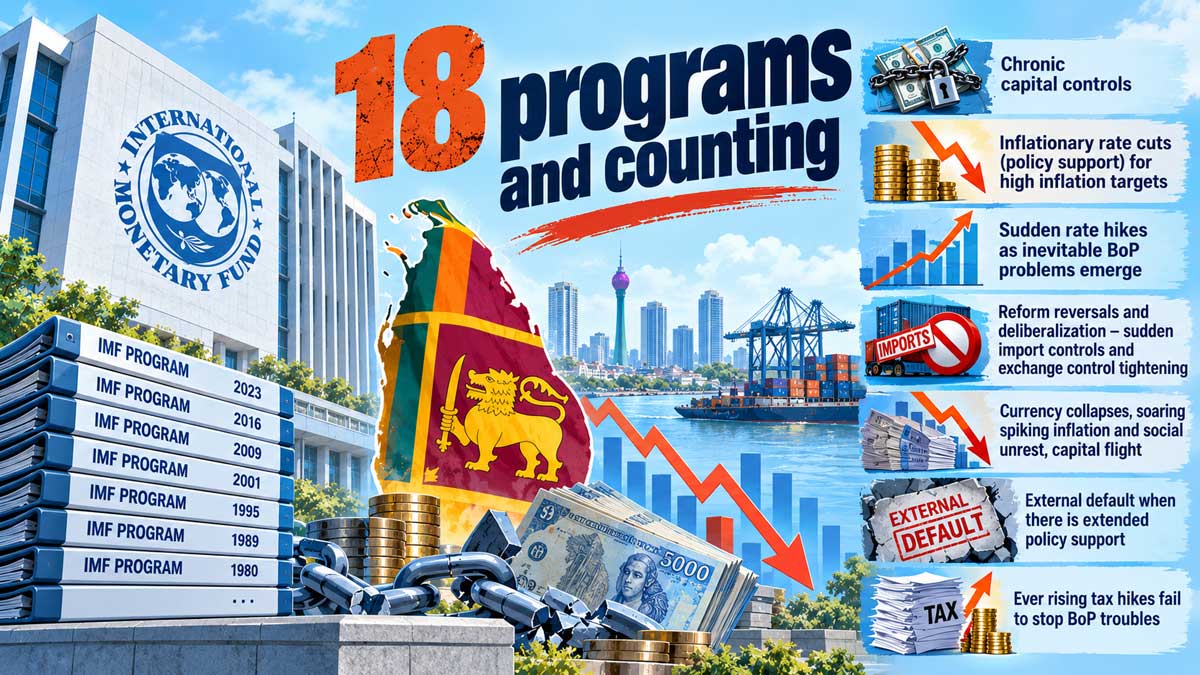
Analysts had warned that the central bank's operating framework was fundamentally flawed and it was escaping accountability for policy errors blaming politicians (deficits), the public (trade deficits or current account deficits).
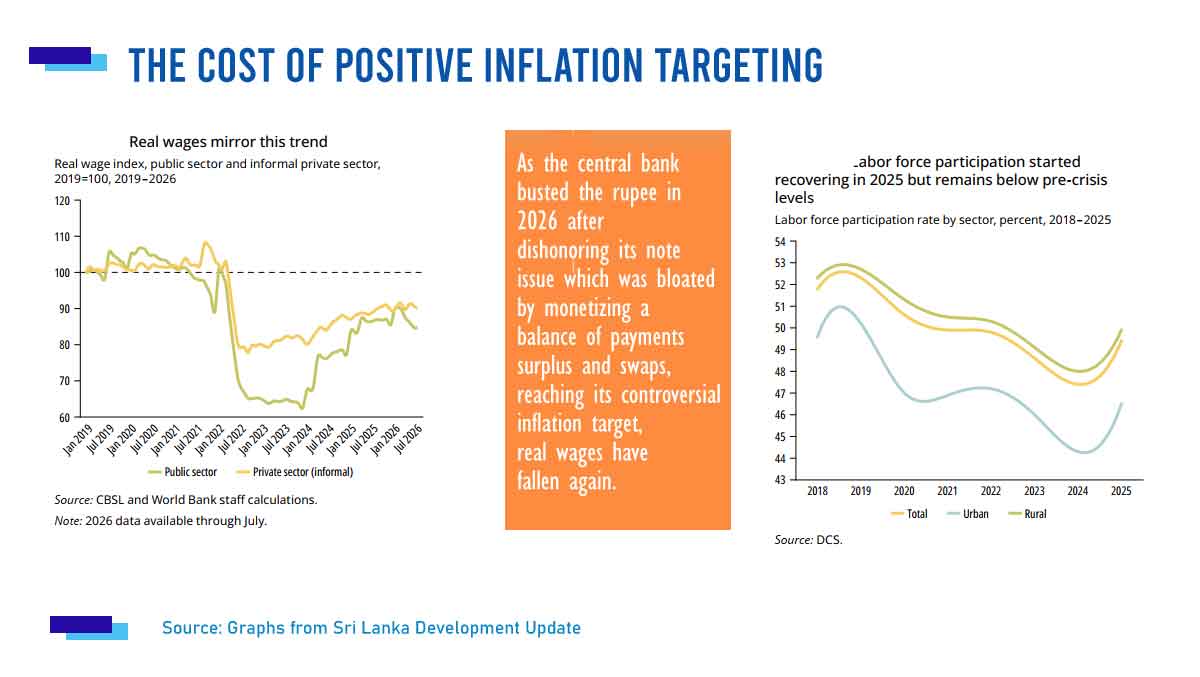
In 2026 the currency collapsed with a budget surplus.
In a further danger to external stability, there is also a 'buffer' involving the banking system, which allows the Treasury to prevent paper bonds being rolled over and turn them into bank credit and liquidity.
The financial repression tool using the banking system was inherited by the Public Debt Management Office from when public debt was under the central bank.
It is not possible to operate an 'inflation targeting' framework with a domestic anchor, and collect reserves at the same which requires pegging, analysts had warned seeing missed reserve targets in 2018 in particular.
It was possible to do so up to December 2024, because the IMF programs at the time contained a provision to permanently kill liquidity from pegging operations.
There are calls for the Treasury to buy dollars to reduce money and exchange policy conflicts, and steep rises in excess liquidity from international operations, which are countered with weak domestic operations.
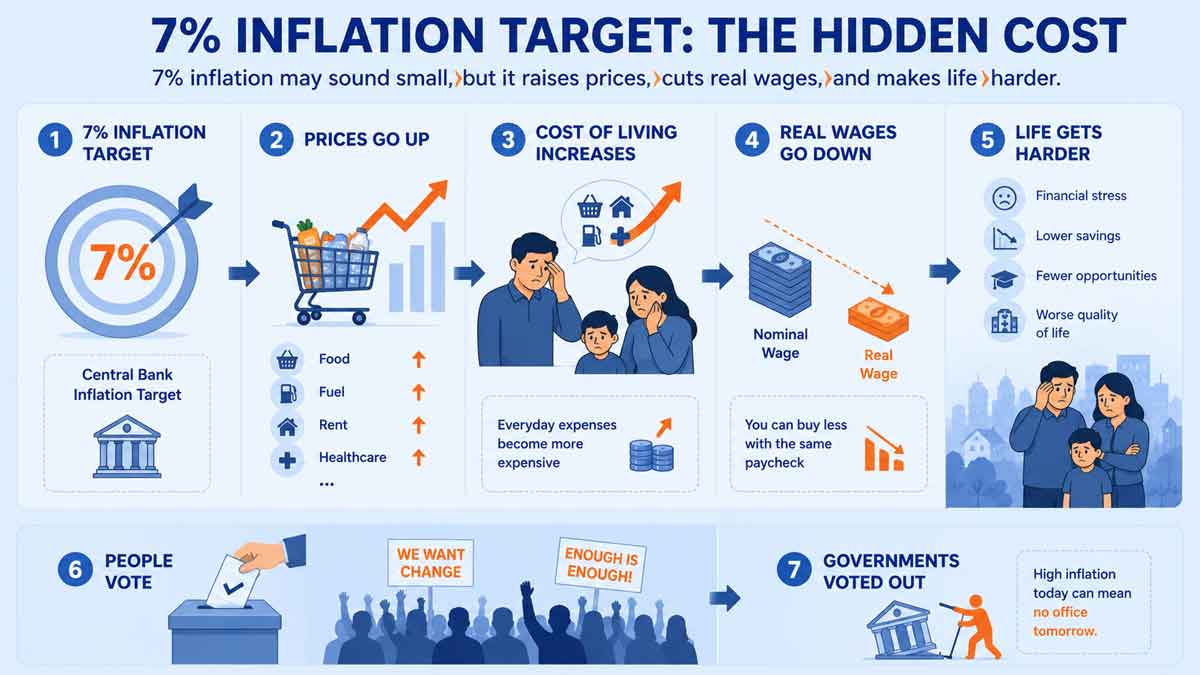
If excess liquidity spikes are prevented in the first place, monetary authorities are less likely to bust the currency and create social unrest by resorting to 'exchange rate as the first line of defence' to dishonor the newly created money triggering massive confidence shocks. (Colombo/Aug24/2026)

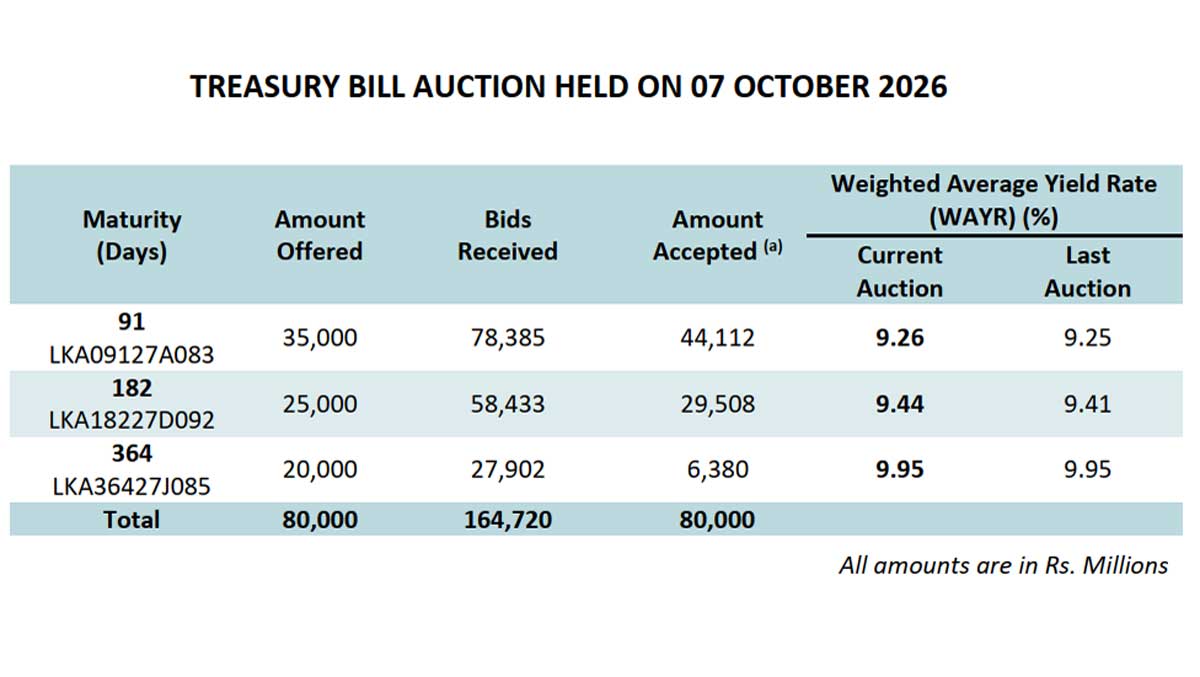
| 3 month bill | 9.25% | 5bp ▲ |
| 12-m bill | 9.95% | 2bp ▲ |
| Gold (Ounce) | $4602 | - - |















Comments
Be the first person to comment and join the debate