
Share your email and we'll share the latest news
Exclusive economic intelligence, political and business coverage
Saturday, September 19 2026
Saturday, September 19 2026
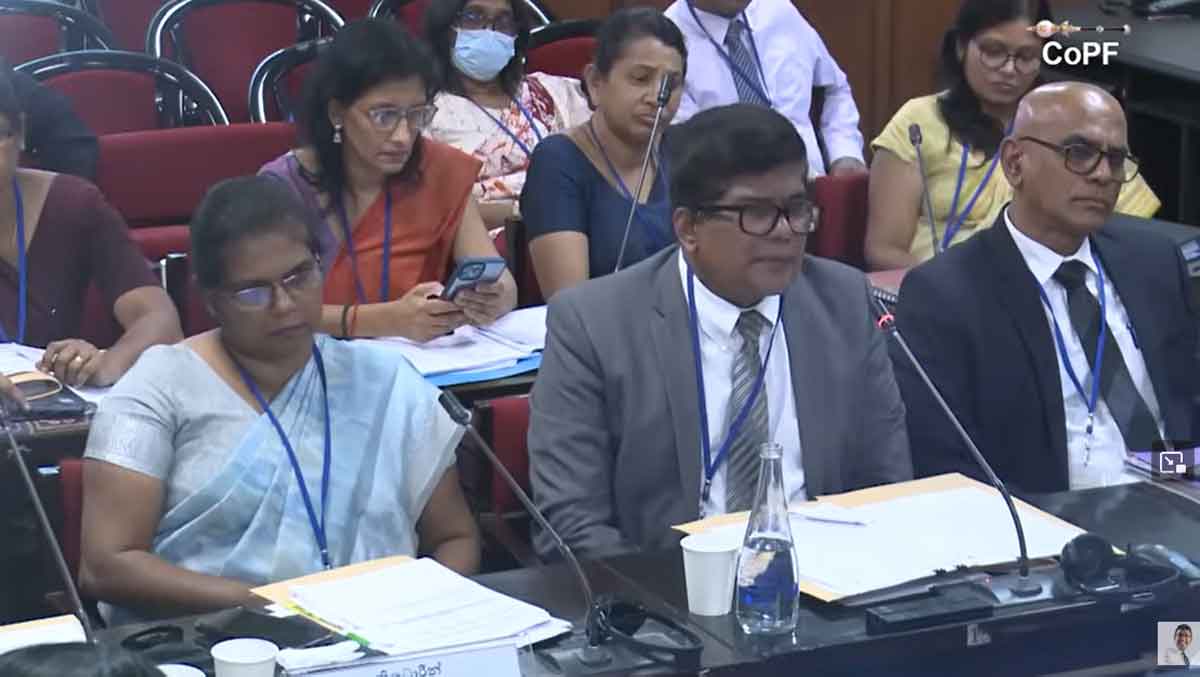 MONETARY INSTABILITY : Though macro-economists claim revenue goes up when rupee depreciates, costs catch up. Any non-neutrality of money comes from delayed wage hikes and social unrest
MONETABRIEF – Sri Lanka contractors have sought cost escalations on contracts already issued, the Parliament's Committee on Public Finance was told, after the central bank busted the rupee in 2026 after cutting rates, building up excess liquidity and refusing to honor the notes.
Short term contracts did not have price escalation clauses and they have refused to build, Treasury officials told the parliament's Committee on Public Finance.
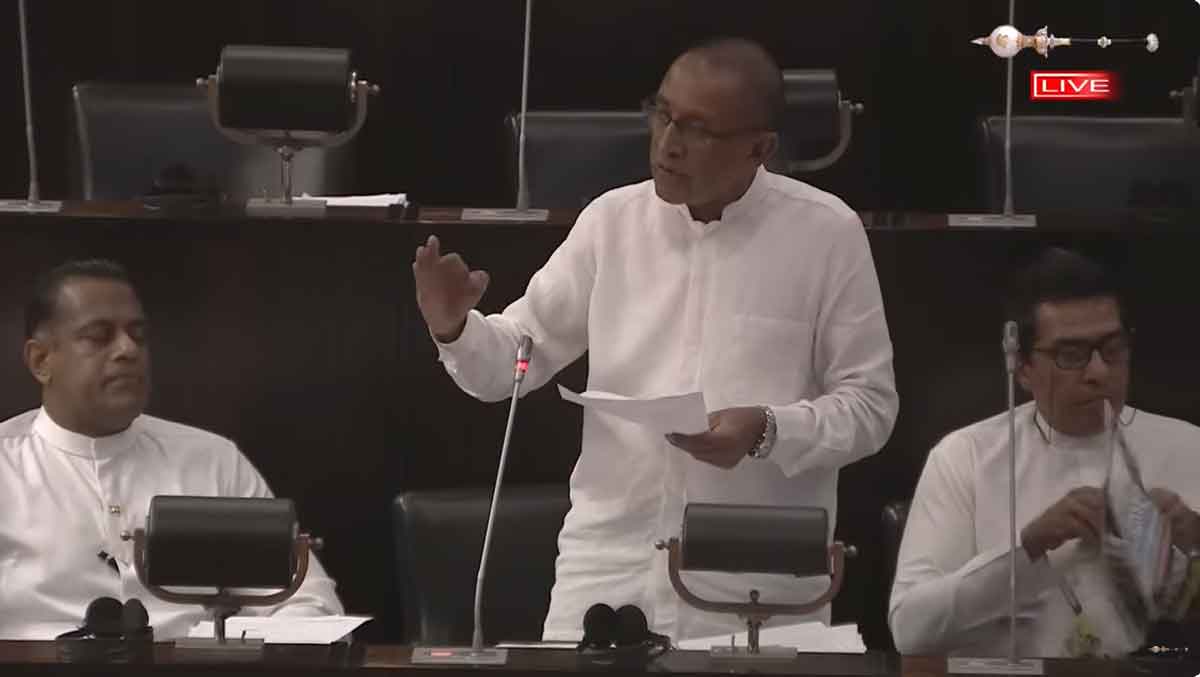
A circular has been sent to the COPF, which sought to give cost escalations to building contracts already issued, Chairman Harsha de Silva said.
"There was a lot of price variations and it was done with the agreement of the procurement commission," Deputy Treasury Secretary A N Hapugala told the CoPF
Monetary Instability and the Rule of Law
De Silva questioned how contracts issued legally can be escalated, because the rupee has depreciated.
"Contractors refused to carry out their work after award, and they were leaving," Hapugala said.
When macro-economist destroy money, norms of democratic governance and even contract law breaks down. As a result contracts have to be either written in a low inflation foreign currency or inflation clauses have to be in place.
If not, investors will not deal with countries with a bad central bank.
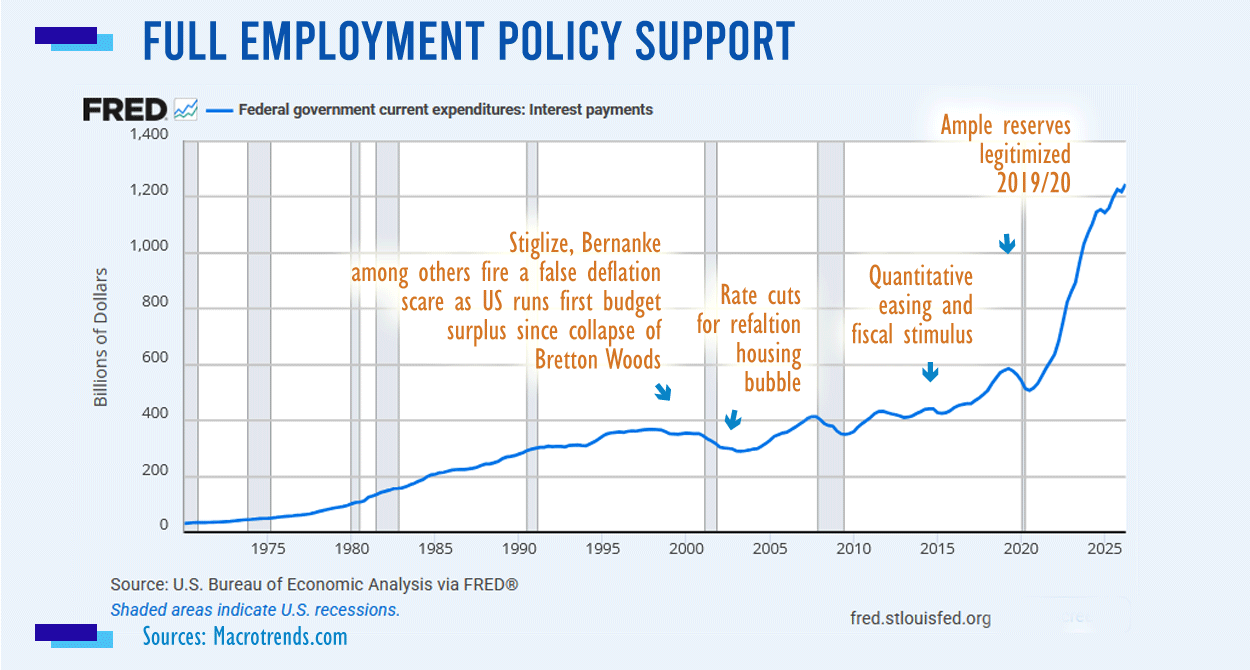
Dollar denominated expenses, including interest and capital expenses are among the first to go up. Unlike in private company accounts, budget deficits do not include accounting for depreciation, which may allow inflationist macro-economists to escape accountability.
Macro-economists usually mislead politicians saying revenue will increase when currencies are debased, but costs eventually catch up.
"The main difference between the impact of inflation on tax revenues and on public expenditure is the timing and scale of adjustment," explains a paper published on Public Sector Economics when tax revenues rose as major central banks printed money during Covid.
"Tax revenues react to inflation more or less immediately and proportionately – especially VAT, but also, via monthly withholding, personal income taxes and social security contributions.
"Public expenditure items adjust to inflation with varying lags."
"More specifically, government purchases of goods and services and public investment costs increase in line with inflation,
unless some items are subject to longterm pricing agreements."
"Finally, payments on newly issued government debt rise automatically with market interest rates and sovereign risk premia, while the increase in payments on outstanding debt depends on the maturity structure and the share of variablerate debt. "
Subsidy costs (transfers to households) also rise as currencies collapse. In Sri Lanka, fuel prices are higher than required because of the busted rupee. The Treasury was also asked for subsidies for petroleum, a whole or part of which could have been avoided if monetary stability had been maintained.
Currency is debased because macro-economists can escape accountability for cutting rates and boosting excess liquidity by using the 'exchange rate as the first line of defence' which is part of the flexible exchange rate doctrine.
Cantillon Effect and the 'Non-neutrality' of Money
There are short term benefits because wages do not go up immediately due to the so-called Cantillon effect, but commodity prices, which are traded goods, go up immediately raising the cost of houses of the people and capital projects of the state.
However eventually wages have to be raised after workers strike. Even if they do not strike, voter anger turns against elected governments who are then voted out of office.
Macro-economists and central bankers then turn back on the working class and say that there is 'wage spiral inflation' though what has happened is that wages are catching up after money under control of macro-economists has lost its property of being a medium of deferred payments.
The 'benefit' from depreciation comes due to the differences in inflation hitting various interest groups of the public which then trigger social unrest and political instability.
It is due to the supposed 'non-neutrality of money' that macro-economists seek to boost short term growth at the expense of the wage earners and budgets, critics.
Winners and Losers of Debasement and High Inflation Targets
Macro-economists claim that money is 'non-neutral' due to delays in some costs, especially wages and pensions, but in the same breath say that money is neutral in the long term in a direct contradictions.
Exporter, one of the interest groups favoured by Mercantilists macro-economists (competitive exchange rates) get a benefit, though their nominal profits may be taxed and they could lose their capital to taxes and dividends.
Most of the claims made by inflationist macro-economists have been debunked by classical economists for over two centuries.
A 600 billion rupee cash buffer, which was worth 2 billion dollars before the currency panic, is now only worth 1.79 billion dollars. Similar effects are seen in taxes, which is described by the so-called Tanzi effect.
As capital is destroyed, nominal interest rates stay stubbornly high.
Dollar debt expands as the central bank debases the monetary unit but pension funds which hold government bonds and savers in banks lose the value permanently and it cannot be recovered and is the only lasting benefit that budgets may get, at the expense of an ageing population.
IMF Second Amendment Defaults
When currencies collapse, the entire price structure of the country is altered and capital is destroyed. As a result countries can default.
There was a wave of defaults in the 1980s after the IMF's Second Amendment to its articles encouraged countries to collapse currencies.
Building materials are one of the first goods to respond to central bank depreciation which is the net result of both money and exchange policy errors.
In May rates were corrected, but the rupee was not appreciated back.
Singapore was one of the countries that rejected competitive exchange rates of the Washington Consensus that destroyed Latin America and went in the opposite direction.
In 1980 Singapore's economic architect Goh Keng Swee, told then President J R Jayewardene, who was facing an IMF program two years after the most radical economic reforms done in the history of the island since British Colebrooke-Cameron commission to watch several indicators for monetary instability.
"The volume of Treasury bills bought by the central bank. This is by far the most important statistic to watch," Goh Keng Swee said.
"The central bank's foreign exchange reserves. The exchange rate of the rupee. The Consumer Price Index. The prices of construction materials."
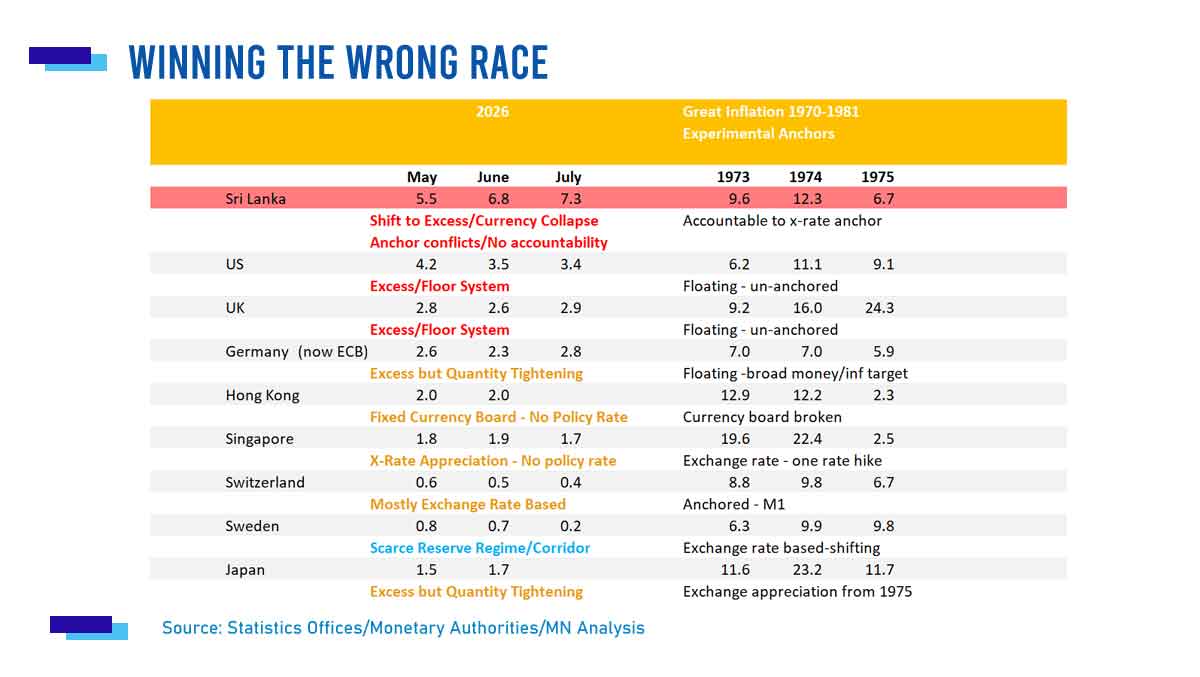
The 2026 currency panic however was not created with Treasury bill purchases but with buy-sell fx swaps, monetizing a balance of payments surplus from Ditwah credit fall, and central bank profit transfer in rupees, analysts say.
Inflationist macro-economists claim that there are 'inflation expectations' but critics say that is a demonstrable falsehood and there are 'exchange rate expectations' in small trading nations as seen in contract price escalations and importer panic as the central bank dishonored excess liquidity as oil prices went up.
As Sri Lanka's rupee collapsed under IMF doctrine which critics say allows a central bank to escape accountability, Singapore appreciated the currency to maintain monetary stability and therefore policy stability.
Ultimately budgets became un-manageable in the 1980s as inflation shot up with depreciation, even as US policy improved allowing several East Asian nations which rejected the IMF's Second Amendment to become export powerhouses.
Same Path as in 2015 to 2022?
In 2015 to 2019 an administration in which de Silva was a deputy minister, suffered from the flexible inflation targeting even though taxes were raised and fuel was market priced.
Since February 1952 when the central bank started creating the first currency crisis, macro-economists have blamed budgets to escape accountability and raised taxes and import controls.
This year however macro-economists who cut rates to boost growth, busted the rupee amid a budget surplus.
After the last default, when the central bank ran a textbook 'single policy rate' with a floor system to target potential output, there is more knowledge about how central banks bust currencies, including with IMF monetary policy modernization.
Both value added taxes and import duties go up on central bank depreciation and inflation.
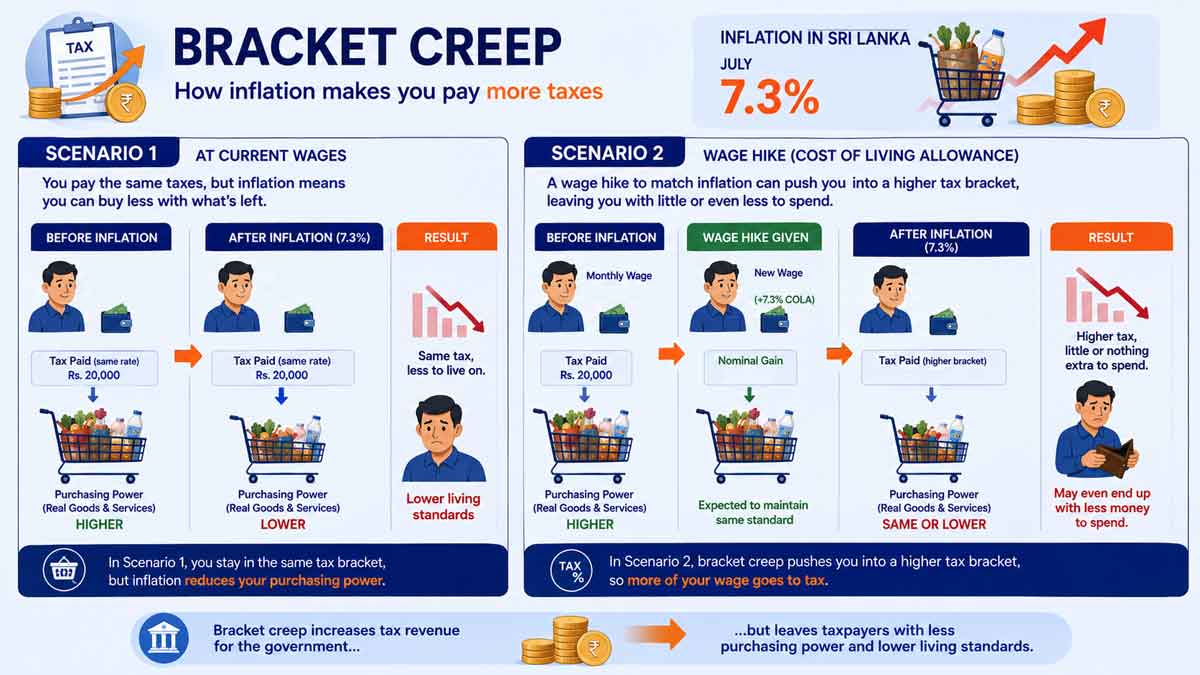
However monetary debasement also reduces the real consumption of goods of people with fixed incomes, as taxes take up more of their incomes, hurting output and growth in addition to turning them against elected governments and undermining democracy, critics say.
In the 2015 to 2022 period as each cycle of crisis and stabilization sapped growth more money was printed to close a 'potential output gap' and from 2020 a true single policy rate floor system with excess liquidity was implemented, triggering prolonged forex shortages downgrades and default.
Earlier this month, Pakistan, where the the currency appreciated in the Middle East giving confidence to investors, was upgraded by S & P, while Sri Lanka, which ran a budget surplus was given a warning on external weaknesses. (Colombo/Aug05/2026)

| 3 month bill | 9.22% | 22bp ▼ |
| 12-m bill | 9.91% | 10bp ▼ |
| Gold (Ounce) | $4602 | - - |










Comments
Be the first person to comment and join the debate