
Share your email and we'll share the latest news
Exclusive economic intelligence, political and business coverage
Sunday, October 4 2026
Sunday, October 4 2026
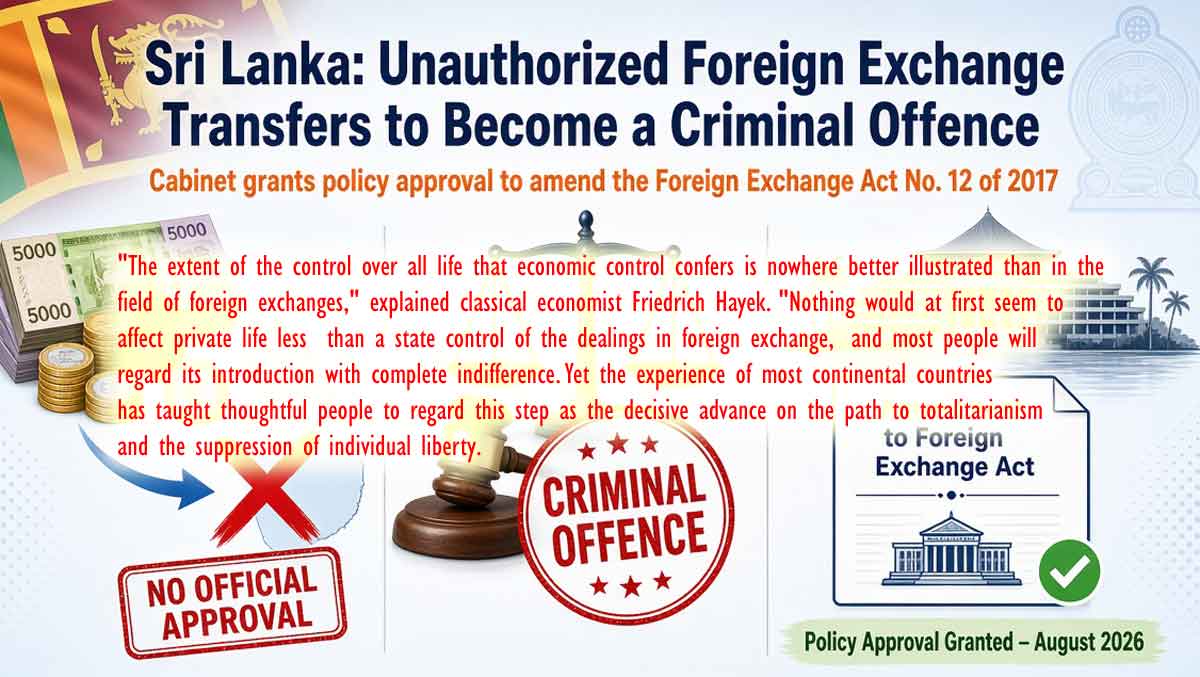
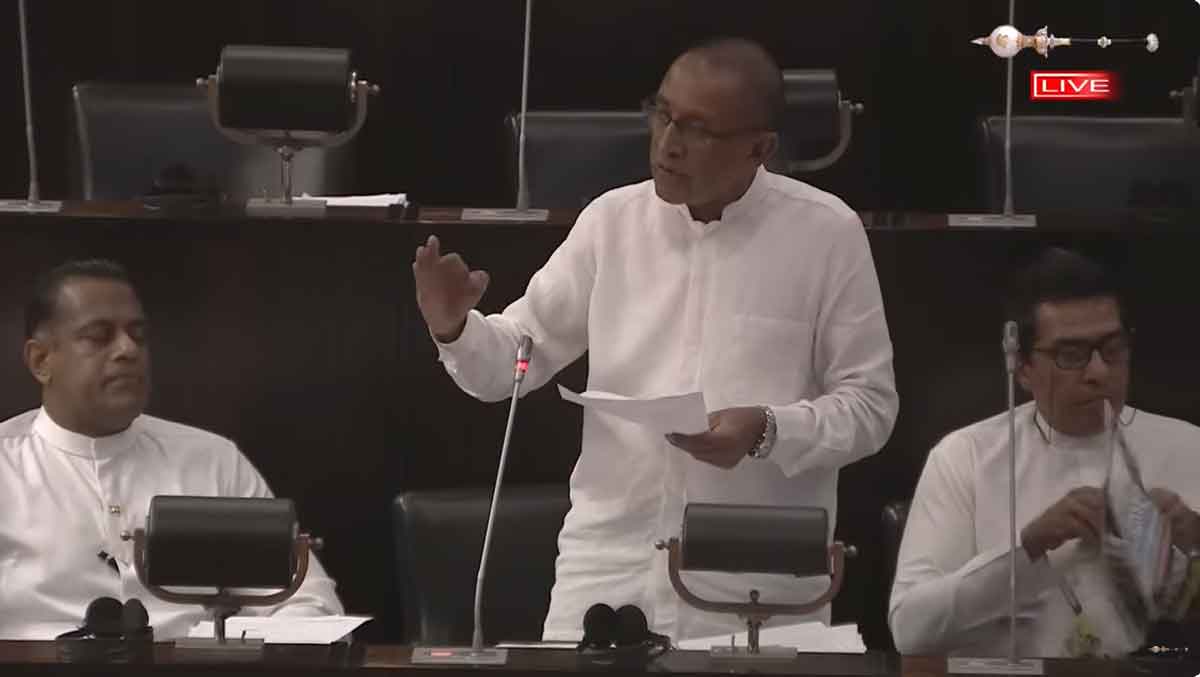
MONETABRIEF - Sri Lanka's cabinet has approved a proposal to make transferring foreign exchange abroad without required permission a criminal offense, spokesman Nalinda Jayatissa said.
Under Sri Lanka's Foreign Exchange Act, unauthorized transactions are now only subject to a fine of an equal amount, Minister Jayatissa said Tuesday
The change comes after pre-payments made for imports that never arrived in the country, he said.
Police this week produced in court four bank executives on charges of conspiring and facilitating the transfers, Minister Jayatissa said.
The case involves making 10,151 transactions worth 74 billion rupees (223 million dollars) through 89 accounts
In Sri Lanka current transfers can be made for imports without central bank permission but capital transfers are not permitted except in some approved cases.
Most countries with good central banks do not have any such controls for transferring a legally earned money and savings for non-criminal activities or investment.
In Sri Lanka activities such as drug smuggling, money laundering are separate offences.
Sri Lanka progressively tightened foreign exchange controls after a newly set up central bank started to print money and create foreign exchange shortages from February 1952.
With the spread of Keynesianism and 'monetary policy' (the policy rate) many countries started to experience foreign exchange due to bad operating frameworks that violate classical economic theory.
The UK had exchange controls from 1948 to until Margarat Thatcher controlled the Bank of England and changed its operating framework.
Modern style exchange controls were invented by the Bank of Russia in Imperial Russia, which then fell to the Bolsheviks amid high inflation and a currency collapse.
"The extent of the control over all life that economic control confers is nowhere better illustrated than in the field of foreign exchanges," explained classical economist Friedrich Hayek.
"Nothing would at first seem to affect private life less than a state control of the dealings in foreign exchange, and most people will regard its introduction with complete indifference.
"Yet the experience of most continental countries has taught thoughtful people to regard this step as the decisive advance on the path to totalitarianism and the suppression of individual liberty.
"It is in fact the complete delivery of the individual to the tyranny of the state, the final suppression of all means of escape-not merely for the rich, but for everybody."
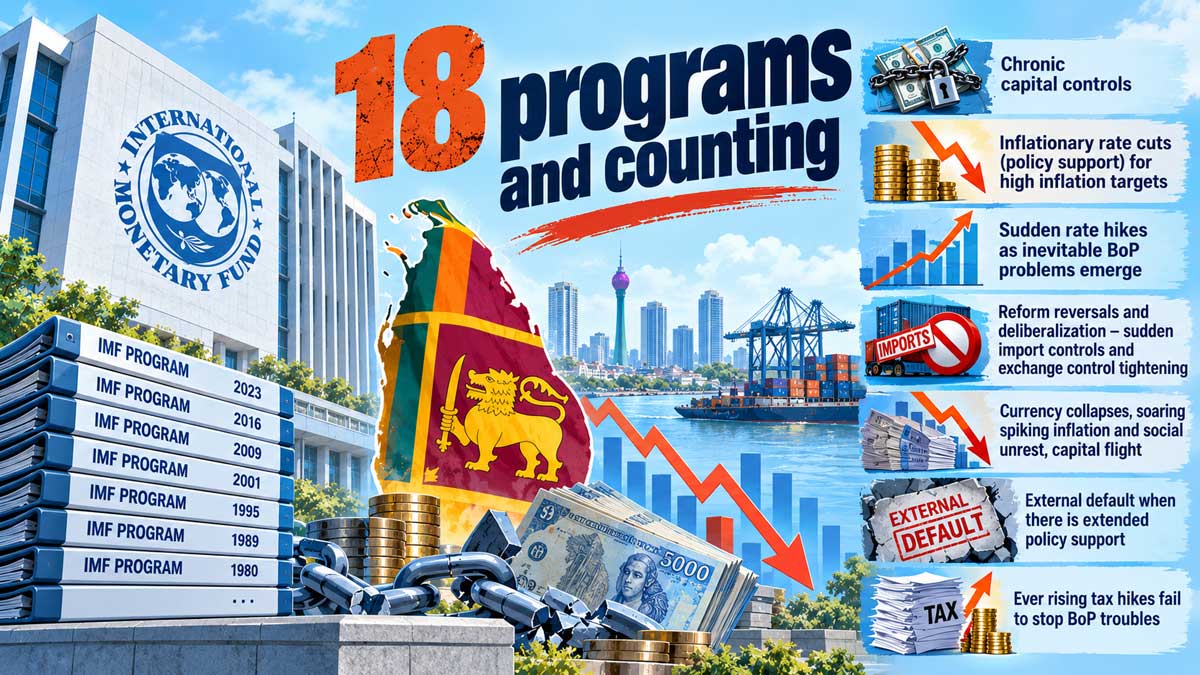
Sri Lanka's central bank and the Treasury in 2022 imposed the harshest exchange and trade controls since 1971 after cutting rates to boost 'potential output', banning over 3,000 imports including cars, showing the truth of what Hayek said.
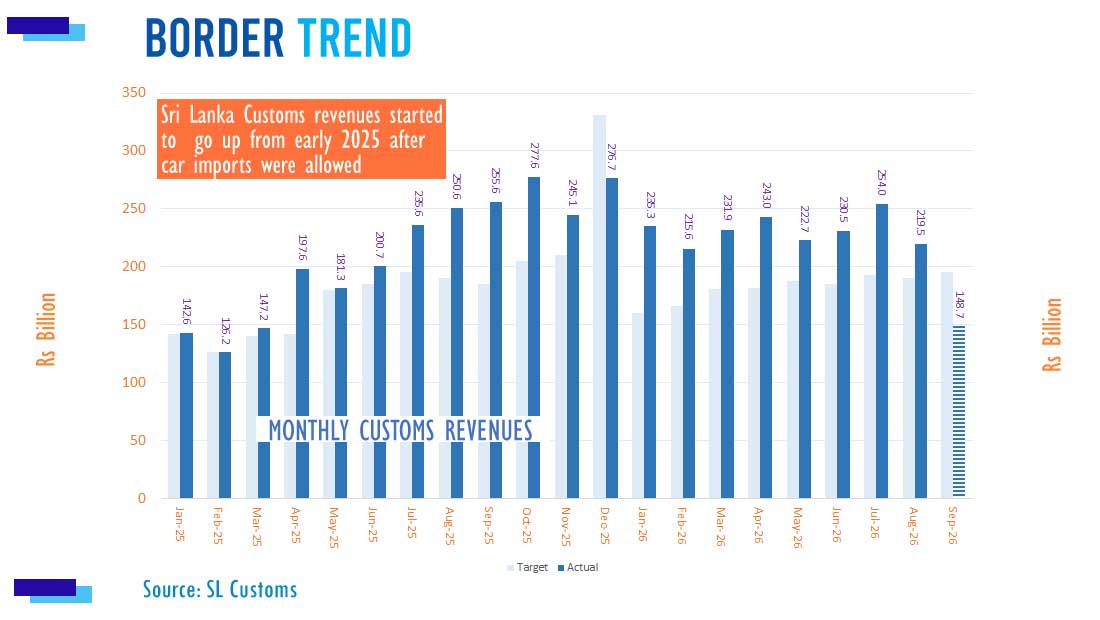
Car imports were relaxed in February 2025, but after the central bank printed money through buy-sell fx swaps and dishonored notes and escaped accountability by depreciating the rupee, a 50 percent surcharge on vehicle imports was imposed.
Countries with tight exchange controls - which is a result of a high inflation central banks - become so-called 'basket cases' and can never move forward beyond a 'frontier market'.
Such counties aslso and see high out migration and inward remittances and external sovereign default. (Colombo/Aug18/2026)

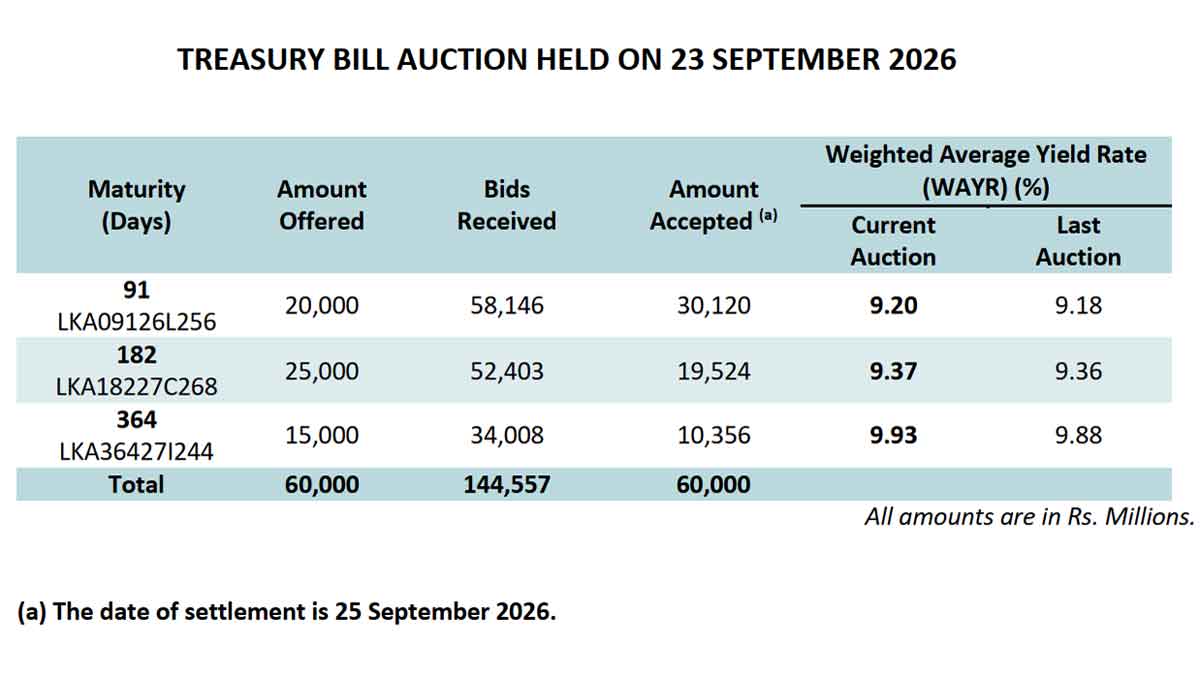
| 3 month bill | 9.25% | 5bp ▲ |
| 12-m bill | 9.95% | 2bp ▲ |
| Gold (Ounce) | $4602 | - - |






Comments
Be the first person to comment and join the debate