
Share your email and we'll share the latest news
Exclusive economic intelligence, political and business coverage
Tuesday, September 22 2026
Tuesday, September 22 2026
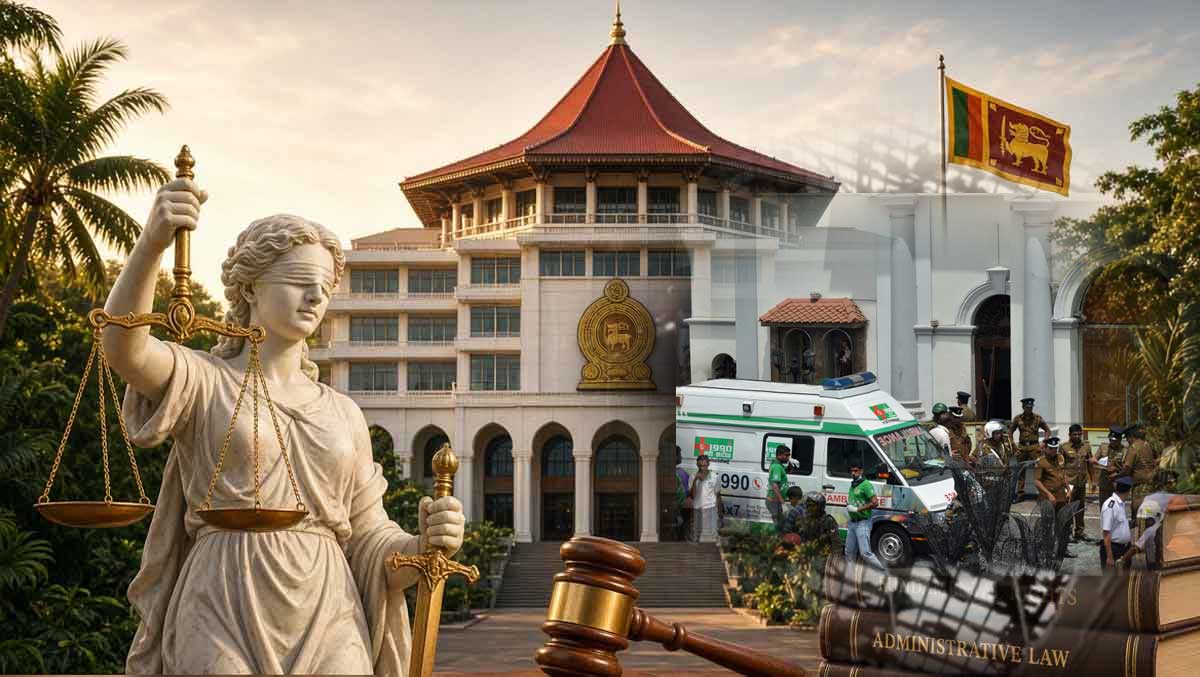
MONETABRIEF – Sri Lanka’s government on Friday formally unveiled its controversial plan to extend the retirement age of superior court judges by two years as the government also prepared for a plan “B” with an alternative Chief justice.
Giving Supreme Court judges two additional years in office and expanding the Court of Appeal by five more judges require a constitutional amendment. The government on Friday issued a Gazette notification on the proposed change.
The “22nd Amendment … a Bill to amend the Constitution of the Democratic Socialist Republic of Sri Lanka” was published on the orders of Justice Minister Harshana Nanayakkara.
Apart from raising the retirement age of Supreme Court judges to 67 and that of Court of Appeal judges to 65, the Bill also seeks to increase the number of judges on the appellate court to 25 from the current 20.
The government is pressing ahead with the constitutional amendment despite opposition from the Bar Association of Sri Lanka and virtually the entire political opposition in the country. They argue that the amendment is to extend the term of current Chief Justice Preethi Padman Surasena who is due to retire in November.
Government sources said they were also considering alternative candidates to replace the Chief Justice if they were unable to pass the 22nd Amendment in the face of growing opposition.
The possibility of elevating current Attorney-General Parinda Ranasinghe has been discussed at the highest levels of government, but no final decision has been made, according to sources close to the administration.
The government has the required two-thirds majority in Parliament to make the constitutional change, but the Opposition has warned that the proposed amendment may also require approval at a national referendum.
However, since the provision being amended is not an entrenched article of the Constitution, the government argues that the amendment requires only a two-thirds majority.
The Opposition has said in Parliament that the government wants an additional two years in office for Chief Justice Surasena.
Should Surasena retire without being granted an extension, the next most senior judge would be Yasantha Kodagoda. The Opposition has accused the government of suffering from “Kodagoda phobia” and trying to prevent Kodagoda becoming the next CJ.
Kodagoda, who was then President of the Court of Appeal, issued a decision in 2019 allowing Gotabaya Rajapaksa to contest the presidency despite a challenge to his Sri Lankan citizenship.
The petitioners had argued that Rajapaksa did not obtain Sri Lankan citizenship when he returned to Sri Lanka in 2005 as a US citizen. He was later accused of forging documents and backdating approval of his dual citizenship to the date on which his brother Mahinda won the presidency in November 2005.
A case filed against Rajapaksa effectively accused him of being stateless after he had renounced his US citizenship in order to contest the 2019 presidential election. Since the magistrates’ court case was put on hold after Rajapaksa became president, the matter remains unresolved. (Colombo/Aug 8, 2026)

| 3 month bill | 9.22% | 22bp ▼ |
| 12-m bill | 9.91% | 10bp ▼ |
| Gold (Ounce) | $4602 | - - |














Comments
Be the first person to comment and join the debate