
Share your email and we'll share the latest news
Exclusive economic intelligence, political and business coverage
Friday, October 2 2026
Friday, October 2 2026
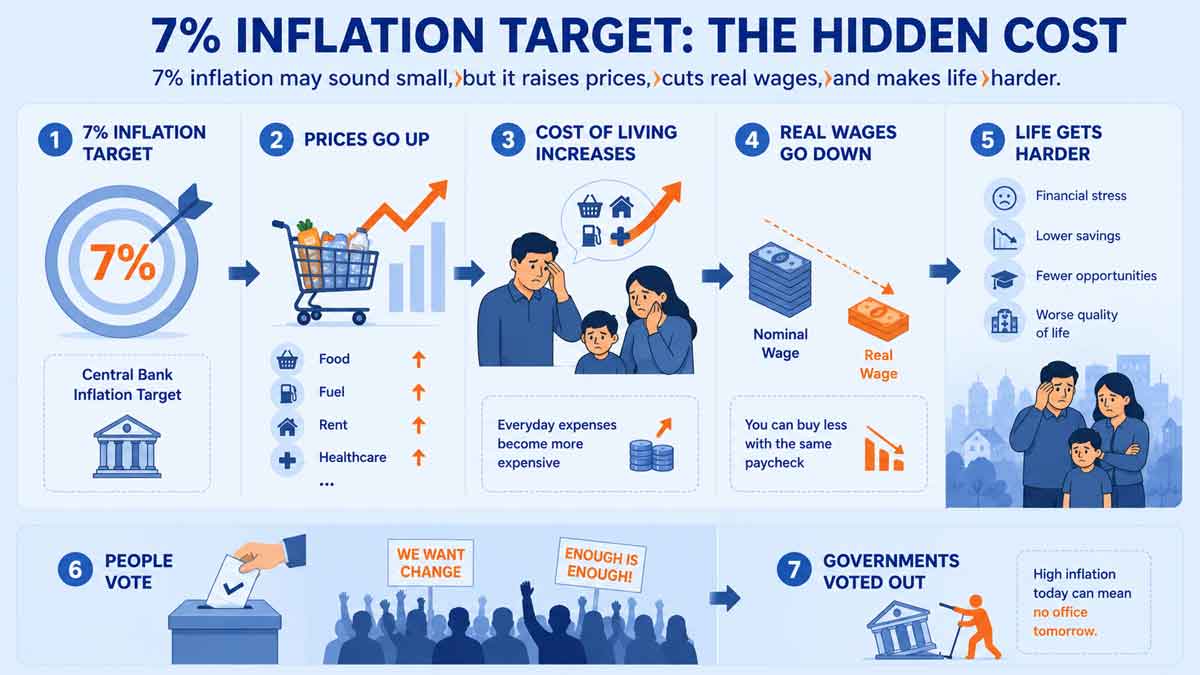
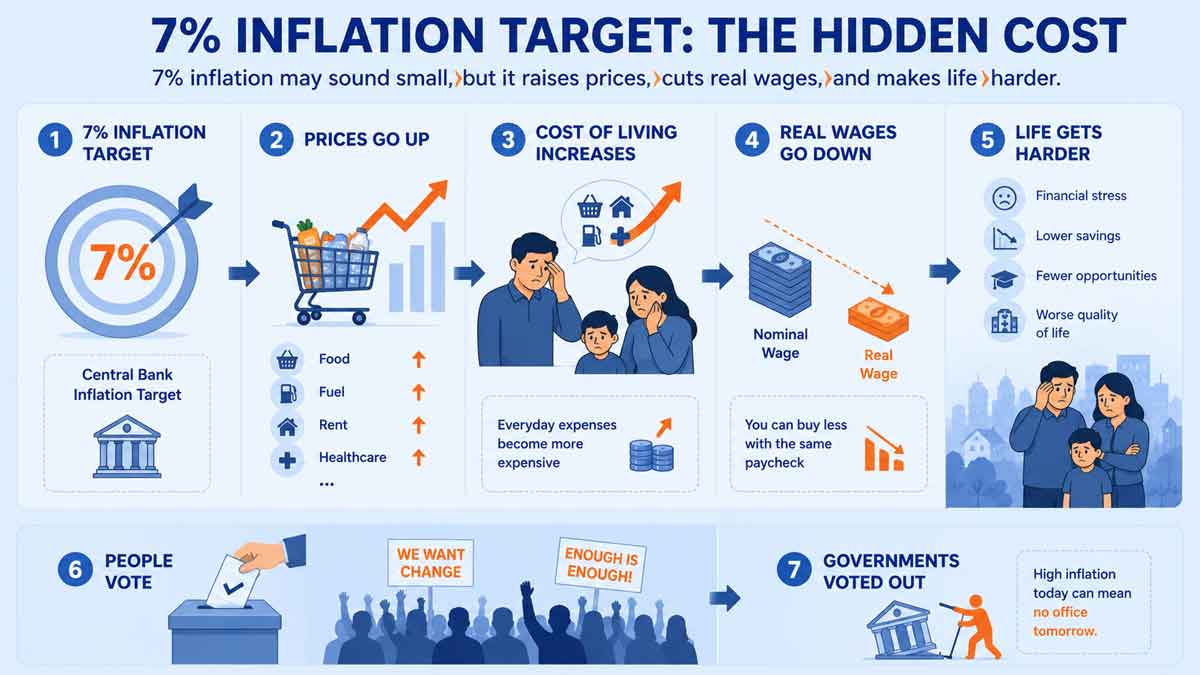
MONETABRIEF – Sri Lanka's central bank has won the fight to keep pushing the cost of living to high levels each year, soon exceeding its already high 7 ceiling rate and generating 8 percent inflation with the backing of the International Monetary Fund.
Ironically, the central bank itself is lobbying heavily for the high inflation target, showing the public that Sri Lanka's economic problems come from a doctrinaire inflationism of the central bank and not government policy or budgets, analysts say.
Analysts have pointed that while banks get a benefit from the inflationary policies of the agency, which are also temporary, others lose out as inflation accelerates.
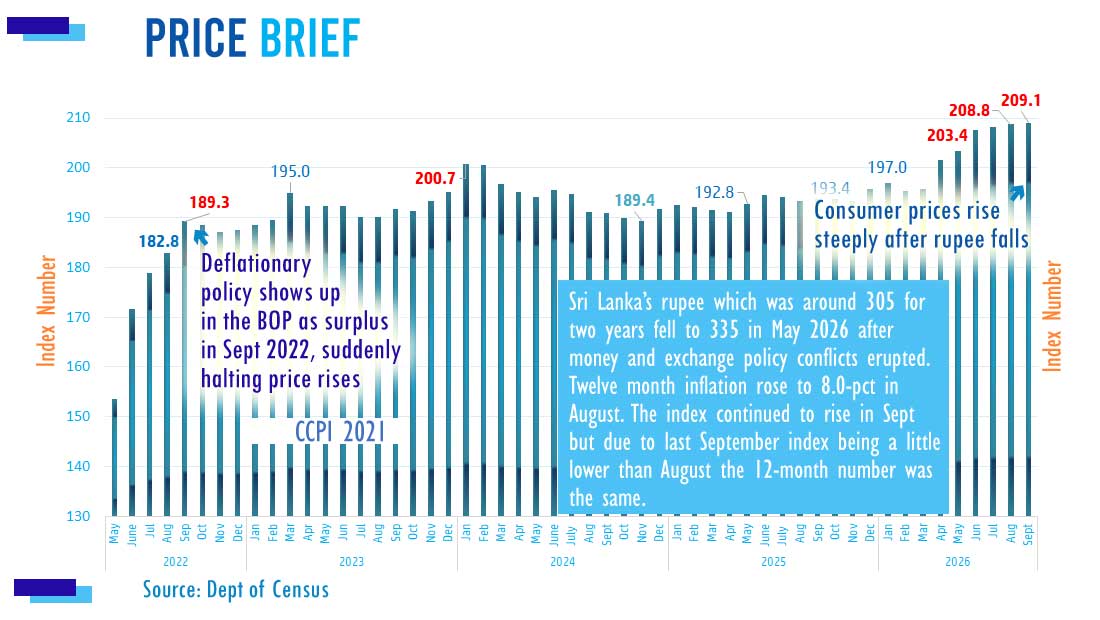
There has been no visible accountability for the central bank for pushing up inflation to 8 percent in 2026, by collapsing the currency amid a budget surplus, though voters hold democratically elected governments accountable for the economic difficulties they face from debasement and trade controls that come from the inflation bias of the central bankers.
The lobbying for high inflation by Sri Lanka's central bank came amid a global deterioration of monetary knowledge with abundant reserve regimes (floor systems), which has devastated fiscal metrics and driven the electorate to fringe political groups.
The IMF also backed the demand by the central bank to keep pushing up prices despite part of the population skipping meals after the last currency collapse engineered by the central bank.
There were calls to restrain the central bank's inflation bias so that its power to impoverish people further, trigger social unrest and undermine democratically elected governments by pushing up the cost of living is curtailed.
Poverty surged after the last currency collapse, engineered by the agency.
Former Deputy Governor of the Central Bank W A Wijewardene called for a phased reduction of the cost of living rise to maintain economic stability.
The move would have given some space for people to rebuild their lives and wages to come back.
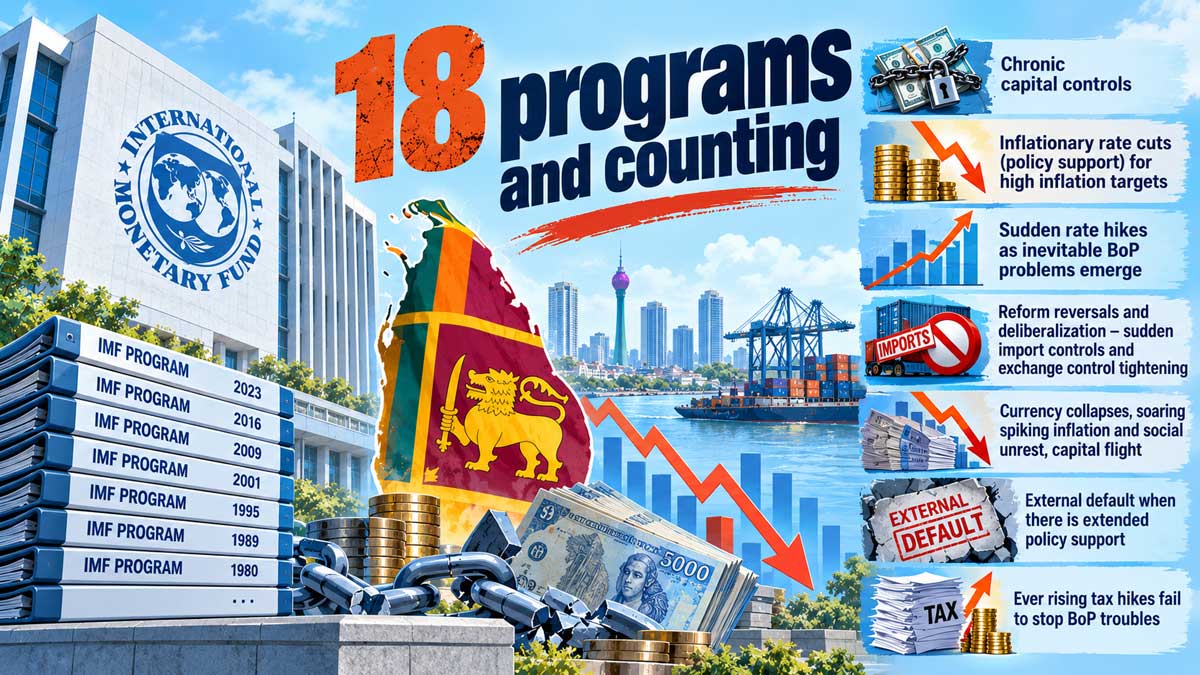
Since Wijewardene's retirement, the rupee has collapsed from around 113 to 333 to the US dollar with currency collapses roughly every two to three years, and eventual sovereign default in peacetime.
But the central bank has got the full pound of flesh.
In Sri Lanka the inflation target is not a ceiling that restrains the agency but a floor.
Missing the target and pushing up cost of living by 2 percent extra is called the "accountability" margin.
The full statement is reproduced below:
Sri Lanka’s Inflation Target is set at 5% for the next three years
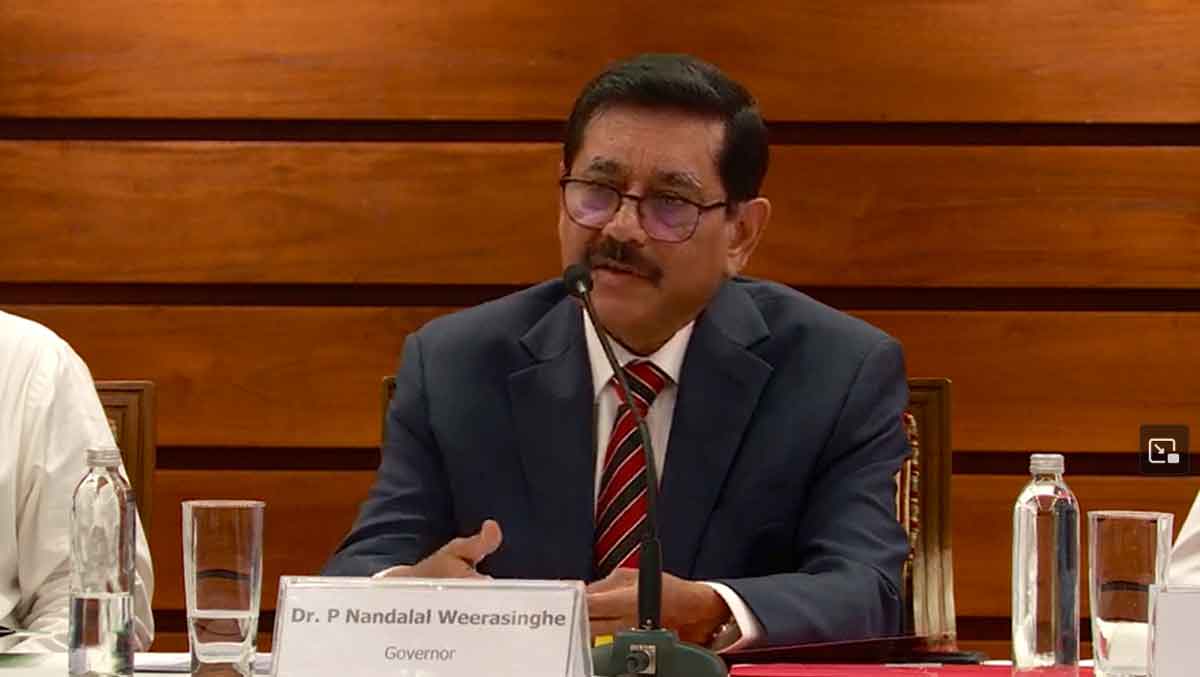
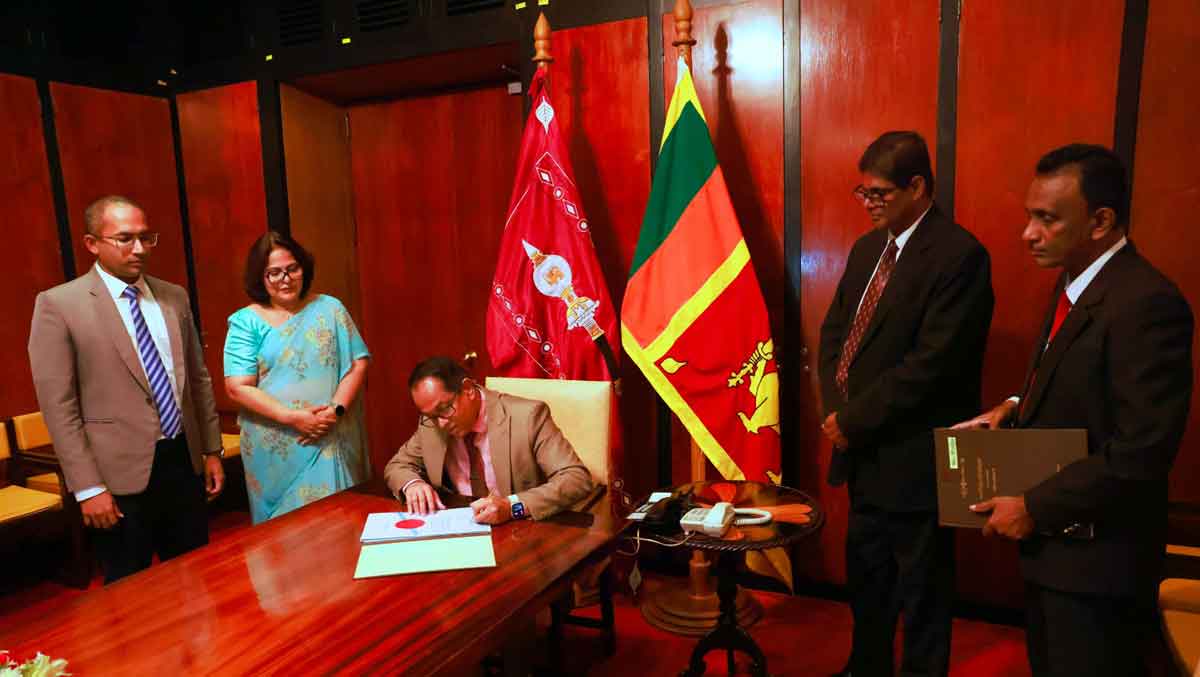
The Minister of Finance, Planning and Economic Development and the President of Sri Lanka, Hon. Anura Kumara Dissanayake, and the Governor of the Central Bank of Sri Lanka, Dr. P Nandalal Weerasinghe, signed a new Monetary Policy Framework Agreement (MPFA) in terms of Section 26 of the Central Bank of Sri Lanka Act, No. 16 of 2023 (CBA) on 01 October 2026. The Agreement was published in Government Gazette Extraordinary No. 2508/28 dated 01 October 2026.
Key features of the MPFA
o Inflation target: The Central Bank shall aim to maintain quarterly headline inflation rate at 5%
o Accountability margin: A margin of ±2 percentage points
o Measure of inflation: Quarterly headline inflation is the simple average of the year-on-year percentage changes in the monthly Colombo Consumer Price Index (CCPI), published by the Department of Census and Statistics, for the three months of the corresponding calendar quarter.
In terms of Section 26(4) of the CBA, the inflation target and related parameters are reviewed once in every three years, or at shorter intervals if exceptional circumstances so warrant. Accordingly, 2026 marked the scheduled review since the initial MPFA, which was signed in October 2023.
As part of the review, the Central Bank undertook a comprehensive technical assessment that considered Sri Lanka’s economic structure, historical and empirical evidence, monetary policy considerations, the credibility of the framework, stakeholder views, and international experience and practices. Based on the findings of the review, the Central Bank communicated its proposal to the Ministry of Finance. The Ministry, after careful consideration, accepted the recommendation.
The Central Bank remains committed to achieving the inflation target through forward-looking and data-driven policy decisions, in pursuit of its primary objective of achieving and maintaining domestic price stability.

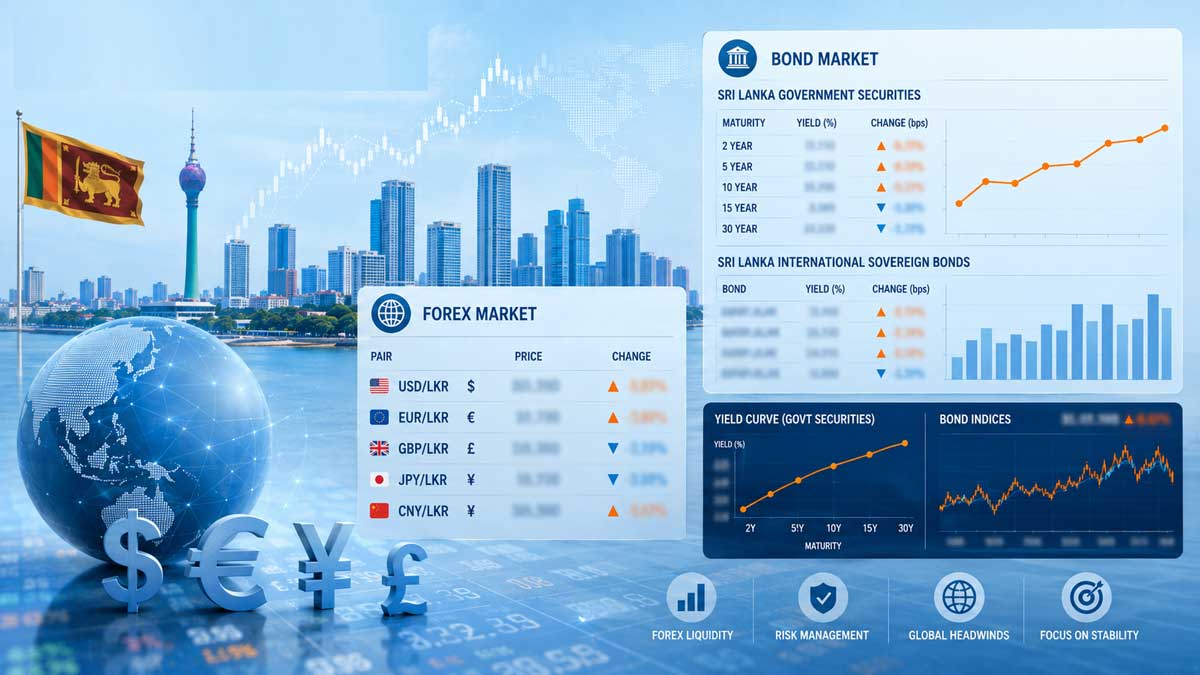
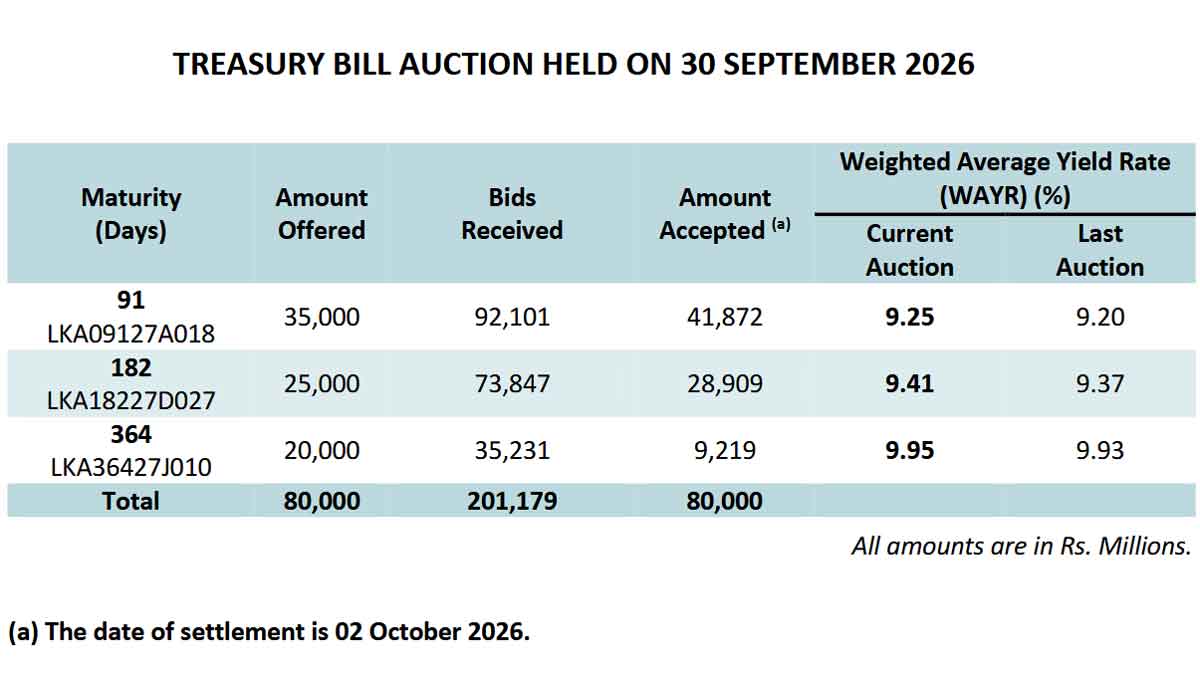
| 3 month bill | 9.25% | 5bp ▲ |
| 12-m bill | 9.95% | 2bp ▲ |
| Gold (Ounce) | $4602 | - - |











Comments
Be the first person to comment and join the debate