
Share your email and we'll share the latest news
Exclusive economic intelligence, political and business coverage
Sunday, November 22 2026
Sunday, November 22 2026
An entrepreneur who has remained the country despite problems reflects what can be done to make the country a better place for businesses and the people.
He says Sri Lanka's resistance to change has to go and people must take responsibility for what goes on in this country.
Globalization is Here, Change is inevitable, Can We Afford to Defence a Culture of Entitlement?
By A Special Correspondent
MONETABRIEF - I read with interest an article penned by an economist titled “Neo-Liberal Policies Slowing Down Economic Growth?” He contends that the Government’s economic framework and its alignment with the IMF facility programme are the cause of this lacklustre performance. He may have a point, but to me, the problem is much bigger than higher public-sector infrastructure expenditure.
The Entreprenuer's Dilemma and Investment Confidence
I am a small and medium-scale entrepreneur operating in volatile export markets. I have built a business over the years, developing contacts and technology with integrity and hard work. Export markets are fickle and tough. My company’s revenue now stands at a little under US$600,000 a year.
Markets prompt expansion; however, I am holding back, as I do not want to create burdens on myself while the country’s situation remains volatile.
Since Independence, a majority of our politicians have created an ambience of going to nirvana on someone else’s account. We need to change this culture, truthfully address issues as a nation and take meaningful steps in line with global market realities. Confidence, built on the perception of considered direction, will mitigate the risk now stifling investment.
Exiting from my business is an option I postponed in the belief that our new political idealists may prove pragmatic and, hence, help us get out of this hole.
I am not declaring my name, as I do not want the carpet pulled from under me or a frontal attack from persons who contend that the cap fits him or her. This is true for many locals remaining silent, with projects pending decisions. The examples are from my own experience and observations, and the real fears of numerous close contacts.
Sri Lankan's Must Take Responsibility
We have to accept that getting out of this mess created since independence will only be possible with the commitment of Sri Lankans themselves.
Expecting others to extend a hand because of their love or affinity for this country is a mere dream.
We need to identify where we went wrong, admit it, take responsibility and reposition ourselves. Identify deliverables and refrain from impossible promises, with all-party consensus.
A level playing field is a must, with an enabling environment as opposed to the stifling application of regulation. We need to reiterate to markets the importance of long-term security for investment and a consistent regulatory framework, which will enable planning, governance, accountability and transparency among the regulators and the regulated. Taxation has to be fair, and Government expenditure from tax revenue must reflect a high degree of probity, prudence and transparency.
Taxation, Savings and Capital Flight
Our tax-to-GDP ratio has shown an alarming decline over the last four decades. But is this not the result we should expect if we expand unproductive public-sector employment and extend handouts that have now become entitlements?
Taxpayers agree that there are dodgers. But widening the tax net must be rational, accountable and balanced against costs.
Erosion of the confidence of wealth creators will lead to a decline in savings and a flight of capital. We see this happening at an accelerated pace, with the sharp decline in purchasing power.
The daily changes in tax legislation and toxic communications imply that the taxing authority believes that you live in this country just to pay taxes. Accordingly, I feel it is better to deplete my available savings by accelerating purchases rather than investing to create wealth. Consultants earn more, but the cost of doing business in Sri Lanka is on an unacceptable upward trajectory.
Capital Gains and Productive Investment
Though we are a middle-income country, we are short of capital. If one looks at most of our corporates, we see inordinately high borrowings. Our savings too are low and declining, so we will not see any capital restructuring in company balance sheets.
On top of this, purchasing power has declined. A family’s daily expenditure has virtually doubled. It is in this scenario that capital gains tax has been reintroduced.
The pros and cons of taxing the so-called rich with inflated assets and little cash, I will leave to the pundits who now experience the after-effects of the schools, land and business takeovers.
My point is that taxing capital and funnelling the cash into Government consumption expenditure is a disaster.
I feel it would be more prudent for the Government to float special-purpose investment vehicles and issue shares to capital gains taxpayers, with the proviso that they can sell their shares after 10 or 15 years.
The Government can put project funding through these as equity or loans, but management should remain with shareholders who choose directors as in a publicly quoted company. The Government may appoint nominee directors, such as the Chairman of the Chamber of Commerce, the Institute of Directors, engineers, architects and accounting bodies.
Public Sector Costs and Double Standards
The mail and documents emanating from the Department show a total absence of cost control. Double standards, too, are unacceptable.
For example, current legislation envisages that payments above a threshold should be by account-payee cheques, but the Department itself does not accept cheques for quarterly payments. In reality, their perceptions of digitalisation run far ahead of an ageing population.
Most public-sector institutions and the Department of Inland Revenue operate with the People’s Bank or the Bank of Ceylon. This is unacceptable, as it reflects blatant discrimination against private banks.
A Daily Mirror article published on the 25th of August, written by a Senior Commissioner of the Inland Revenue Department, argues rather arrogantly that the taxpayer must simply comply because tax revenue is spent on essential public goods and services. To me, this reflects a total lack of empathy and a misplaced confidence that taxpayers' money is always spent wisely
Are the Department's own costs optimised?
As for my small contribution, I have options available for my own benefit. It is called tax planning, in the jargon of tax advisers.
The Department, too, has shortcomings that sap taxpayers' confidence. A taxpayer's experience with the IRD shapes his or her perception of the entire tax system.
When taxpayers encounter complexity, inconsistency, poor communication or an administration that appears indifferent to genuine difficulties, the issue is no longer simply one of taxpayer behaviour. It also becomes a question of institutional behaviour.
I quote a former Minister who actually ran a business: you cannot tax your way to prosperity.
Duplication, Conflicts of Interest and Institutional Reform
Unacceptable public-sector intrusions and duplicated work processes and costs need to be pruned.
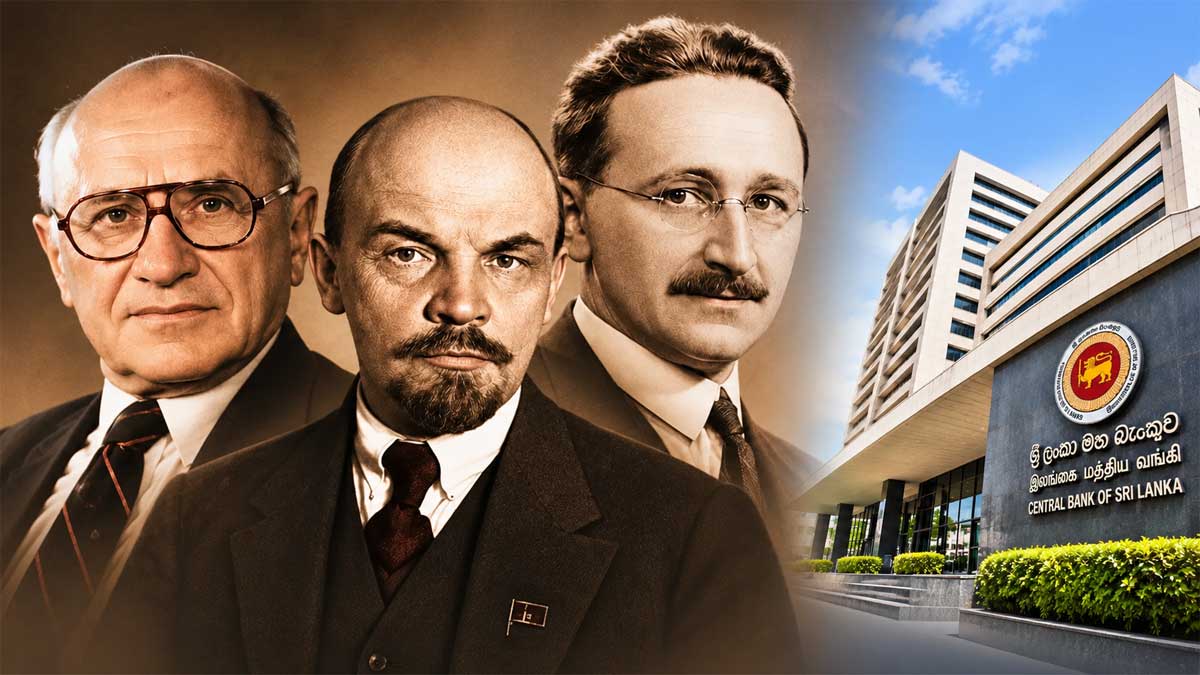
Central Bank management of the EPF has to be re-examined, since it is also conducting monetary policy.
For example, the Central Bank manages the largest savings fund. This is the mother of all conflicts of interest, at a massive cost to stakeholders.
Private-sector provident funds are managed frugally. The CBSL’s cost structure can be assessed by looking at the Fort office of the EPF.
The ETF too runs a parallel computer input system and employs unnecessary staff, duplicating similar staff at the Labour Department. This needs to be rationalised, saving nearly Rs. 10 billion.
The Central Bank can run the computer system for both the EPF and ETF; the Trust Fund can manage the funds, while the Labour Department, a watchdog rather than a bulldog, can monitor conformance, enhancing transparency and internal control.
I heard, down the line, how a state retirement fund claimed an interest payment on a delayed settlement after 25 years. The person who did this either has no work or has an axe to grind. Other institutions need to look at themselves in the mirror,
The RMV and the Cost of Public Inefficiency
An acquaintance told me she went to the RMV to renew her driving licence. She noted the huge number of applicants, man-hours lost and costs totally out of line with revenue, as they were paranoid about graft.
She got the extension but continues to use a temporary document, now for over five months, as cards are not available. All banks issue credit cards with chips, so she does not understand the delay.
The Commissioner can merely subcontract this to a bank and focus on the 7,000 motorcycle fatalities and why bus drivers and tuk-tuk drivers are seriously careless.
Agriculture, Rural Employment and Labour Shortages
The land mass of Sri Lanka, excluding the sea around us, is 6.5 million hectares. Forty-four per cent is agricultural land. Seventy per cent of the population is rural. GDP contribution from agriculture and fisheries is less than 10%, down to a fifth of its level post-Independence.
This is in spite of subsidies and the Mahaweli expansion. An acute shortage of labour—no pluckers, tappers or general labour—is apparent.
Bring labour from abroad? What is happening now will prove a disaster when unproductive jobs become untenable.
Paddy Productivity, Land Utillization
In our staple, paddy, our average yield is just above four tonnes per hectare and declining, in spite of 2,000 years of experience. China produces 12 tonnes and is rising.
A company operating a medium-sized tract in Sri Lanka gets over eight tonnes per hectare, with a cost of production per kilogram half of the farmers’ cost.
Climate change and looming water shortages are ignored, with water utilisation varying from 4.5 tonnes per kilogram of paddy down to 2.2 tonnes with the higher yield.
Land utilisation ratio is also a question. With 2.2 million acres of land, we cultivate around 1.5 million acres over two seasons. Why is a question we need to answer. Why not release land for other uses?
Average land holdings are less than an acre, basically a home garden, unviable to sustain a livelihood; hence, a lack of focus and interest.
Is this because of a mistake in land policy implemented in the 1960s and 1970s, or its use as a carrot for votes?
A Fragmentation Board with an unviable mandate, unwittingly maintaining the status quo, blocking sales of land above 10 acres and demolishing efforts to build diversity, with no idea of what they are implementing.
Is this undermining growth with a misconception that they know better how an investor must spend their money?
Coconut yield: 2,500 nuts per acre. Thailand: 12,000. The late Dr. Ray Wijewardene consistently achieved 8,000 per acre. Holdings of 50 acres and below lack management and investment.
Food Safety and Mis-used of Chemicals
You cannot buy a single fruit in this country that has not been doctored. Is the misuse of ripening chemicals going the same way as the misuse of pesticides? Why are the food safety regulations silent? Are we waiting for the importation of fruits?
The Low-hanging Fruit : Land Policy and Diversification
This is the low-hanging fruit that we must harvest first by identifying land policy shortfalls, incentivising consolidation and diversification and letting investors decided their fate. Biodiversity, environmental conservation and climate change should be a prime concern for the government.
Education, Competition and Quality
Education needs a hands – off approach.
We Asians value knowledge gathering. The quality of our graduates lags far behind neighbouring countries. In the 1950s, Indian students came here; now we send our children there.
For example, in under 50 years of existence, IIT is as good as or better than MIT.
Has our parenting failed us, or have our universities failed us? Or should we admit that India’s decision not to dismantle the use of English created an advantage?
We note the initiative now being considered to send 200 top performers to top universities and bear the cost—an excellent idea.
Should we not fund all students attending our universities with repayable loans so that students demand value for money, pushing university dons to sharpen their act and be rewarded accordingly?
Competition must be nurtured. If the best here get into State universities, all other affiliated universities will have to improve their standards too, to compete.
Fuel Subsidies, Traffic, And Fuel Imports
A recent paper article hi lighted that fuel prices will go up unless the government provides a subsidy. But no one seems to care about fuel wastage and its impact on our import bill.
We should leave the decision on what car to buy to individuals. Their ego and ability to pay will determine that. However, he or she must bear the true cost of fuel.
The Government must ensure that the available roads permit the free flow of traffic. They have done a good job by making Galle Road from Wellawatte to Kollupitiya, Duplication Road and most lanes one-way.
The CMC, however, has leveraged the same to block the flow of traffic and extort parking fees by encroaching on the roads. View this at Bambalapitiya and many side roads. Who pays?
Ultimately, the country, with higher oil imports.
The absurdity and values inculcated in our children are apparent if you pass CMS Ladies College St, Peters, Devi Balika Visaka, Royal, D S, at school closing time. The parking arrangements are unbelievable.
On a separate note these are preferred schools. Ladies is a private fee levying, St Peter’s assisted regulated and others are quality government schools with large infusions at grade 5 scholarships for high performance candidates from all over. But the way parents park prompts me to ask? Should a vast majority pay fees with scholarships for the deserving?
Parking Revenue, Road Land and Public Accountability
The business of parking generates billions in revenue and promotes corruption and intimidation while distorting the labour market.
The questions that arise are:
What are the CMC’s share and the subcontractors’ share?
Is land acquired for road expansion now being used differently?
Can the original owners make a claim?
Is VAT collected and tax paid?
Why is the CMC not actively helping landowners to build car parks?
Building Approval and Regulatory Favouritism
The cost of building approvals from the UDA, CMC, Fire Department and Water Services, and the blatant favouritism in locating fire hydrants and electrical distribution boxes, is another story. It is worth investigating.

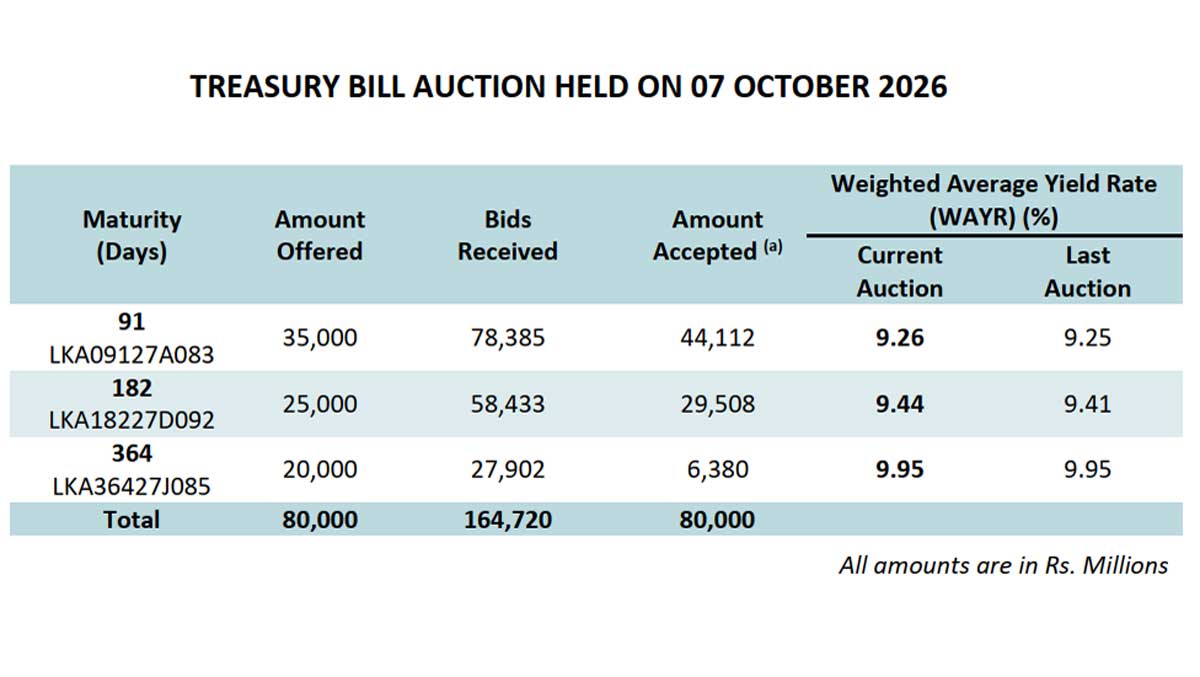
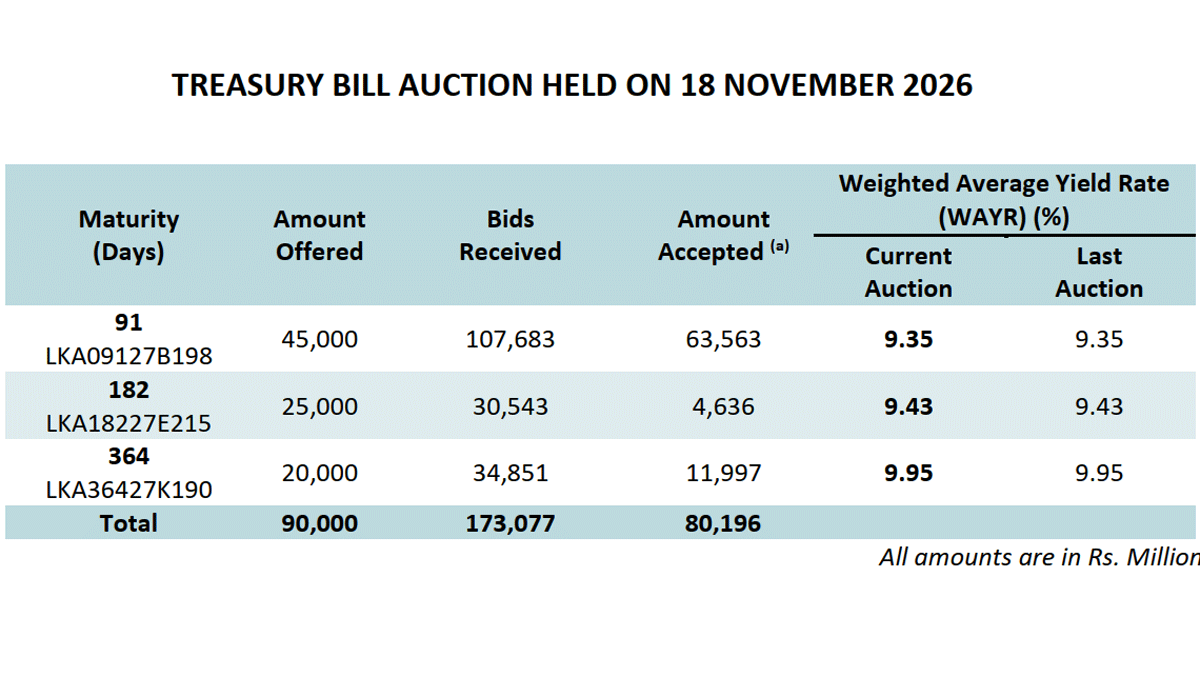
| 3 month bill | 9.26% | 1bp ▲ |
| 12-m bill | 9.95% | 2bp - |
| Gold (Ounce) | $4015 | - ▼ |





Comments
Be the first person to comment and join the debate