
Share your email and we'll share the latest news
Exclusive economic intelligence, political and business coverage
Saturday, November 28 2026
Saturday, November 28 2026

MONETABRIEF – International Finance Corporation, a member of the World Bank group said it had arranged a 6-year Sri Lanka rupee borrowing line with HSBC for lending to a renewable firm.
IFC said the transaction with HSBC Sri Lanka was the first of its kind in Asia and the first borrowing line in of the agency in Sri Lanka and is part of a broader partnership across its global network.
HSBC participates in the World Bank Group’s Private Sector Investment Lab to identify new avenues for public-private collaboration and mobilize private capital.
"By combining HSBC’s local expertise and global capabilities with IFC’s development mandate, we look forward to exploring further practical solutions that support Sri Lankan businesses and the country’s longer-term priorities," Mark Surgenor, CEO, HSBC Sri Lanka," was quoted as saying in a statement.
Foreign Exchange Risk
The partnership expands access to longer-term Sri Lankan rupee financing for companies and helps them manage foreign-exchange risk, he said.
Combined with additional local currency funding arranged by the World Bank group Treasury the funding will support a 10 million dollar, 10-year rupee denominated loan to a large Sri Lanka largest renewable energy firm, the IFC said.
By raising rupees locally, the World Bank Group can lend in the currency businesses earn in, reducing their exposure to exchange-rate risks, the agency said.
The World Bank Group aims to expand long-term local currency financing in Sri Lanka to support private investment and growth.
"Access to long-term local currency financing can help businesses invest, grow and create jobs without taking on foreign exchange risk they may not be able to manage," Keshav Gaur, Director, Treasury Client Solutions and Structuring, World Bank Group said in a statement.
"This first borrowing line in Asia expands the financing solutions we can bring to emerging markets, helping channel private investment to sectors that can drive growth and economic opportunity."
Reflation Framework
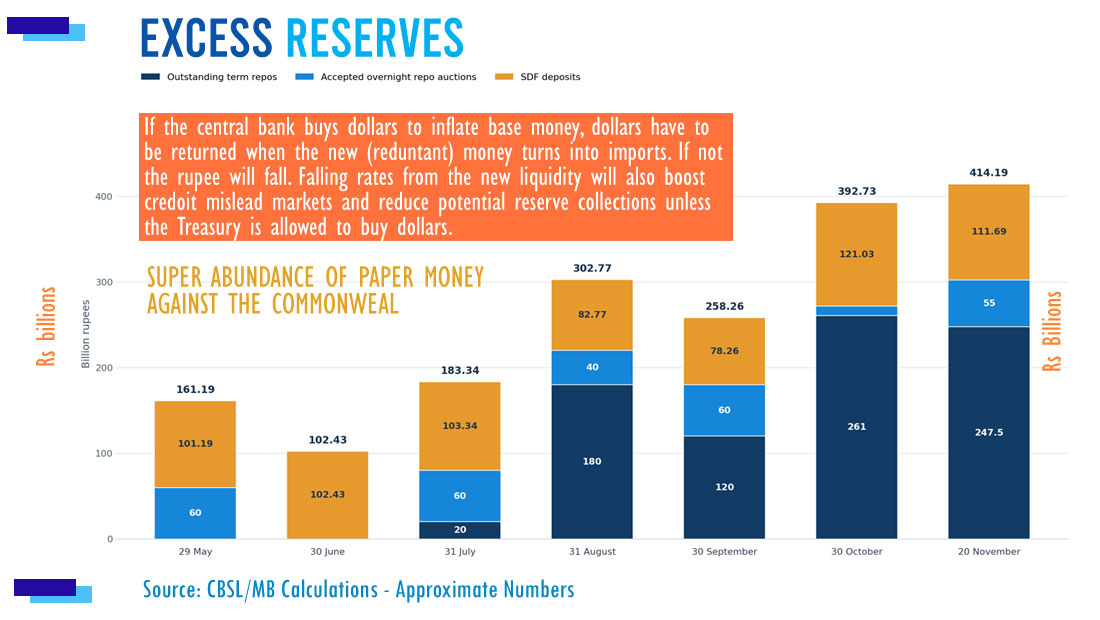
Sri Lanka's central bank operates a system of reflation, called flexible inflation targeting, where inflationary policy is re-deployed claiming historical inflation is low giving only a short period of stability to the economy, critics have pointed out.
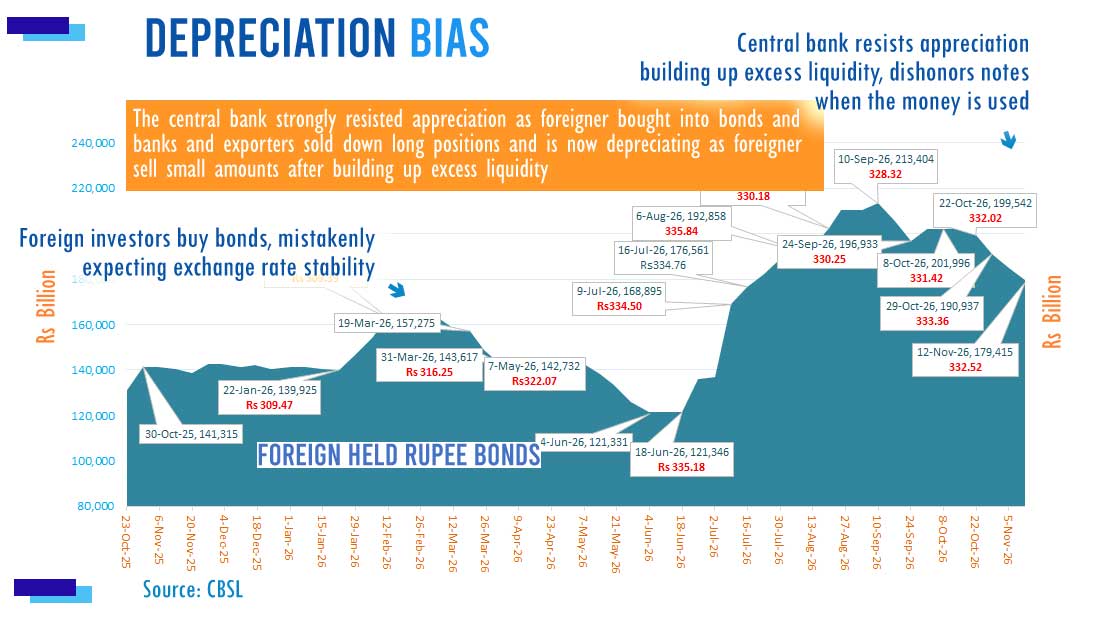
Sri Lanka's rupee collapsed from 309 to 330 in 2026 amid a budget surplus as the central bank dishonored its note issue after inflating it by monetizing balance of payments surpluses in the previous months.
Since February 1952 central bankers have blamed budget deficits for external trouble, not inflationary policy which undermine their de facto (reserve collecting) external anchor.
Over 2025 also the central bank depreciated the currency from 300 to 309 overpurchasing dollars (surrender rule style), analysts say. The central bank busted the rupee from 200 to 340 in 2022 by trying to float with a surrender rule.
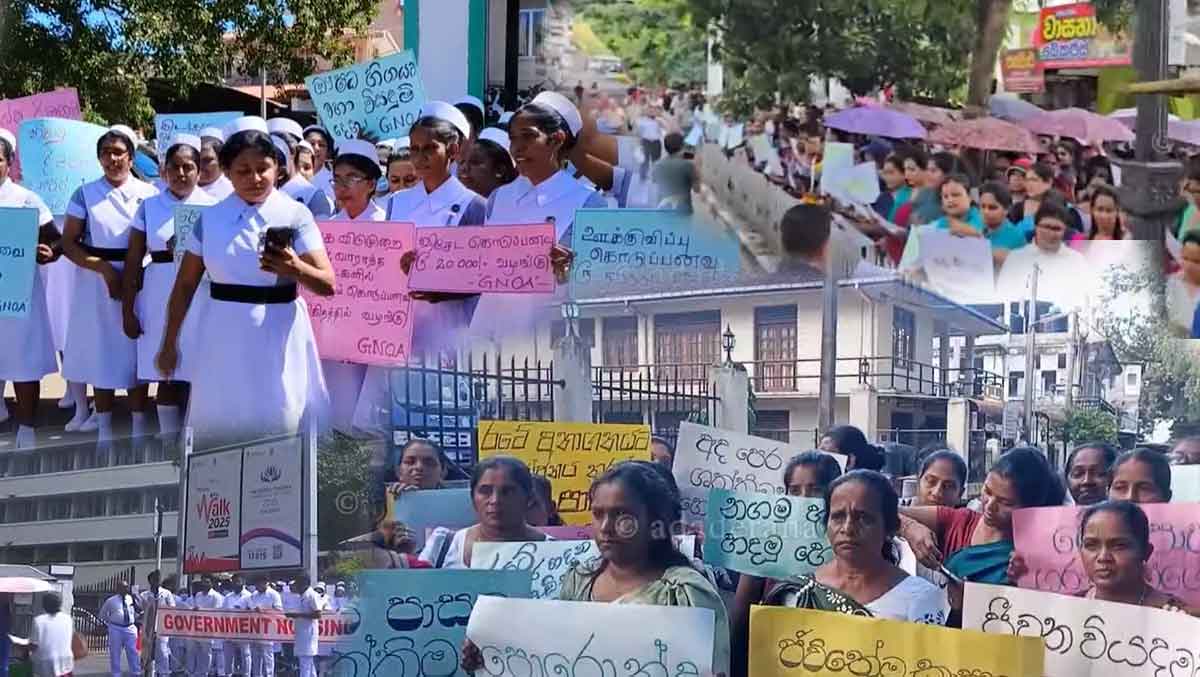
The debasement of the national currency has so far pushed index inflation over 8 percent and amplified the effects of a war in the Middle East, and has led to initial token strikes against the state workers by state workers whose wages have not risen.
Sri Lanka started experience rapid deprecation, high inflation and social unrest after the IMF's Second Amendment to its articles in 1978 left the country without a credible anchor for money.
Latin American nations, which had borrowed abroad started to default at the time.
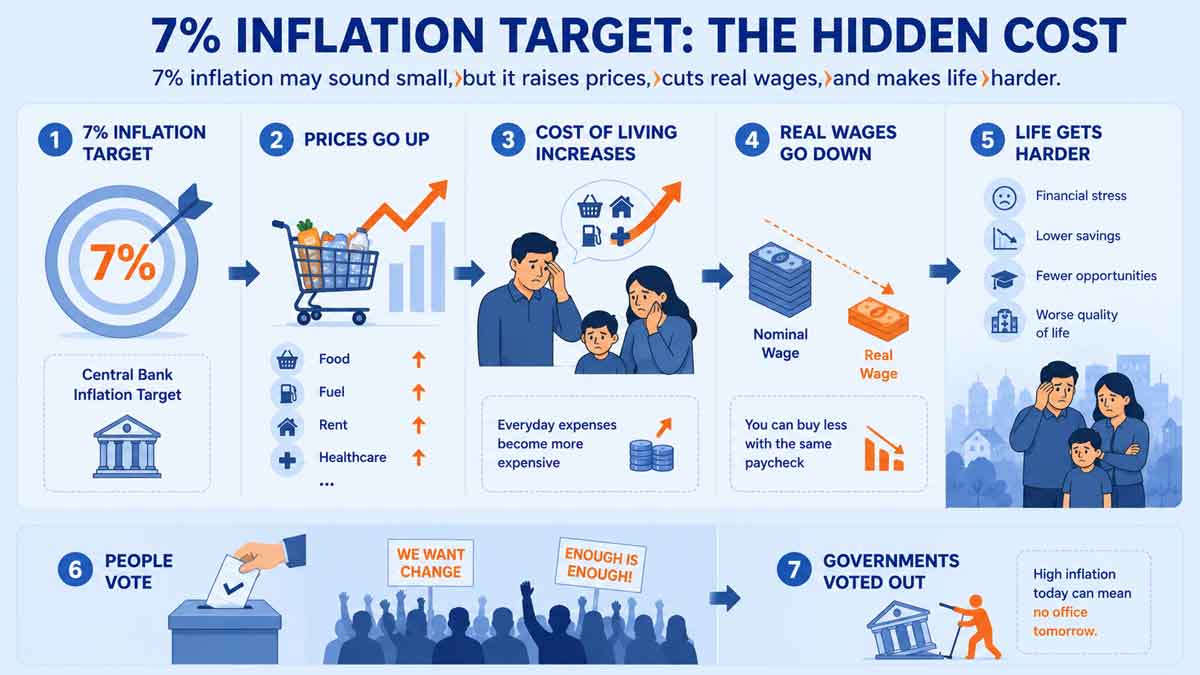
The inflation biased agency lobbied and got powers to raise cost of living by 5-7 percent a year on the claim that high inflation is necessary for growth, though monetary debasement destroys capital and leads to higher nominal interest rates.
Inflation biased macro-economists who reject classical economic theory usually push up inflation claiming that money is 'neutral' but the strikes and the IFC facility to mitigate forex risks show that it is not and it has damaging real effects, analysts say.
Sri Lanka's central bank narrowed its policy corridor from 150 to 100 basis points in 2015 and started printing money for mid-corridor targeting sharply raising powers to trigger forex shortages.
The IMF also gave technical assistance to calculate a potential output, further encouraging the agency to cut rates with inflationary policy.
IMF programs also encourage the central bank to build reserves monetizing the balance of payments surrender rule style and dishonor the notes (deny convertibility) to safeguard the exposed unsterilized reserve when the money is used for credit expansion.
Meanwhile IFC said Sri Lanka facility builds on borrowing lines established by IFC and Citi in Kenya in 2024 and South Africa in 2026. Over the past decade, IFC has committed 33 billion dollars in local currency financing in 71 currencies. (Colombo/Nov27/2026)

| 3 month bill | 9.26% | 1bp ▲ |
| 12-m bill | 9.95% | 2bp - |
| Gold (Ounce) | $4015 | - ▼ |







Comments
Be the first person to comment and join the debate