
Share your email and we'll share the latest news
Exclusive economic intelligence, political and business coverage
Thursday, November 26 2026
Thursday, November 26 2026
MONETABRIEF – Sri Lanka's tea farmers have claimed there is "unhindered and rampant importation" of "cheap foreign tea" for re-exports, claiming it will destroy the industry.
However, tea can be blended anywhere, not just in Sri Lanka and Dubai is now around the seventh largest exporter of tea in the world adding value, whether cheap of otherwise. However, the Dubai is now in the middle of a war zone.
"For generations, the global reputation of Ceylon Tea has commanded a premium in international markets, strictly on the strength of its unique, single-origin provenance, rigorous quality standards, and geographical indication," the PA claimed.
"The PA cautions that flooding the domestic supply chain with cheap foreign alternatives dilutes this core Unique Selling Proposition (USP), risking irreversible damage to consumer trust worldwide."
A long-held complaint in Sri Lanka has been that value to Ceylon tea is added elsewhere.
The rubber sector has exited the mindset and Sri Lanka has now become a global centre for solid rubber tyres, increasing demand for Sri Lankan rubber.
Ironically, the protectionist fire came as one commercial tea plantations started making Matcha tea for export to Japan, which perfected the production of the product from powdered green tea of China.
In Sri Lanka, people cannot consume foreign teas either, as tea farmers behave like maize and rice farmers, lobbying for import controls.
The British built the sector without any import bans.
The full statement is reproduced below:
PLANTERS’ ASSOCIATION WARNS: UNCHECKED IMPORTATION OF CHEAP FOREIGN TEAS THREATENS TOTAL COLLAPSE OF SRI LANKA’S PLANTATION ECONOMY
25 November 2026: The Planters’ Association of Ceylon (PA) has raised urgent alarm bells regarding the unhindered and rampant importation of cheap foreign teas into the country. The Association warns that allowing low-cost, external teas to be brought in, blended, and re-exported under the Sri Lankan flag is systematically, undermining the hard-earned equity of Pure Ceylon Tea, devastating local livelihoods, and driving the domestic plantation economy toward total decline.
For generations, the global reputation of Ceylon Tea has commanded a premium in international markets, strictly on the strength of its unique, single-origin provenance, rigorous quality standards, and geographical indication. The PA cautions that flooding the domestic supply chain with cheap foreign alternatives dilutes this core Unique Selling Proposition (USP), risking irreversible damage to consumer trust worldwide.
Today, Sri Lanka’s tea industry sits at a sharp, structural crossroads: it commands premium global prices for its orthodox teas, yet its cost of production is roughly 2.5 to 3.1 times higher than major rivals India and Kenya, while over 70% of its output depends on fragmented smallholder plots facing severe input and labour pressures.
Furthermore, the influx of external teas creates artificial downward pressure at the Colombo Tea Auction - the world's largest single-origin tea trading platform. Depressed Net Sale Averages (NSAs) directly compress green-leaf payout rates, delivering an immediate and severe financial blow to over 400,000 smallholder farming families and regional plantation workers who are already struggling under escalating living and operational costs.
Under the governing statutory framework specifically the Sri Lanka Tea Board Import and Export Regulations, the gazette regulations mandated a fixed, rigid numerical ratio of mandatory 70:30 percentage split for mixing imported tea with locally grown tea.
The framework states that import permits for blending and re-export are contingent upon the condition that "the imported tea is blended with tea produced within Sri Lanka, and such tea has been purchased at the Colombo tea auctions or from any other industry approved channel of sale.".
This move is to safeguard Ceylon Tea identity, for which SLTB must use its authority to ensure that imported teas function strictly as minority components. They must be mixed with a sufficiently high proportion of local tea so that the final exported package qualifies to carry the approved mandatory label such as "A blend of Ceylon tea and tea of other origin packed in Sri Lanka" ensuring the bulk of the product remains rooted in local production.
Other than specialty teas, the cheap poor-quality teas imported at around USD 1.20 for value addition is detrimental to the image of Ceylon Tea.
The core grievance of local producers is straightforward: importing foreign tea does not complement the domestic industry; it cannibalizes it.
For over a century, the words "Ceylon Tea" have conjured images of misty mountain slopes, hand-plucked golden tips, and uncompromising purity. Yet beneath the global prestige of the island's premier export, lies a quiet, bruising economic war.
The Smallholder Squeeze: Over 70% of Sri Lanka’s tea is produced by smallholders managing small plots, primarily in the low grown regions. Their livelihoods depend entirely on the green leaf prices they receive, which are statutorily pegged to monthly Colombo Tea Auction averages. When millions of kilograms of low-cost foreign tea enter bonded processing zones, they satisfy global bulk contracts that would otherwise have pulled demand and prices toward local auction lots. Lower auction bids translate directly into slashed farm-gate payouts, driving rural families into debt and forcing them to abandon cultivation.
1. The High-Cost Trap vs. Foreign Margins: Sri Lanka carries the highest cost of production in the global tea industry (averaging over $3.10 per kg), driven by steep terrain, manual plucking, aging bushes, and rising labor and energy expenses. By contrast, Kenya and India produce tea at a fraction of that cost ($1.00–$1.25 per kg) due to high-yield, clonal varieties on flat terrain and mechanized harvesting. Allowing blenders to access these cheap foreign inputs, removes the commercial pressure to buy local green leaf, leaving growers to absorb losses plus the burden of unsold produce, which they cannot afford.
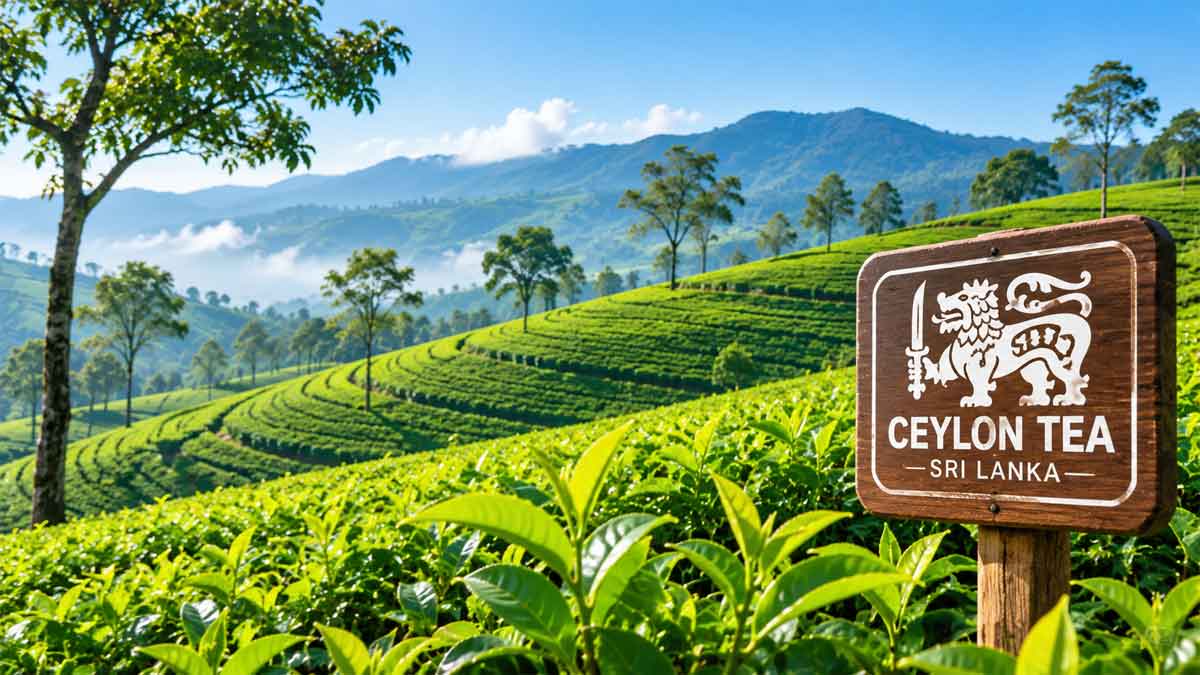
2. Erosion of the "Pure Ceylon" Heritage: Sri Lanka’s ultimate competitive moat is its single-origin integrity and the protection of the Ceylon Tea Lion Logo. When foreign teas enter local processing pipelines even under strict re-export bonds, the risk of brand dilution, contamination, and consumer skepticism grows. If international buyers perceive that "Ceylon Tea" has become a generic multi-origin blend, the entire nation loses its ability to command premium luxury pricing.
Under normal market conditions, unsold lots at the Colombo Tea Auction typically account for approximately 5% to 8% of total weekly offerings which generally range between 5 to 6 million kg.
However, following the influx of cheaper inferior quality imported teas at around USD 1.20 per Kg, the out lot percentage increased significantly to approximately 25% with the impact being particularly pronounced in the case of CTC Teas.
In Late 2025 following the abolition of the Simplified Value Added Tax (SVAT) scheme in October 2025, exporters cut back on holding inventory due to upfront VAT cash-flow costs, driving unsold volumes significantly higher alongside an immediate Rs. 100/kg drop in

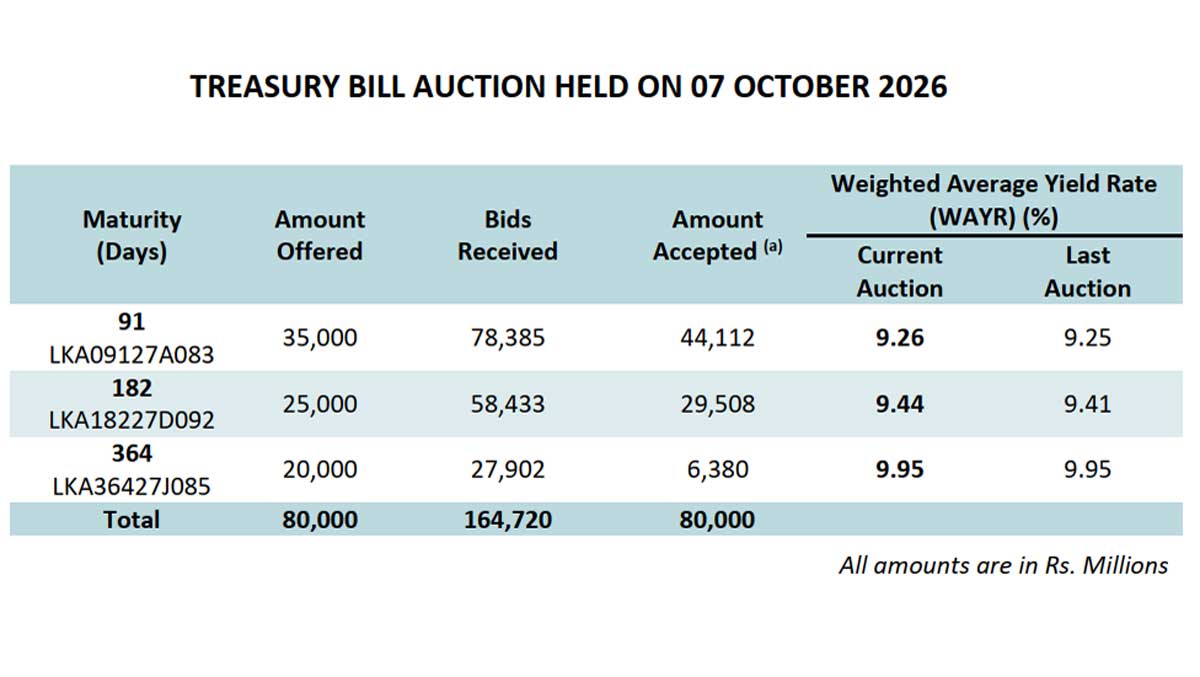
| 3 month bill | 9.26% | 1bp ▲ |
| 12-m bill | 9.95% | 2bp - |
| Gold (Ounce) | $4015 | - ▼ |





















Comments
Be the first person to comment and join the debate