
Share your email and we'll share the latest news
Exclusive economic intelligence, political and business coverage
Saturday, October 24 2026
Saturday, October 24 2026
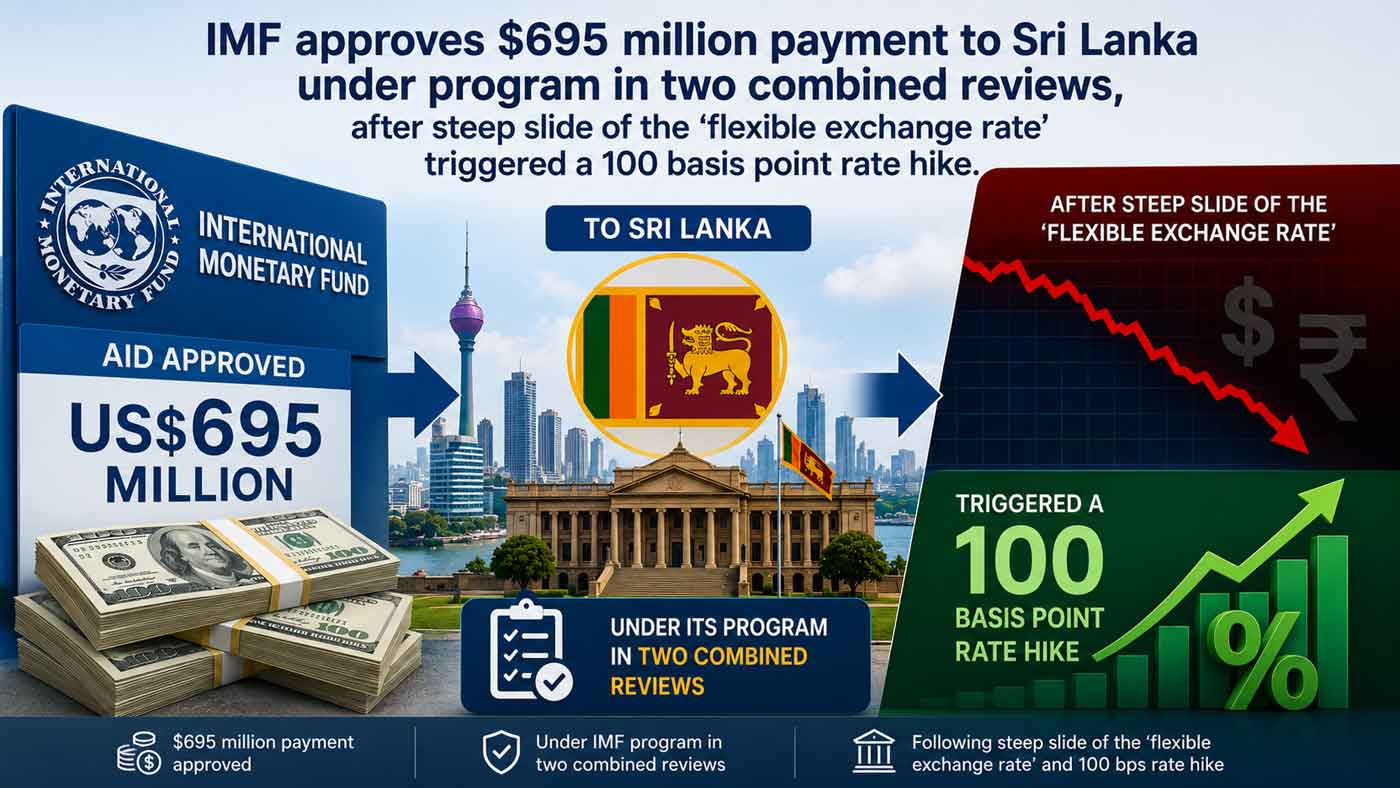 DOUBLE TRANCHE : Sri Lanka is catching up on the timeline of the IMF program by completing two reviews
MONETABRIEF – The International Monetary Fund aid it has approved a 695 million US dollar payment to Sri Lanka under its program in two combined reviews, after steep slide of the 'flexible exchange rate' triggered a 100 basis point rate hike.
There was a hacking incident which led to a missed payment to Australia. As the flexible exchange rate struck the country sending the rupee sliding, rates were hiked the day before the board meeting.
"The continuous performance criteria on no new external payment arrears and on not imposing or intensifying import restrictions were not observed,” the International Monetary Fund said in a statement.
"All end-December 2025 quantitative performance criteria were met. Most structural benchmarks were met or implemented with a delay."
Sri Lanka’s Treasury was hit by by hackers, which diverted payments due to Australia.
"The continuous QPC on new external payment arrears was not observed since November due to a cybercrime incident that resulted in missing external debt payments of US$2.5 million (0.002 percent of GDP) to the Government of Australia," an IMF country report said.
"The incident was recently identified and investigations are ongoing, including in coordination with Australia.
"Authorities requested a waiver of nonobservance on the basis of minor breach and the adoption of corrective actions."
Sri Lanka imposed import surcharges on vehicles after the currency fell sharply in 2026 under the so-called ‘flexible exchange rate’ which critics have pointed out allows the central bank, a state agency, to act in unpredictable ways undermining the rule of law and democratic norms.
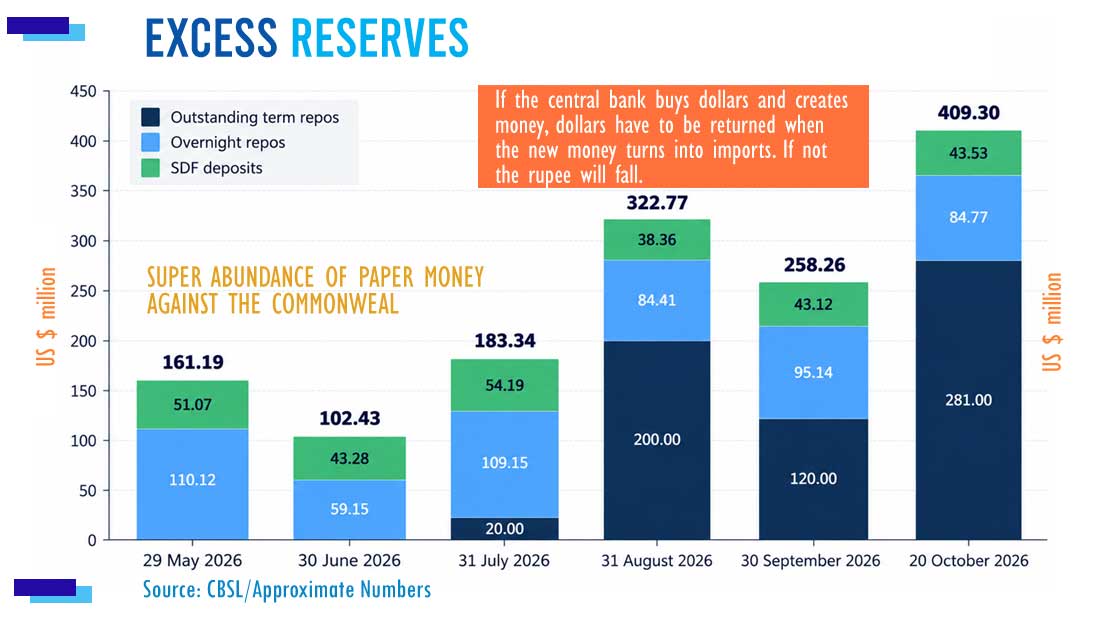
The central bank is one of the biggest players in the forex market, buying dollars preventing appreciation and creating money (monetizing the balance of payments), though claims are made that the exchange rate is ‘market determined’.
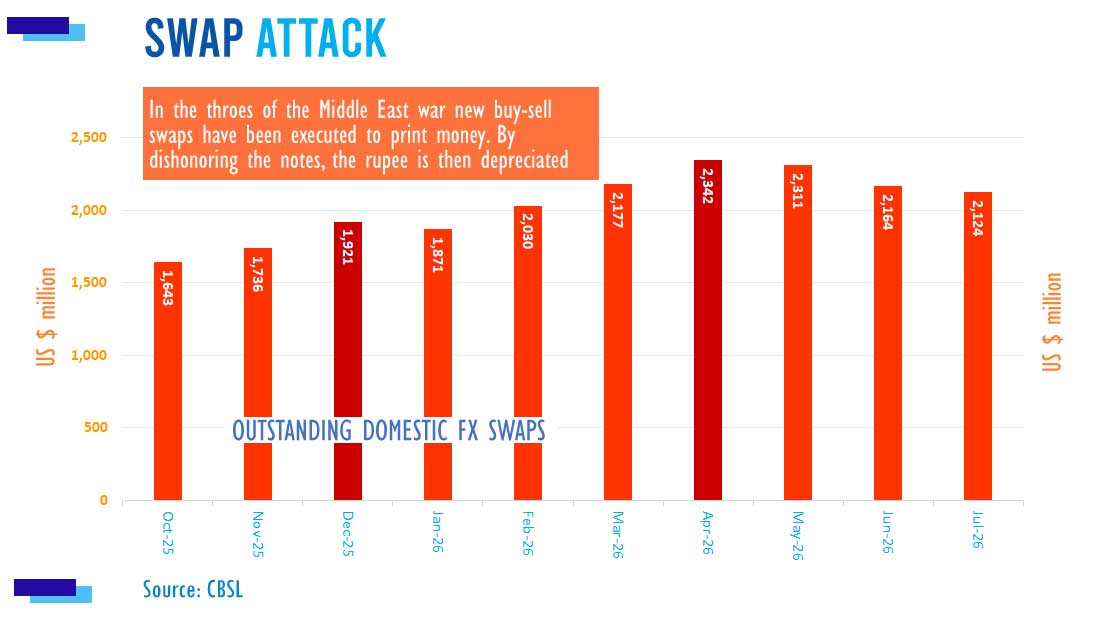
It promises the public to ‘smooth out excessive volatility’ but stops honoring the bank notes it has created by purchasing people’s dollars (and through fx swaps in latest currency slide) at the slightest shock, under a procedure called ‘exchange rate as the first line of defence’ interpreted by critics as the ‘interest rate as the last line of defence’.
Ultimately rates are raised after the currency collapses, phenomenon which has been labelled in the pithy colloquial term ‘Rawulath ne kendath ne’, leaving country with higher interest rates in any case, a debased monetary unit ((By trying to save the beard, the soup has also been lost).
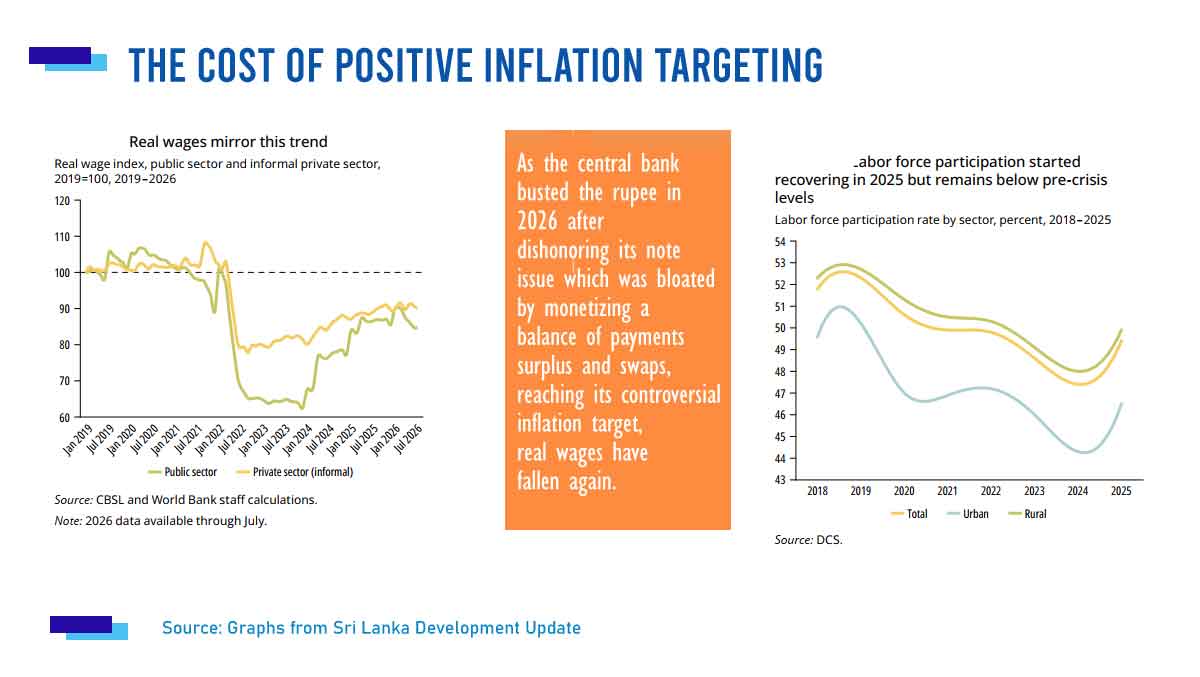
The debased monetary unit leaves destroyed wages, lifetime savings including of an ageing population, an inflated external debt denominated in currencies produced by central bank with sounder operating frameworks, which is more difficult to service at existing incomes, and an unhappy electorate whose wages takes two to three years to catch up.
Later, costs of the governments also catch up, de-stabilizing state finances as salaries and other expenses go up and cost of capital projects zoom up.
Sri Lanka’s central bank hiked rates ahead of the IMF program, after a steep slide in the currency unsettled external trade which imposed costs including political.
The mis-targeted rates, which analysts warned also to boosting reserves through inflationary swaps and had led to depreciation throughout 2025 also, was blamed on an ‘external shock’, despite energy being market priced.
Amid emerging conflicts between money and exchange rate policies of the central bank last June, analysts warned that vehicle imports would be restricted as the ‘flexible’ exchange rate was likely to strike the island again, leading to importer front loading, exporter delays and profits for banks from hedging and wide two way quotes. (What is wrong with Sri Lanka’s flexible exchange rate).
There have been calls for the parliament to bring new laws to reduce discretionary powers (flexible) and make the central bank a more democratic agency that acts within pre-set rules, around which the public and economic agents can plan their activities.
"Nothing distinguishes more clearly a free country from a country under arbitrary government than the observance in the former of the great principles known as the Rule of Law,” explained Friedrich Hayek, who was among classical economists that helped Britain stop currency depreciation after the country was pushed to the largest IMF program in history at the time, by full employment polices of so-called Cambridge economists.
"Stripped of technicalities this means that government in all its actions is bound by rules fixed and announced beforehand – rules that make it possible to foresee with fair certainty how the authority will use its coercive powers in given circumstances and to plan one’s individual affairs on the basis of this knowledge.
"Thus, within the known rules of the game, the individual is free to pursue his personal ends, certain that the powers of government will not be used deliberately to frustrate his efforts."
As the flexible exchange rate strikes, Sri Lanka authorities usually tighten exporter surrender requirements, raises import taxes (claiming some items are non-essential dealing another blow to tax revenues), hikes LC margins and cuts net open positions of banks.
Analysts have also warned earlier that under flexible inflation targeting the central bank engages in inflationary rate cuts claiming historical inflation is low, and then misses IMF reserve targets and has to request a waiver, based on what happened in 2018.
The falling currency, then leads to the ouster of the administration in the next election.
The central bank already has exchange controls, which critics say demonstrates that the agency is un-accountable and flaws in its operating framework are covered up by denying economic freedoms to citizens and businesses.
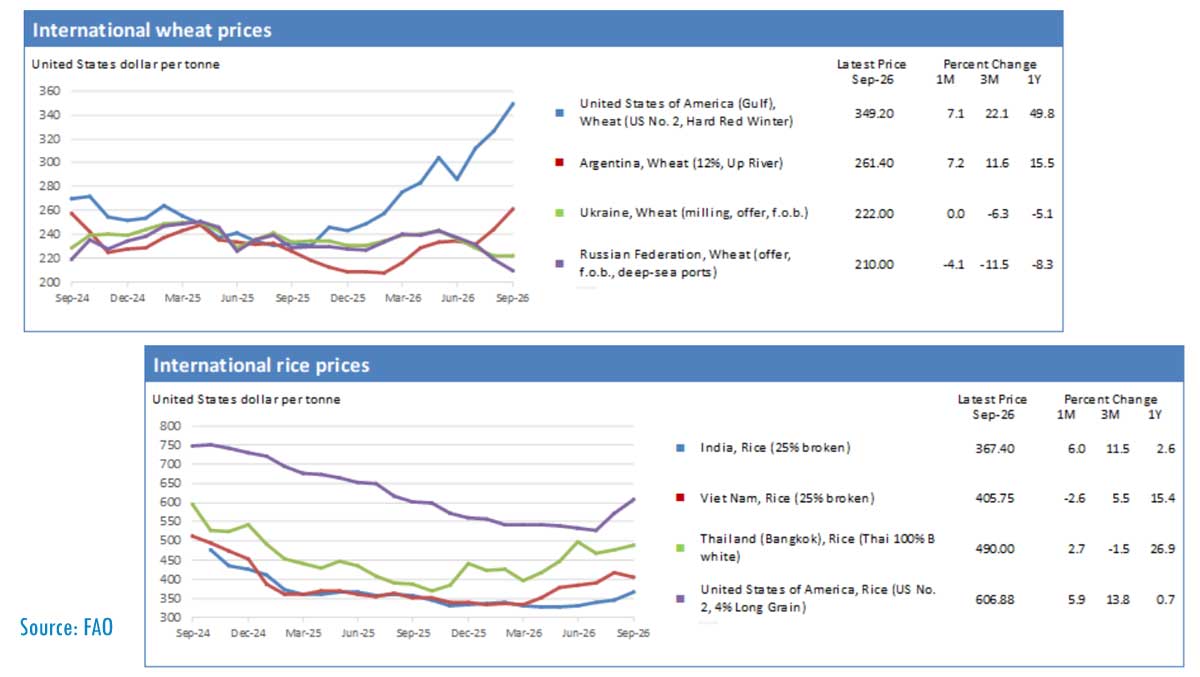
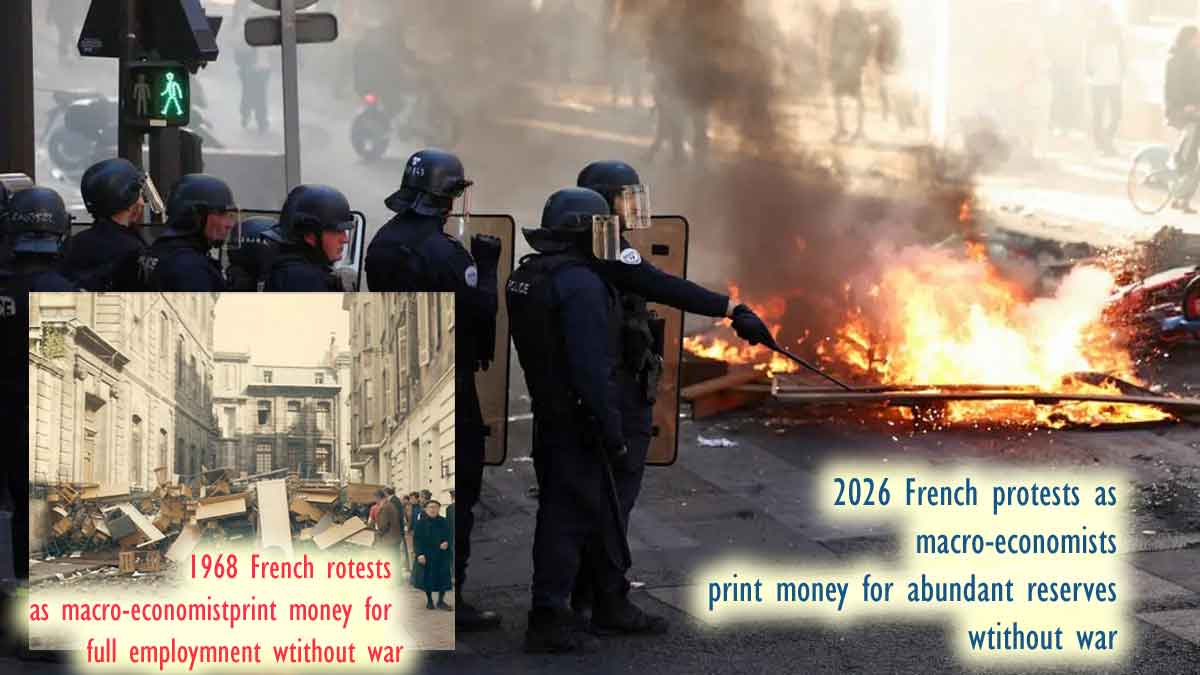
The sliding currency (decline in the external value of the monetary unit) pushes up food and energy prices, hurting the most vulnerable population and also pushes up subsidy costs, destabilizes state finances, while intensifying social unrest and undermining the credibility of economic reforms and empowering rent seeking protectionists.
"Fiscal easing in 2026 is appropriate in response to the shocks, and the government is implementing a temporary relief package, while also allocating additional spending to support recovery and reconstruction following Cyclone Ditwah,” the IMF statement said.
"From 2027 onward, the authorities are appropriately committed to reverting to the primary balance target of 2.3 percent of GDP, as well as complying with the primary expenditure ceiling."
The most durable monetary arrangements in South Asia are found in Bhutan, Nepal and the Maldives where state bureaucratic control of interest rates is the lowest.
However the monetary anchor is weak in the first two countries.
The Maldives has the best monetary anchor and is the most prosperous, though the operating framework of the monetary authority has some flaws following ‘monetary policy modernization’ which has allowed more inflationary operations, analysts say.
The full statement is reproduced below:
IMF Executive Board Completes the Combined Fifth and Sixth Reviews Under the Extended Fund Facility for Sri Lanka
The Executive Board of the International Monetary Fund (IMF) completed the combined Fifth and Sixth Reviews of Sri Lanka’s economic reform program supported by the 48-month Extended Fund Facility (EFF) arrangement. Completion of the combined reviews provides SDR508 million (about US$695 million), bringing the total purchases under the arrangement to SDR1.778 billion (about US$2.4 billion).[1]
The EFF arrangement for Sri Lanka was approved by the Executive Board on March 20, 2023 (see Press Release No. 23/79) in an amount of SDR 2.286 billion (395 percent of quota or about US$3 billion).
The arrangement supports Sri Lanka’s reform program to durably restore macroeconomic stability by (i) restoring fiscal and debt sustainability while protecting the vulnerable, (ii) safeguarding price and financial sector stability, (iii) rebuilding external buffers, (iv) strengthening governance and reducing corruption vulnerabilities, and (v) advancing growth-oriented structural reforms.
Following the Executive Board’s discussion, Mr. Kenji Okamura, Deputy Managing Director and Acting Chair, issued the following statement:
"Sri Lanka’s strong implementation under the EFF arrangement has continued despite challenging circumstances. Gains from the economic reform program helped preserve economic resilience and provided room to respond to cyclone Ditwah and the Middle East war.
"The latter, however, has significantly worsened Sri Lanka’s economic outlook and tilted risks to the downside. For 2026, growth is projected to slow down to 3 percent. Higher oil prices would increase inflation and weaken the current account, which would also be adversely impacted by lower tourism receipts. The uncertainty, regarding the war’s intensity and duration, heightens risks to the outlook.
"Fiscal easing in 2026 is appropriate in response to the shocks, and the government is implementing a temporary relief package, while also allocating additional spending to support recovery and reconstruction following Cyclone Ditwah. From 2027 onward, the authorities are appropriately committed to reverting to the primary balance target of 2.3 percent of GDP, as well as complying with the primary expenditure ceiling.
"Program performance remains generally strong, but efforts are required to complete public financial and investment management, and electricity sector reforms. Sustained revenue mobilization is crucial to make the tax system more efficient and growth-enhancing and should be spearheaded by developing a medium-term revenue strategy. Debt restructuring is nearing completion, but debt sustainability risks remain high.
"Monetary policy should continue prioritizing price stability. Greater exchange rate flexibility and gradually phasing out the balance-of-payments measures remain critical to rebuild external buffers and resilience.
"Well-calibrated structural reforms and renewed public infrastructure are also needed to improve the investment climate and lift the growth potential."

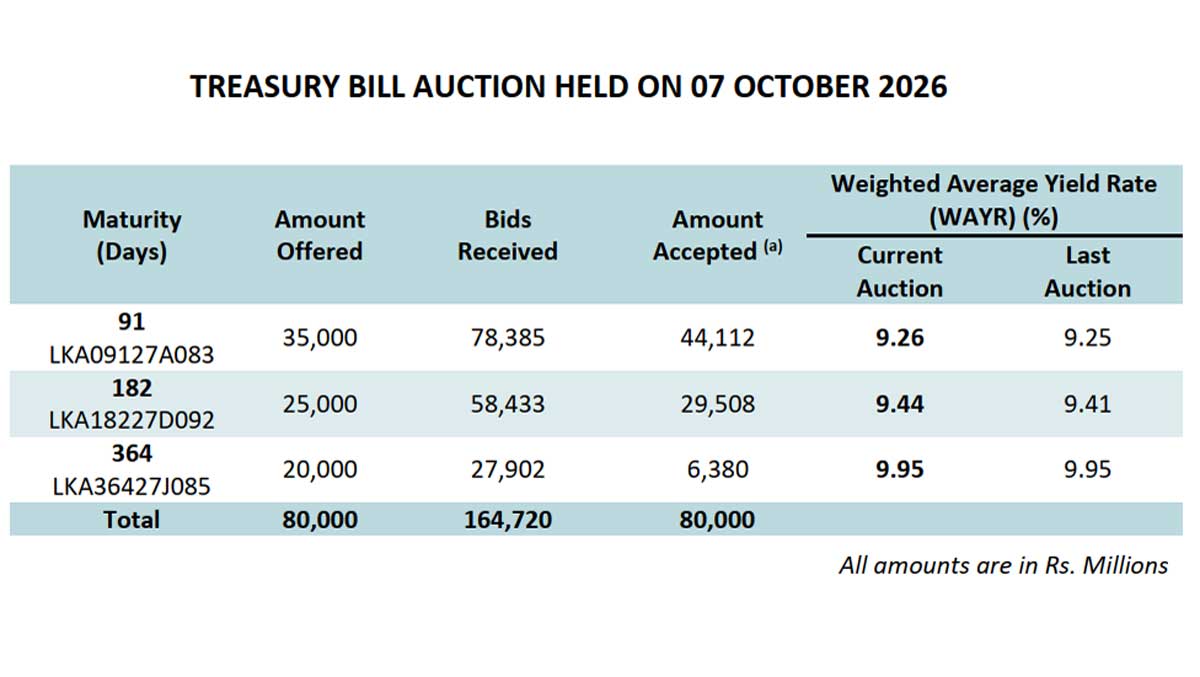
| 3 month bill | 9.26% | 1bp ▲ |
| 12-m bill | 9.95% | 2bp - |
| Gold (Ounce) | $4187 | - ▼ |










Comments
Be the first person to comment and join the debate