
Share your email and we'll share the latest news
Exclusive economic intelligence, political and business coverage
Sunday, October 25 2026
Sunday, October 25 2026
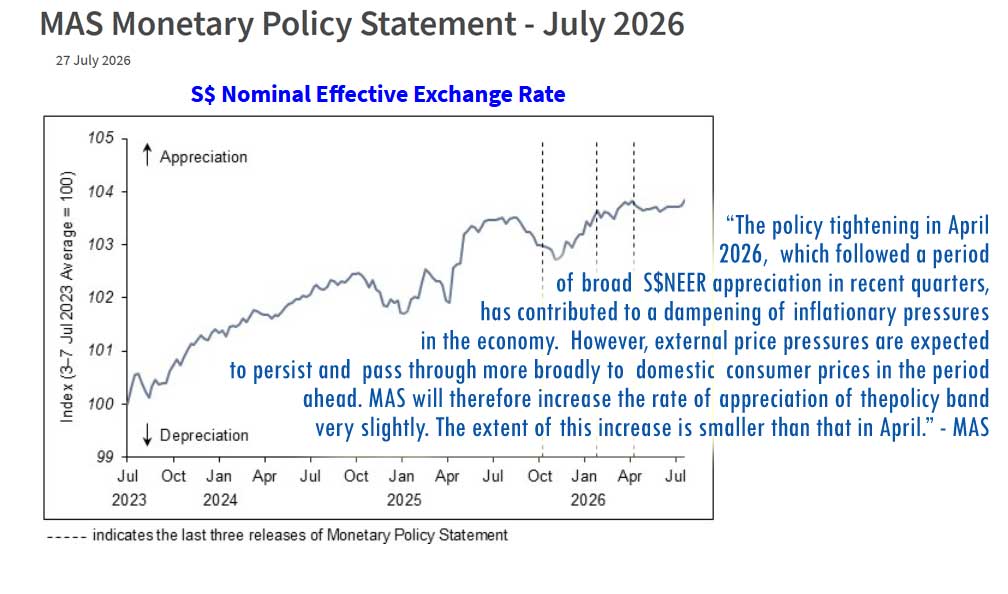
MONETABRIEF - The Monetary Authority of Singapore said it will appreciate the currency at a higher pace to counter inflation as Sri Lanka's central bank busted the rupee using a high inflation target and a depreciation biased 'flexible' exchange rate.
The MAS increased its exchange rate appreciation in April on top of earlier appreciation on a nominal effective exchange rate (Sing $NEER) path on an undisclosed basket.
"The policy tightening in April 2026, which followed a period of broad S$NEER appreciation in recent quarters, has contributed to a dampening of inflationary pressures in the economy," the MAS said in a decision on July 27.
"However, external price pressures are expected to persist and pass through more broadly to domestic consumer prices in the period ahead.
"MAS will therefore increase the rate of appreciation of the policy band very slightly. The extent of this increase is smaller than that in April. There will be no change to the width of the policy band and the level at which it is centred."
"In an environment of continued heightened uncertainty, this calibrated adjustment to the policy stance builds on the tightening in April.
"It sustains an appropriate appreciation path for the S$NEER policy band which will cap inflationary pressures. MAS also stands ready to curb excessive volatility in the S$NEER."
As the MASS does not have a policy rate it can control the exchange rate at will.
Non-Inflationary Growth
Singapore's inflation was only 1.6 percent in June. Hong Kong, which has a fixed currency board, had 2.0 percent inflation in June.
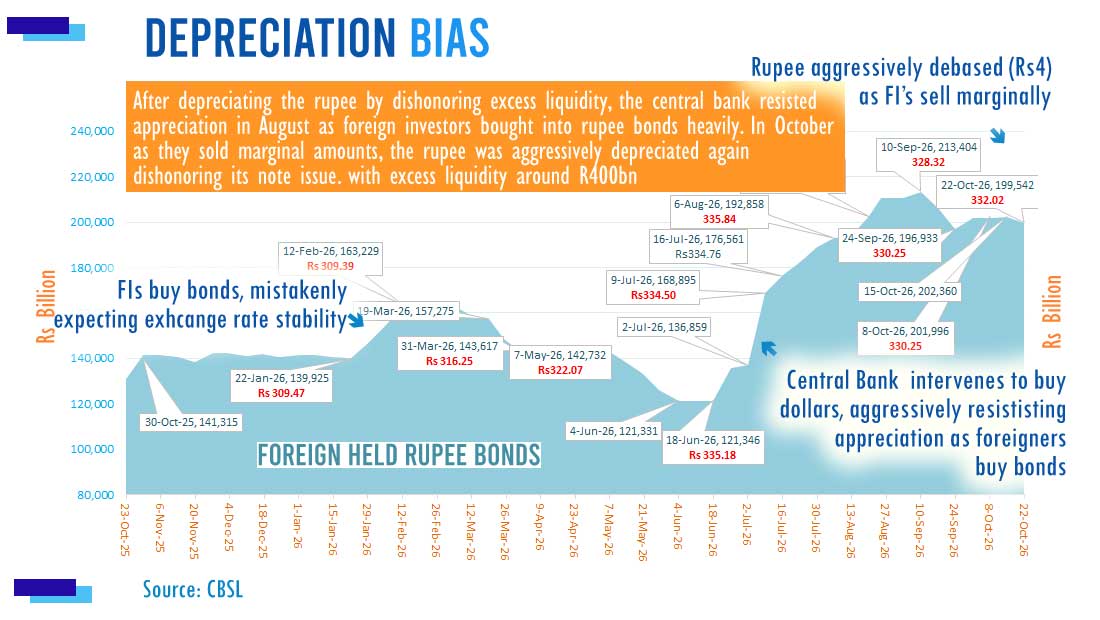
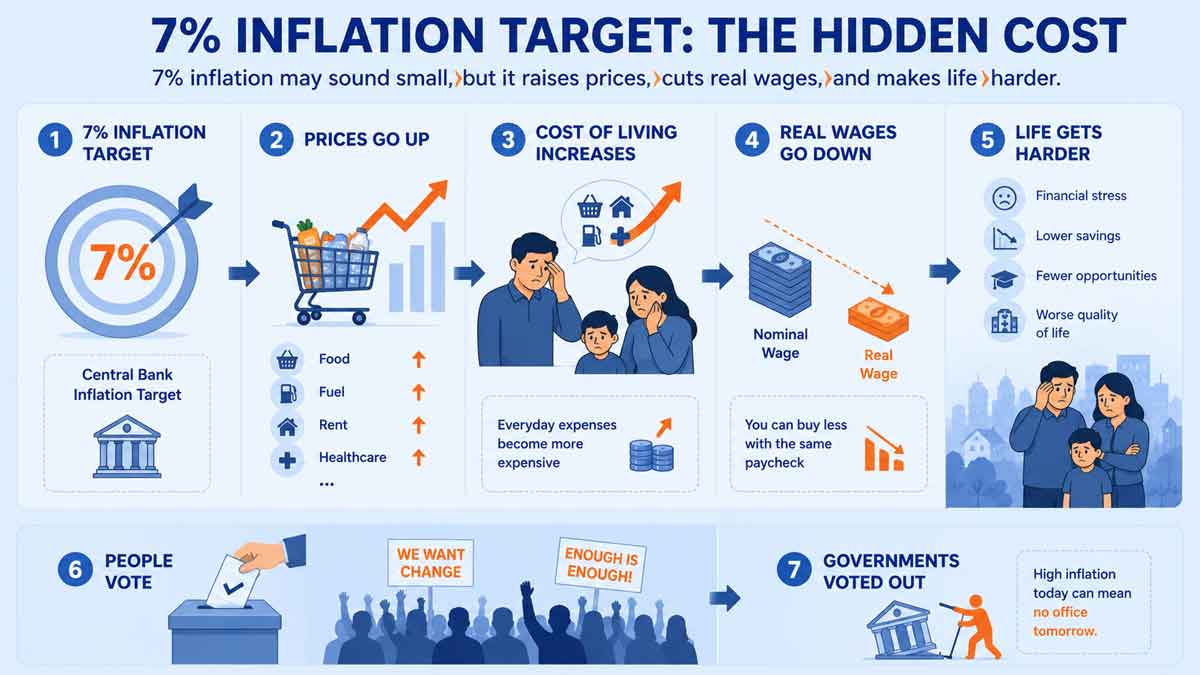
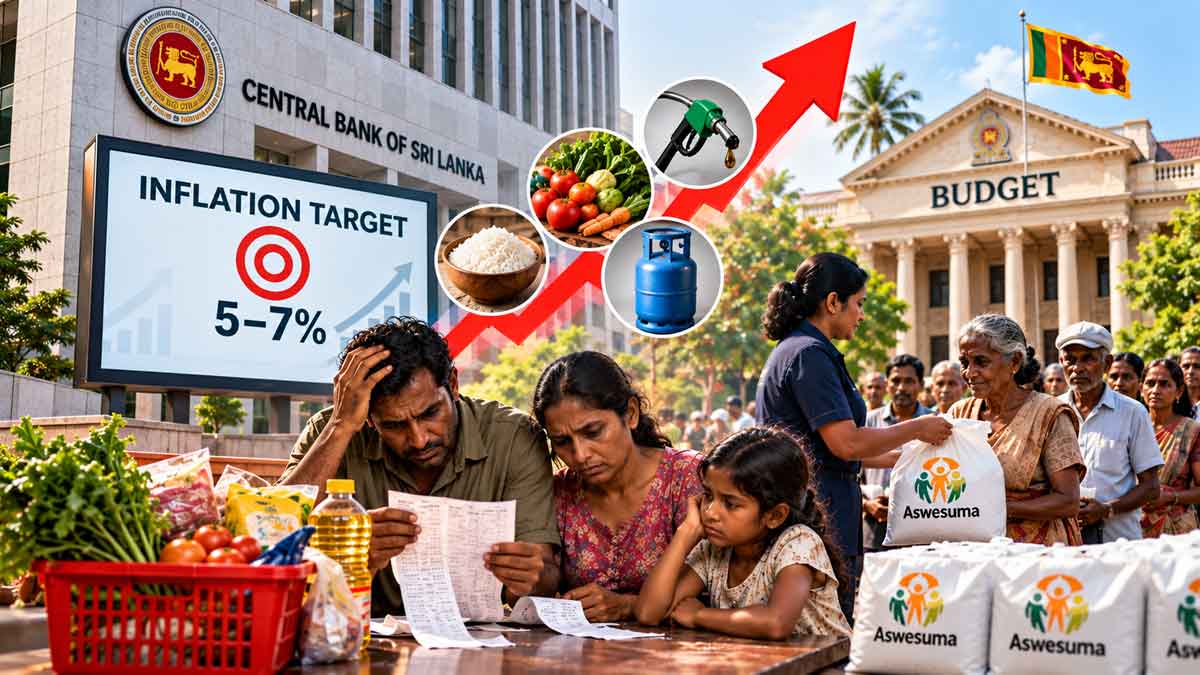
The MAS decision came as Sri Lanka busted the rupee in 2026 on top of 2025, amid strong domestic credit growth, sending inflation soaring to 6.8 percent and is actively resisting appreciation and denying benefits of recent monetary tightening.
Unlike other central banks in the world, Singapore does not exclude energy and food prices from its 'core inflation' to harm the poorest sections of society and trigger social and political unrest.
Singapore drops accommodation and private transport which has congestion fees in it.
Singapore has high growth rates from having a strong monetary standard (non-inflationary growth) and does not embrace monetary instability as soon as growth recovers, unlike inflation-biased monetary authorities.
Though Singapore country initially had an orthodox currency board, in the 1970s when macro-economists who promoted 'full employment' policies busted the US dollar and the Bretton Woods, triggering Great Inflation, Singapore started to appreciate the currency, using currency board principles (no policy rate).
At the time Singapore was running external current account deficits, due to heavy inflows of foreign direct investments.
The framework was originally developed by one time Finance Minister and Chairman of the Monetary Authority of Singapore, Goh Keng Swee.
Sri Lanka Rejects Economics for Mercantilist Inflationism
In December 1980, when then President J R Jayewardene was facing a fresh IMF program as the rupee collapsed with the central bank printing money after the most radical economic reforms in the country's history, he sought the help of Singapore.
Goh responded to a brief given by the Sri Lanka government.
"As the brief correctly observed, a depreciating exchange rate will increase the cost of living as prices of imported goods increase," Goh said in a report dated December 06.
"This has its attendant political risks."
While higher prices may reduce imports (by impoverishment), it should not be allowed to "must not be allowed to drift to the stage where people begin to lose confidence in the currency," Goh said.
"When this happens, it will not be possible to retain your policy of free imports.
"The brief expressed the fear that an appreciation of the rupee will weaken Sri Lanka's competitive position and stifle future growth.
I believe these fears to be groundless for two reasons."
Goh said agricultural export (tree crop) prices are determined by global prices and are not impacted by exchange rate.
"As regards, exports of Sri Lanka's manufacturing industries, an appreciating currency would have limited net impact," he said.
"Both in Sri Lanka and Singapore, manufacturing activities consist mainly of processing of imported semi-finished material such as textiles into garments, silicon chips in semi-conductors, steel sheets into refrigerator cabinets, etc.
"A stronger rupee would mean that import costs would be lower and thus offset the effect of currency rate appreciation.
"Contrariwise, a weaker rupee will mean an increase in import costs of raw materials and intermediate goods used in manufacture, largely offsetting the competitive advantages arising from a lower exchange rate."
Sri Lanka chose Mercantilist inflationist (competitive exchange rates), instead of the classical sound money advocated by Goh.
Compared to Singapore's June 2026 inflation of 1.6 percent, Sri Lanka's has reached 6.8 percent with a steep fall in the currency from around 300 to 335 to the US dollar over the past year.
When currencies fall, due to the so-called Cantillon effect, some items move up less fast than traded goods like food and energy.
Sri Lanka gets about 12 billion dollars from merchandise exports, about another 5 billion from services, and about 6-7 billion dollars from remittances which generate large volumes of imports when recipients spend them, indicating that export and import prices drive domestic price levels. (Colombo/July27/2026)

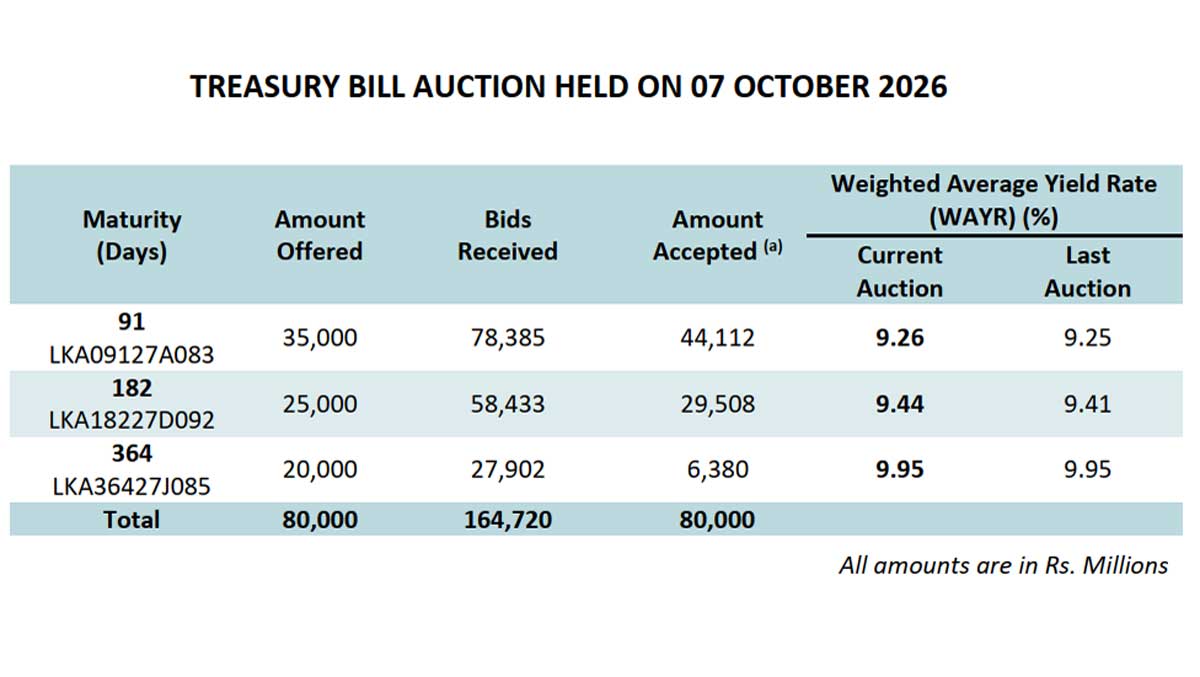
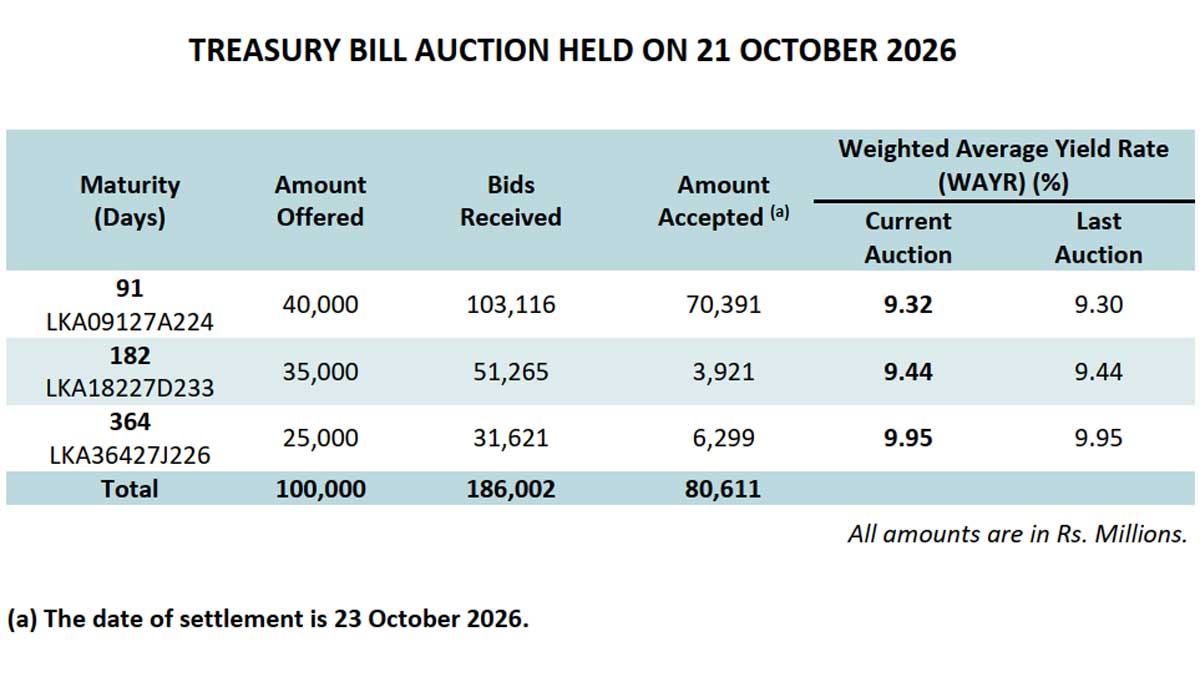
| 3 month bill | 9.26% | 1bp ▲ |
| 12-m bill | 9.95% | 2bp - |
| Gold (Ounce) | $4187 | - ▼ |












Comments
Be the first person to comment and join the debate