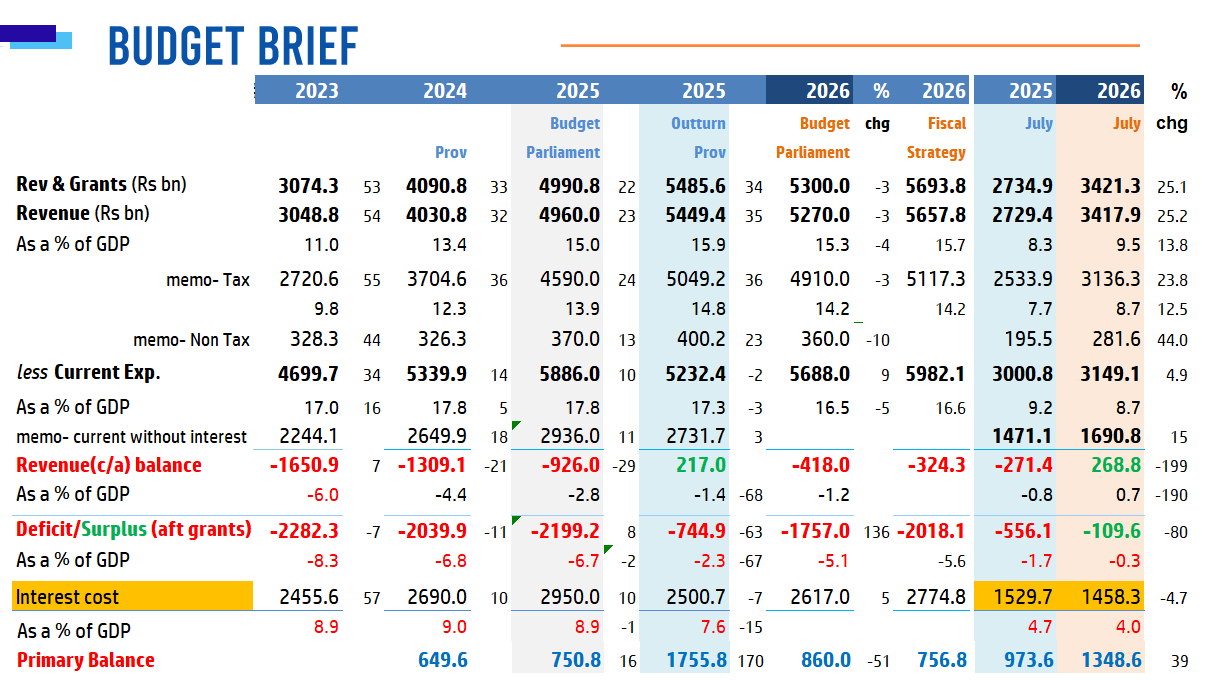
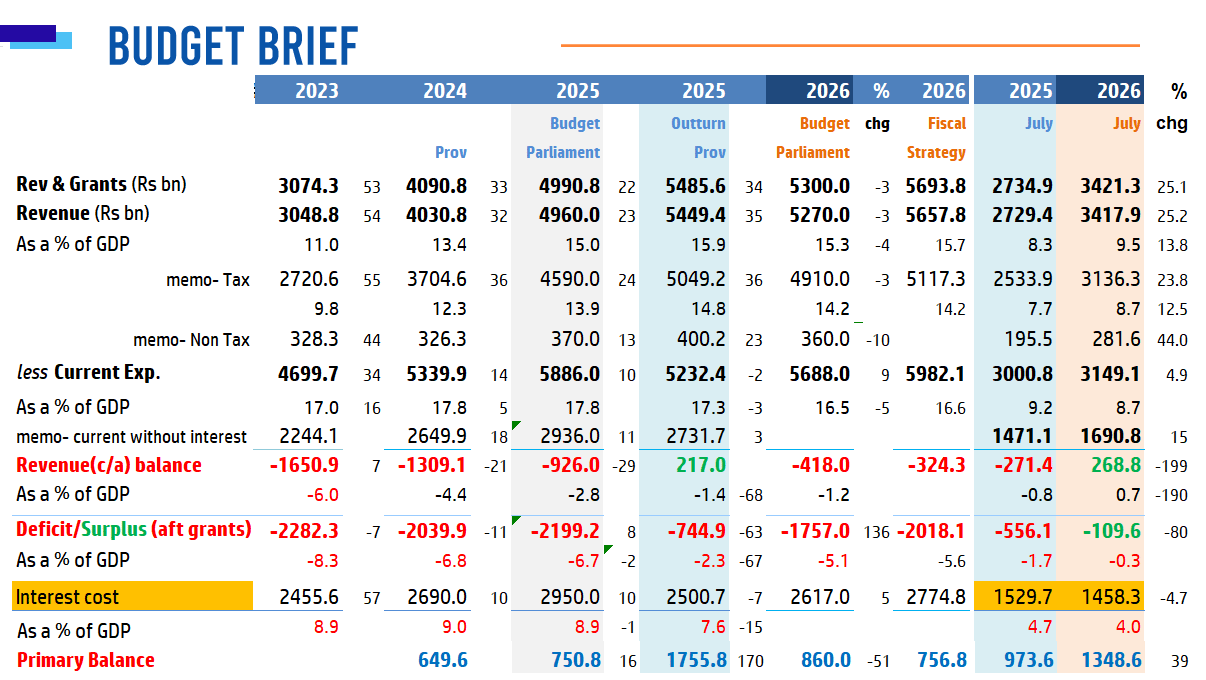
MONETABRIEF – Sri Lanka posted a budget deficit of 107.1 billion rupees up to July, ending surpluses seen in the first half, as capital expenditure picked up, but the gap is sharply lower than last year, official data show.
Tax revenues grew 25.2 percent to 3,417.9 billion rupees and non-tax revenues grew 44 percent to 281.6 billion rupees.
Revenues
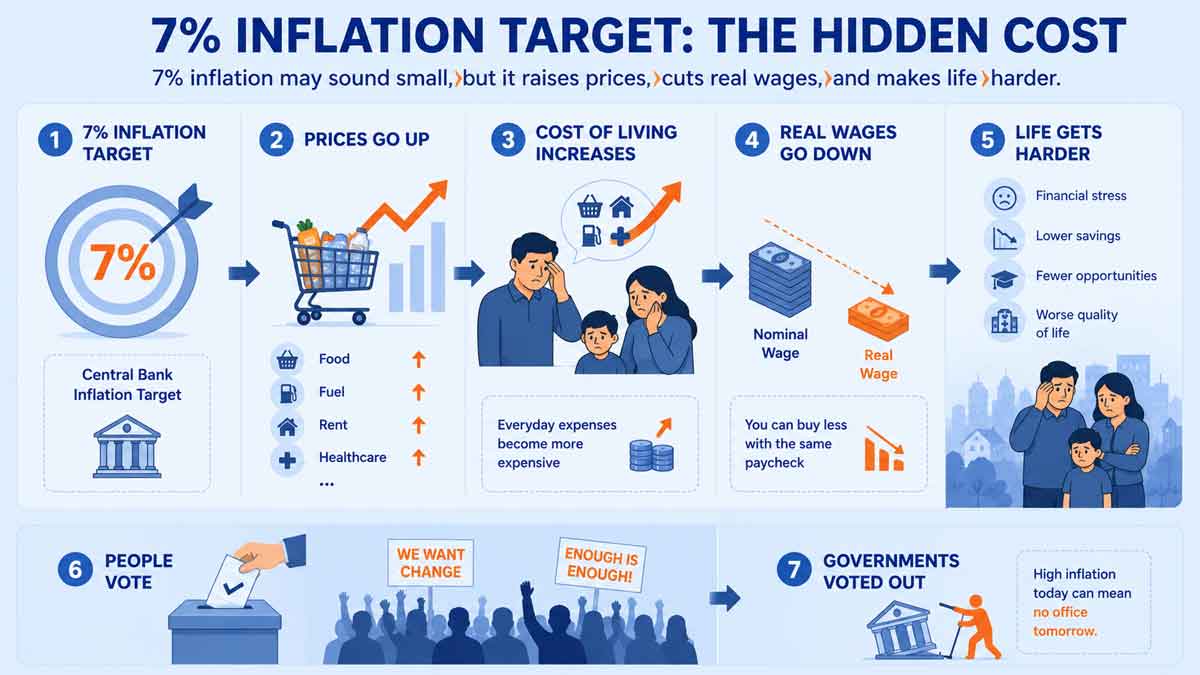
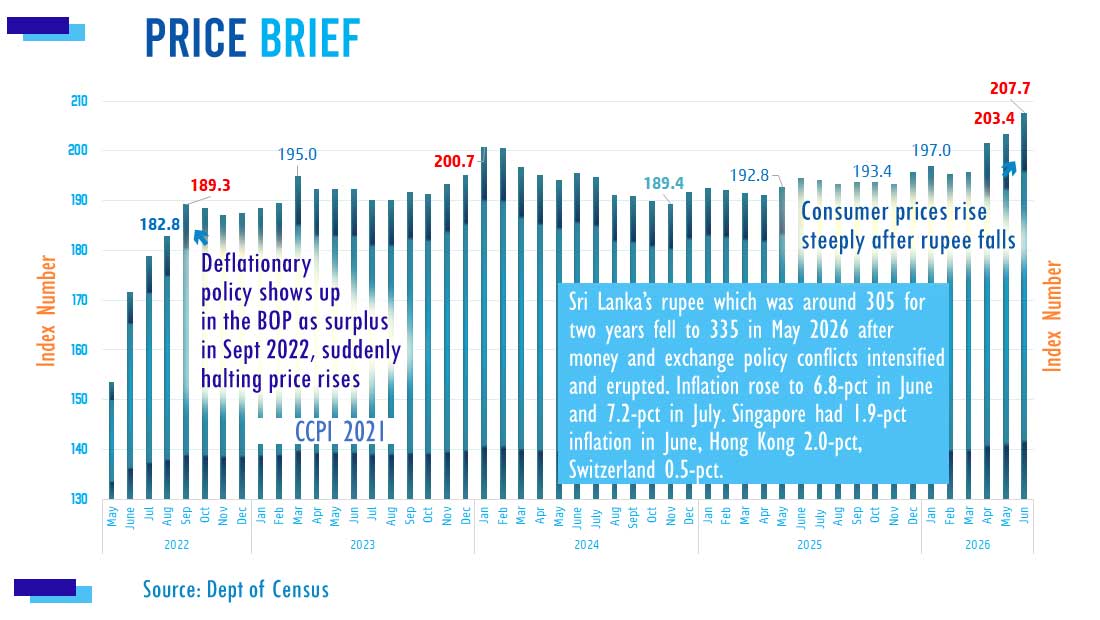
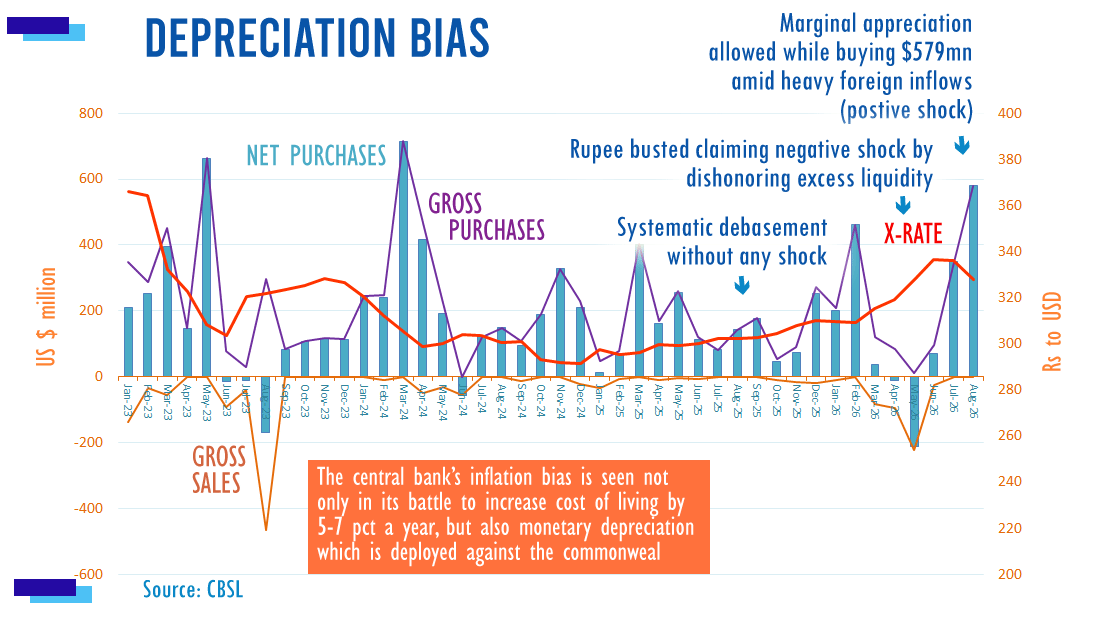
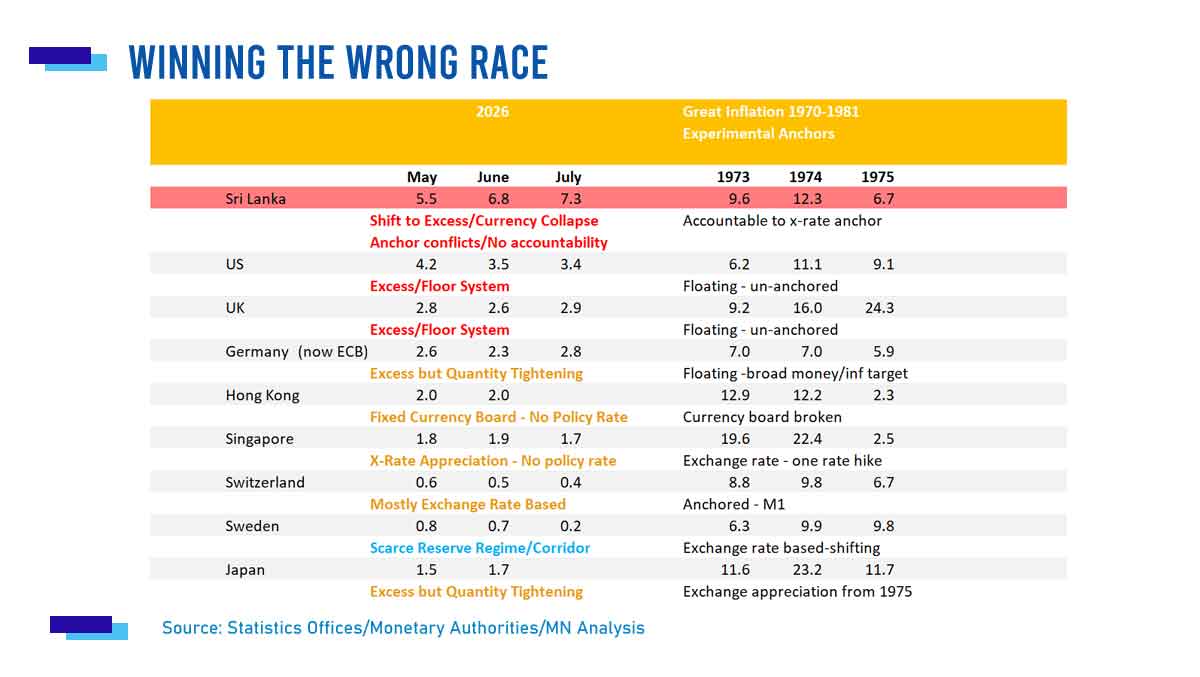
In 2026 the central bank also transferred profits as excess liquidity shortly before the currency collapsed with the note issue being dishonored, pushing up inflation above the central bank's controversial 5-7 percent target.
There have been calls to transfer profits as dollars to prevent excess liquidity building up which the central bank can then dishonor, depreciate the currency.
Monetary depreciation then pushes up the cost of living undermining social cohesion and democratic rule by discrediting fiscally prudent government which takes hard decisions to raise taxes.
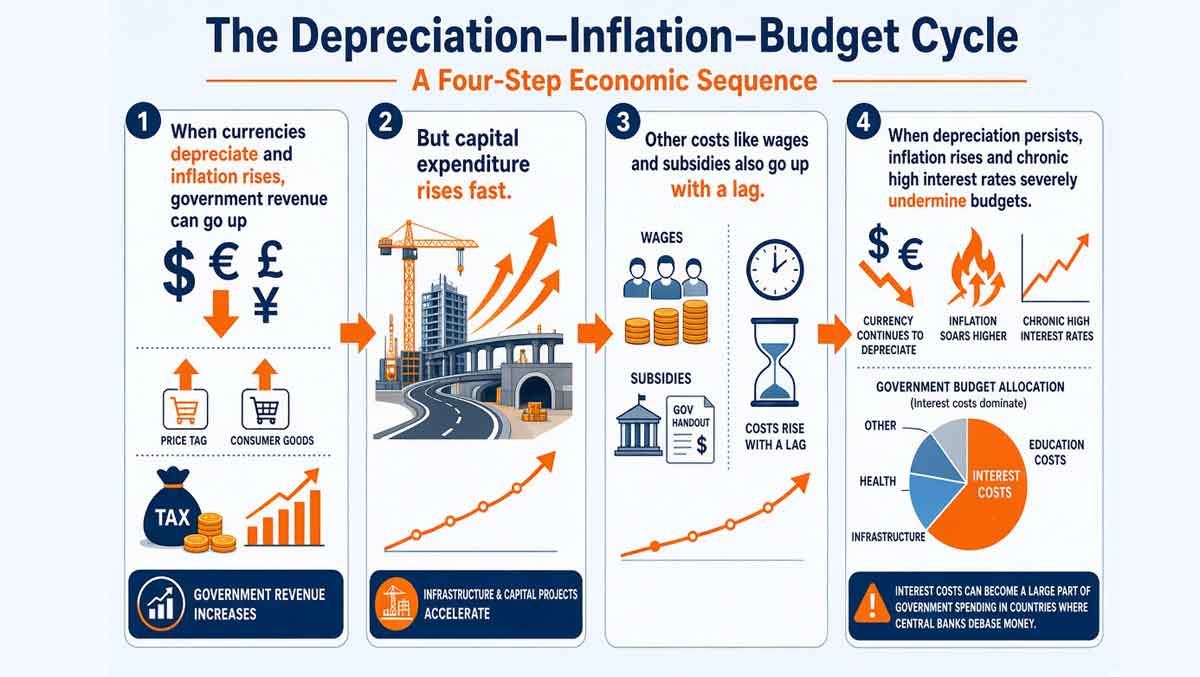
Budgets are also de-stabilized in the end as expenses pick up with as lag.
Tax revenues grew 23.8 percent to 3,136 billion rupees, with vehicle taxes driving revenues. Income taxes and value added tax also grew, the Finance Ministry said.
Income taxes grew 16 percent to 610.5 billion rupees and value added tax increased 25 percent to 1,168 billion rupees.
Current spending increased 4.9 percent to 3,149 billion rupees after two years of monetary stability which ended in 2026 with a currency collapse.
Current Account Surplus
With current spending being below total revenues the budget posted a current account surplus of 268.8 billion rupees, known as the golden rule of budgeting.
Sri Lanka reported the first current account surplus since 1987 last year, as monetary stability helped keep spending in check.
Before the IMF's Second Amendment to its articles in 1978 allowed macro-economists to escape accountability for monetary depreciation, Sri Lanka's interest rates were around the same level as the US.
The current account surplus leaves some tax money for capital expenditure. In the age-of-inflation and macro-economic policy and default, current account surpluses or overall surpluses are no longer fiscal policy goals.
Interest costs fell 5 percent to 1,458 billion rupees also helping to keep current spending in check.
Capital Expenditure
Capital expenditure grew 32 percent to 381.0 billion rupees. Sri Lanka has planned higher capital expenditure in 2026 with Cyclone Ditwah re-building.
Capital expenditure tends to pick up towards the end of the year.
In the early part of the year time is taken for procurement processes and to award contracts.
Even after contracts are awarded, contractors may submit bills unevenly after completed work is certified by consultants, Deputy Minister of Finance Anil Jayantha has pointed out.
As a result, physical progress of projects may be higher than reported in the budget, which is done on a cash basis on evidence of bills.
Money Illusion
Macro-economists promote inflation using the so-called money illusion and the Cantillon effect where some sections of society benefit from price rises at the expense of others.
In 2026 after the currency collapsed, there are also contractor cost escalations as a result nominal budget capex numbers may not represent the same work as in 2025 when there was monetary stability.
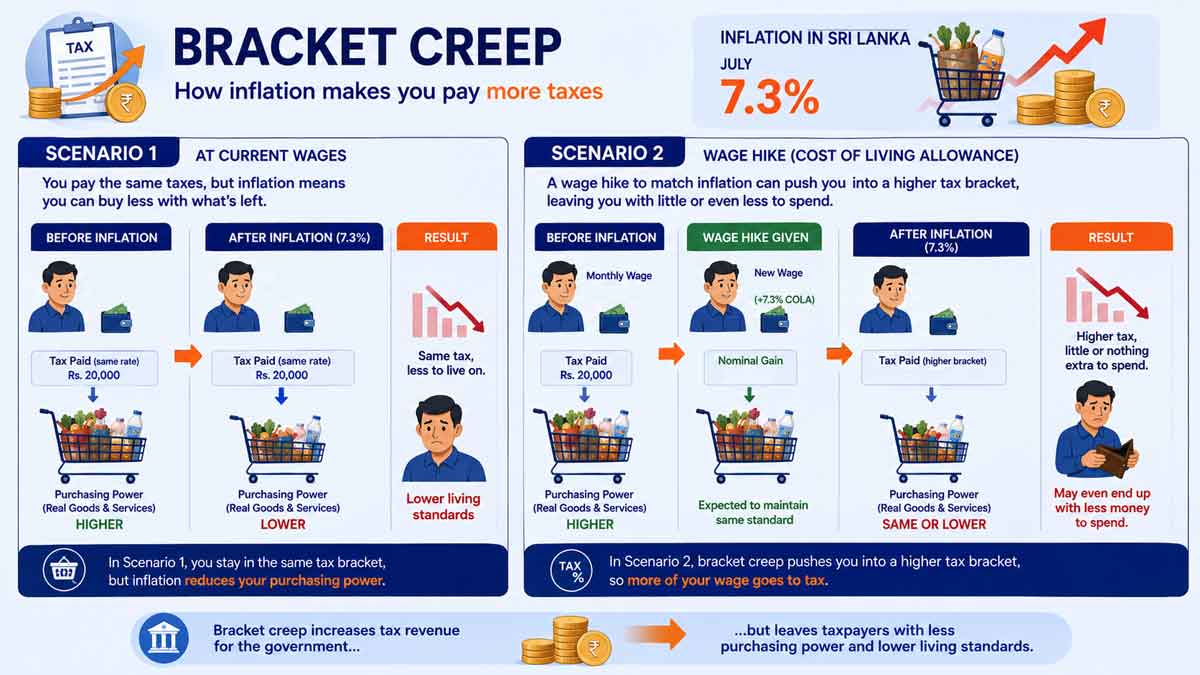
Though macro-economists claim that inflation pushes up revenue, which is true as value added tax can go up as prices go up, wage earners are squeezed reducing real consumption and investments as capital is also destroyed.
Expenses such as the wage bill catches up with a lag, allowing inflationists to mislead parliaments that inflation is good for budgets.
Subsidy payments also catch up eventually, hitting current spending. In the intervening period democratically elected governments who raised taxes get unpopular.
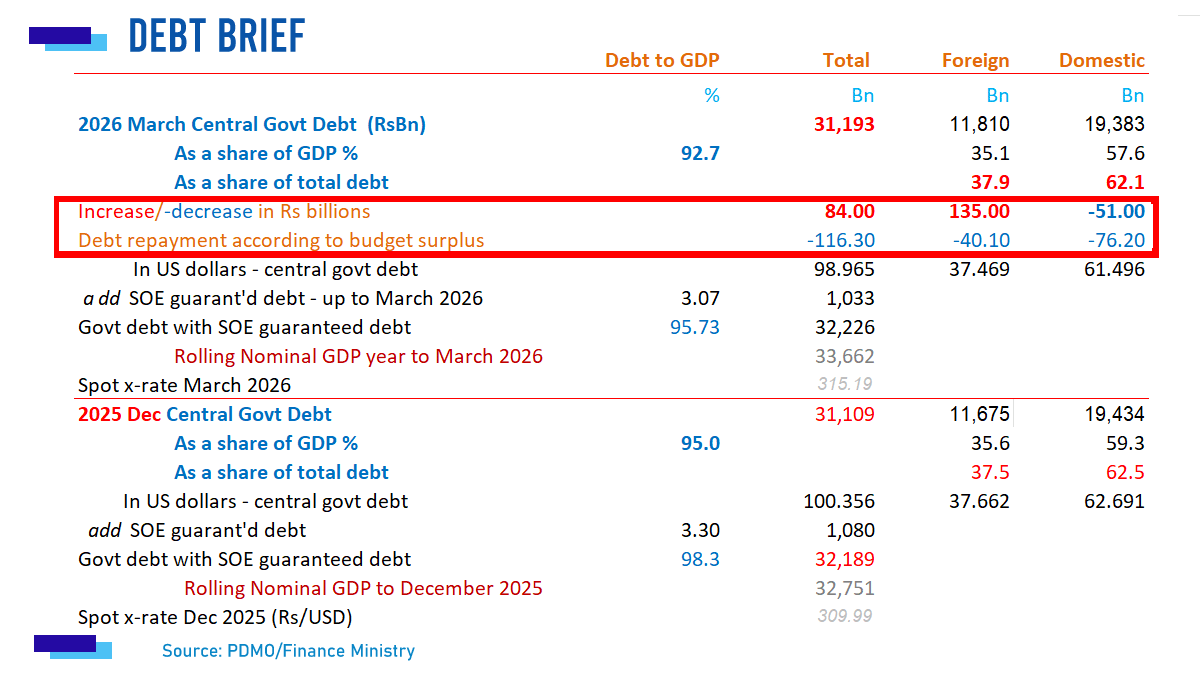
Foreign debt inflates.
Foreign Debt Inflates Quickly
Up to April, the central government debt grew by 538 billion rupees, even as the budget reported a surplus data show.
Interest costs fell 5 percent up to July. In the modern era, government debt is mostly held by pension funds and banks.
Since long term bonds are held by the fund like the Employees Provident Fund, they are not adjusted up fast and they make losses which cannot be recovered without extra supplements being made.
Since all other expenses adjust, short changing the EPF and ETF is the only benefit that the budget may get from inflation, analysts say.
However, over several years, long term nominal interest rates also pick up. After massive depreciation Sri Lanka's interest bill was around 7 percent of gross domestic product in 2026.
After more than a decade of stimulus and 'single policy rate' similar problems are emerging in developed nations like the United States.
The US started to run a budget surplus in the late 1990s, for the first time since the collapse of the Bretton Woods, when Stiglitiz-Bernanke reflation started, firing a false deflation scare, triggering the housing bubble and stimulus and the deadly single policy rate in its wake.
(Colombo/Sept08/2026)
















Comments
Be the first person to comment and join the debate