
Share your email and we'll share the latest news
Exclusive economic intelligence, political and business coverage
Thursday, October 22 2026
Thursday, October 22 2026
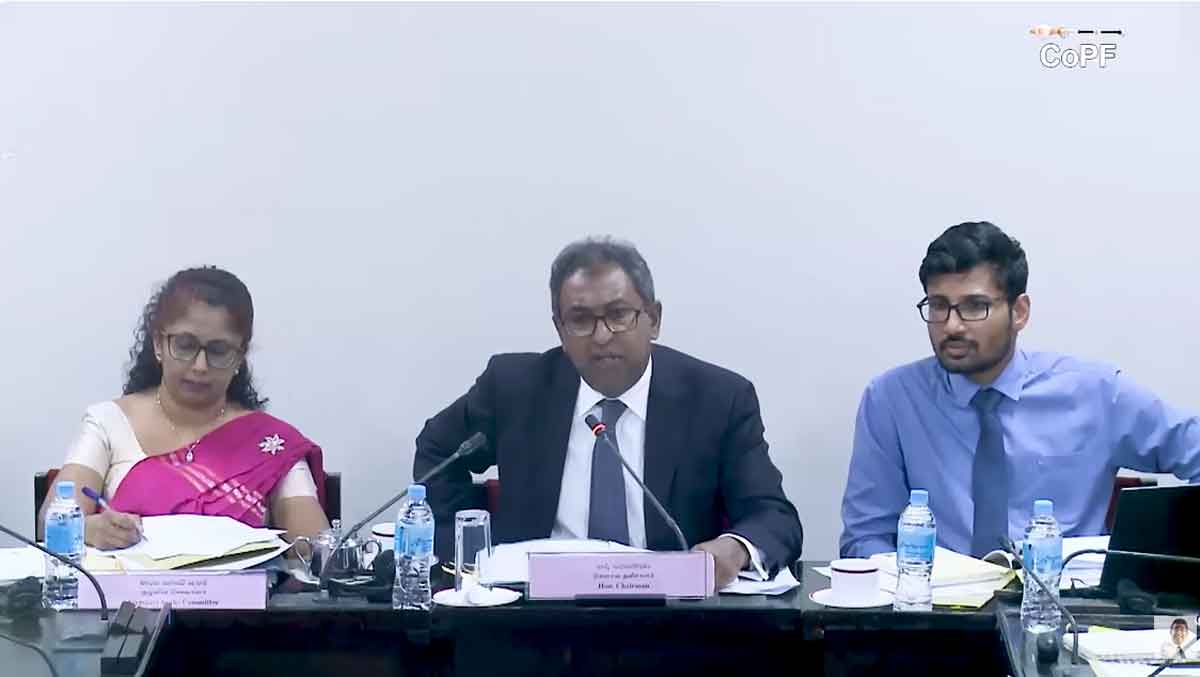 NON DEBT RESERVES: CoPF Chief Harsha de Silva asks fundamental question on traditional monopoly that led to sovereign default
MONETABRIEF – Chairman of the Committee on Public Finance, Harsha de Silva has questioned why the Treasury does not buy dollars like other government agencies to repay foreign debt or build non-borrowed reserves and instead depends on the central bank for dollars.
Sri Lanka defaulted in 2022 after the central bank cut rates with inflationary open market operations and said it ran out of reserves to give to the Treasury.
Fundamental Question
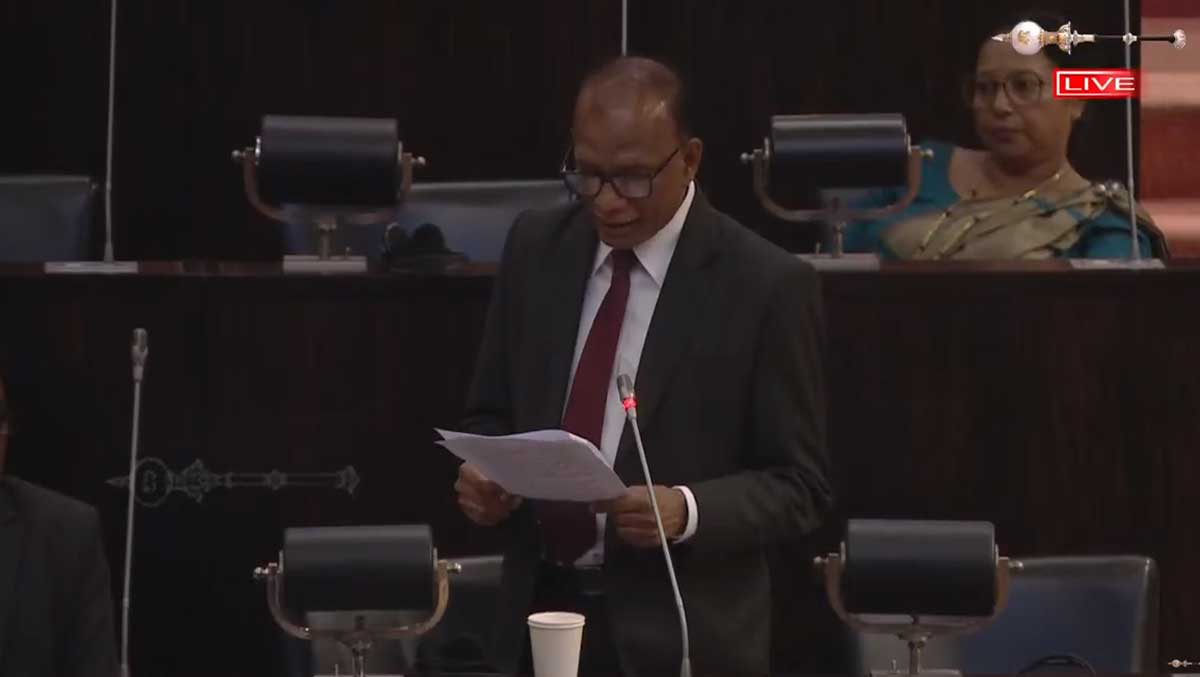
"Can I ask a fundamental question DST?," De Silva asked Deputy Treasury Secretary A K Seneviratne at a CoPF meeting.
"Why doesn't the Treasury does not buy dollars from the market?"
Based on the need the Treasury purchases from the central bank, Seneviratne said, not explaining why the Treasury did not buy dollars on its own account.
"No. I am not asking about the central bank," de Silva explained. "Isn't there the managing director or someone from the Electricity Board or Petroleum Corporation? How do you do your dollar payment?"
An official was heard to reply that energy utilities buy from the market.
"So you buy from the market? What I am asking is why doesn't the Treasury buy from the market?"
The Treasury usually gets from the central bank, Seneviratne said.
"I know, traditionally the Treasury gets from the central bank. The central bank also has to stabilize the exchange rate. I am asking why the Treasury cannot build its own fund."
Flexible Inflation Targeting External Instability
Unlike the Treasury or any other state agency like the CPC or private importers, that can buy dollars with existing money without creating new import demand, the central bank prints money to buy dollars and prevents appreciation of the currency.
The newly inflated monetary base then triggers cascading credit, eventually driving up import demand.
If the central bank does not sell the dollars to redeem the notes and defend the exchange rate peg it operated when the dollars were originally bought and appreciation was prevented, the rupee depreciates.
When the central bank prints money to cut rates and push up the cost of living under flexible inflation targeting, it completely loses the ability to collect any reserves and misses reserve targets.
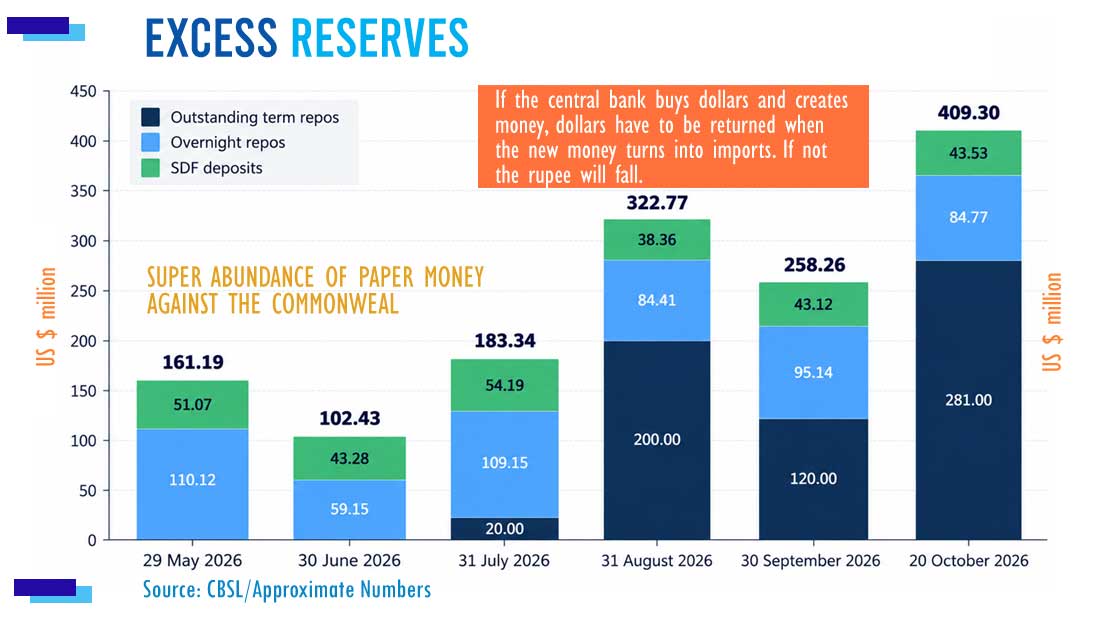
To 'safeguard' reserves and not create new credit and imports from any dollar purchases, the new money has to be sterilized or mopped up.
When de Silva was a minister in a 2015-2019 administration, the central bank created external trouble and depreciated the rupee despite the Finance Minister Mangala Samaraweera raising taxes to reduce the deficit and market pricing fuel.
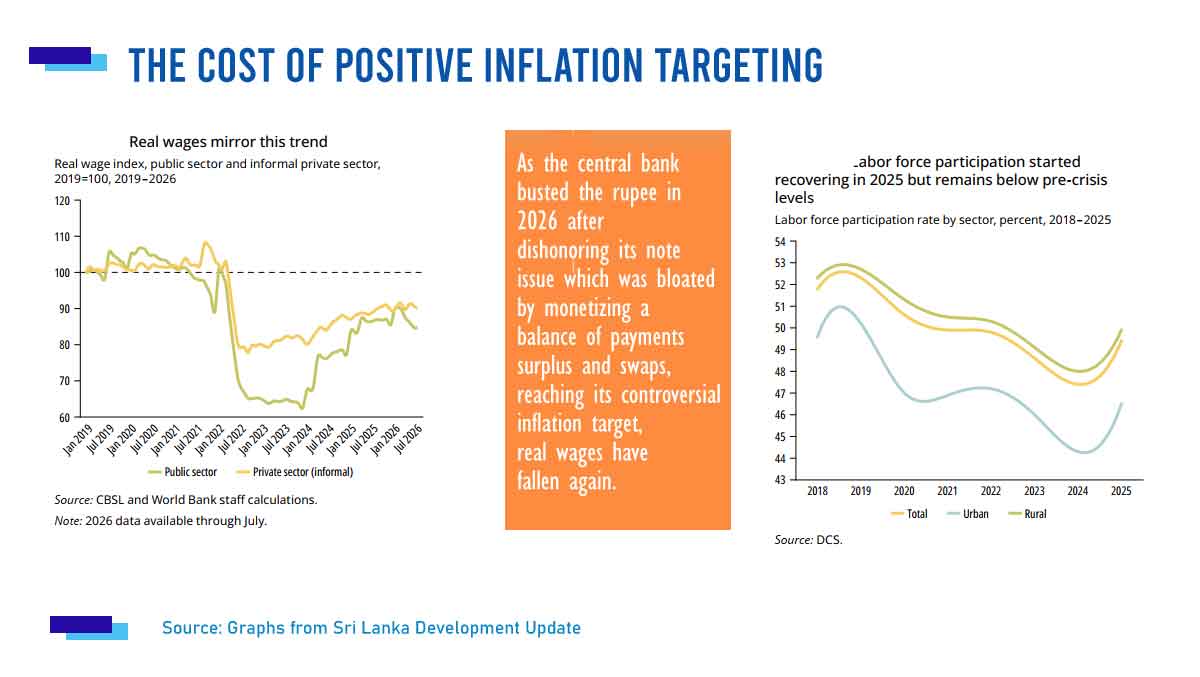
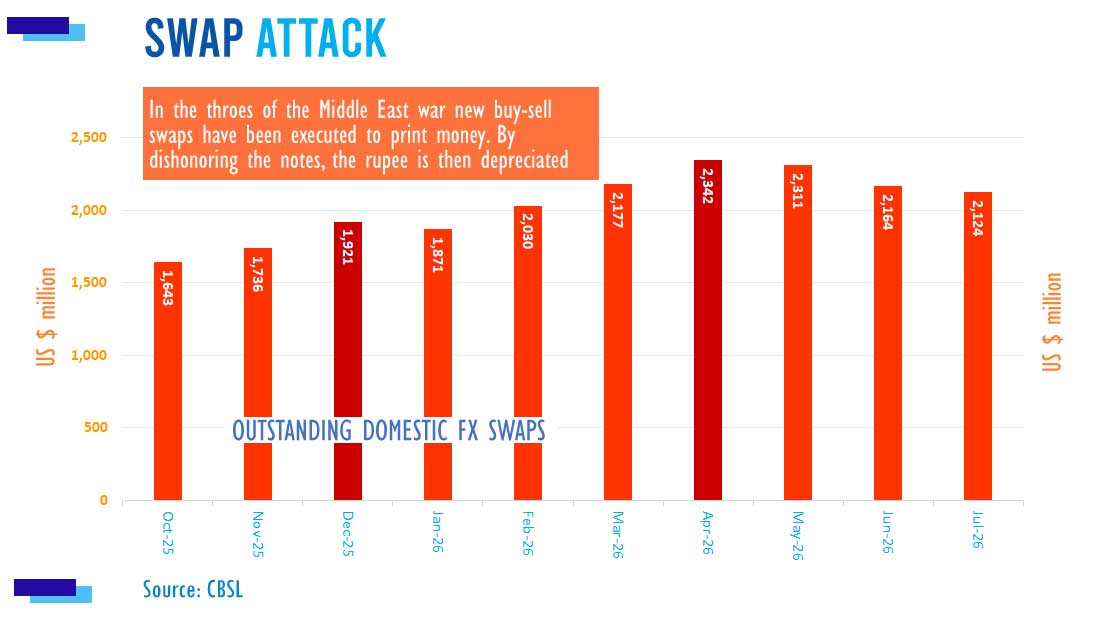
In the first quarter of 2026, the rupee depreciated and the central bank missed its March International Monetary Fund reserve target, after printing money mainly through buy-sell swaps and not returning the dollars to the people who imported goods with the freshly created swap money.
Though claims were made that it was an external shock, rates were eventually raised in May 2026, to stop the external crisis, since external crises come from domestic monetary policy that rejects classical economic theory, primarily Hume's Price Specie Flow mechanism.
Debt Trap
De Silva pointed out that other countries have sovereign wealth funds and government funds which are independent of the central bank.
"Why can't the Treasury build its own fund," de Silva asked. "Some countries have sovereign wealth funds. There are funds belonging to the Treasury. Isn't that so?
"Why is it that you always have to go to the central bank?"
Treasury Secretary Seneviratne, replied that the government had raised 50 million dollars in December through a dollar bond sale, again not answering de Silva's question why the Treasury was not purchasing dollars from the market like any other state agency to build reserves without getting into a foreign debt trap.
The dependance on the central bank – an undertaking the monetary authority cannot meet when rates are cut to boost growth or to push up inflation – drives the Treasury into a debt trap.
'Safeguarded' and Unsafe Reserves Exposed to Excess Liquidity
However, the purchase of dollars to build a sovereign wealth fund or sinking funds to settle foreign debt, as then Ceylon did under British rule, does not inflate or shrink of expand reserve money (reserve money neutral transactions) and does not compromise domestic monetary stability and the rupee.
Under the central bank's current operating framework, when dollars are sold to the Treasury, it defends a peg at the exchange rate and shrinks reserve money (reducing the ability of commercial banks to give credit), which is good for rupee stability.
But until then, the excess liquidity will drive credit and trigger imports as an unsterilized dollar purchase is not a final transaction.
If. after the sale of reserves to the Treasury cash, the central bank resists any consequent rise in short term rates from reduced liquidity with printed money, to maintain a 'single policy rate' or for any other inflationary aim, the new liquidity can trigger a currency crisis and make the central bank miss a reserve target and eventual default if the practiced is continued.
De Silva was the person who pointed out that the central bank purchase of Treasury bills in 2004 and the denial of convertibility that led to the depreciation of the rupee.
When he showed a graph showing how the rupee started to depreciate with the rise in Treasury bill purchases by the central bank, the agency countered with a statistical argument, that he was confusing a stock with a flow, ignoring the human action of the agency's International Operations Department denying convertibility.
De Silva, who also knew statistics, responded with a longer term statistical co-relation that linked the growth of variables.
However, Singapore's economic architect and former Finance Minister, Goh Keng Swee had told then President J R Jayawardene the exact same problem, and warned against rising bill stocks.
The rupee falls suddenly because convertibility is suddenly denied to the new rupees as credit picks up under the central bank's depreciation-biased exchange rate policy, where appreciation is blocked through pegging.
In 2025 and 2026 the central bank also depreciated the rupee, this time denying convertibility to rupees created through buy-sell swaps and also previous dollar purchases from the unfortunate public, especially in January and February 2026, as cyclone Ditwah slashed domestic credit. (Colombo/July21/2026)

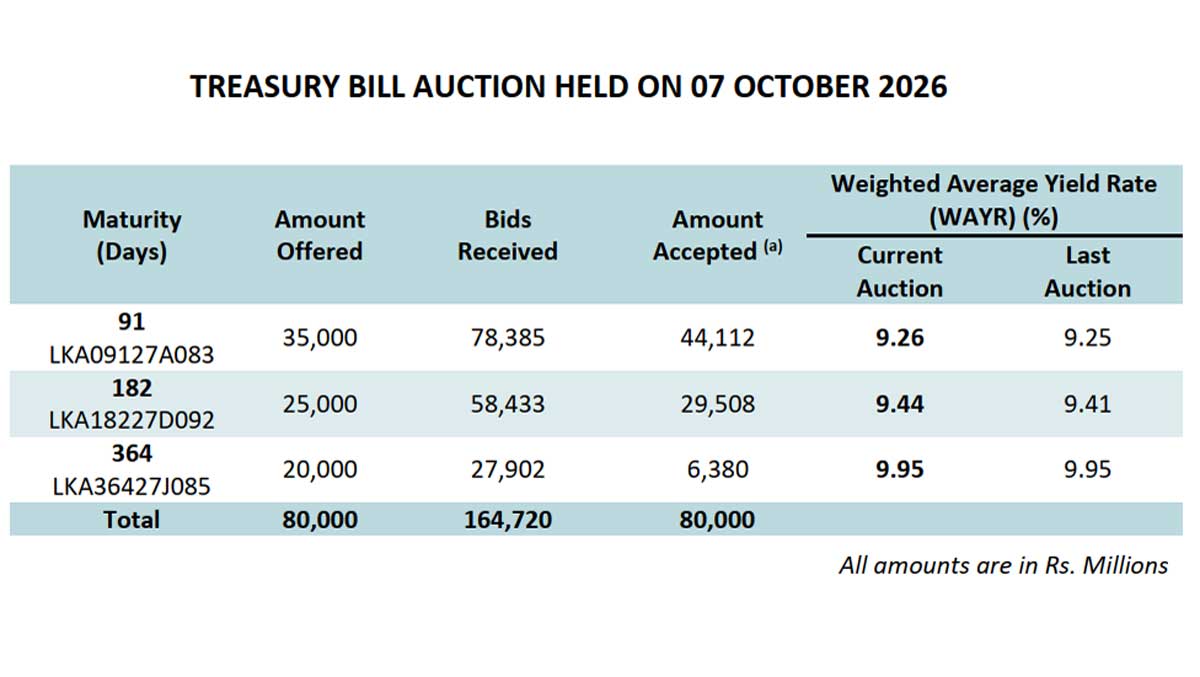
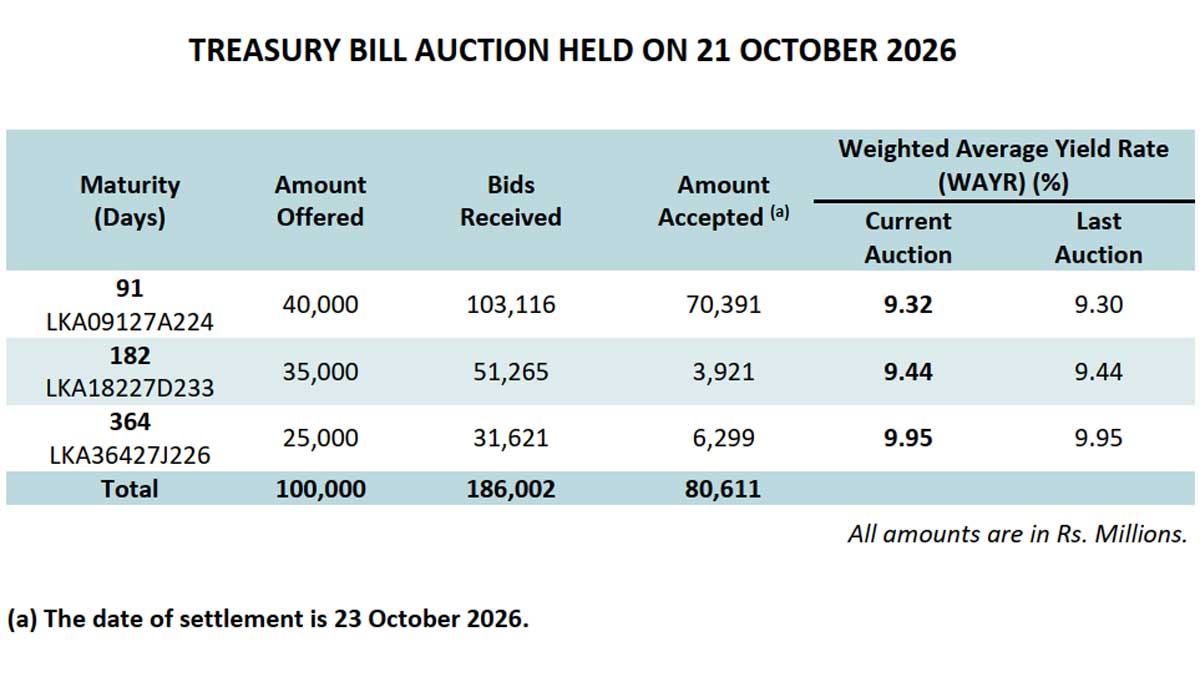
| 3 month bill | 9.26% | 1bp ▲ |
| 12-m bill | 9.95% | 2bp - |
| Gold (Ounce) | $4187 | - ▼ |













Comments
Be the first person to comment and join the debate