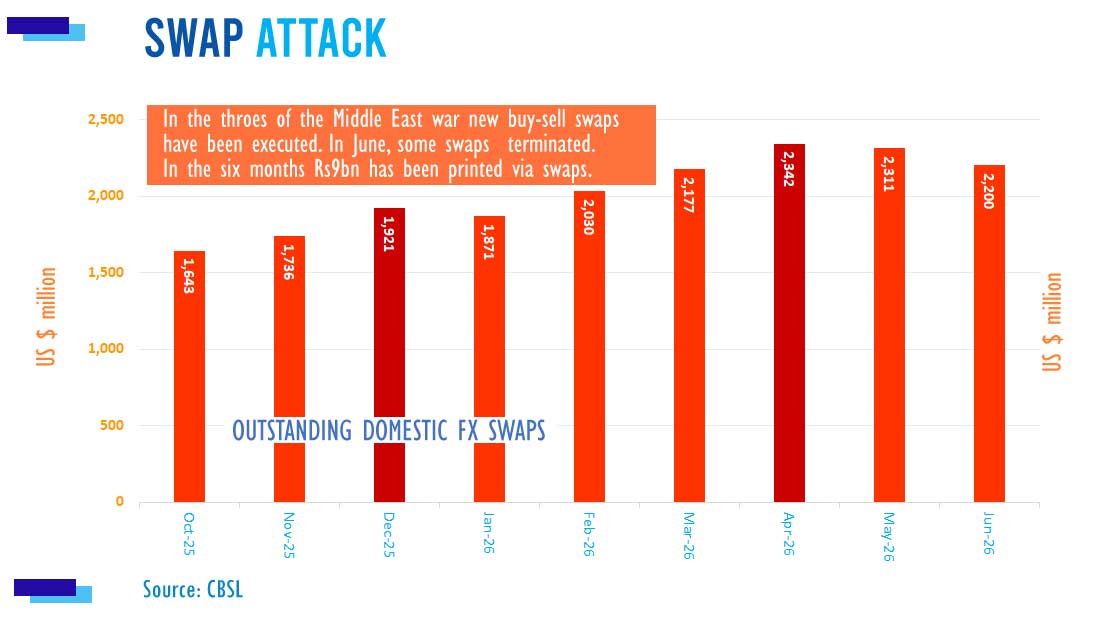
MONETABRIEF – Outstanding buy-sell swaps executed by the Sri Lanka's central bank with commercial banks have reduced to about 2.2 billion US dollars by June from a peak of 2,342 million dollars in April, central bank data shows.
The central bank is urging banks to enter into longer term swaps, a market operations report said.
The swaps are controversial as the central bank injects new money into banks to give investment credit triggering imports, reducing the ability to collect non-debt reserves outright.
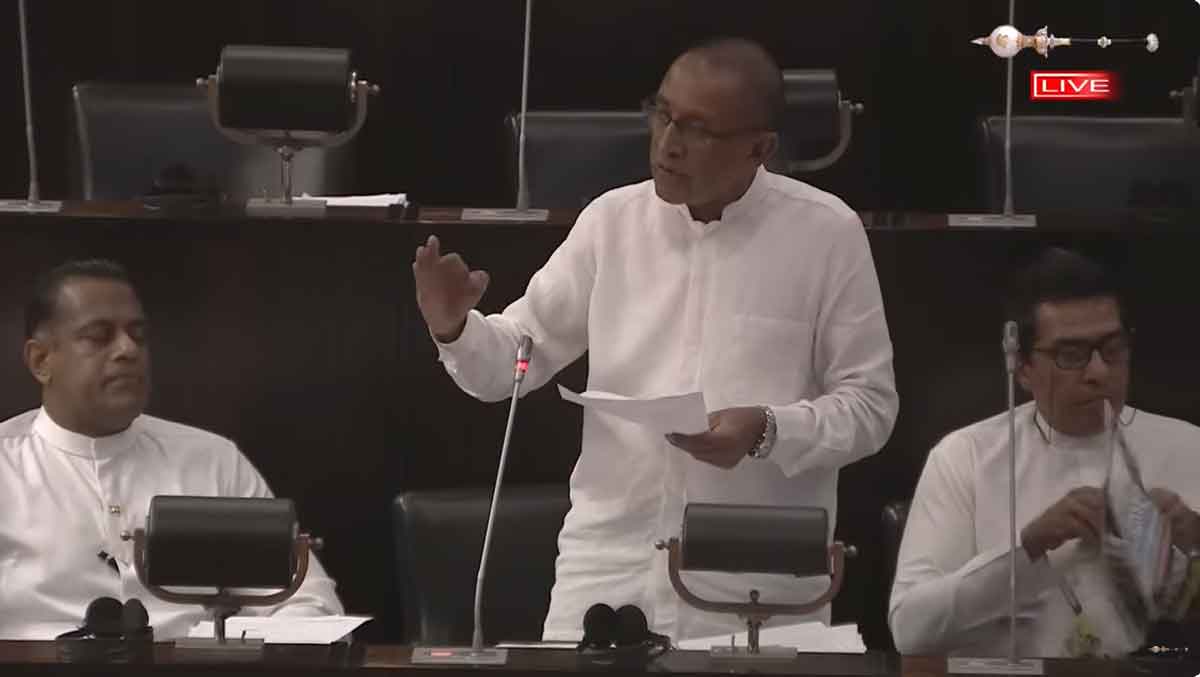
The parliament's Committee on Public Finance has started to question the excess liquidity and the swaps, which pushes up debt and forward currency obligations of the state and gives money for banks to make imports without raising rupee deposits.
When the currency collapses under 'exchange rate as the first line of defence/interest rate as the last line of defence' the central bank is left if a loss, if the dollars had been sold to to the market or the Treasury.
Outstanding swaps rose to 2.2 billion US dollars by end June 2026 from 1.9 billion in December 2026.
From December to June 92/5 billion rupees had been injected to the market, the central bank's Market Operations Report said.
However, in April outstanding swaps were as high as 2,342 million dollars indicating more money had been injected to money markets, suppressing rates.
If the central bank does not return the dollars to the people who make imports from swap liquidity (dishonors its own notes), the rupee depreciates.
Though the swaps reduced in June, they were still up from December.
The Central Bank said it entered into new buy-sell swap transactions of 1.4 billion and rolled over US dollars 1.4 billion worth of existing swaps "with the intention of preserving" the gross official reserve level.
"The Central Bank also encouraged banks to enter into longer-term foreign exchange swap transactions to support a more durable build-up of GOR," the report said.
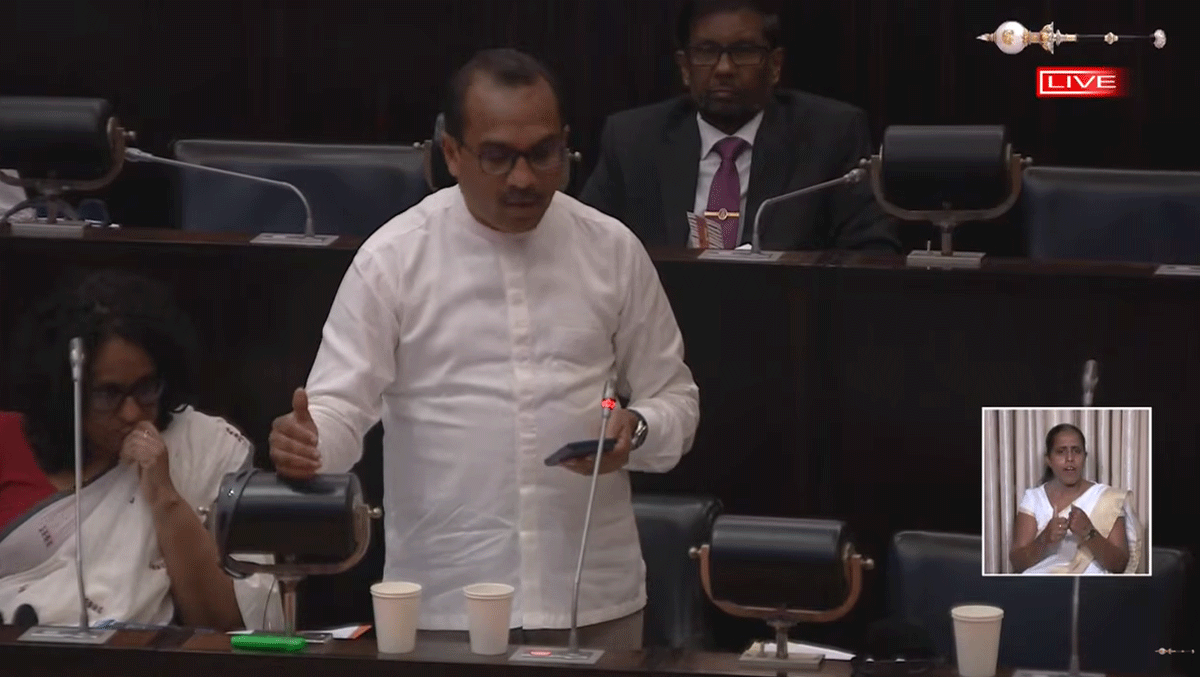
The parliament Committee on Public Finance has started to question the swaps and other liquidity injections made through pegging, which the central bank then dishonors under 'exchange rate as the first line of defence' as if a peg did not exist.
The sudden switch from an operational peg to float or crawling peg, unsettles markets and triggers panic and speculative behaviour.
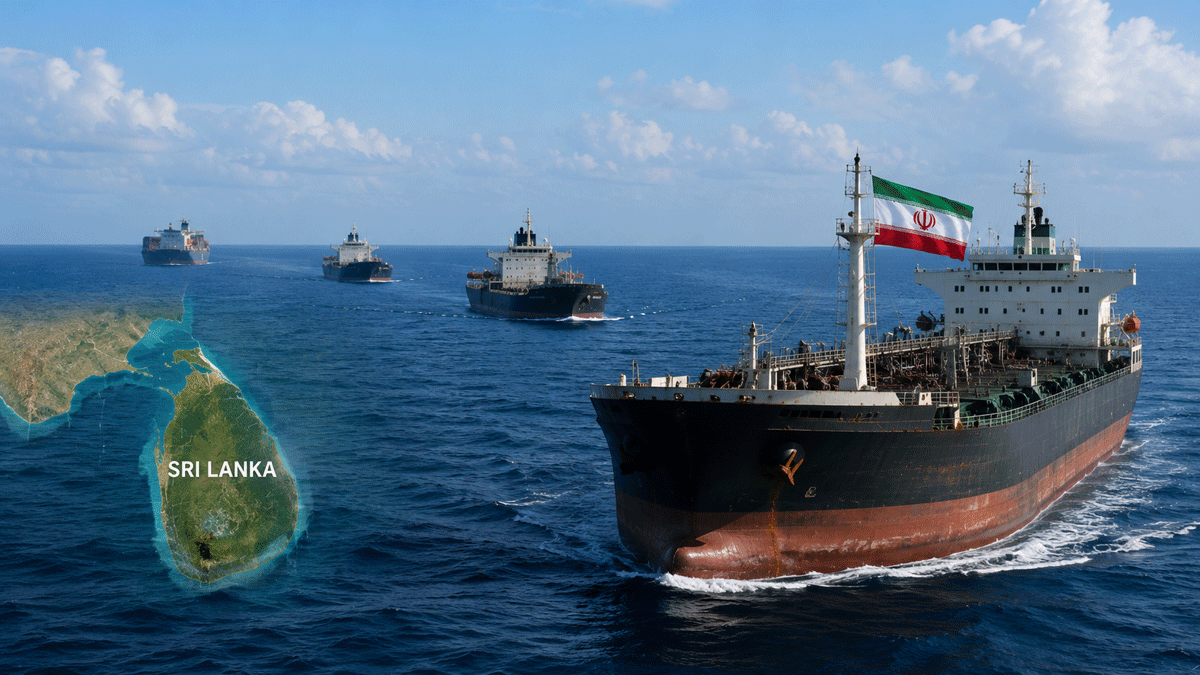
By depreciating the rupee in the throes of the Middle East crisis, macro-economists have amplified an external shock, analysts have pointed out, forcing higher than required rises in energy price and also pushing up all traded goods, including exports.
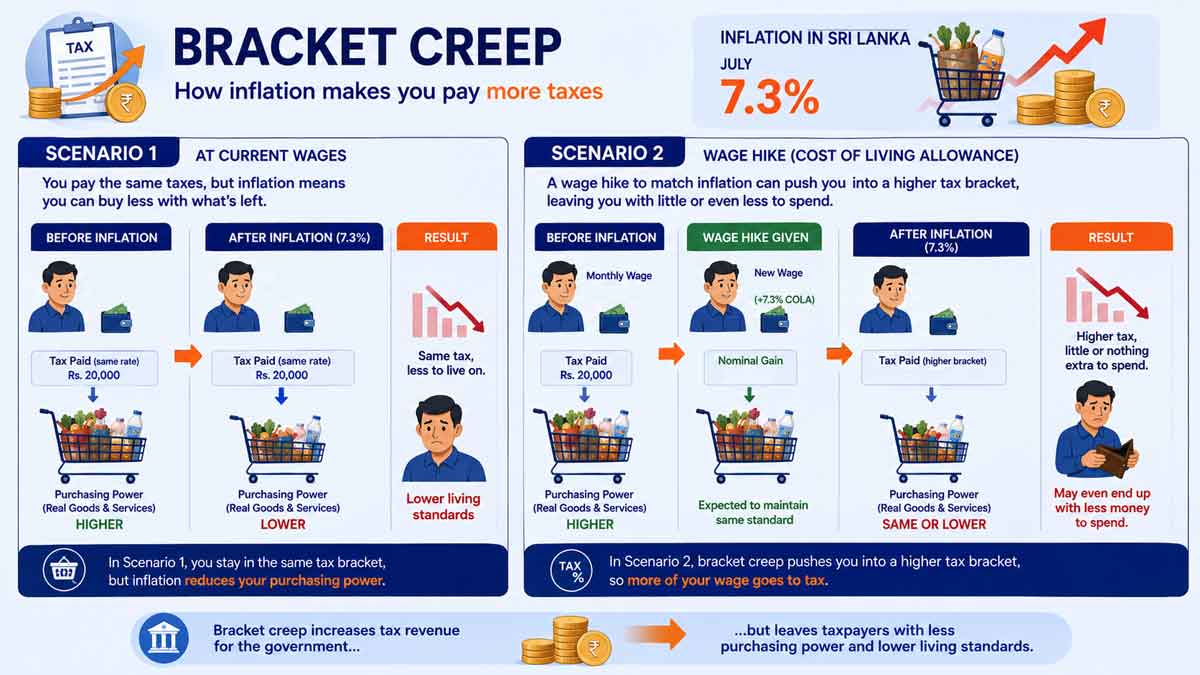
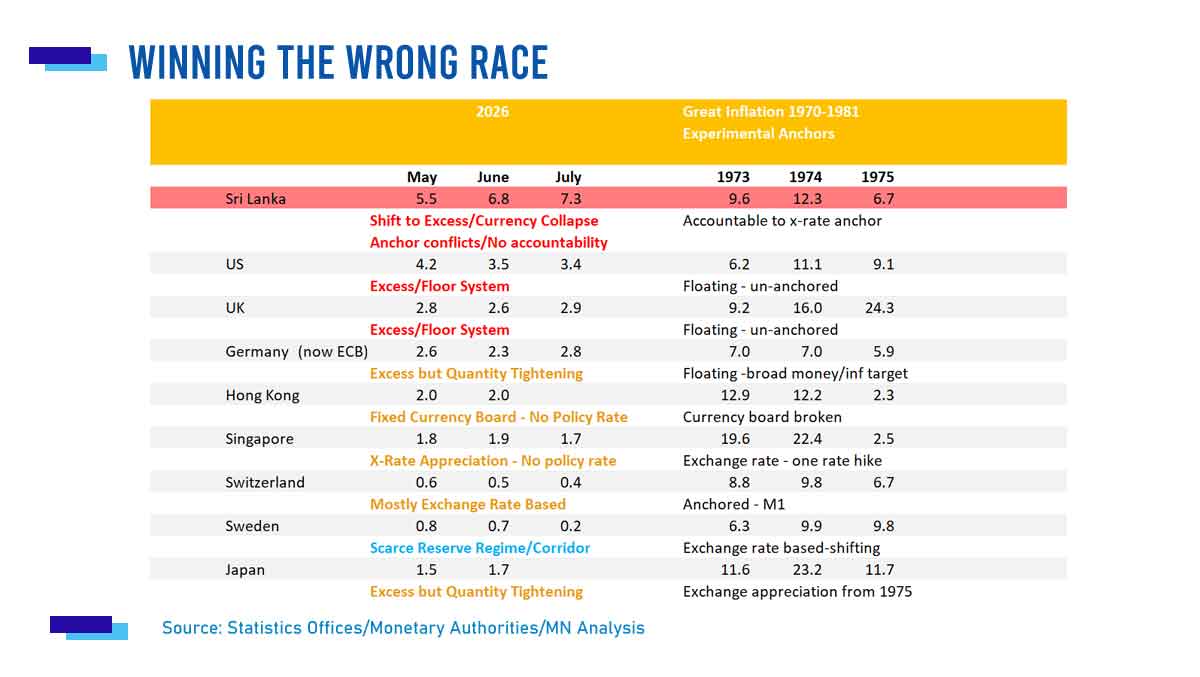
Sri Lanka's inflation soared to 7.3 percent in July and 6.8 percent in June, while countries with more robust monetary regimes like Hong Kong (diesel prices up over 45-pct) kept inflation around 2.0 percent up to June. (Colombo/Aug03/2026)












Comments
Be the first person to comment and join the debate