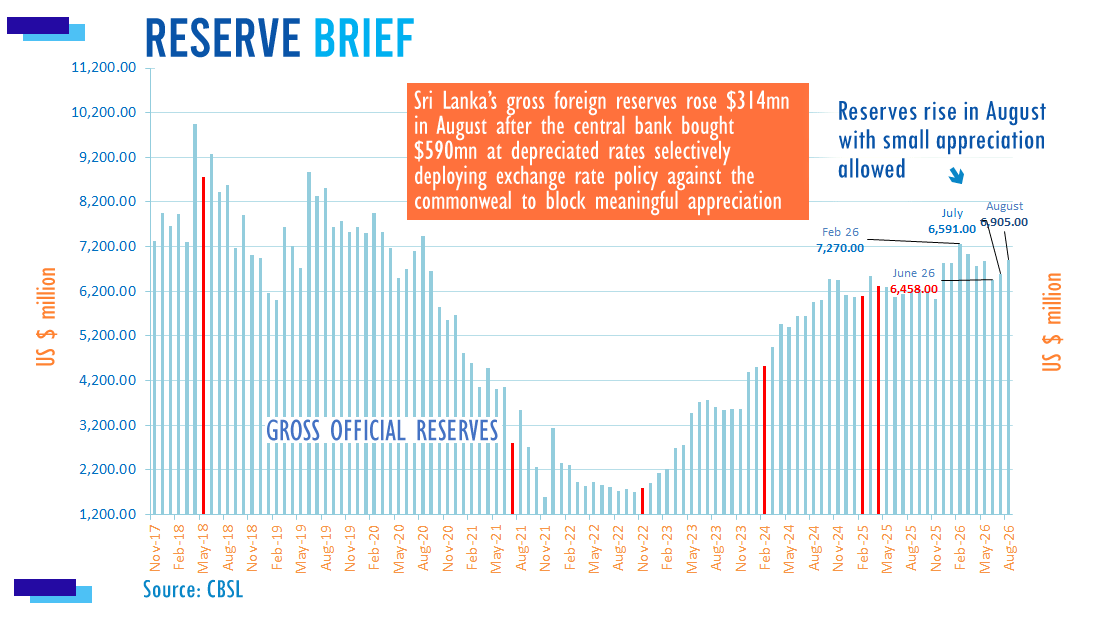
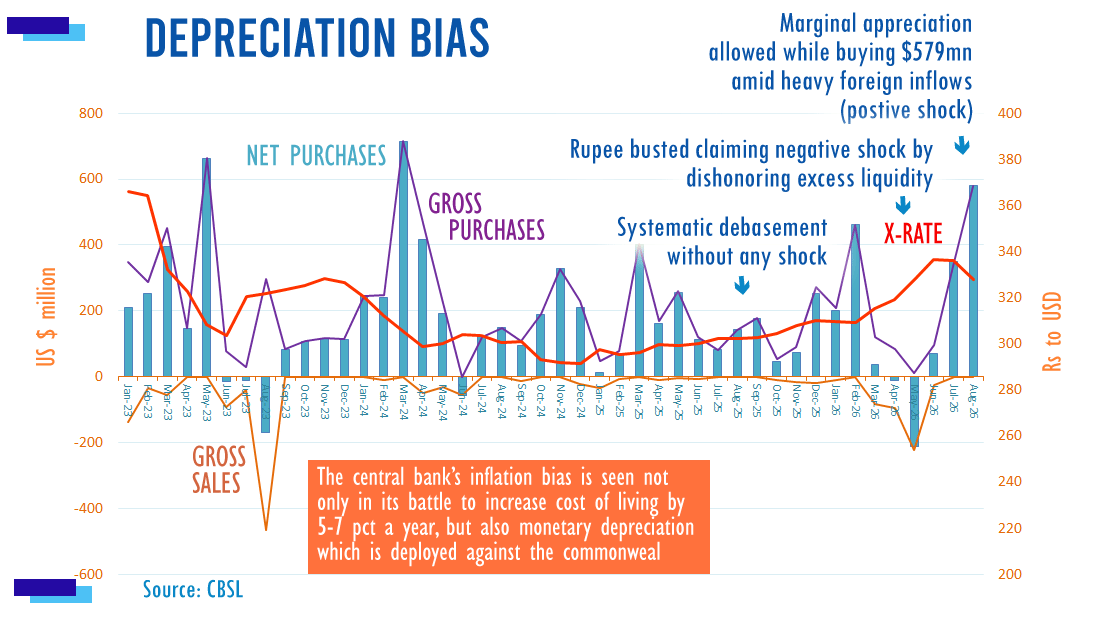
MONETABRIEF – Sri Lanka's gross official reserves grew 314 million US dollars in August 2026 to 6,905 million US dollars, after the central bank bought 579 million dollars in the month, data shows.
The lower increase in month end reserves is usually due to repayment of central bank and government debt.
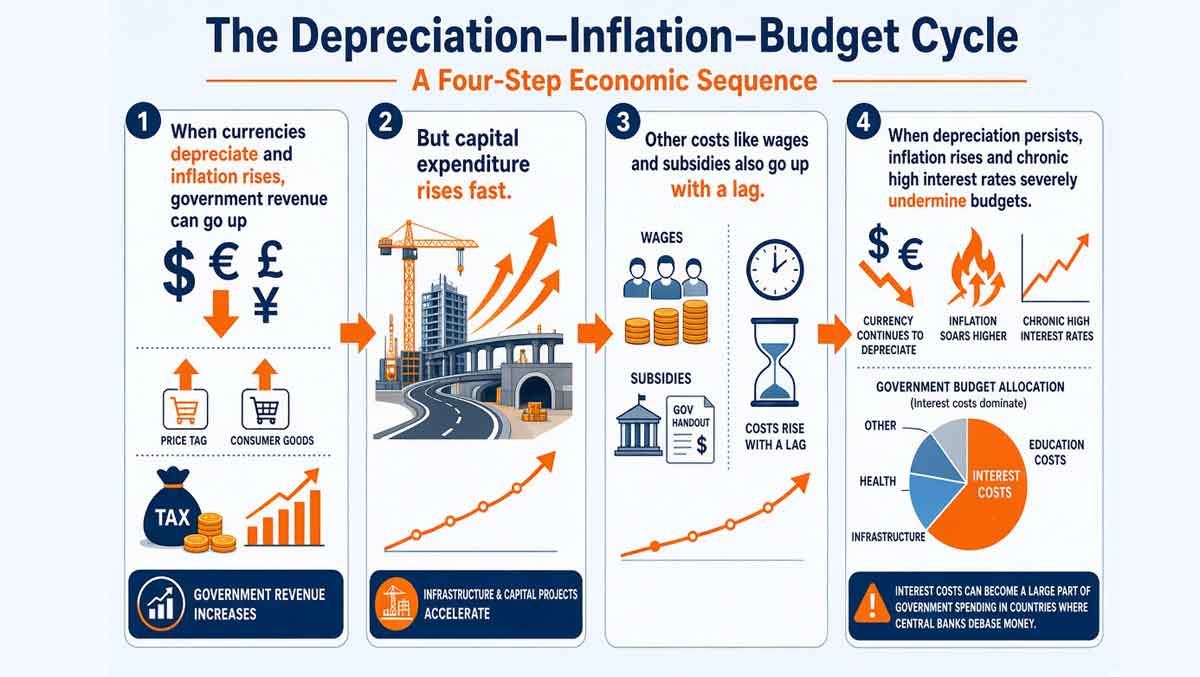
The central bank usually borrows from the International Monetary Fund and lately other central banks after money printed to cut rates under 'flexible' inflation targeting blows the balance of payments apart.
The central bank has to settle loans to the IMF and the Reserve Bank of India.
The RBI loan in the 2021-2022 rate cut crisis led to further forex shortages as they were used for interventions and more money was printed. The loan is now almost finished.
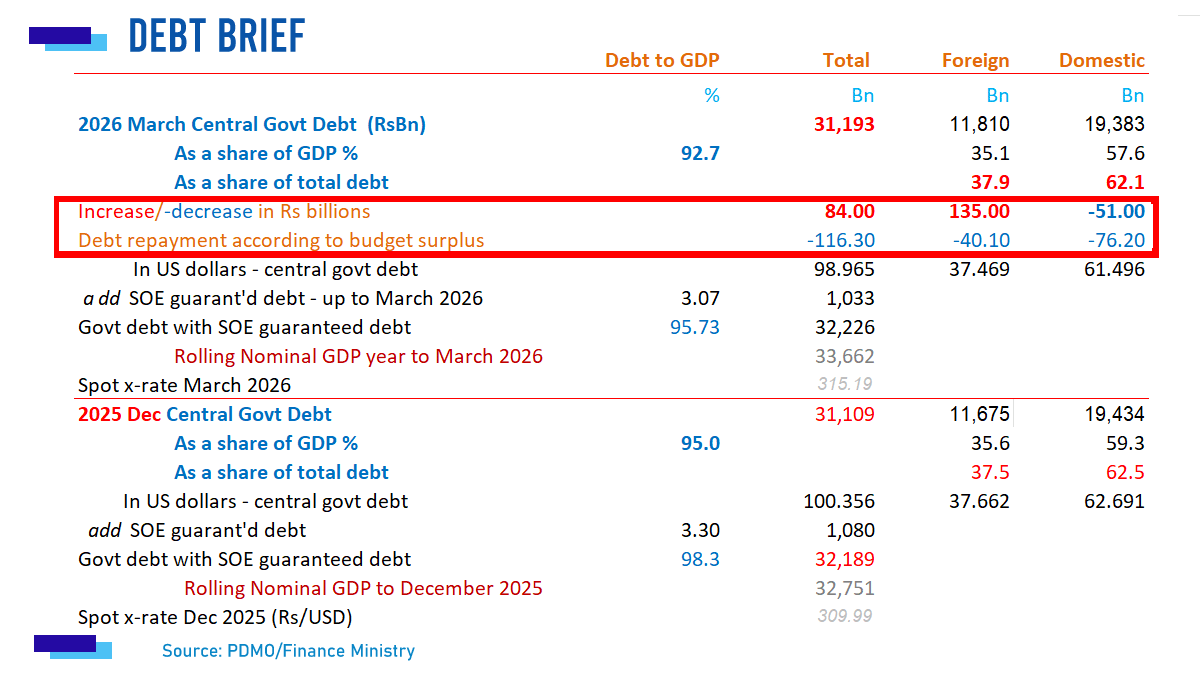
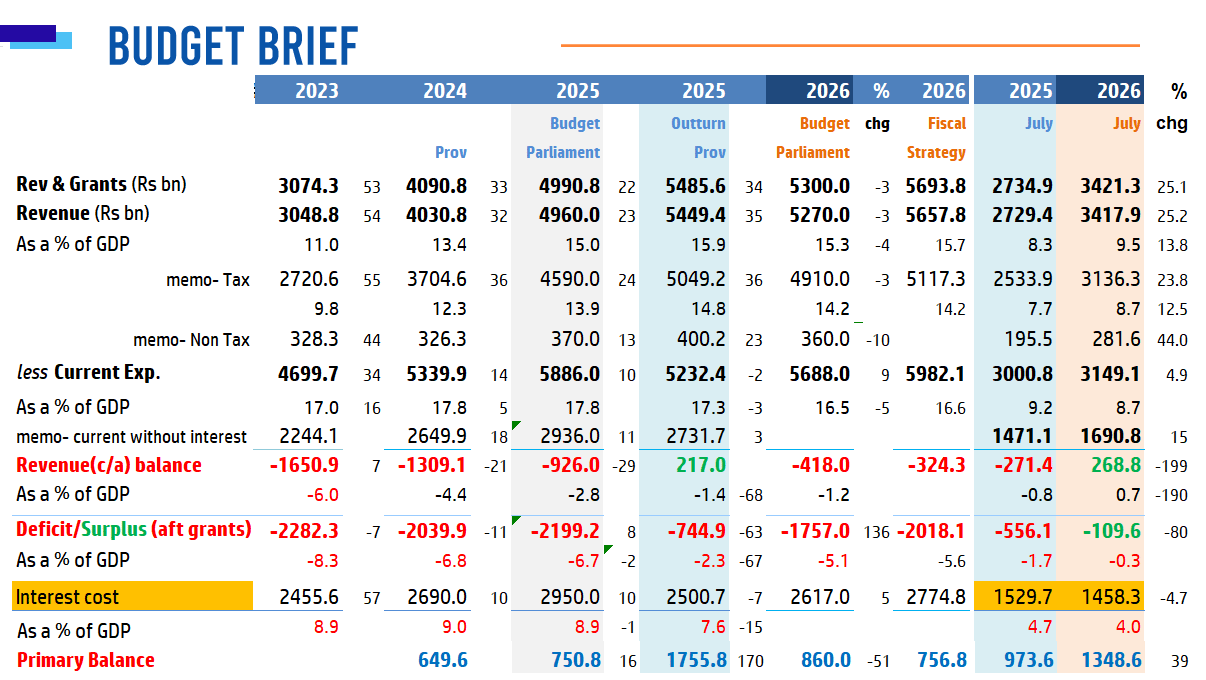
The central bank has long complained that the country's external trouble was due to budget deficits but in 2026 the rupee collapsed to 340 to the US dollar with a budget surplus.
Analysts pointed out that in 2025 the IMF program took away a key tool that curbed the inflationary bias of Sri Lanka's central bank by ending the requirement to reduce net credit to government (domestic assets of the central bank).
After that deflationary policy and the ability to retain reserves was limited to the coupons of the banks restructured bond portfolio.
After it ended the central bank was able to build up excess liquidity through dollar purchases for new money, allowing the money to remain in the banking system engaging in overnight or term repo deals without killing the liquidity outright until they turned into credit and imports.
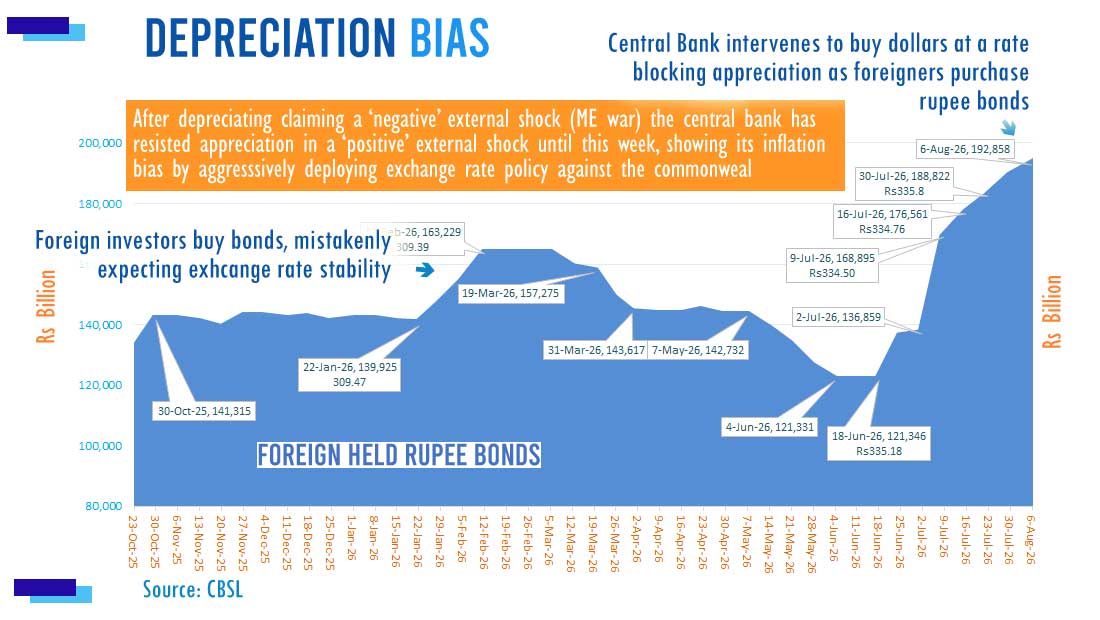
When import demand comes the note issue is dishonored leading to steep depreciation at any kind of negative shock, and when demand reduces, appreciation to the old level is prevented by purchases at depreciation rates as seen in 2026.
There have been various methods suggested to curb the central bank's inflation and depreciation bias to reduce increases in cost of living and the social and political unrest that follows.
One is to get the Treasury to buy dollars with existing money, which will block the ability of the central bank to print money and build up excess liquidity, outlaw buy-sell swaps and reduce its inflation target.
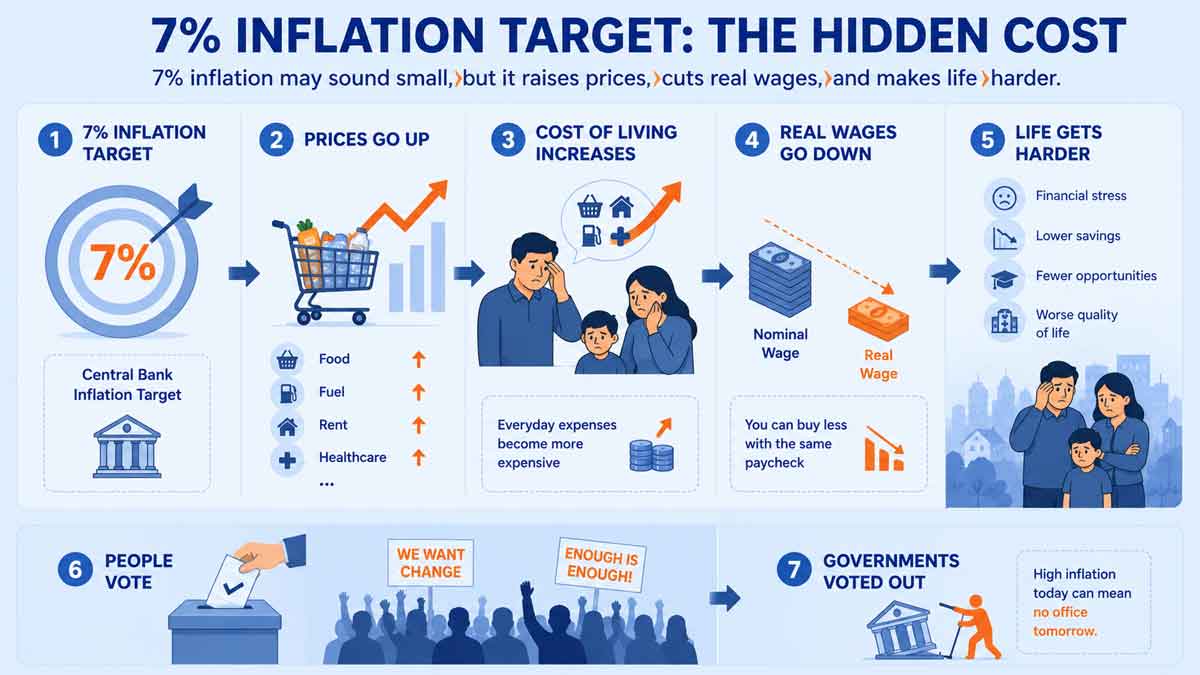
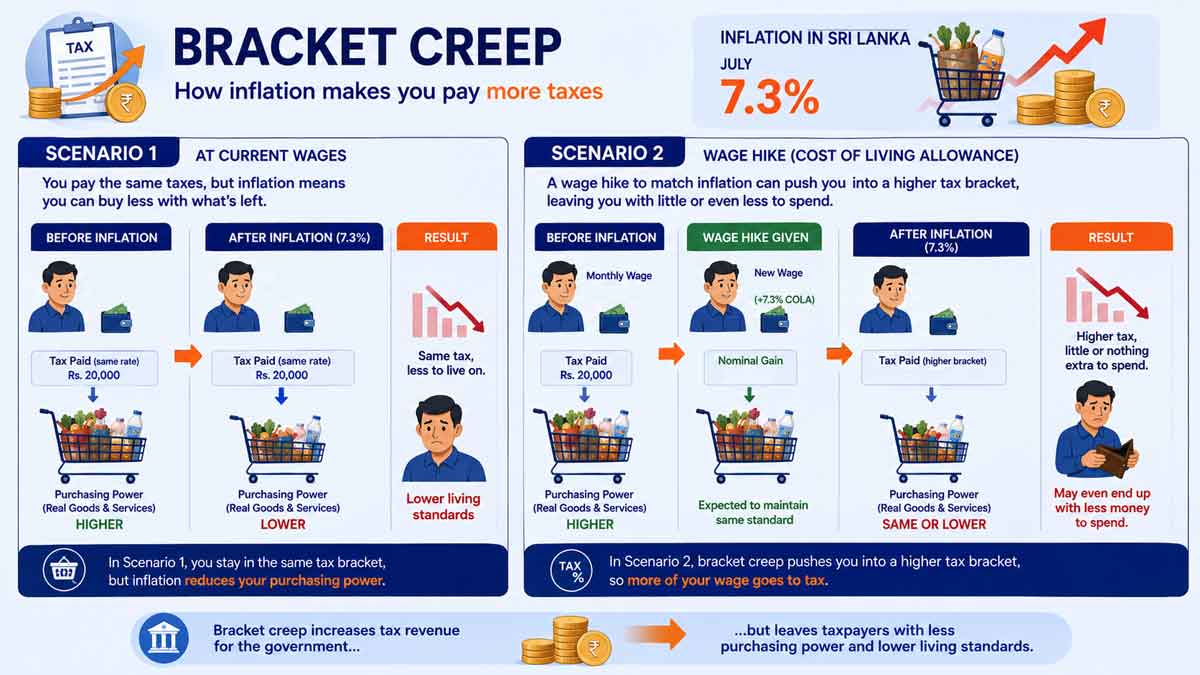
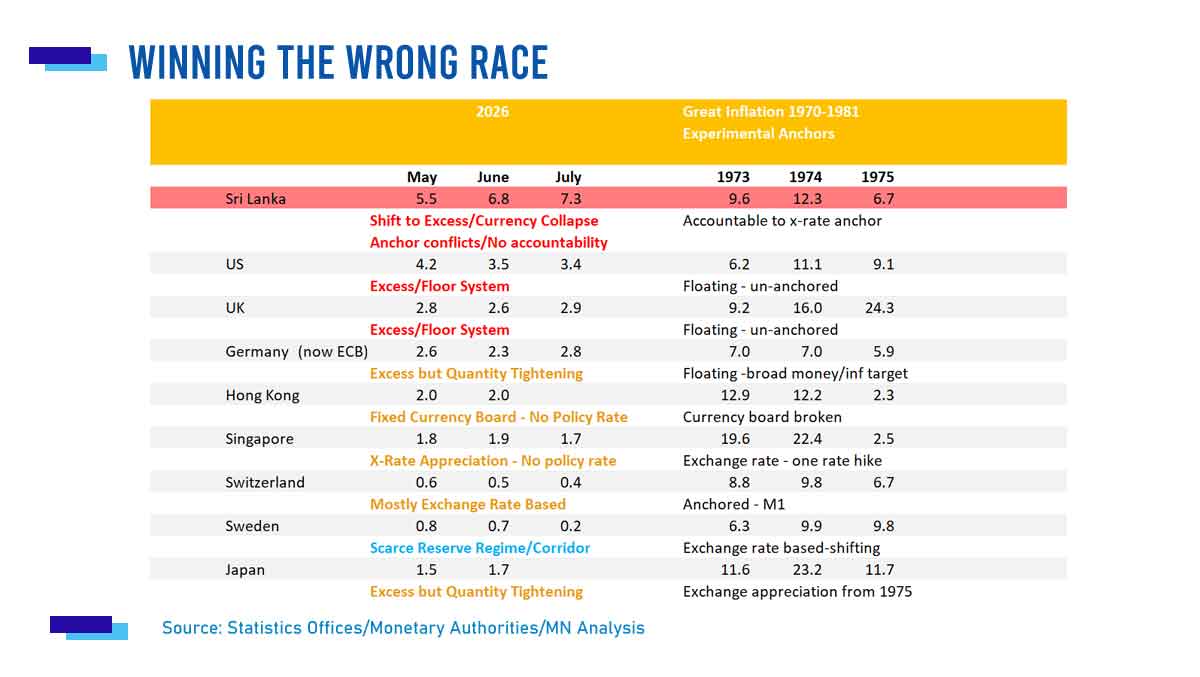
The collapse of the Sri Lanka rupee, while exchange rates of the UAE and Qatar among other GCC currency board like-regimes kept rock solid has led inflation exceeding the central banks controversial 5-7 percent target which critics say gives the agency too much room to trigger external crises.
Forex shortages come from a note-issue bank that rejects classical economics, primarily Hume's price-specie-flow mechanism.
In 2026 public displeasure however has been directed at the political leadership not macro-economists who rejected classical economic principles and dishonored notes. (Colombo/Sept08/2026)













Comments
Be the first person to comment and join the debate