
Share your email and we'll share the latest news
Exclusive economic intelligence, political and business coverage
Wednesday, October 21 2026
Wednesday, October 21 2026
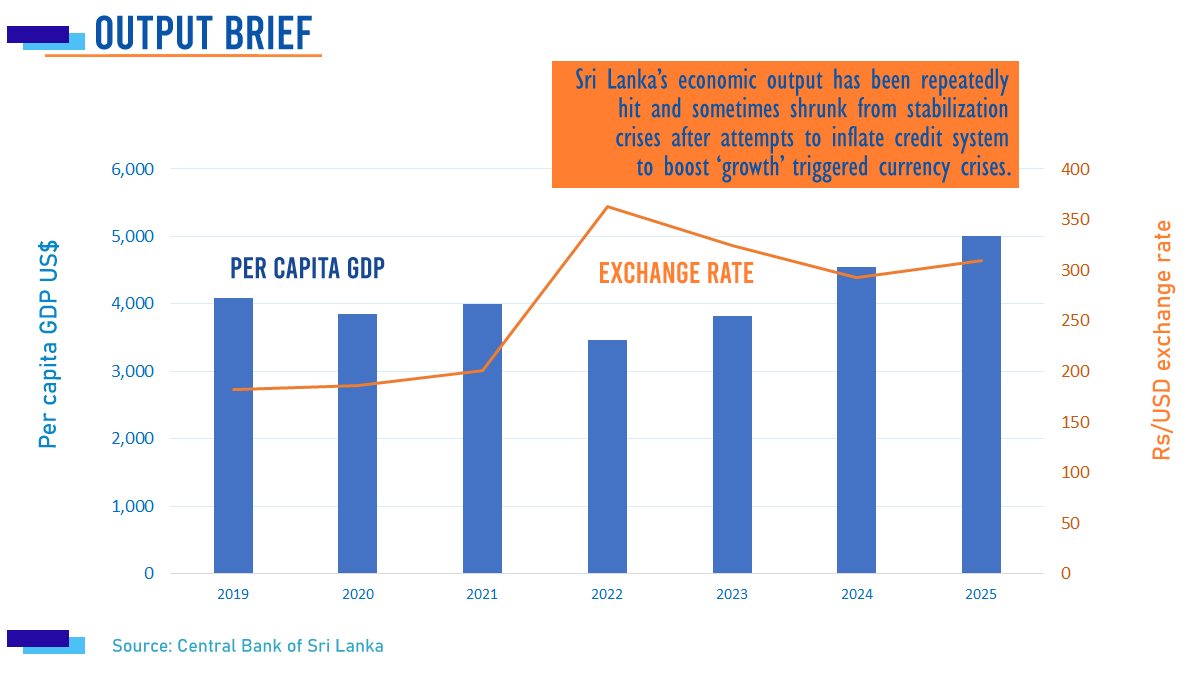
MONETABRIEF – Sri Lanka's per capita gross domestic product recovered to 5,003 US dollars in 2025, after collapsing to 3,464 dollars in 2022 from attempts by the central bank to boost potential output by inflationary rate cuts.
GDP at market prices rose to 108.8 billion US dollars in 2025 from 99.6 billion dollars in 2024 (4,546 dollar per person) and 84.1 billion in 2023 (3,818 dollars) after currency stability was reached in late 2022 and Sri Lanka was relieved from the central bank's 5 percent inflation target.
Money printed through the 5 percent inflation led to serial currency crises in 2015/16, 2018 and 2020/22.
In 2015 money was initially printed by terminating sell-buy swaps and repo deals with borrowed bills from the Employees Provident Fund that the central bank had executed with local banks in the process of building up reserves up to the third quarter of 2014.
Standard domestic operations, using Treasury bills acquisitions mostly from the secondary market, then followed.
The 2018 currency crises under the cover of the 5 percent inflation target, was triggered with overnight, term and outright purchases of Treasury bills. In July 2018 money was also printed through buy-sell swaps, against Hambantota port sales proceeds.
Aggressive yield curve targeting was also used against the rupee, through 'operation twist' style violating a long-held bills only policy to buy bonds held by banks outright.
The action rewarded overtrading banks with excess liquidity and allowing them to dump bonds at high prices on the central bank, triggering currency pressure, which then require a stabilization crisis and slowing or shrinking of the economy to stop the sliding currency.
The twin currency crises, shattered the free trade agenda of the 2015-2019 administration, gold imports were then taxed, triggering smuggling, and restrictions were imposed on vehicle imports.
Sri Lanka at the time was importing large volumes of gold which were then smuggled to India. India had imposed taxes on gold when currency troubles hit after due to RBI money printing, largely from sterilized outflows.
India experienced renewed depreciation after shifting from a 5 percent wholesale price index to targeting a broader consumer index with more services from 2011.
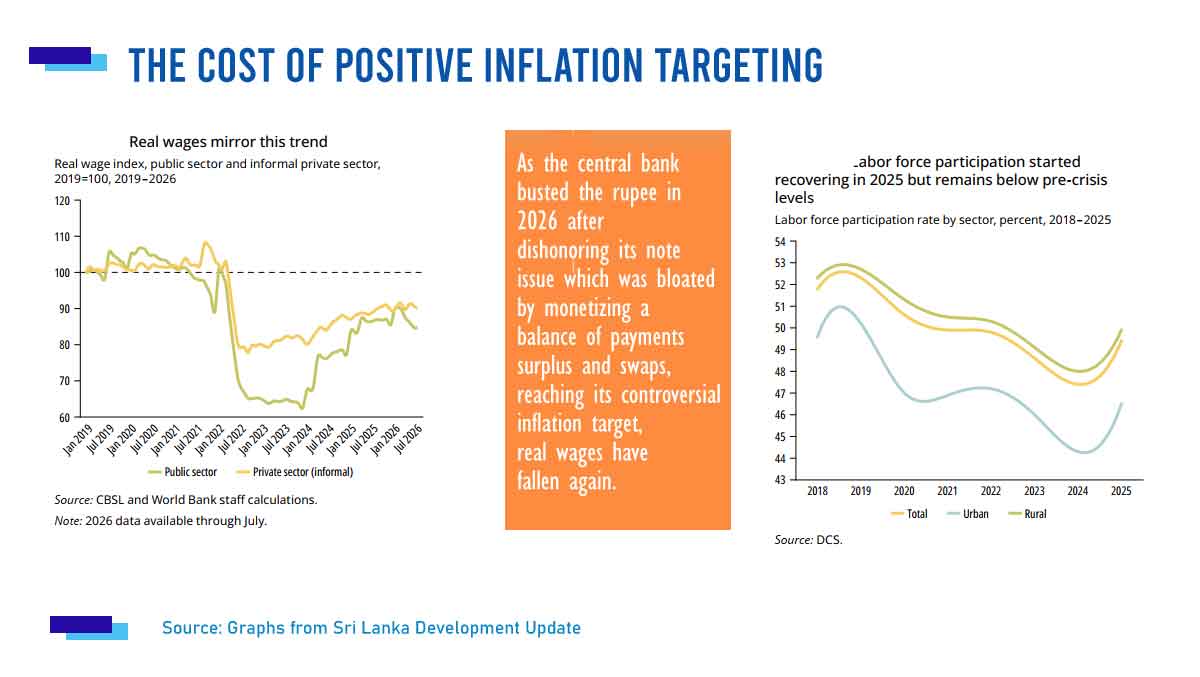
Sri Lanka's per capita GDP was 4,400 US dollars in 2017, despite the 2016 crisis, but fell to 4,371 in 2018 and 4,082 in 2019 after rapid fire inflation and stabilization crises from rate cuts made under flexible inflation targeting.
Sri Lanka defaulted in 2022 after extreme open market operations and a floor system (single policy rate), executed by setting a ceiling rate for bond auctions.
Sri Lanka had currency stability and low inflation from September 2022 to around early 2025.

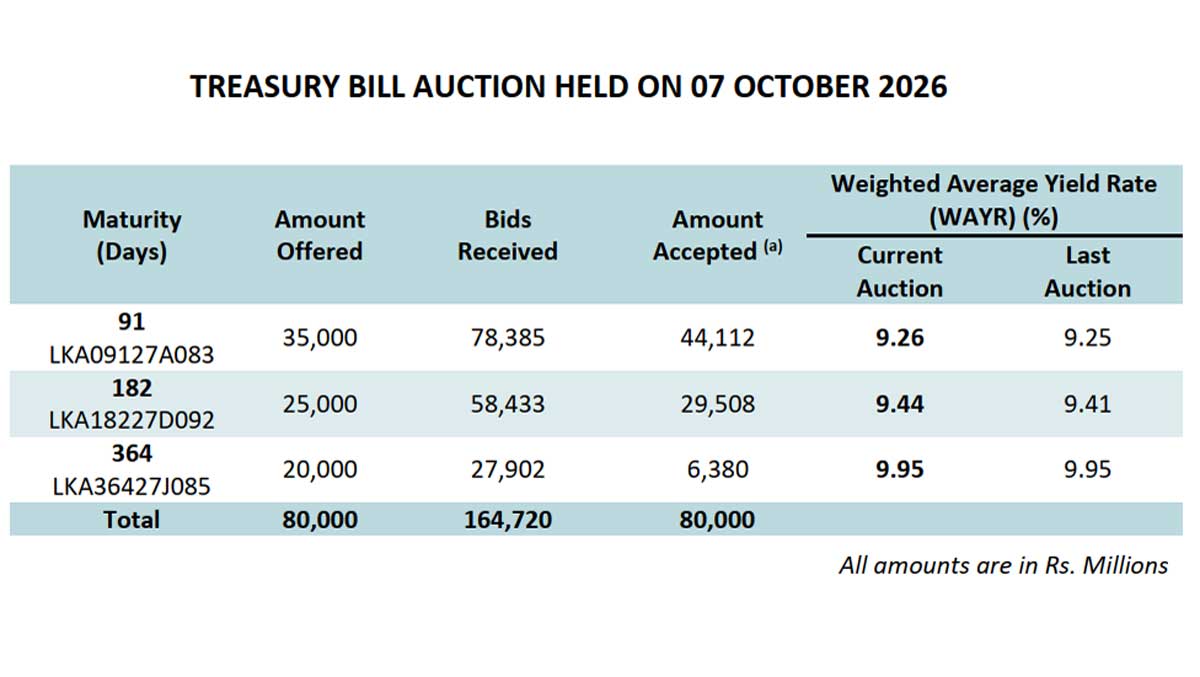
| 3 month bill | 9.26% | 1bp ▲ |
| 12-m bill | 9.95% | 2bp - |
| Gold (Ounce) | $4187 | - ▼ |












Comments
Be the first person to comment and join the debate