
Share your email and we'll share the latest news
Exclusive economic intelligence, political and business coverage
Tuesday, September 29 2026
Tuesday, September 29 2026
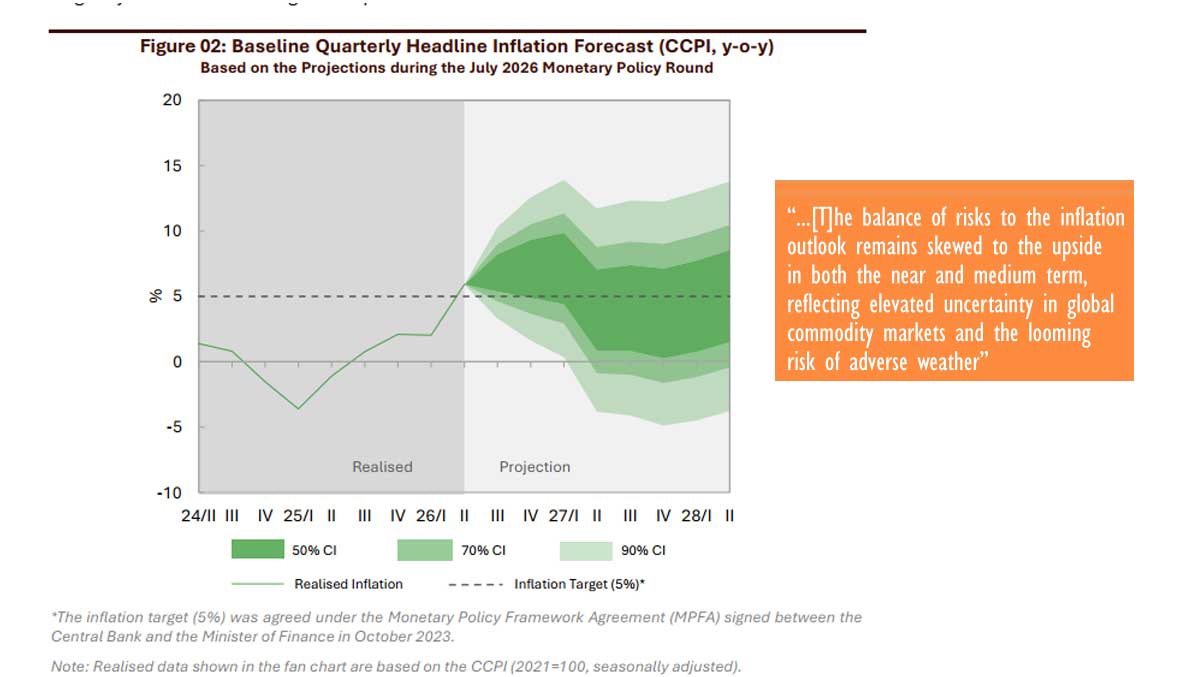
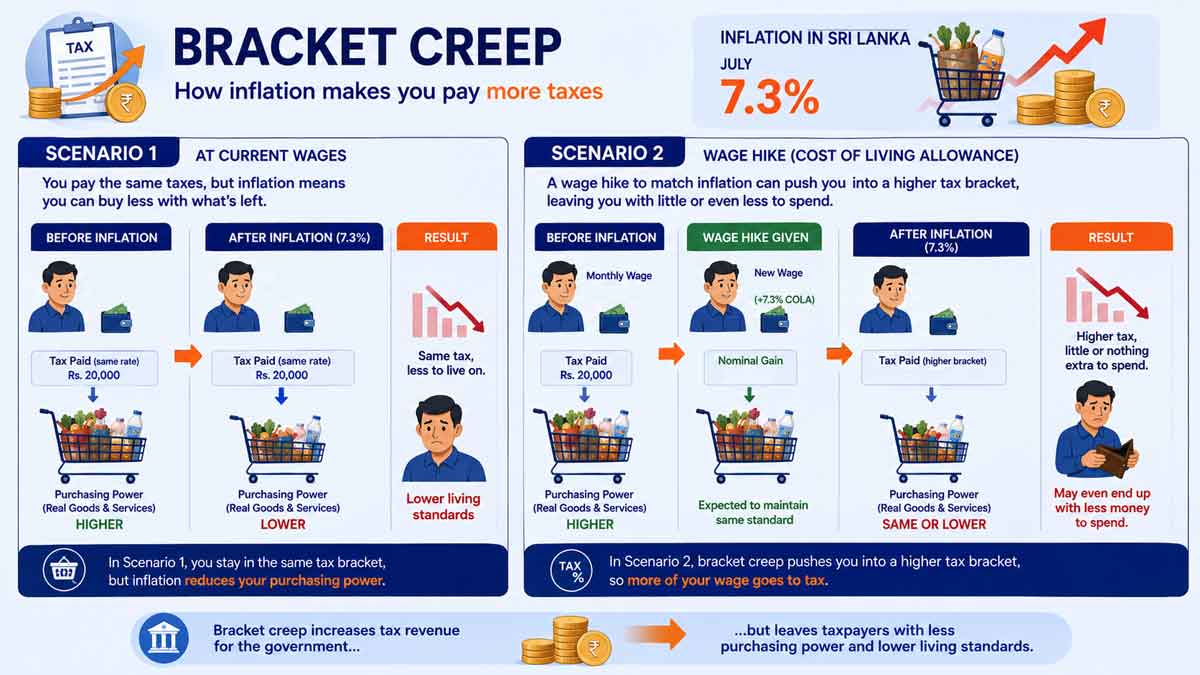
MONETABRIEF – Sri Lanka's inflation will remain above the central bank's 5 percent target in the near term before falling, the central bank said in a monetary policy report after the currency collapsed and the 12-month inflation soared to 7.3 percent in July.
There are calls to reduce the 5-7 percent inflation target which critics say is not a credible anchor and allows the agency to cut rates, trigger external crises, social and political unrest and drive the less affluent to seek jobs abroad.
"Headline inflation is expected to remain above the target in the near term, mainly due to elevated energy and transport inflation, exchange rate pass-through to imported prices and higher volatile food inflation, along with its base effect," the June 2026 Monetary Policy Report said.
"Thereafter, headline inflation is projected to moderate to the target level, conditional on the assumption that the effects of the tensions in the Middle East and their spillovers are temporary, and that they will gradually dissipate.
Though the central bank claimed that the prices of imported goods rise, exported traded goods also go up when the currency collapses.
"Core inflation is also anticipated to increase and reach levels around the headline inflation target.
"Meanwhile, the balance of risks to the inflation outlook remains skewed to the upside in both the near and medium term, reflecting elevated uncertainty in global commodity markets and the looming risk of adverse weather conditions associated with El Niño."
Core inflation removes food and energy prices which the poorest feel the most and is the most likely to trigger social and political unrest.
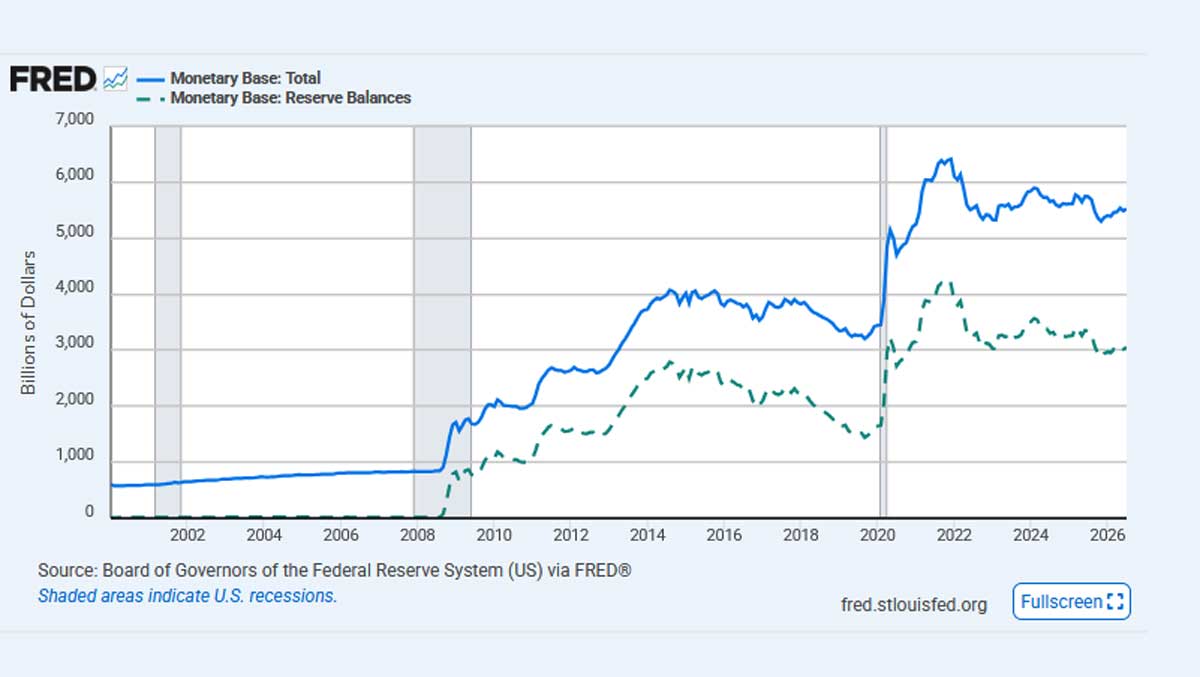
Sri Lanka's central bank amplified an external shock busting the rupee from 309 to 335 levels as oil prices rose and also depreciating it from 295-300 levels by printing money through fx swaps, monetizing the balance of payments and dishonoring the notes to the public.
In addition to reducing the inflation target as a way to restrain the inflation bias of the central bank there are also calls to outlaw fx swaps and deny the agency a key tool to build up excess liquidity and artificially boost imports and undermine the ability to repay debt.
The Parliament's Committee on Public Enterprise has also called for the Treasury to buy dollars instead of getting from the central bank, which creates money in the process.
The treasury can buy dollars without creating new money and it would deny a key tool for the central bank to build up excess liquidity which are then dishonoured at the slightest shock under 'exchange as the first line of defence' (interest rates as the last line of defence) to trigger panic in forex markets and capital flight.
Rates were raised in May after the currency collapsed and relaxed IMF reserve targets in March was missed and the country is now left with higher interest rates and also a depreciated currency.
Economic growth for 2026 is currently projected to be in the range of 4 to 5 percent, continuing the growth momentum recorded in the previous years, the agency said.
The central bank started creating external crises from February 1952 and covered up flaws in its operating framework exchange and trade controls and high taxes.
The external crises seem to come from a belief that by inflating money supply and the cost of living, there will be growth rather than external trouble and political unrest.
Sri Lanka defaulted in 2022 after aggressive liquidity injections to close a potential output gap under its flexible inflation targeting framework. (Colombo/Aug14/2026)

| 3 month bill | 9.22% | 22bp ▼ |
| 12-m bill | 9.91% | 10bp ▼ |
| Gold (Ounce) | $4602 | - - |















Comments
Be the first person to comment and join the debate