
Share your email and we'll share the latest news
Exclusive economic intelligence, political and business coverage
Friday, October 2 2026
Friday, October 2 2026
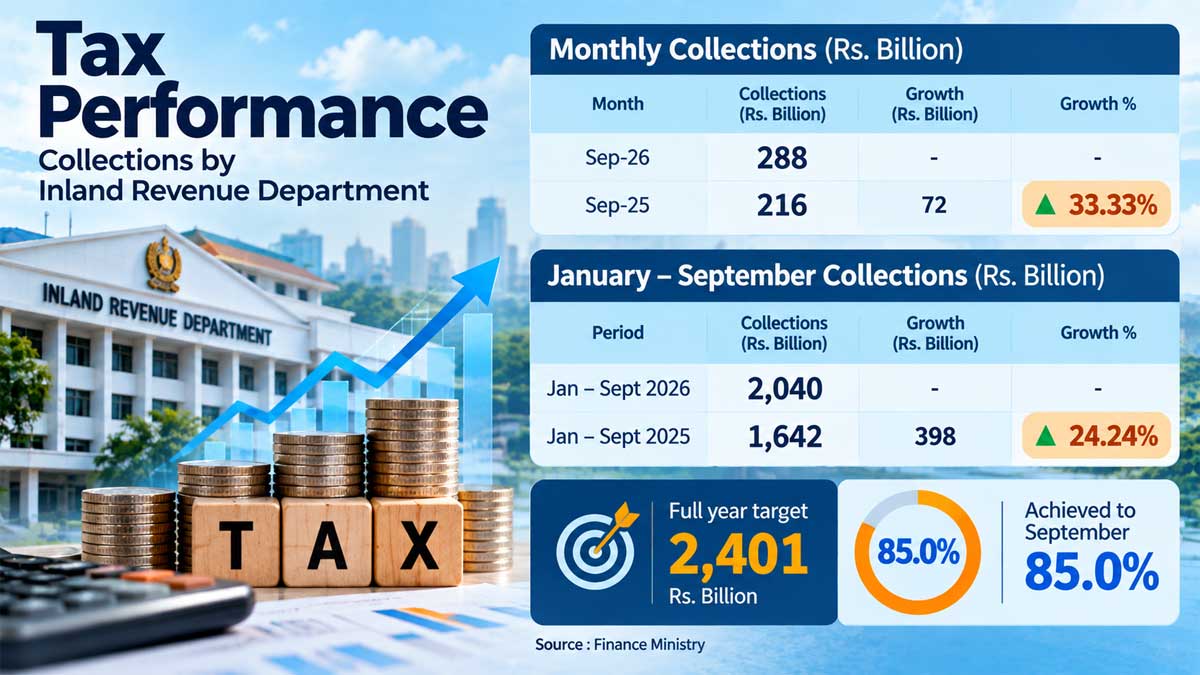
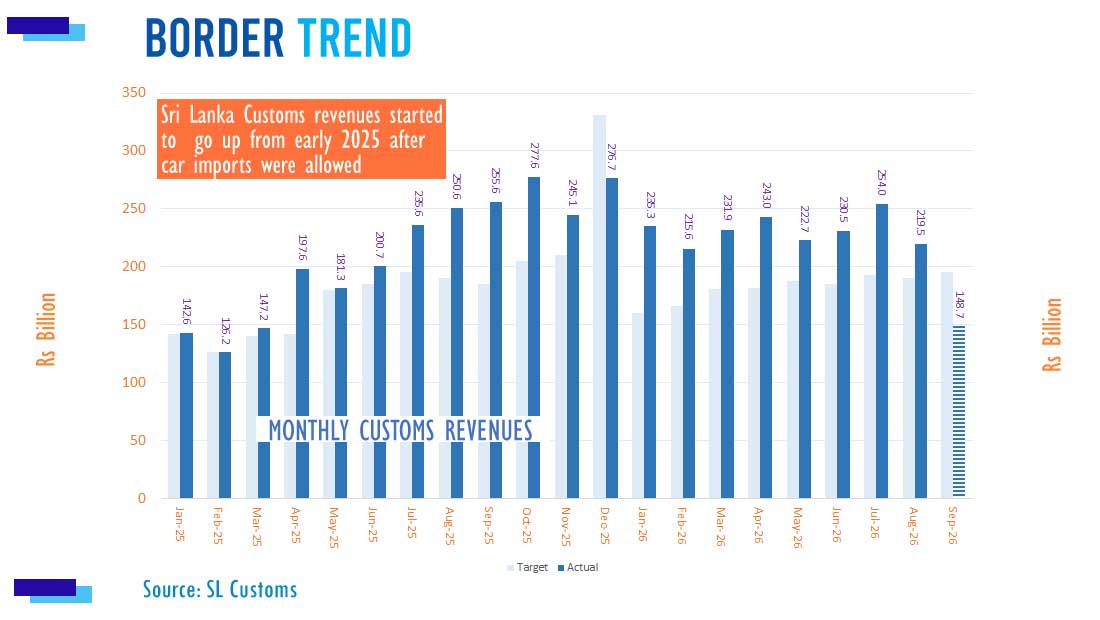
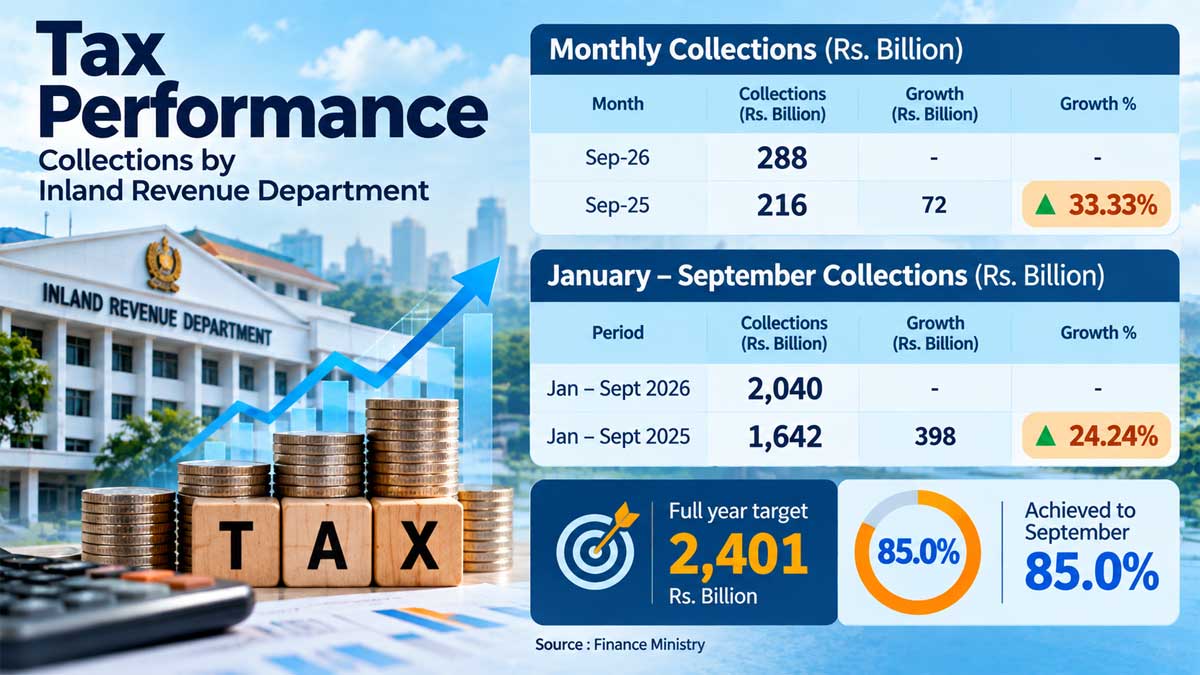
MONETABRIEF – Tax collections by Sri Lanka's Inland Revenue Department were up 24 percent to 2,040 billion rupees, up 25 percent from a year earlier, the Finance Ministry said.
In the month of September alone revenues were up 33 percent to 288 billion rupees.
Inland Revenue has reached 85 percent of its year end target of 2,401 billion rupees by September.
"The tendency of tax payers to paying taxes voluntarily and the better tax administration has directly contributed to better revenue performance," the Finance Ministry statement said.
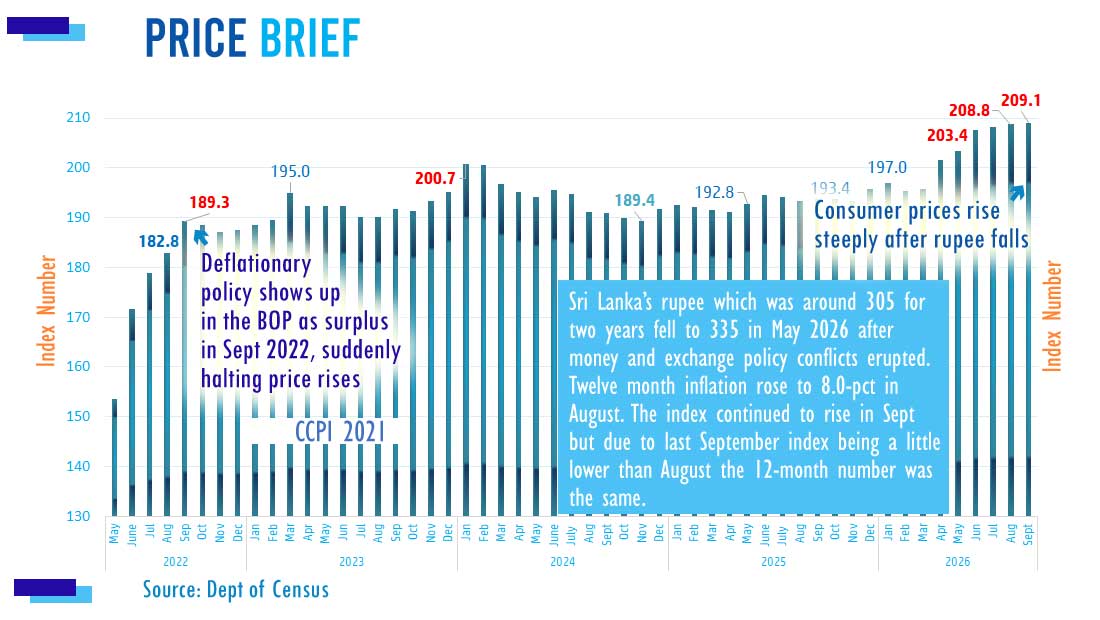
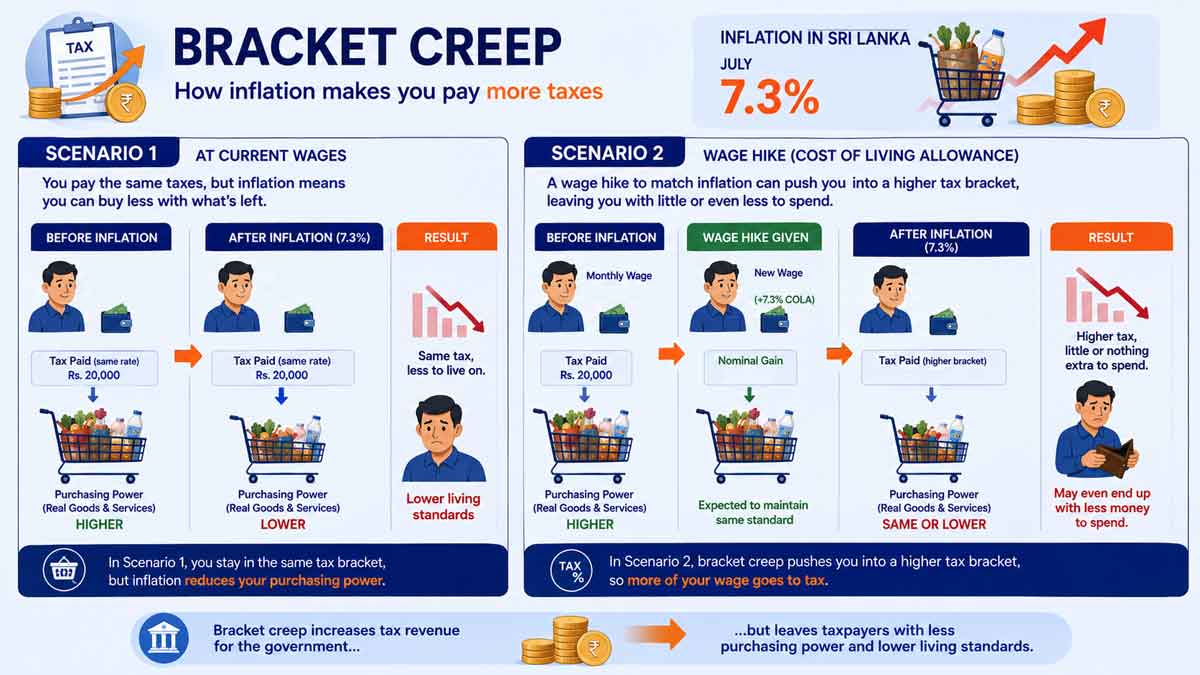
The higher revenues, especially from value added tax, can come from higher inflation, with the central bank reaching its controversial 5-7 percent target which reduces disposable income of the people to spend on actually goods and services.
When goods and services prices go up, people have to tighten their belts according to the inflation target and consume less real goods and services, making them blame a democratically elected government for their troubles.
The people then turn against democratically elected government, whose only fault is the inability to control macro-economists and the central banks inflation bias, analysts say.
When a government maintain fiscal prudence keeping to salary and other spending ceilings, made in the expectation that the rupee will be means of deferred payments, a basic attribute of money, costs initially do not go up.
The higher revenues the get eaten up in budgetary expenses in stages, according to principles described in the Cantillon effect.
Classical economists call the phenomenon the money illusion.
Meanwhile capital project costs go up immediately, eating up the higher revenues. The government has to provide cost escalations as the inflation target and rupee depreciation pushes up costs immediately.
Sri Lanka has already seen cost escalation and some contractors, who believed that the rupee was a means of deferred payments and bid without cost escalation clauses have found that they could not complete projects.
Aswesuma and salaries eventually have be raised, to compensate for the inflation target.
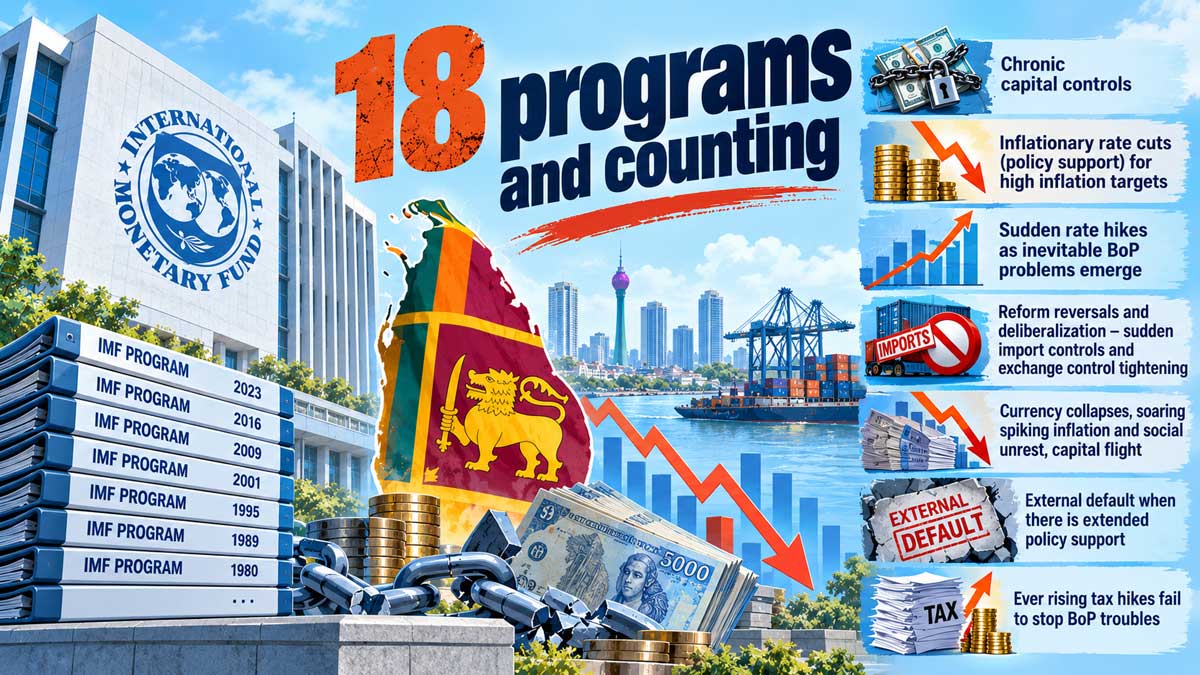
When the rupee depreciates, destroying capital and push up inflation nominal interest rates also go up, a phenomenon that was seen from the 1980s, after the IMF Second Amendment to its Articles.
The burden of foreign debt to be repaid out of tax revenues also go up.
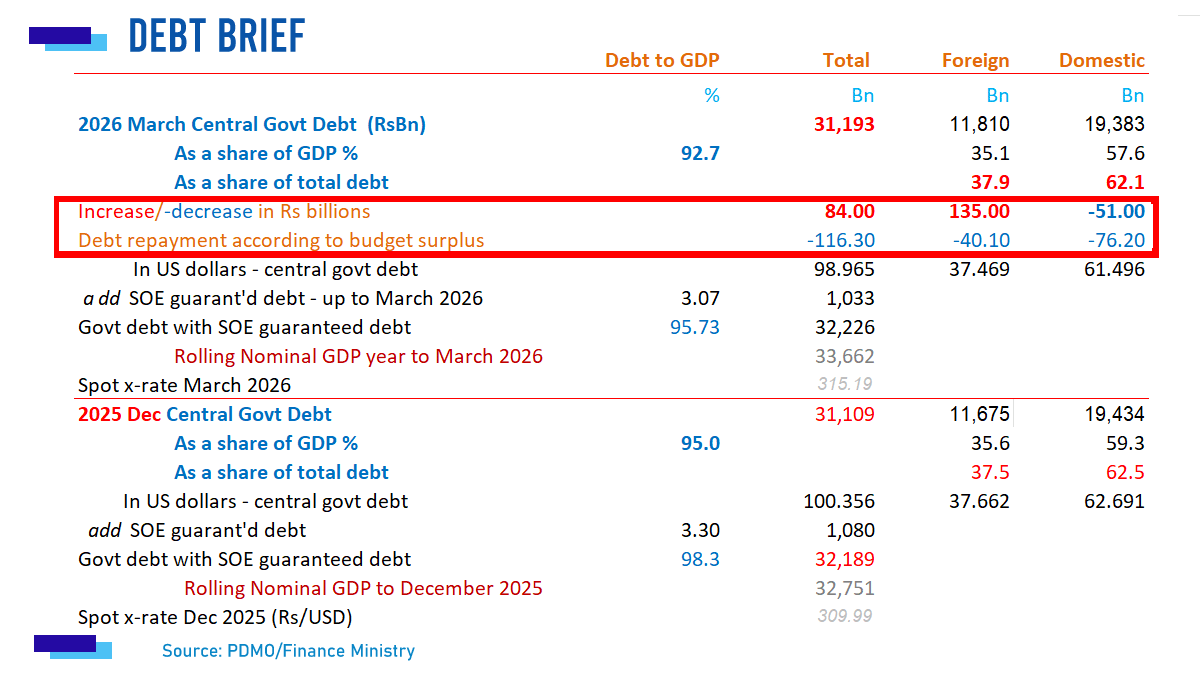
After the currency collapse in 2026, the value of foreign debt has gone up 890 billion rupees to June as the central bank busted the rupee, despite the government maintaining fiscal prudence and running budget surplus.
(Colombo/Oct02/2026)

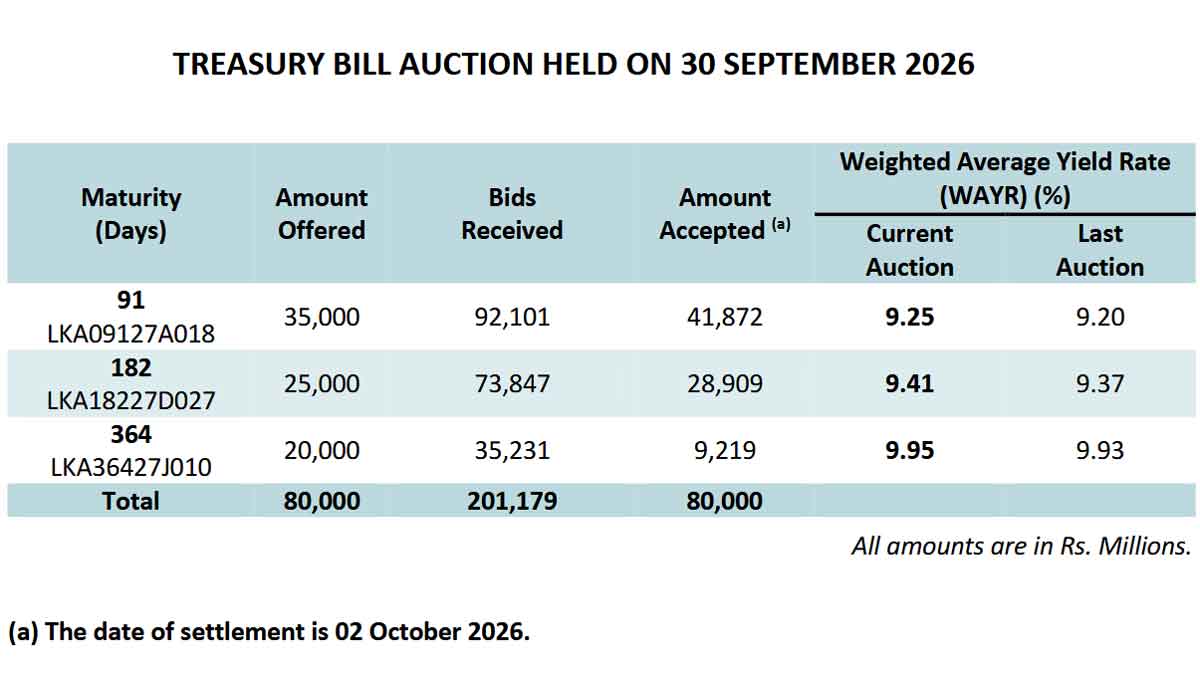
| 3 month bill | 9.25% | 5bp ▲ |
| 12-m bill | 9.95% | 2bp ▲ |
| Gold (Ounce) | $4602 | - - |
















Comments
Be the first person to comment and join the debate