
Share your email and we'll share the latest news
Exclusive economic intelligence, political and business coverage
Friday, November 27 2026
Friday, November 27 2026

MONETABRIEF - S&P Global Ratings has upgraded Sri Lanka's sovereign rating to B- from CCC+ saying the country is less vulnerable and default over the next two years in unlikely.
The outlook is stable.
"The 'B-' ratings reflect our assessment that the improvements in Sri Lanka's macroeconomic settings have become more entrenched," S& P said.
"This has led to a steady increase in fiscal and external buffers, which supports the government's capacity to manage further external volatility and the heavier external debt repayments in the coming years.
"We believe Sri Lanka's willingness and capacity to repay debt obligations is less vulnerable to unfavorable external financing conditions, and that a default scenario over the next two years is unlikely."
The full statement is reproduced below:
On Nov 27, 2026, S&P Global Ratings raised its long-term foreign and local currency sovereign credit ratings on Sri Lanka to 'B-' from 'CCC+'. The outlook on the long-term foreign and local currency ratings is stable. We also raised our short-term foreign and local currency ratings to 'B' from 'C'. The transfer and convertibility assessment is unchanged at 'B-'.
Outlook
The stable outlook reflects our expectations that Sri Lanka's economy will remain resilient over the next six to 12 months despite prolonged disruptions to the global energy market, while the government continues to build fiscal and external buffers through policies that improve macroeconomic stability.
Downside scenario
We could lower the ratings on Sri Lanka if we see indications of renewed risks of funding and liquidity stresses. Developments that could precede such signs include significantly weaker external or fiscal performances, leading to funding pressures.
Upside scenario
We could raise the ratings if two or more of the following scenarios are likely:
• Sri Lanka's interest burden as a share of revenue reduces substantially to levels more consistent with most countries we rate;
• The external position continues to improve such that the country's stock of external debt, net of public and financial sector reserves, are less than current account receipts on a sustained basis;
• The change in net general government debt is consistently about 3% of GDP; and
• The country's macroeconomic stability becomes more entrenched, and financing conditions normalizes, such that we believe that the government's willingness to default reduces substantially, despite its recent history.
Rationale
The 'B-' ratings reflect our assessment that the improvements in Sri Lanka's macroeconomic settings have become more entrenched. This has led to a steady increase in fiscal and external buffers, which supports the government's capacity to manage further external volatility and the heavier external debt repayments in the coming years. We believe Sri Lanka's willingness and capacity to repay debt obligations is less vulnerable to unfavorable external financing conditions, and that a default scenario over the next two years is unlikely.
Risks remain high, as Sri Lanka is vulnerable to global shortages of crude oil and petrochemicals. The prolonged war in the Middle East will maintain pressure on the external balance, particularly if remittances falter. The impending El Nino could affect hydropower generation and agricultural production, worsening inflationary concerns and dampening growth. Sri Lankan government debt levels are high. Despite substantial improvements in recent years, the general government interest burden, at about 40% of revenue, is still heavy.
We believe support from multilateral institutions is likely to continue, and the country's economic recovery and structural reform efforts to anchor further fiscal and external improvements should remain intact.
Institutional and economic profile: Higher energy costs could temporarily derail growth
• Higher costs and supply chain uncertainties since the start of the Middle East war have blunted Sri Lanka's hitherto robust growth momentum, even as the government's proactive policies to secure energy and fertilizers supply have mitigated the brunt of the energy crisis.
• While underlying growth drivers have been broadly resilient, prolonged energy disruptions and more extreme El Nino events could further increase economic challenges next year.
• Political stability and policy predictability have improved following the strong mandate that the National People's Power (NPP) party won at the presidential and parliamentary elections in late 2024.
Sri Lanka's economy has fared well so far despite the abrupt outbreak of the Middle East war. Proactive policy responses, including rationing fuel and shortening the work week, helped to preserve supply early and reduce disruptions to industrial and agricultural activities. Although real GDP growth slowed to 4.2% year on year in the second quarter of 2026 from 5.1% in the first quarter, manufacturing industrial production expanded for nine months this year through to September. Meanwhile, the manufacturing purchasing managers' index has remained firmly in expansionary territory until October, except for a brief dip below the '50'-mark in April.
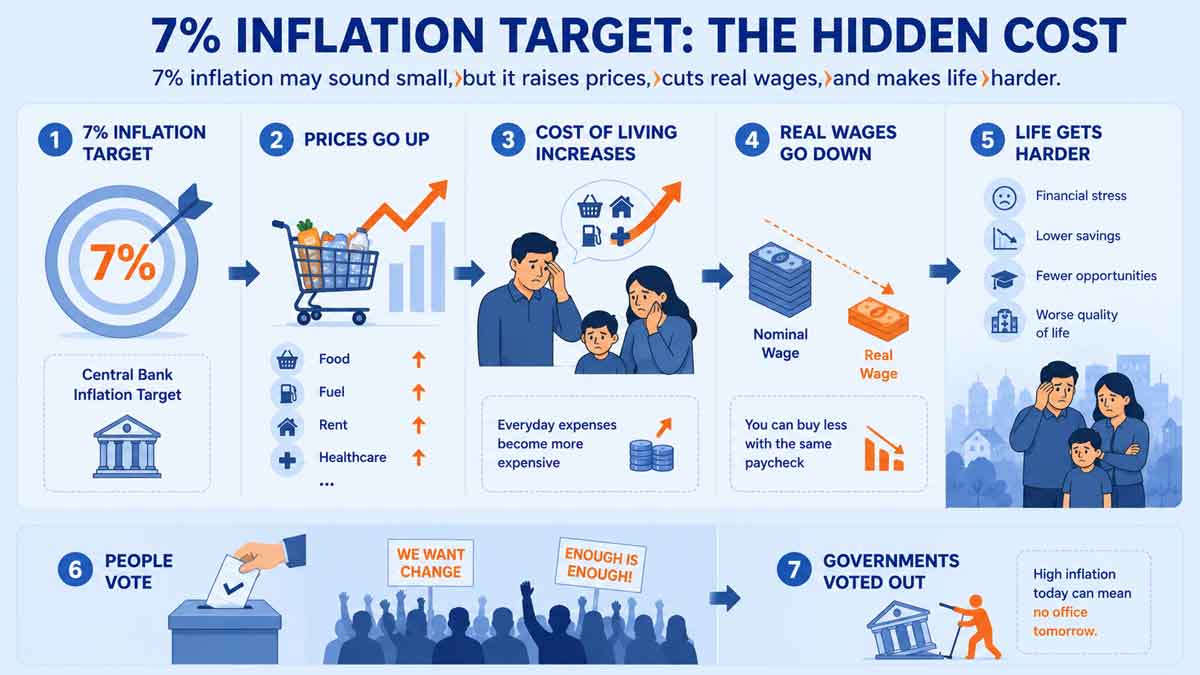
However, with the Middle East war expected to be more prolonged compared to initial estimates, the economic difficulties from disrupted shipping routes, increased freight costs, and a high energy bill could intensify. Sri Lanka remains highly dependent on imported energy and fertilizers while storage options are limited. With energy and fuel price passthroughs happening on a more regular basis, the Colombo consumer price inflation accelerated to 8.3% year on year in October, compared with 1.6% in February prior to the war. This has prompted Sri Lanka's central bank to raise rates by a cumulative 125 basis points (bps) so far this year, which could dampen some economic momentum.
Sri Lanka also faces higher risks from a more severe El Nino in 2027, which may cause more extreme weather events and regional climate divides. Monsoons could become more erratic, with potential drought conditions in dry zones and flooding in other areas, such as the northern and eastern regions. This volatility could affect crop production for important harvests in tea, rubber, and rice. This would exacerbate food inflation, which is already affected by higher fertilizer and transport cost, and affect agricultural income. Hydropower, which accounts for 25%-35% of electricity generated in Sri Lanka, is particularly sensitive to rainfall. Although heavy rains in recent months have improved reservoir storage, the water levels can fall quickly during dry spells.
Renewed escalations in the Middle East could also affect tourism earnings, which have been tepid this year, and remittances. Even though Middle Eastern tourists accounted for a small share of arrivals, about one-third of visitors to Sri Lanka transit through aviation hubs in the Middle East. The region also accounts for 40% of remittances, which have become an increasingly important pillar of Sri Lanka's current account.
Counterbalancing these risks is the government's efforts to promote investment and strengthen export growth. These include dismantling bureaucratic hurdles, creating single-window initiatives for trade and investment, and developing a comprehensive export promotion and diversification strategy. The government's ability to address chronic underspending in capital infrastructure would also likely be key to further increases in the country's potential growth.
Against this backdrop, we expect Sri Lanka's economic growth to slow to 4.0% in 2026 and rebound to 4.5% in 2027. We forecast Sri Lanka's 10-year weighted average per capita real GDP growth at 3.2%. This is in line with peers with similar income levels and indicates that Sri Lanka has largely shaken off the effects of its 2022 economic crisis. We believe Sri Lanka's GDP per capita would reach US$5,200 in 2026 despite a weakening Sri Lankan rupee.
The ruling NPP secured a supermajority parliament following the 2024 general elections, and controls most local councils after elections in May 2025. This situation is uncommon for Sri Lanka, which has historically been characterized by frequent political factionalism and crossovers. We believe the government's strong mandate and policy responses to recent crises demonstrate improved political stability and policy predictability.
We anticipate the government will continue the reform agenda under the current International Monetary Fund (IMF) Extended Fund Facility program even after the program ends in March 2027. The government is likely to continue implementing revenue-based budget repair, cost-recovery pricing for utilities, and other structural reforms of public financial and debt management. The government has demonstrated strong commitment to the IMF program, meeting most of the quantitative indicators and structural benchmarks, albeit with some with delays, even under challenging circumstances.
Flexibility and performance profile: Strong revenue growth boosted fiscal buffers
• Government revenue rose 20% in the first nine months, resulting in an overall fiscal surplus.
• Debt remains high and the interest burden exceptionally heavy, but the debt and interest trajectories will likely improve faster than we had expected.
• The external position has weakened marginally due to the high import bill, greater currency volatility, and softening tourism earnings, but foreign exchange reserves have increased.
Sri Lanka's fiscal position has improved significantly since 2022, underpinned by a series of revenue measures and robust economic growth. The revenue growth momentum has not faltered much this year despite the more challenging external environment and moderation in economic growth. Government revenue grew 20% year on year in the first nine months of 2026, despite the strong base in 2025. We expect general government revenue to exceed 17% of GDP in 2026, roughly double the rate in 2022. Even if growth slows substantially in the last quarter and expenditure execution improves, we expect the overall fiscal deficit to narrow in 2026 to below 2% of GDP. The primary balance will likely remain in surplus for four consecutive years.
The outperformance in revenue is broad-based, spanning income tax, domestic taxes on goods and services, taxes on international trade, as well as non-tax revenue. This healthy revenue growth likely also reflects the government's ongoing efforts to improve tax compliance and collection, including through digitizing the tax system. We expect revenue performance to hold steady in 2027 at about 17% of GDP.
This has likely reduced the pressure on the government to introduce major new revenue measures, such as the nationwide property tax, to meet fiscal targets under the IMF program. Contrary to the government's earlier plans, the property tax has been excluded from the 2027 budget. We do not expect this exclusion to affect the government's commitment toward fiscal consolidation over the medium term.
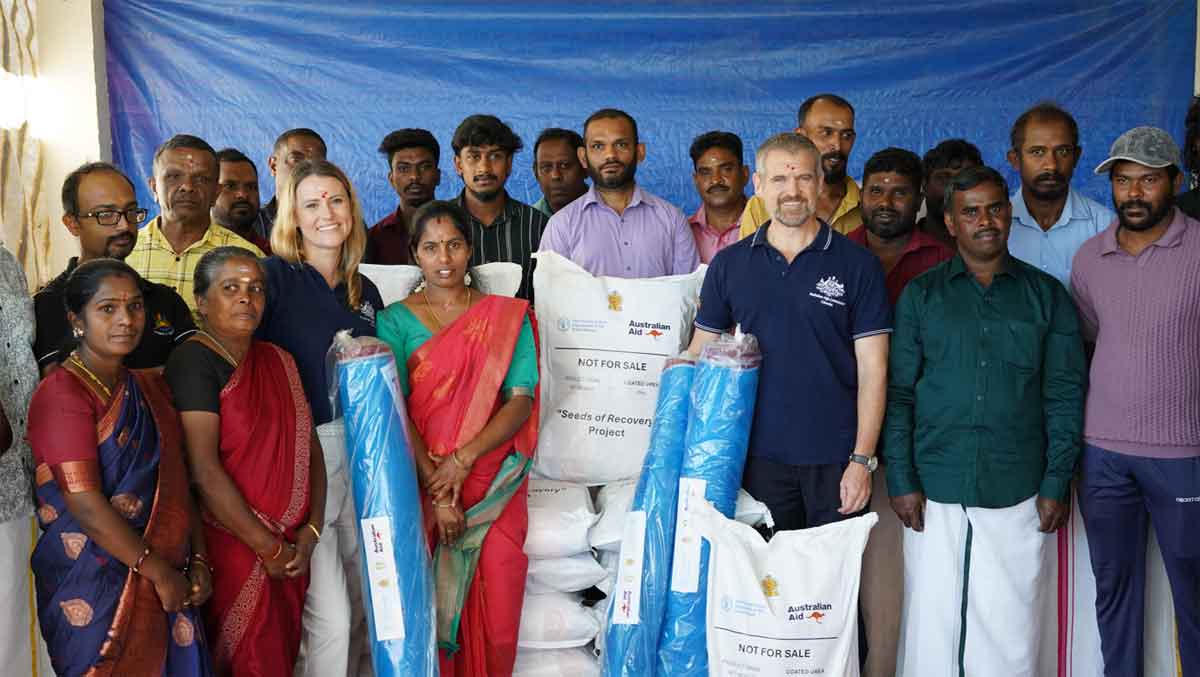
On the expenditure front, spending is higher this year due to larger subsidies and transfers, as the government disbursed, albeit slowly, funds for post-disaster relief and reconstruction for Cyclone Ditwah, which occurred in November 2025. The government also introduced a support package for groups most affected by the higher energy costs and increased payments to the state-owned Ceylon Petroleum Corp. due to inconsistencies in implementing cost-recovery tariff increases. Capital expenditure has also accelerated year on year in the first three quarters of this year, and we expect a further ramp up in the last quarter. As a result, we project that the fiscal deficit will increase to 1.8% of GDP in 2026 despite the government running a surplus in the first nine months.
We expect the fiscal deficit to widen in 2027 due to the various support measures introduced in the budget, including the increase in the personal income tax thresholds, removal of the Value-Added Tax on school supplies, and reductions in targeted levies, such as for solar batteries. Capital expenditure is budgeted to increase by more than 30% in 2027 to support the upgrading of port and energy infrastructure and transport connectivity, although actual spending might be lower if execution remains slow. About half of the original budget allocated for Cyclone Ditwah was unspent in 2026 and will be carried over to 2027. We expect general government fiscal deficits to average 3.5% of GDP in 2026-2029.
Importantly, the government's debt servicing burden has fallen further due to strong revenue growth and the phasing out of expensive debt incurred in 2022. Even after factoring higher coupon payments from triggering the macro-linked bonds (MLB) upsides, we expect Sri Lanka's interest-to-revenue ratio to improve to 34% by 2029, from 64% in 2024. This is still onerous and much higher than most other countries.
We forecast net general government debt, including state-owned enterprise (SOE) guarantees, at about 92% of GDP for 2026. Given the economy's strong performance and the appreciation of the Sri Lankan rupee from the 2023 level, it is likely that the upside scenarios in Sri Lanka's MLBs will be triggered. This would result in higher coupon payouts of 1.75%-2% over 2029-2032 and higher principal payouts of 17%-22%, depending on the bond series.
We expect net general government debt to decline to about 83% in 2029. In addition to the higher principal payout from the MLBs, we have added the Chinese renminbi (RMB) 10 billion currency swap with the Chinese central bank to government debt data. Sri Lankan banks also purchase substantial quantities of government debt, with aggregate exposure significantly exceeding 20% of system assets.
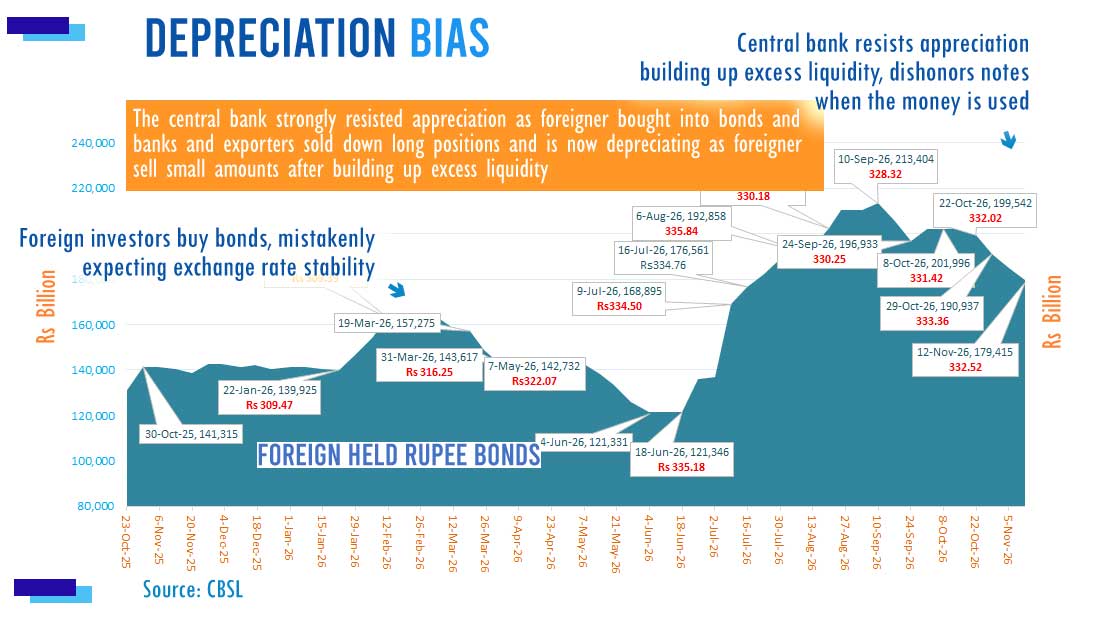
While the fiscal outlook is more benign, Sri Lanka's external outlook has deteriorated due to the high import bill and continuing uncertainties posed by the Middle East war. Fuel imports rose more than 100% year on year in rupee terms in April and May, and the currency has depreciated about 6.8% against the U.S. dollar in the first 10 months of the year. This has eroded external buffers.
We do not expect the changes in the external position to be significant. This is due to the government's actions to stabilize the currency, including raising the policy rate by 100 bps in May, shortening the export proceeds conversion timeframe, and allowing the currency to act as a shock absorber to avoid draining reserves excessively.
Remittances are still rising as of September 2026, but at a slower pace. We estimate inflows from the IMF program and other multilateral organizations at about US$1.7 billion this year. These flows could mitigate the deterioration in the trade balance. With the currency stabilizing since June, the central bank has started rebuilding foreign currency reserves. Gross official reserves fell to US$6.5 billion in June and recovered to US$7.09 billion in October.
However, the risks to Sri Lanka's external position will increase if the Middle East war drags on. Growth in remittances, which continued at more than 30% year on year in May, slowed to 5.6% in September. Tourist arrivals were 1.8% lower year on year in the first nine months of 2026 while tourism earnings declined by 9.2% over the same period.
We expect the current account to flip to a deficit of 1.4% of GDP in 2026. Gross external financing needs as a share of current account receipts and usable reserves will widen to about 109% this year, from 104% in 2025, before improving to 104% by 2029. This still compares favorably with the precrisis average of more than 120%. We expect external debt net of public and financial sector external assets to average 96% of current account receipts from 2026-2029.
Inflation has risen sharply due to the energy crisis, but this supply-induced inflationary shock is likely to be temporary. In our view, monetary policy credibility has improved following the passage of the Central Bank Act in 2023. In addition, extensive foreign exchange restrictions imposed during the previous period have largely been removed. Remaining minor restrictions will likely be phased out in the next two years. (Colombo/Nov27/2026)

| 3 month bill | 9.26% | 1bp ▲ |
| 12-m bill | 9.95% | 2bp - |
| Gold (Ounce) | $4015 | - ▼ |
















Comments
Be the first person to comment and join the debate