
Share your email and we'll share the latest news
Exclusive economic intelligence, political and business coverage
Wednesday, October 21 2026
Wednesday, October 21 2026
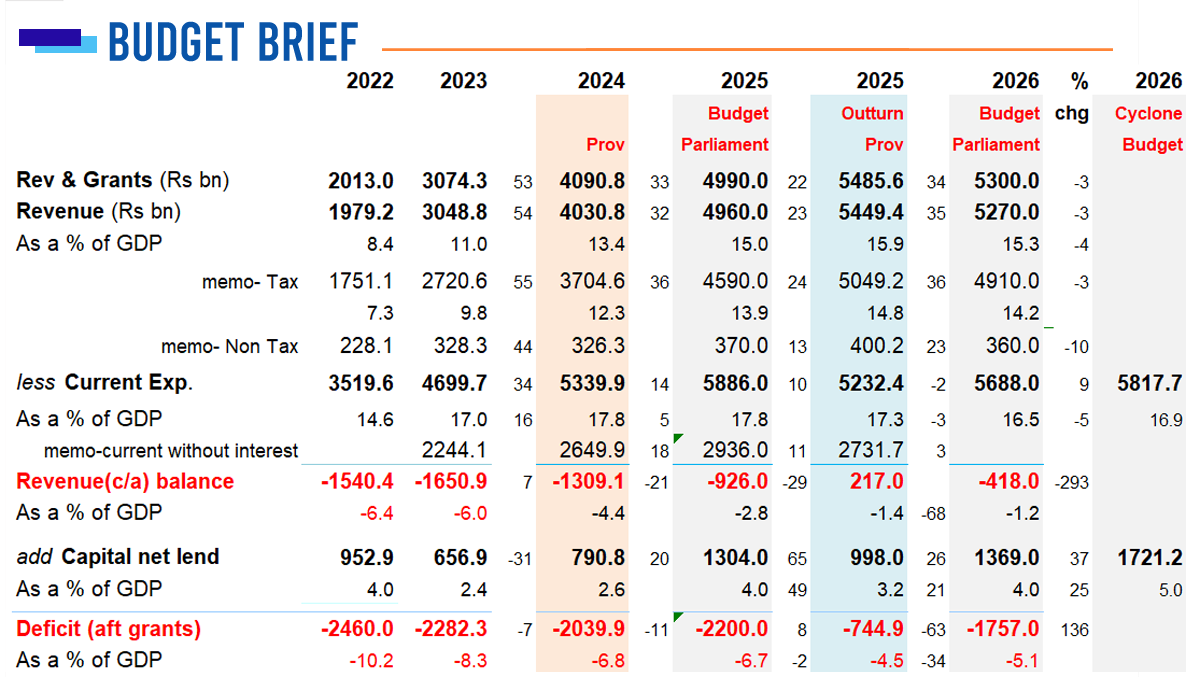
MONETABRIEF – Sri Lanka's budget turned almost to surplus in January 2026 with a gap of only 3.8 billion rupees, on top sharply reduced deficit in 2025, but the central bank depreciated the rupee pushing up the cost of living.
In January 2025, revenues grew 35.2 percent to 468 billion rupees, with tax revenues rising 35.1 percent to 434 billion rupees and non-tax rising 37 percent to 34.5 billion rupees.
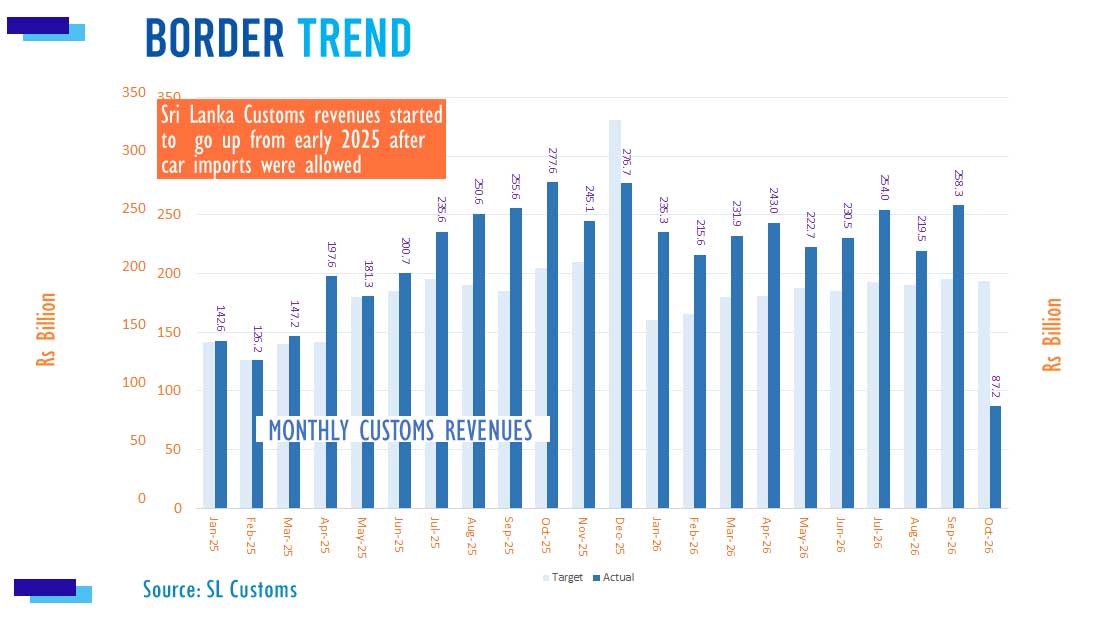
Tax revenues were boosted from February 2025, after ending a vehicle import ban imposed in 2020 as money was printed to cut rates and boost 'potential output'.
Blocking car imports and other highly taxed items (non-essential goods), has been a tactic employed to worsen fiscal crises in what critics call a 'cascading policy error' after macro-economists print money to cut rates.
In January 2025, recurrent spending grew 1.2 percent to 429.4 billion rupees, with a net fall in interest costs.
The current account of the budget was in surplus, conforming to the golden rule of budgeting.
Capital expenditure was 43.2 billion rupees, 4 percent up from 41.5 percent which was almost financed from current spending.
In recent years Sri Lanka has spent on capital projects without feasibility studies to please macro-economists who want a Keynesian 'multiplier effect' from heedless spending rather than well-designed projects that expand the capacity of the country and give permanent growth.
For the full year 2025, Sri Lanka also ran a current account surplus in the budget for the first time since 1987.
In 2025, the overall budget deficit also collapsed to 744 billion rupees from 2,199 billion rupees a year earlier.
In 2025, the central bank depreciated the rupee from 296 to the US dollars to 310 even as budget deficit contracted.
Macro-economists who printed money to 'cut rates' have for decades blamed budget deficits (politicians) for external trouble and also current account deficits (the general public) and also twin deficits.
Sri Lanka however generally has lower budget deficits in the year the central bank prints money to cut rates and trigger a currency crisis, and higher deficits in the year of the stabilization crisis that follows, analysts have shown.
There is strong opposition in Sri Lanka to central bank printing money through domestic operations.
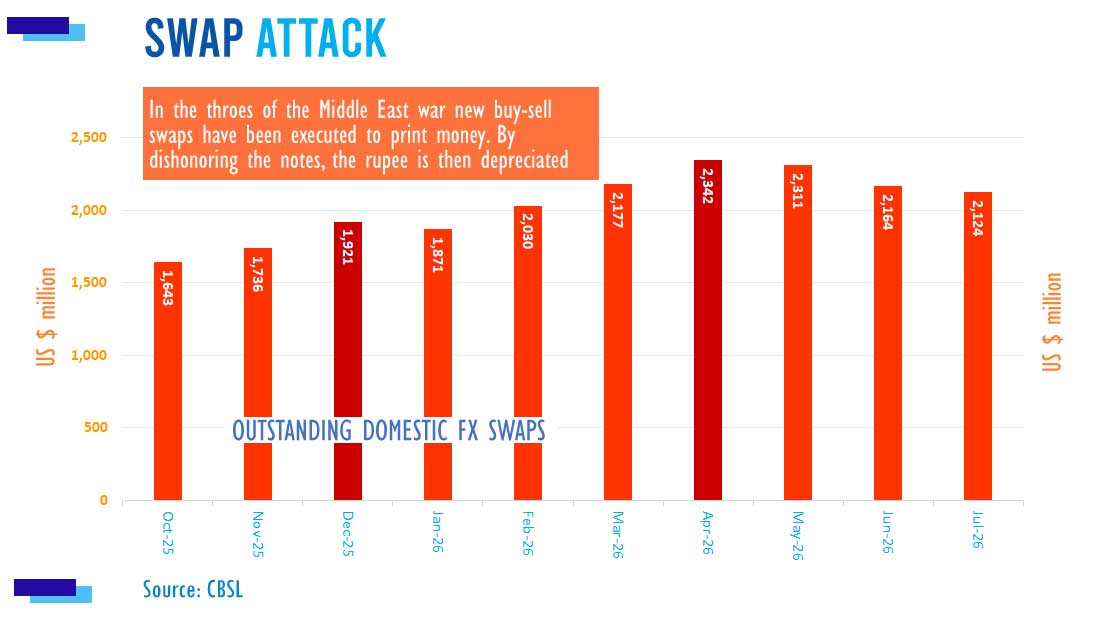
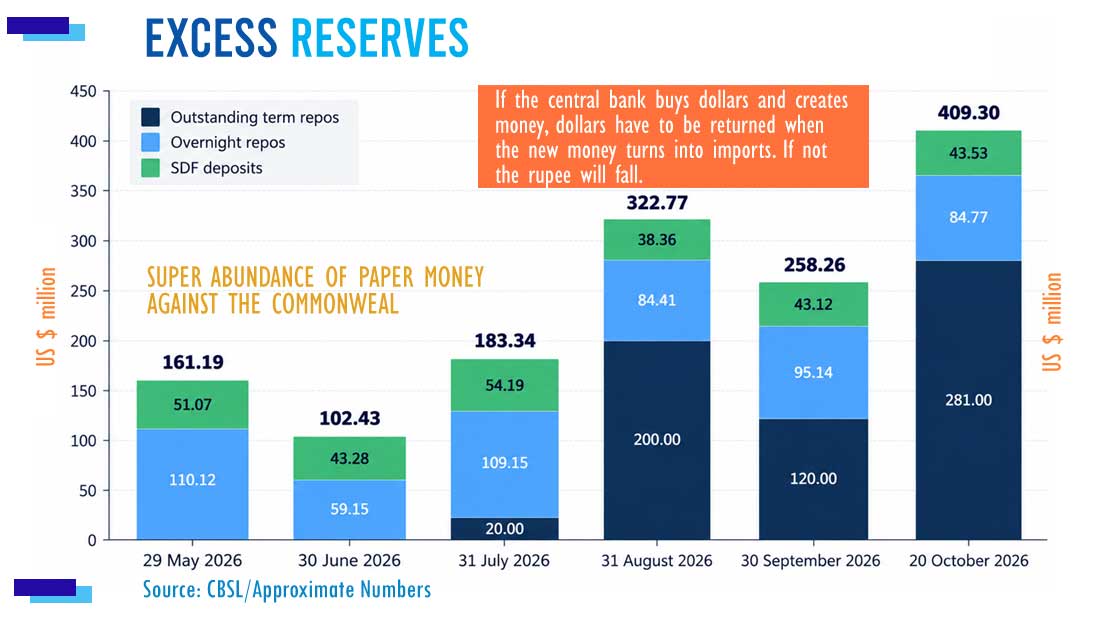
In 2025 money was printed mostly through buy-sell swaps and leaving liquidity from dollar purchases unsterilized until they turned into investment and import credits.
Excess liquidity at times rose close to 400 billion rupees, twice the level seen in inflationary rate cuts that led to the first sovereign default and steep depreciation from a 'float' initiated with a surrender rule in place.
Sri Lanka lost the ability to run current account surpluses in 1987, amid steep currency depreciation after budget deficits going out of control earlier in the decade with nominal interest rates rising to very high levels.
Currency depreciation destroys capital, leading to high nominal interest rates and destroyed budgets, analysts have pointed out.


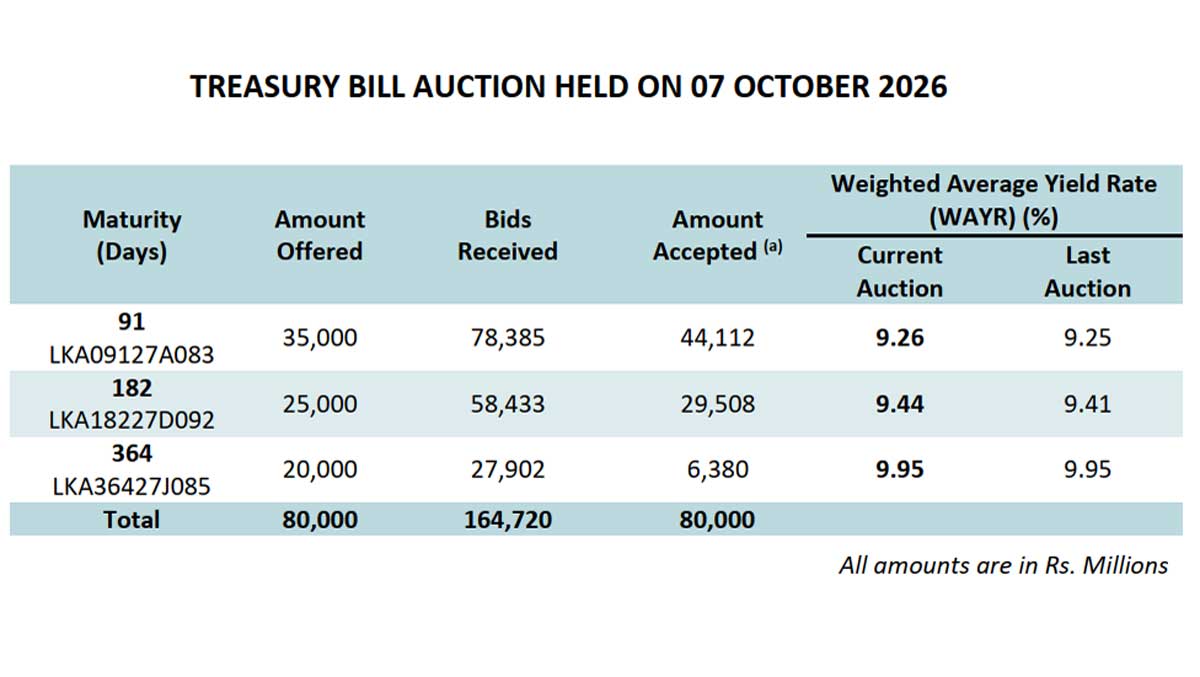
| 3 month bill | 9.26% | 1bp ▲ |
| 12-m bill | 9.95% | 2bp - |
| Gold (Ounce) | $4187 | - ▼ |



















Comments
Be the first person to comment and join the debate