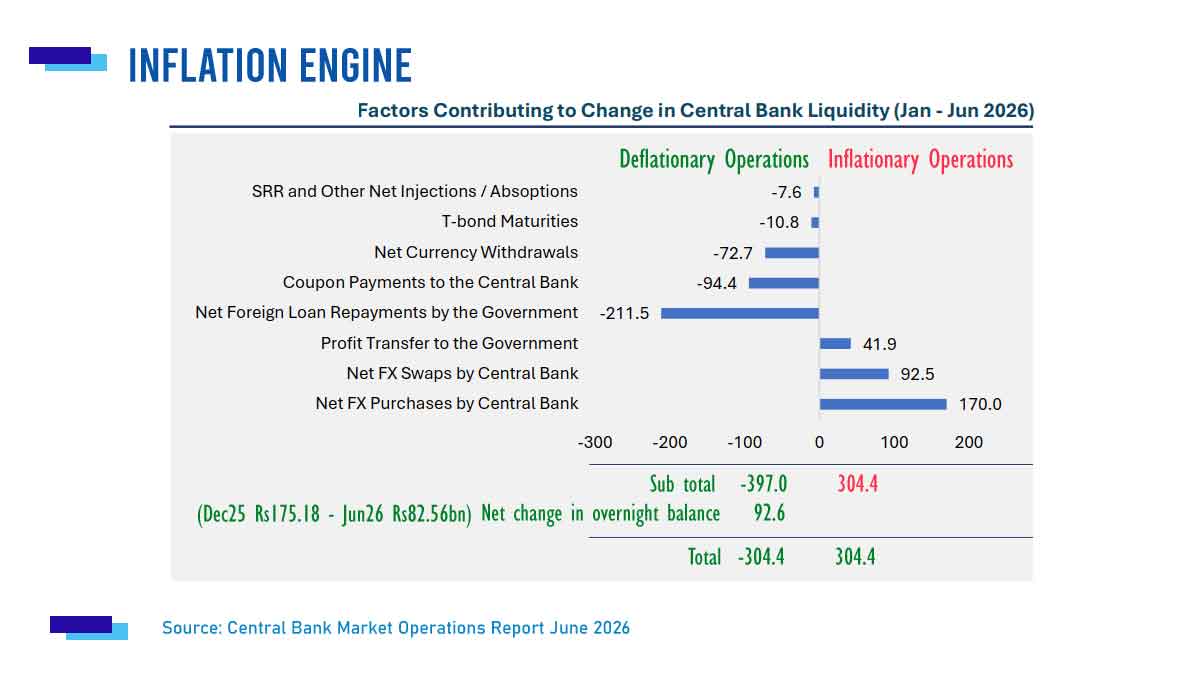
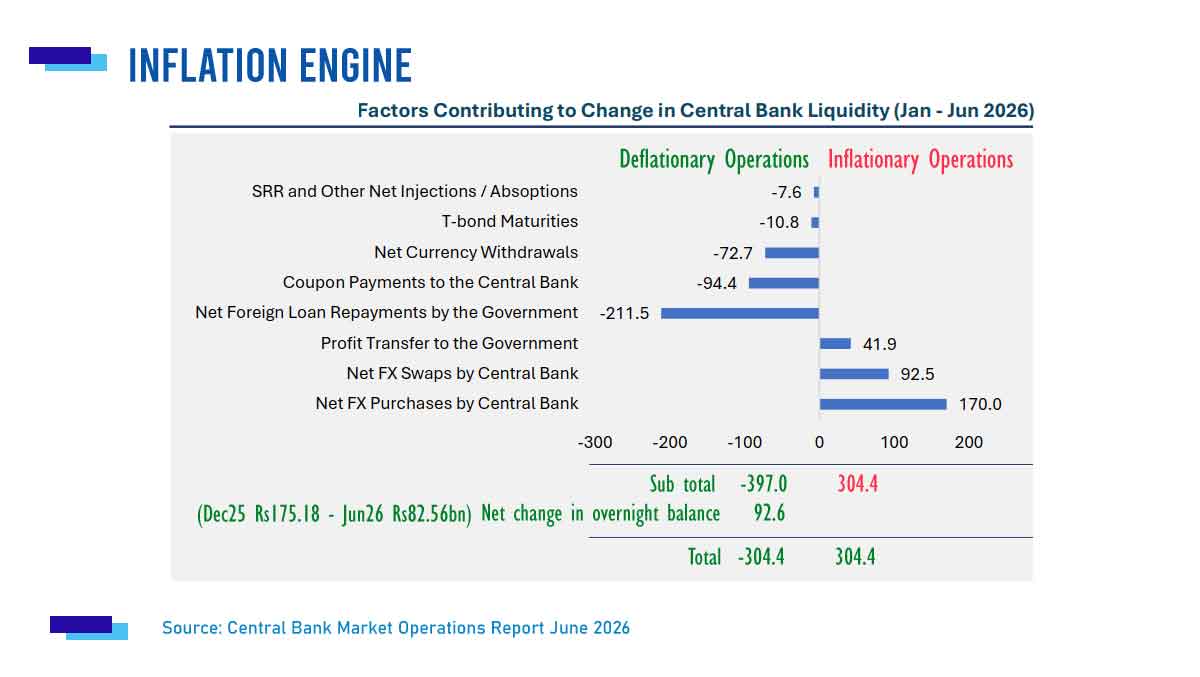
MONETABRIEF – Sri Lanka's central bank has sold around 211.5 billion rupees worth dollars (about 660 million at an average exchange rate of 320 rupees to the dollar) to the government to repay debt in the first half of 2026, official data showed.
Selling dollars to the government involves pegging (weak side convertibility) where liquidity is withdrawn to strengthen the currency peg.
The central bank also created 170 billion rupees by purchasing dollars (pegging to prevent appreciation or strong side convertibility or monetizing a balance of payments surplus).
However, macro-economists claim the rupee is 'market determined', though exchange rates in Sri Lanka are a result of a mix of money and exchange policies of the central bank.
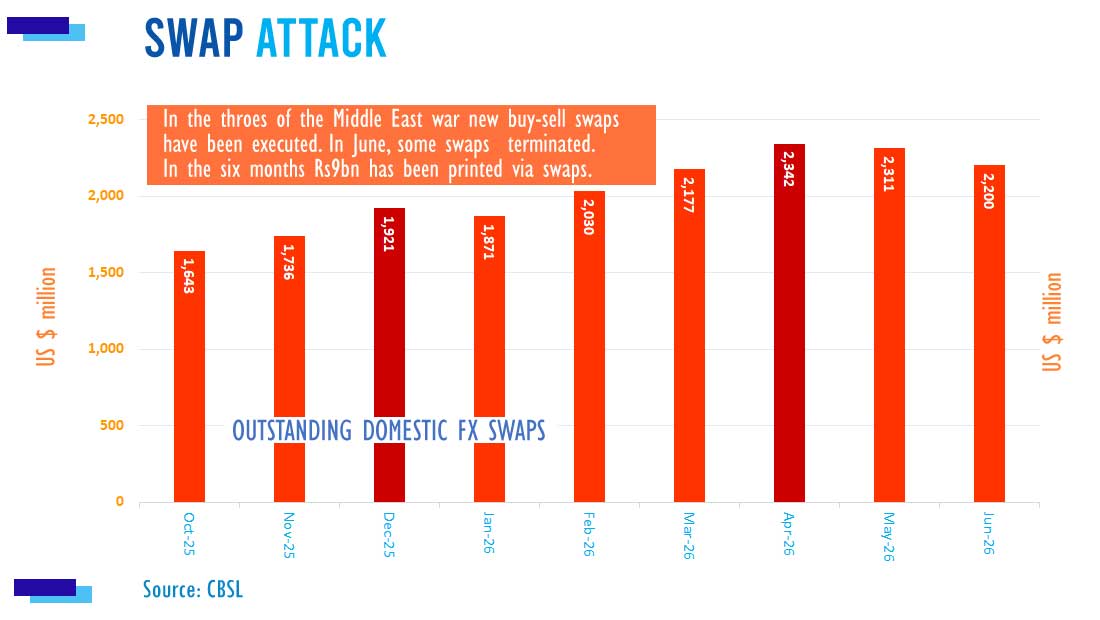
In addition to printing 170 billion rupees through dollar purchases (mostly in January and February 2026 when cyclone Ditwah led to a credit downturn), another 41.9 billion rupees was created through an inflationary profit transfer, and 92.5 billion rupees were created from inflationary buy-sell swaps totaling 304.5 billion rupees.
The central bank had sold dollars to the government for 211.5 billion rupees (more than 600 million dollars) to repay debt in deflationary pegging.
Any dollar sales to the market or government can strengthen the exchange rate by reducing the liquidity (rupee reserves in banks) which would have otherwise turned into investment credit and imports.
When dollars bought from current inflows to the Treasury to repay debt, or to build a fiscal reserve or sinking fund (for a financial outflow), killing liquidity and credit, a current account narrows or turns into a surplus.
If excess liquidity remains in the system, it can turn into current account imports.
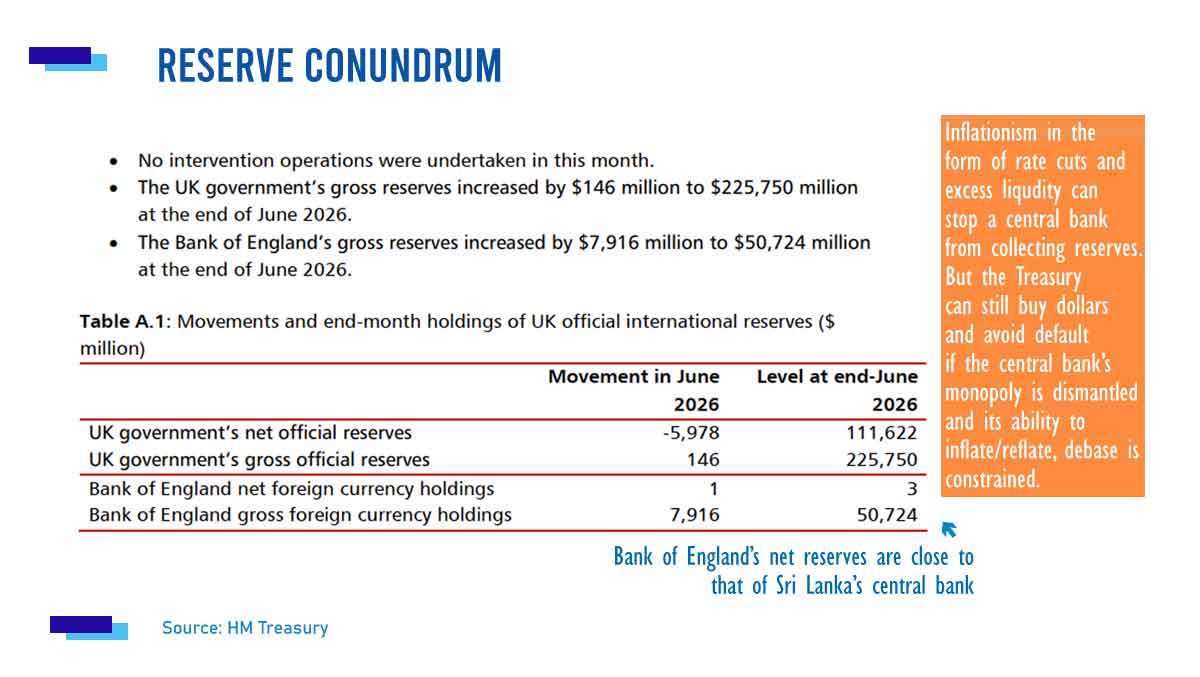
Analysts have pointed out that the central bank is supremely unqualified to build reserves due to creating money when purchasing dollars and its observed reluctance to kill the liquidity due to an inflation bias.
There have been calls for the Treasury to directly purchase dollars as it will take away another opportunity for the central bank to create money and trigger external instability. Treasury dollar purchases do not alter reserve money.
The treasury also paid 94.4 billion rupees to the central bank as coupons on its bond portfolio converted from Treasury bills, which is deflationary.
Along with statutory reserve ratio and increases in note use in the economy, leading to deflationary operations of 397 billion rupees, excess liquidity in the banking system fell by 92.6 billion rupees.
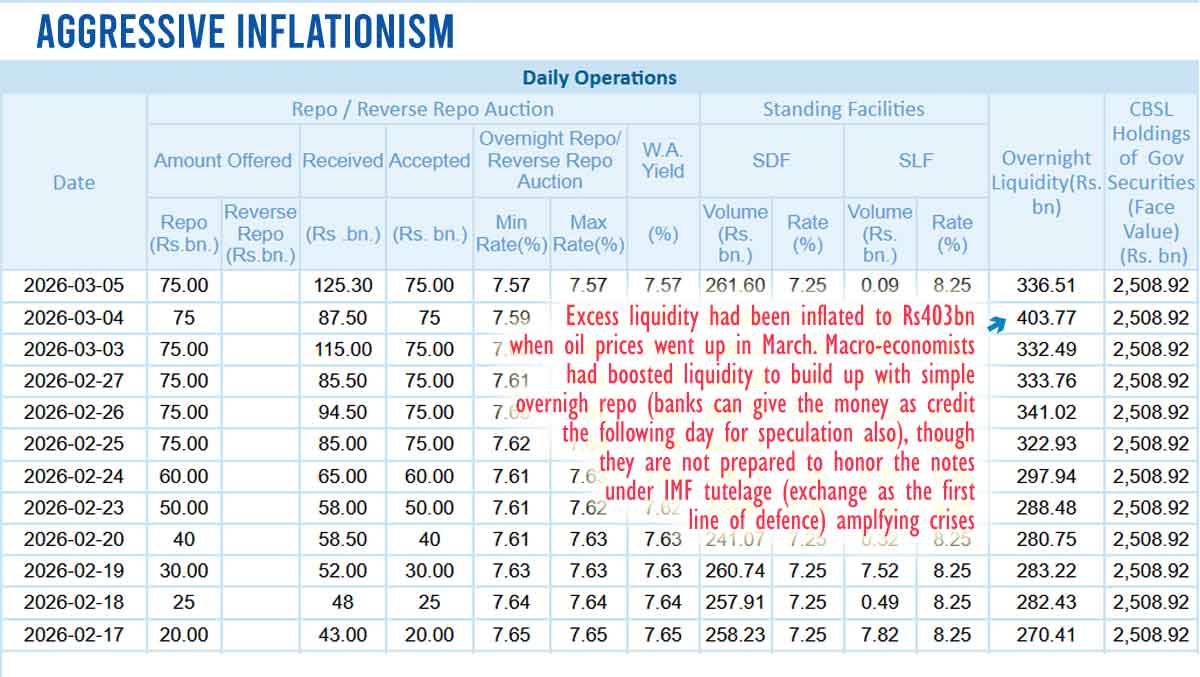
However, by the end of the quarter when oil prices rose from the Middle East war, excess liquidity was at very high levels.
Excess liquidity was 403 billion rupees on March 04, twice the level seen from money printed during the economic crisis.
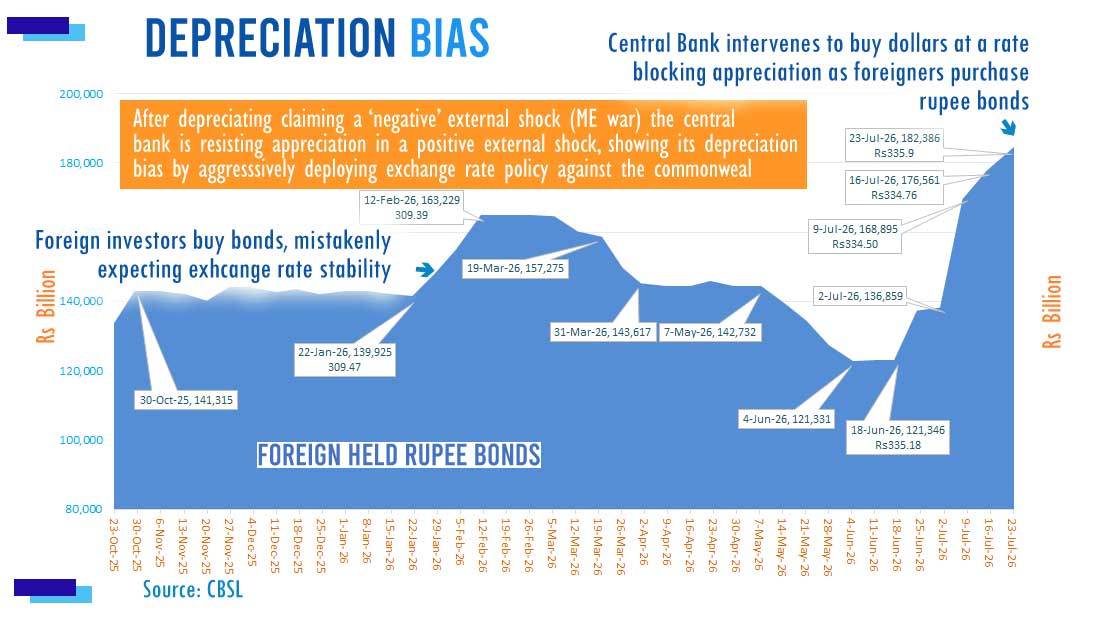
The central bank then ran away from the notes under IMF 'exchange rate as the first line of defence' doctrine, dishonoring its own note issue created by pegging and buying dollars in January and February and through inflationary swaps, triggering panic in forex markets.
After dishonoring notes and completely undermining confidence in forex market through the so-called 'flexible' exchange rate, heavy moral suasion killed the interbank spot market leading to a collapse of the currency and retail sales of dollars de-linked from the 'official' spot market.
The purchase of dollars from the public involves pegging (strong side convertibility that prevents appreciation) and the sale of dollars to the government also involves pegging (weak side convertibility killing liquidity and preventing a fall of the currency).
However, when dollars are not returned to the general public when excess liquidity turns into credit, the currency falls, triggering external trouble.
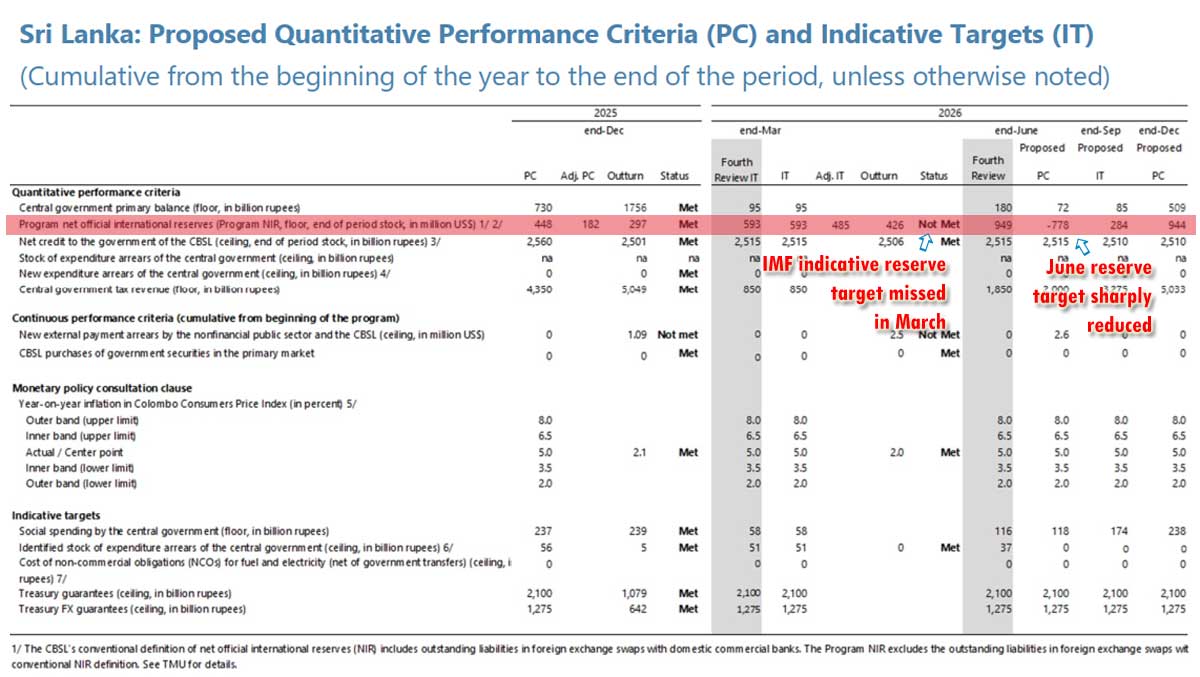
Standard and Poors' confirmed a CCC+ Sri Lanka credit rating warning on the external sector, while upgrading Pakistan where the State Bank of Pakistan appreciated the currency.
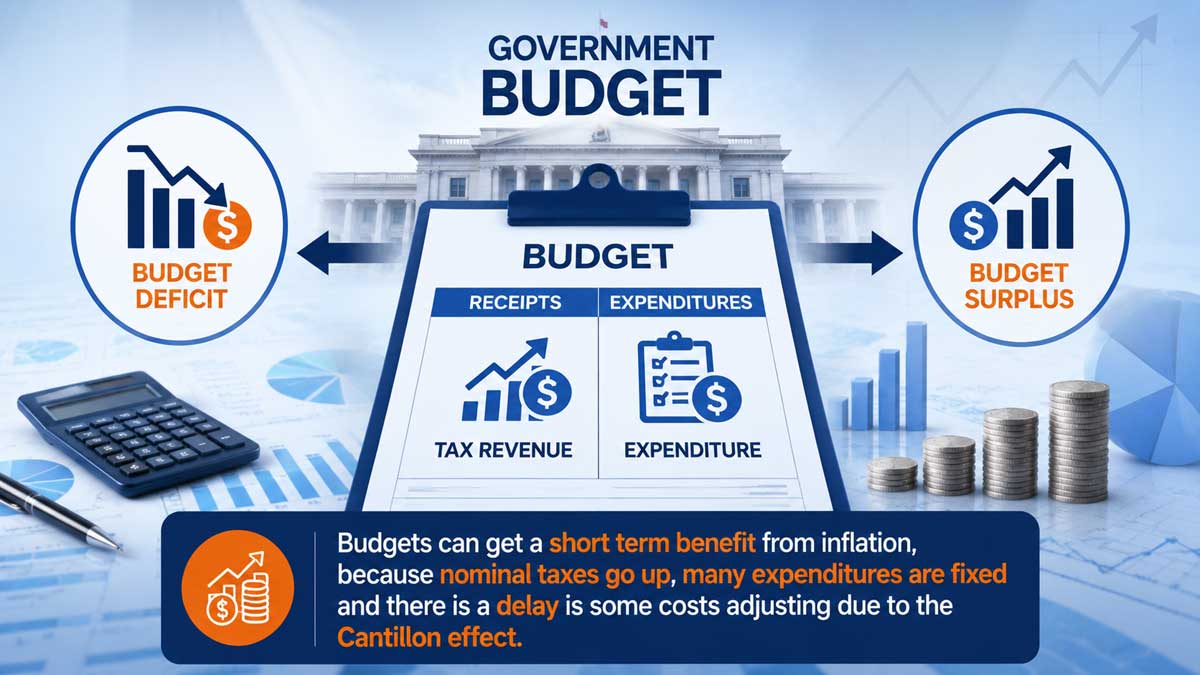
Sri Lanka's currency was busted in 2026 amid a budget surplus.
Macro-economists have for decades blamed the budget for external trouble and not the inflationary operations of the central bank, escaping accountability.
This time however the currency was busted amid inflationary policy and dishonoring notes. (Colombo/Aug04/2026)











Comments
Be the first person to comment and join the debate