
Share your email and we'll share the latest news
Exclusive economic intelligence, political and business coverage
Wednesday, September 30 2026
Wednesday, September 30 2026
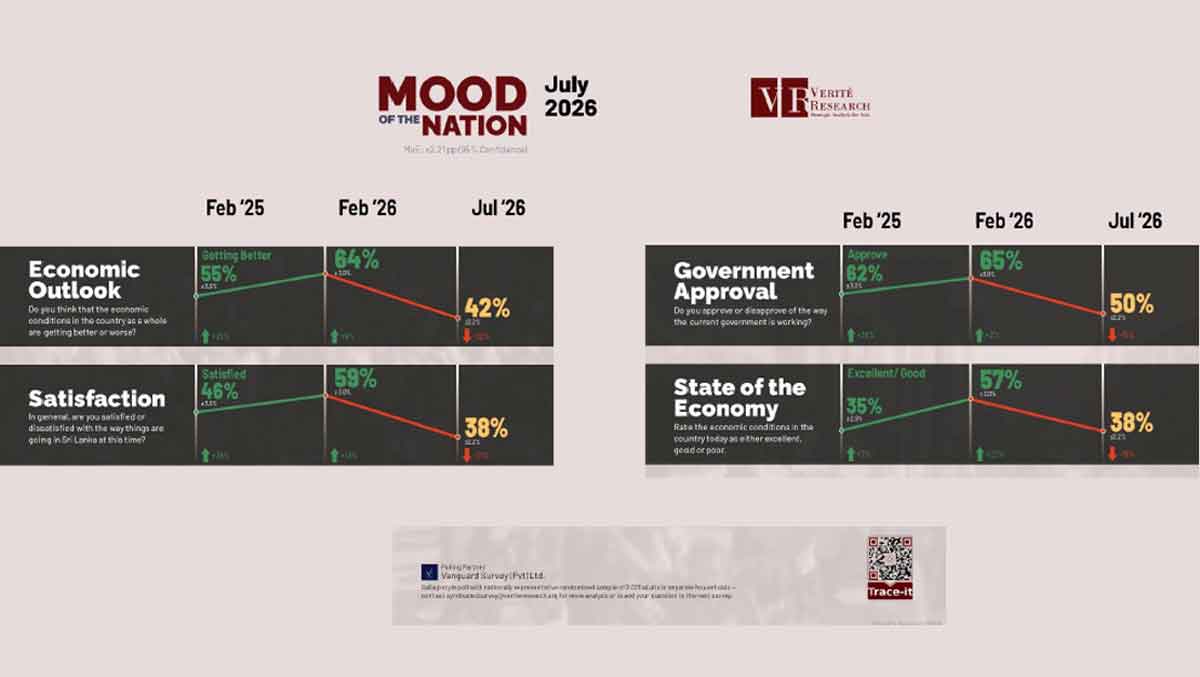
MONETABRIEF – The approval rating of Sri Lanka’s government has taken a severe battering after a collapse of the currency which amplified energy prices much more than required and also pushed up prices of all traded goods, destroying real wages.
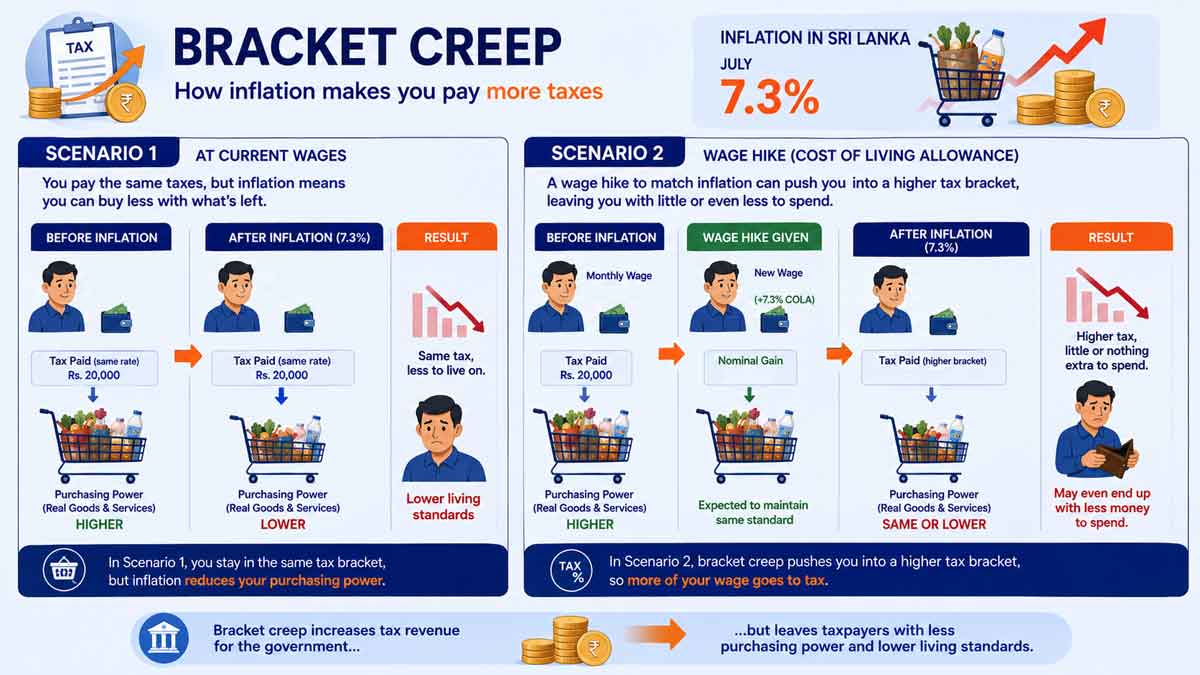
By July measured inflation at 7.3 percent exceeded the upper limit of the central bank's controversial inflation target.
Currency debasement also also takes away the last benefit given to tax payers by raising tax thresholds.
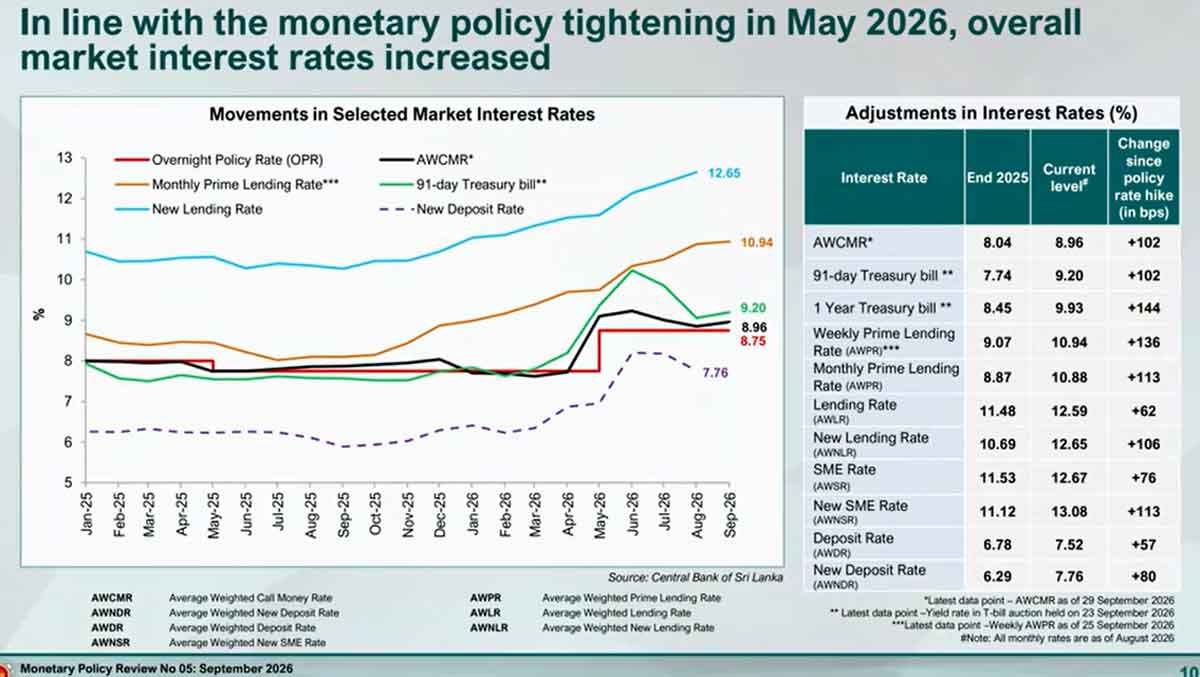
Macro-economists busted the currency saying there was an 'external shock' but raised interest rates, showing mis-targeted policy rates that triggered unsustainable credit, including with money printed by buy-sell fx swaps, was the real problem.
In the latest, July 2026 round of the Gallup-style Mood of the Nation poll, conducted by private economic policy think tank Verite Research, the government’s approval rating dropped to 50 per cent, from 65 per cent in February 2026.
The survey, conducted between 11 and 30 July, had a randomised sample of 2,013 respondents. Vanguard Survey (Pvt) Ltd, which conducted the poll, said it was designed to have a margin of error of plus or minus 2.21 percentage points.
The proportion of respondents who thought the economy was “getting better” declined to 42 per cent, from 64 per cent in the previous round of the survey in February.
More than half of the respondents, 56 per cent, said current economic conditions in Sri Lanka were “poor”. Only 38 per cent said conditions were “good” or “excellent”, in contrast to the previous round, when a majority said economic conditions were good.
The proportion who said it was “getting worse” increased to 40 per cent, while those who said they disapproved of the government increased to 31 per cent—both from around 15 per cent in the previous round.
By July measured inflation at 7.3 percent exceeded the upper limit of the central bank's controversial inflation target.
There are calls to reduce the target in a bit to restrain the central bank and its leeway to print money (this time through buy-sell swaps) and the ability to trigger social unrest and political discontent.
Under flexible inflation targeting and mid-corridor targeting (now called the single policy rate) similar trends of turning voters against a democratically elected government with back-to-back currency panics was seen from 2015.
The net ratings for the economic outlook and the state of the economy are averaged to create an Economic Confidence Index ranging from minus 100 to plus 100, Verite said in a statement.
The index was minus 39 in mid-2024 but moved into positive territory after February 2025 before declining to minus 8 in the latest round of polling, the think tank said.
In contrast to Sri Lanka, where money and exchange polices conflicts, good central banks like the Swiss National Bank, created only 0.5 percent inflation in June in Switzerland.
Sweden which also has an exceptional central bank, with a scarce reserve regime, created only 0.7 percent inflation in the 12 months to June.
Singapore which has only exchange rate policy, 1.9 percent.
Hong Kong Monetary Authority which has no monetary policy created 2.0 percent in i the 12 months to June. Diesel prices rose almost 50 percent to over 36 Kong Kong Dollars from 24.50 in February.
The central bank created the first currency crisis from February 1952, and the country saw the first set of import duty surcharges as budgets were falsely blamed.
Despite the fiscal corrections it printed more money the following year, and the government imposed more taxes, de-stabilizing the Dudley Senanayake administration and his ouster in the first 'Aragalaya'.
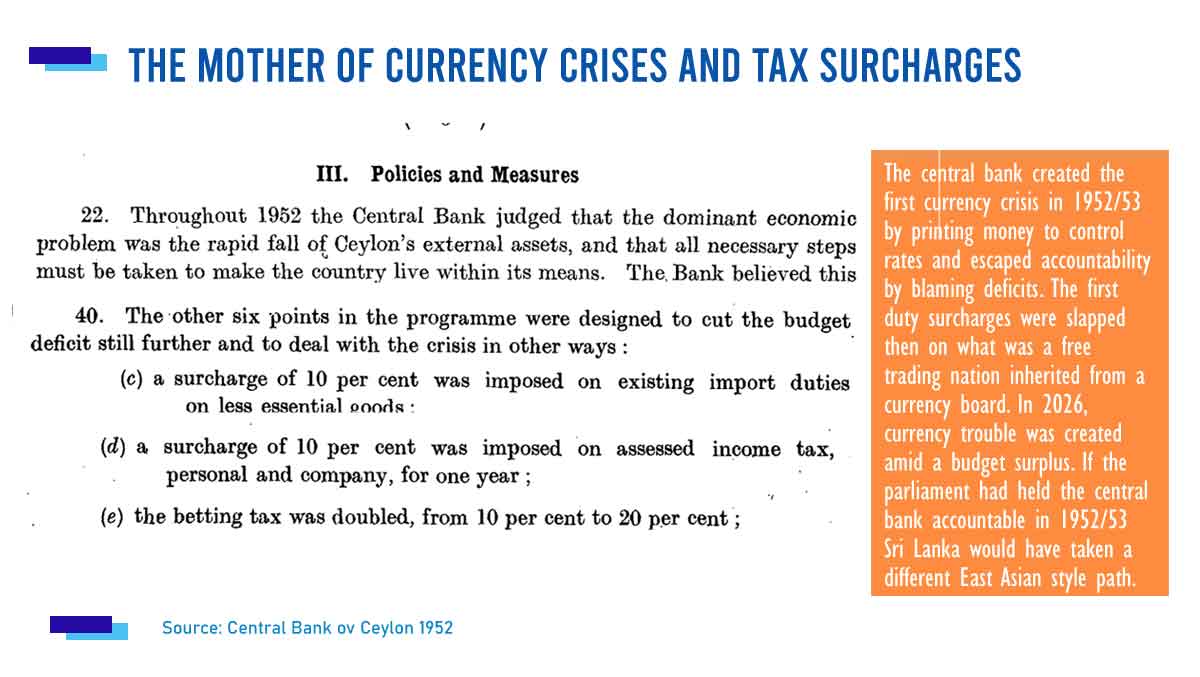
In 2026, external trouble came with a budget surplus, depriving the central bank of a 70 decade excuse for escaping accountability.
If the central bank was held accountable in 1952/3 by the politician and the parliament, Sri Lanka's fate may have been different. (Colombo/Aug 16/2026)

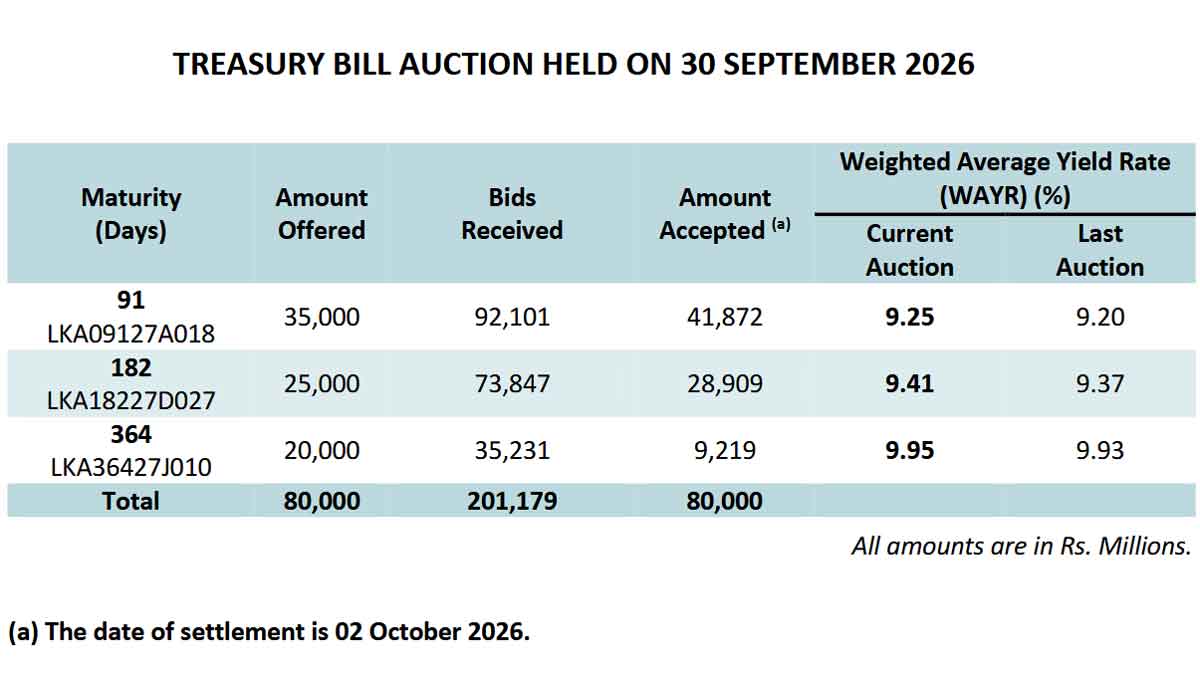
| 3 month bill | 9.25% | 5bp ▲ |
| 12-m bill | 9.95% | 2bp ▲ |
| Gold (Ounce) | $4602 | - - |














Comments
Be the first person to comment and join the debate