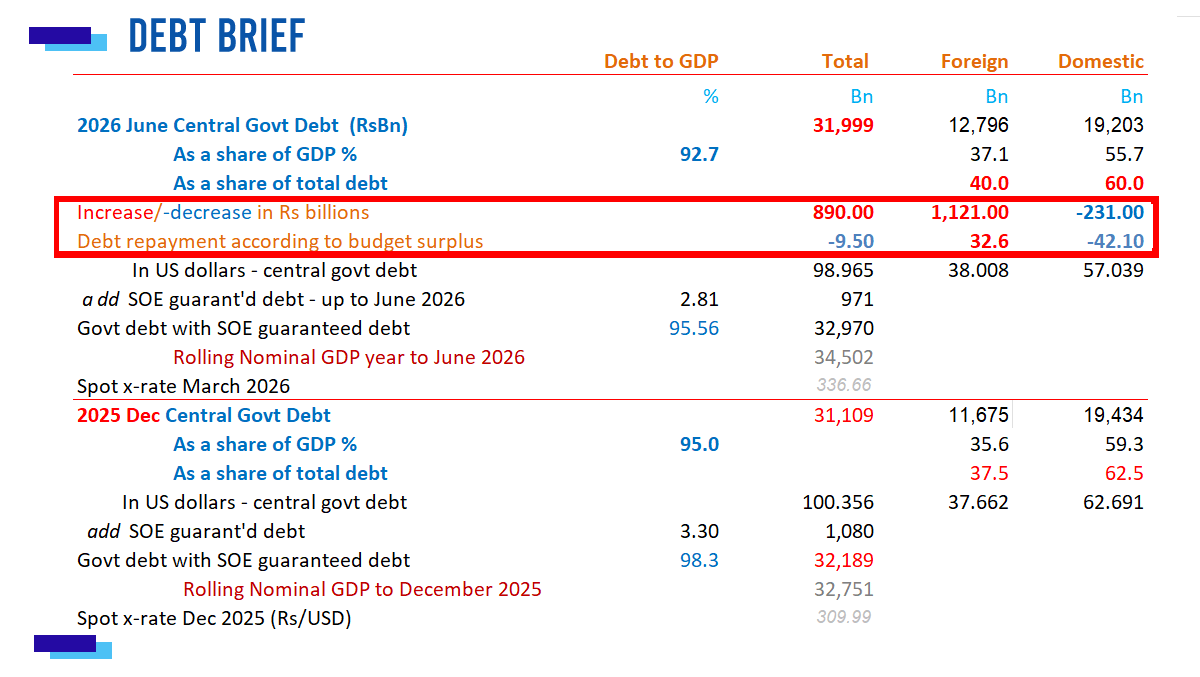
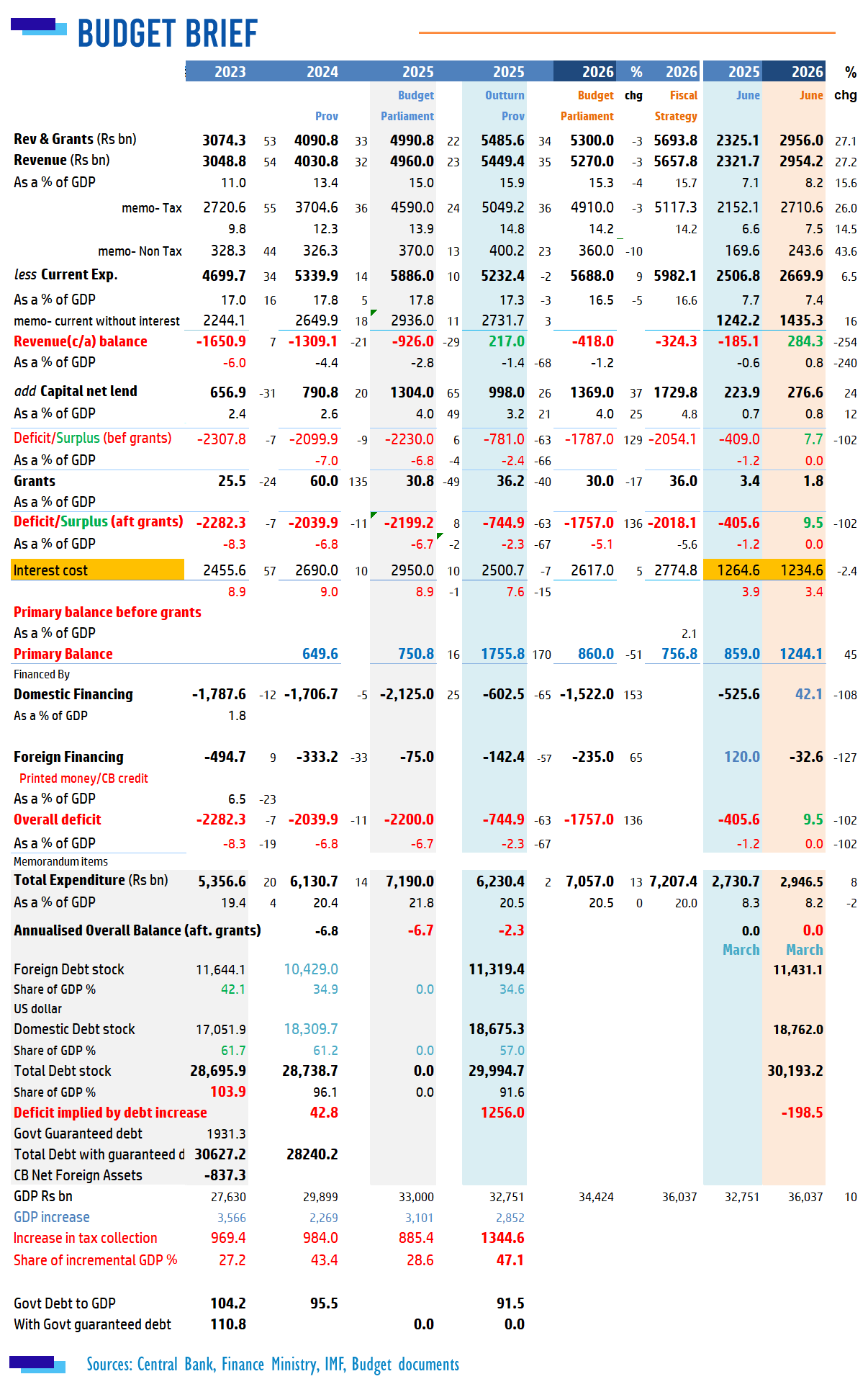
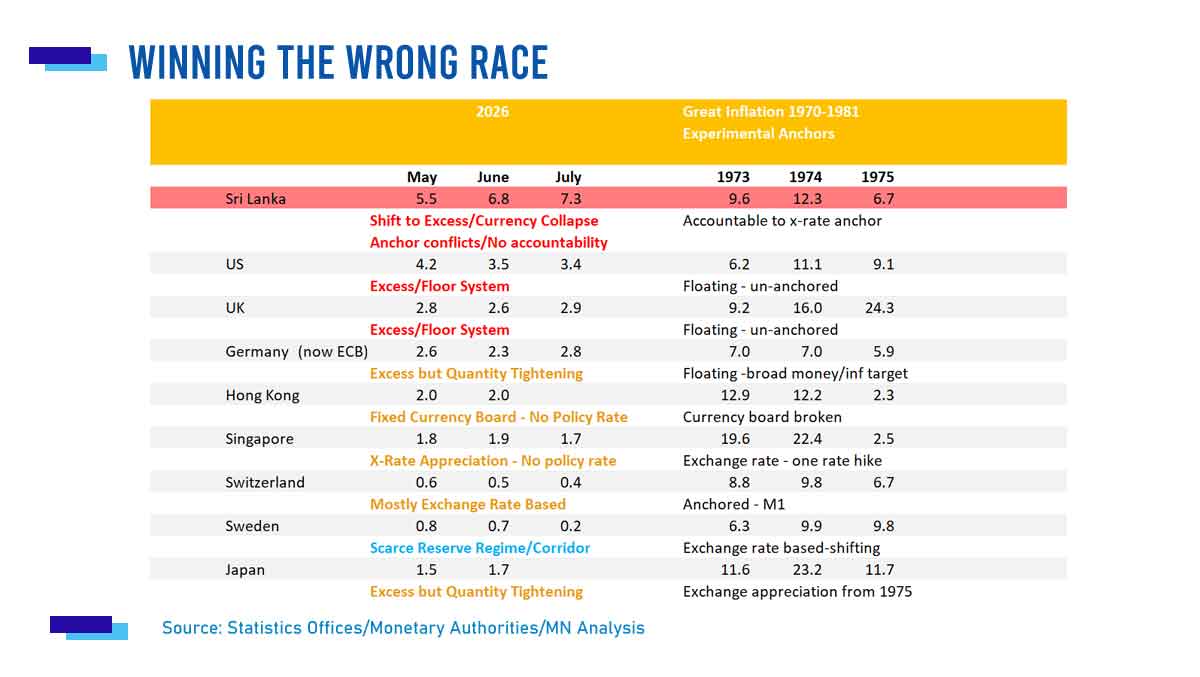
MONETABRIEF – Sri Lanka government debt has surged 890 billion rupees in the six months to June 2026 as macroeconomists busted the rupee, data show, while a democratically elected government raised taxes and ran a budget surplus.
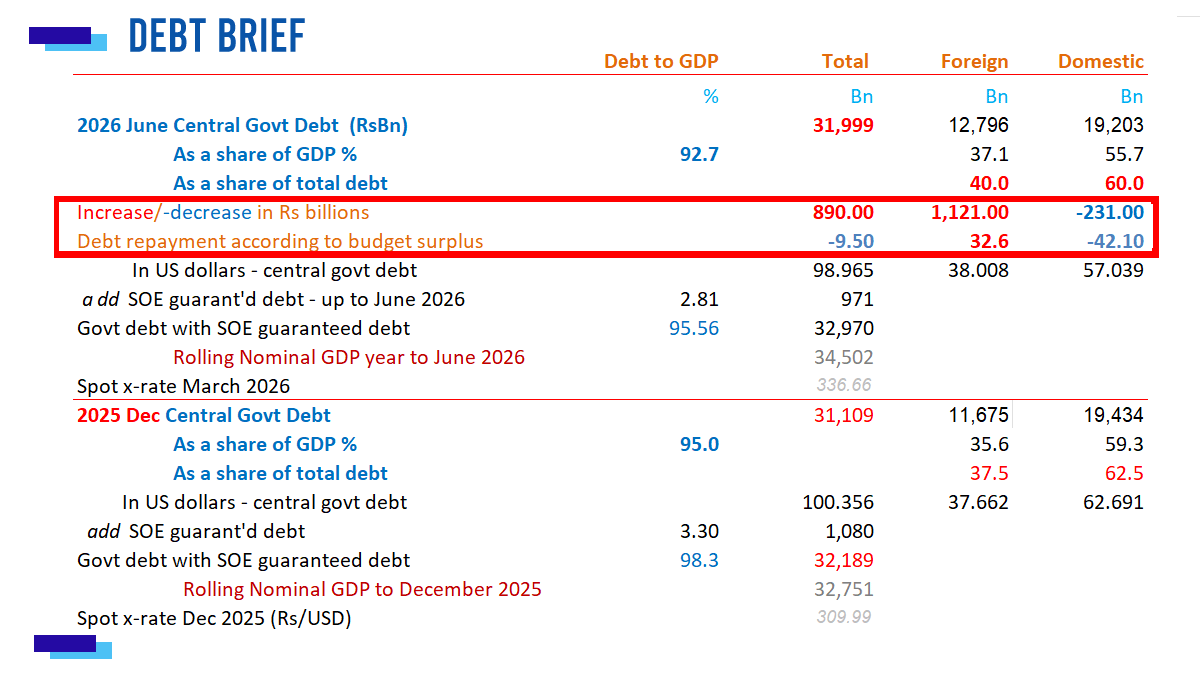
Sri Lanka ran a budget surplus of 9.5 billion rupees up to June 2026, involving the net repayment of 42.1 billion rupees in domestic debt and net foreign borrowings of only 32.6 billion rupees.
Inflating Debt
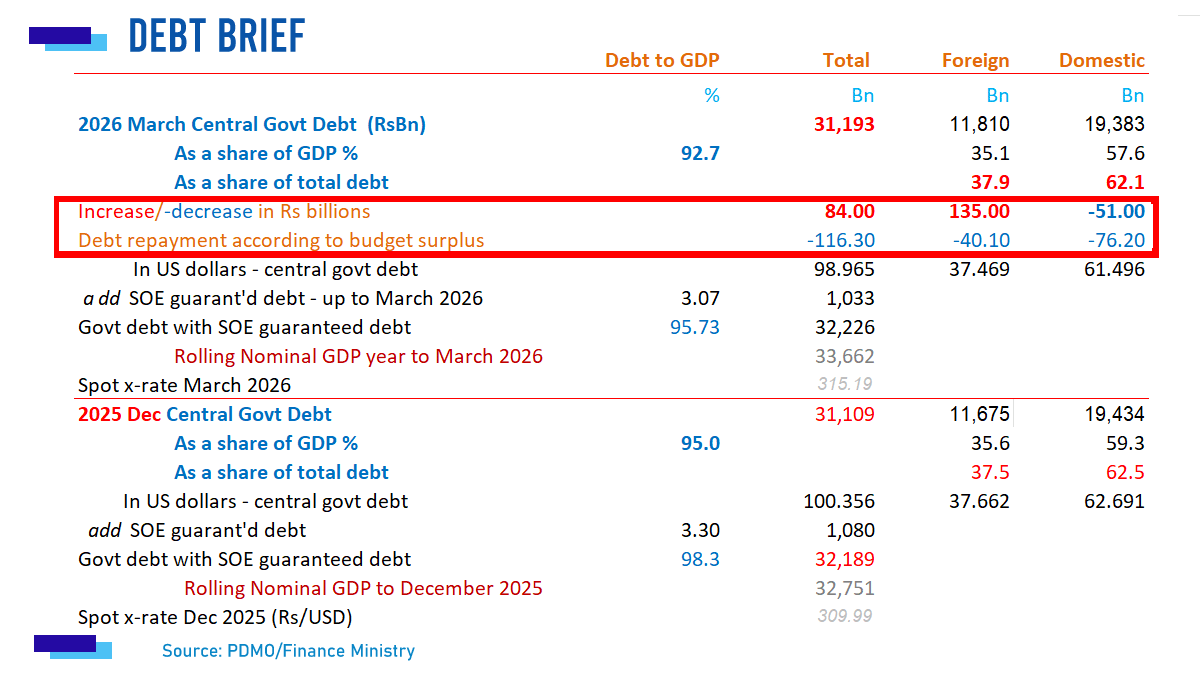
But Sri Lanka's outstanding central government debt inflated from 31,109 billion rupees in December 2026 to 31,999 billion rupees in June 2026, or an increase of 890 billion rupees.
When the central bank busts the currency, the share of foreign debt surges, sometimes overtaking domestic debt in countries like Argentina.
The share of foreign debt increased to 40 percent in June from 37.5 percent in December with only marginal new borrowings while the domestic debt share fell to 60 percent from 62.5 percent.
But long term debt of held by agencies like the Employees Provident Fund are locked into fixed rates, leading losses that cannot be recovered, unless budgetary supplements or employers give additional supplement.
The domestic debt also has some foreign debt, and the Treasury also has a rupee deposits in banks called a 'buffer'.
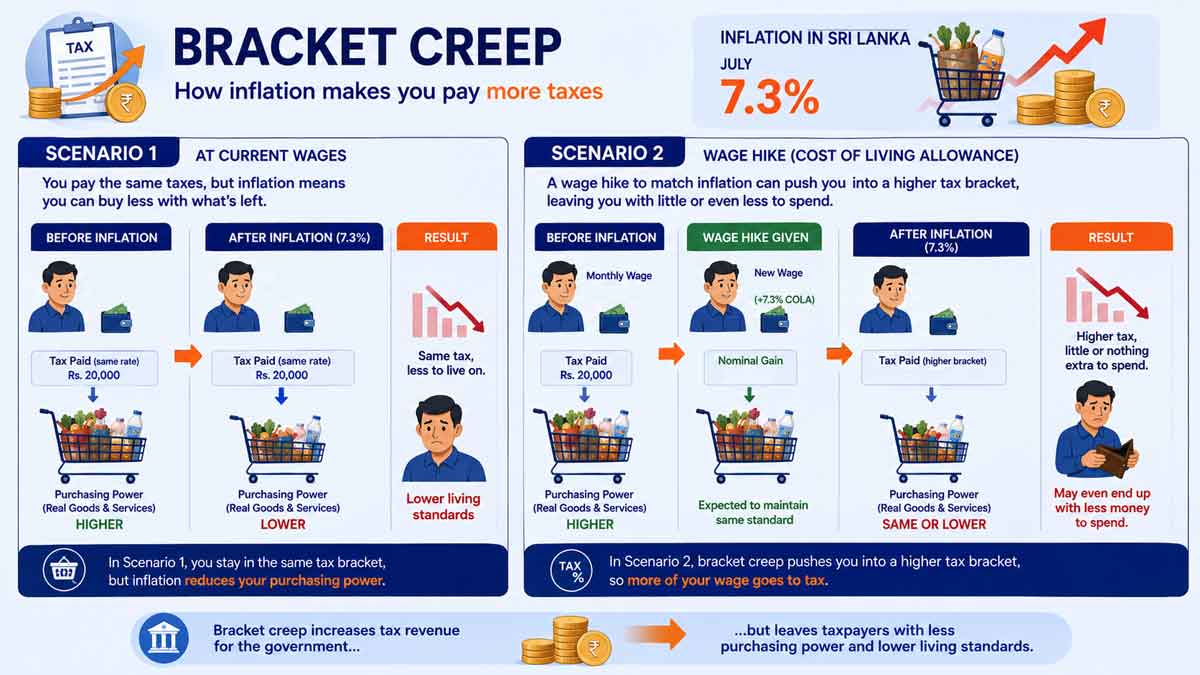
The real value of the 'buffer' also diminishes as inflation picks up, in line with what is known as the Tanzi effect usually applied to taxes.
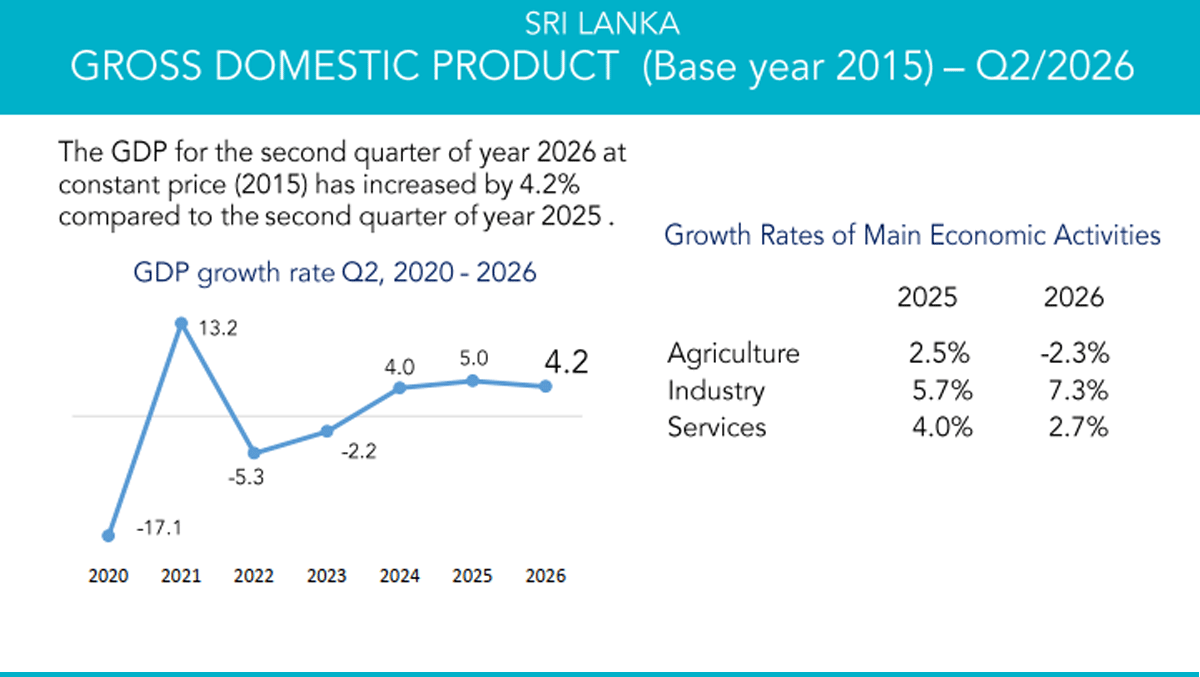
The debt to GDP ratio which fell from 95 percent to 92.7 percent from December to March amid mild depreciation in the first quarter, remained at 92.7 percent amid nominal and real growth in the second quarter.
Sound Money
Before J M Keynes started to promote inflation and 'macro-economic policy' destroying the value of money such as by coin clipping (similar to positive inflation targeting) was a capital offence.
The milled edge of coins was also devised to stop what is now called positive inflation targeting.
As a result, monarch was able to rule for long periods, unlike countries with depreciation biased central banks which trigger social and political unrest in the belief that inflation leads to growth or full employment which was the original argument of the age-of-inflation.
Sri Lanka's rupee collapses as the central bank builds up excess liquidity through dollar purchases or buy-sell fx swaps and dishonors the notes when market participants use the money to make imports.
Monetary Fallacies
The collapse of the rupee in 2026 as the government ran a budget surplus also exposed an excuse given by the central bank since February 1952 to escape accountability for their inflationary bias, by blaming politicians.
In addition, blaming politicians (budget deficit) macro-economists also blame business (importers), the workers who agitate for wages as food and energy prices rise (wage-spiral inflation) and the public in general (inflation expectations) for their inflation biases and policy errors.
Currencies collapse due to rejecting classical economics involving Hume's price-specie-flow mechanism which was 'rediscovered' as the monetary approach to the balance of payments (MAPB) in the last century, including by Mundell and Fleming who worked at the IMF.
Sri Lanka's government has also taken on debt from some state enterprises including SriLankan Airlines. When the currency collapses agencies like the SriLankan Airlines also make losses.
Central government and state enterprise guaranteed debt also inflated from 32,189 billion rupees, from 32,970 billion rupees over the six months.
Private firms which have rupee revenues recognize the forex losses in their income statements. But government budgets do not, allowing macro-economists to escape accountability and blame politicians and managers of state enterprises.
The Cantillon Effect
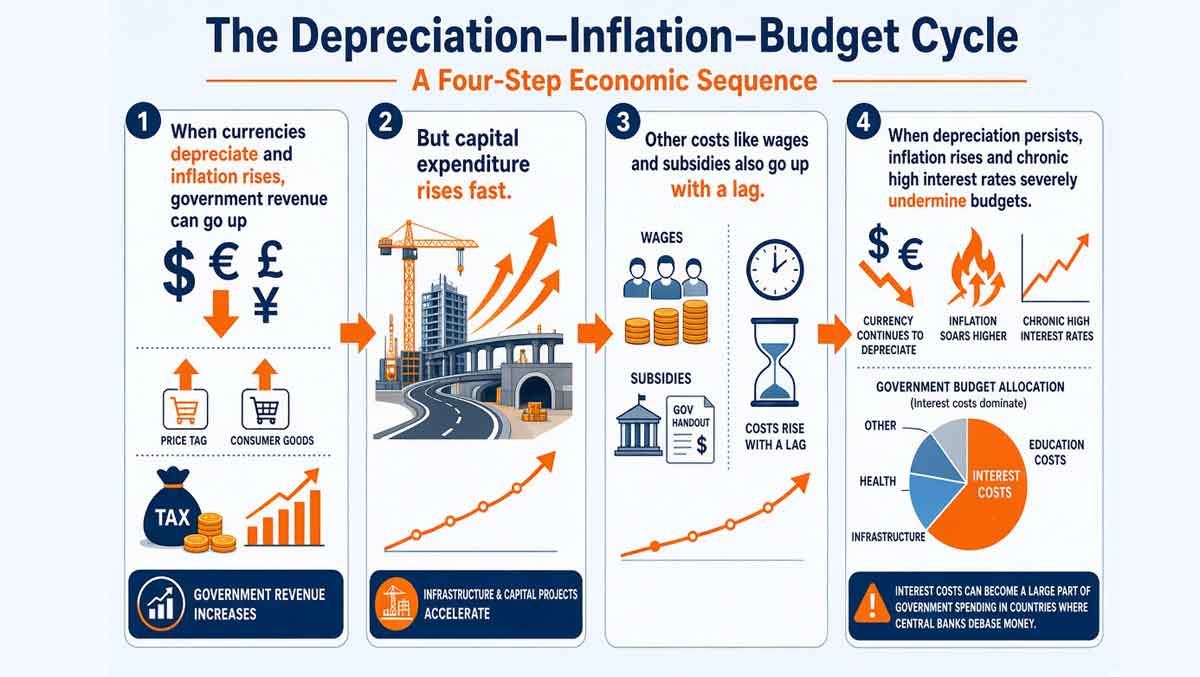
But expenses eventually catch up. Already capital costs of the budget are going up, while the cost of repaying foreign debt is immediate. Calls for higher wages come later.
Unlike macro-economists who bust currencies at the drop of a hat, politicians operate budget, with fixed costs which are changed in the next cycle.
But the in gap of wages adjusting to depreciation voter unhappiness increases and budget become difficult to manage.
In the 1980s Sri Lanka's budgets deteriorated after the IMF's Second Amendment gave a license for the central bank to debase money and 'supplementary estimates', became the norm.
East Asian nations rejected the doctrine and some appreciated their currencies in the 1980s, Hong Kong re-established its currency board, while Latin America which was geographically closer to so-called 'Saltwater' universities, defaulted.
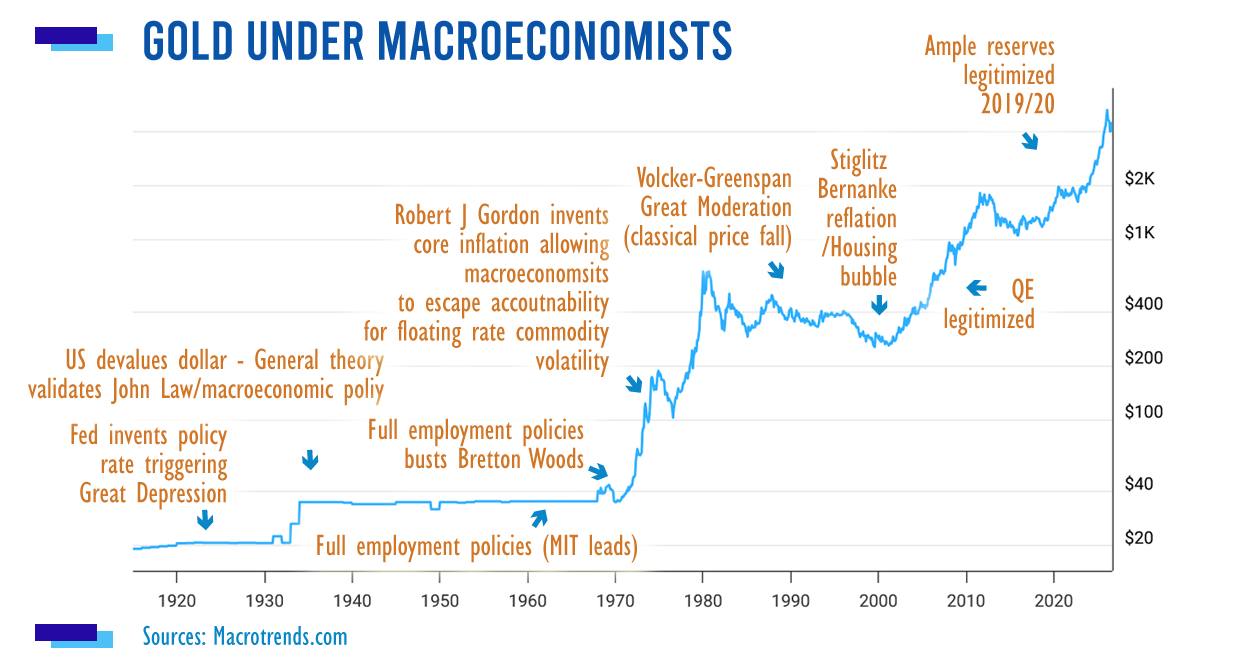
Until the Federal Reserve invented the policy rate in the 1920 leading to mass depreciation in the inter-war years and protectionism, currencies did not depreciate as a rise in gold prices automatically led to automatic monetary tightening just as credit or capital outflows drive monetary tightening in currency board regimes now.
The IMF itself was set up to stop depreciation after World War II, but the policy rate (monetary policy) was not given up. Instead, capital controls were imposed (Article IV), in the agency that was set up by J M Keynes himself and US Treasury's Harry Dexter White.
Cheating Workers
In his General Theory Keynes rejected classical economics, reviving debunked Mercantilism (see Chapter 23) allowing central banks to escape accountability by pointing to current account deficits or twin deficits, and trigger social and political unrest.
Keynes promoted inflation as a way to reduce real wages to boost full employment but the move led to strikes and democratically elected governments being voted out.
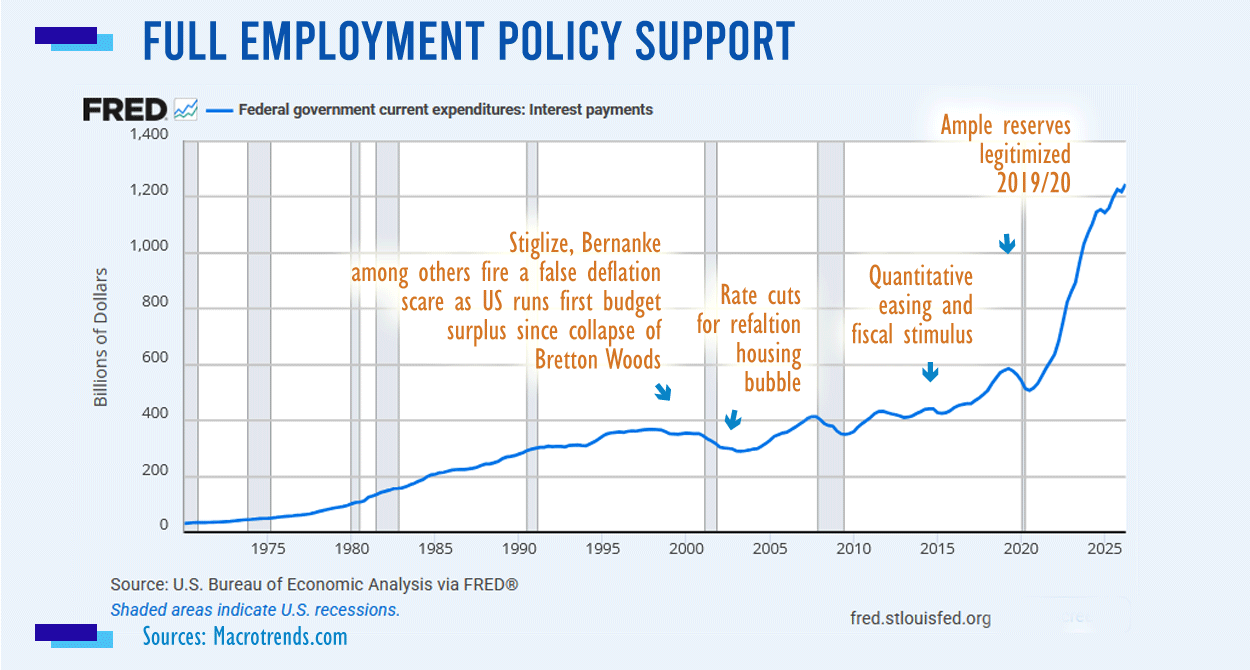
"We are not concerned here with the niceties of his theory," classical economist Friedrich Hayek once said as full employment policies (rate cuts) led to higher inflation in the US and United Auto Workers demanded higher wages.
"What we are concerned with is the factual assumption on which his whole argument rests: that it is easier to cheat workers out of a gain in real wages by a reduction in the value of money than to reduce money wages; and his contention that this method ought to be employed every time real wages have become too high to allow of ‘full employment’.
"Where Lord Keynes went wrong was in the naive belief that workers would let themselves be deceived by this for any length of time, and that the lowering of the purchasing power of wages would not at once produce new demands for higher wages."
By busting the currency in 2026 the central bank has amplified the effect of a Middle East war on the energy and food prices forcing the government to give fuel subsidies and raise prices higher than if there was sound money.
The central bank however raised rates in May after the currency collapse and had resisted appreciation as conditions improved. However it is quick to depreciate.
Analysts warn that central banks which resisted appreciation when speculative capital came in had depreciated in the past when confidence is lost and they flow out.
Hayek and other classicals had warned that the supposed benefits of inflation come only as inflation accelerates, which cannot continue indefinitely for multiple reasons.
The US Federal Reserves which accommodated the rise in fuel prices with its abundant reserve regime is now expected to raise rates. Central banks that did not accommodate, and pre-emptively tightened have seen monetary stability.
(Colombo/Sep16/2026)

















Comments
Be the first person to comment and join the debate