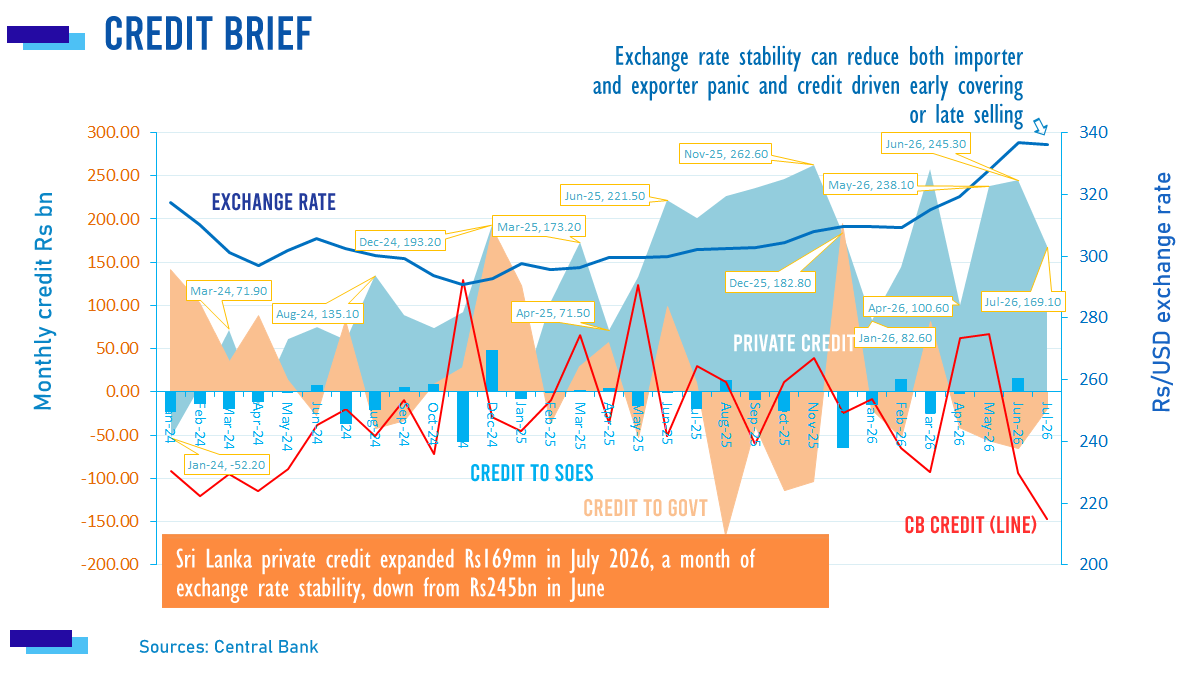
MONETABRIEF – Sri Lanka's private credit expanded by 169 billion rupees in July 2026, down from 245 billion rupees a month earlier, amid a return to exchange rate stability and a rate hike in May, official data show.
Exchange rate instability that comes from dishonoring of the central bank's note issue after bumping up excess liquidity, can leave to credit driven speculation (from the excess liquidity itself) as importers front loan and exporters sell dollars late.
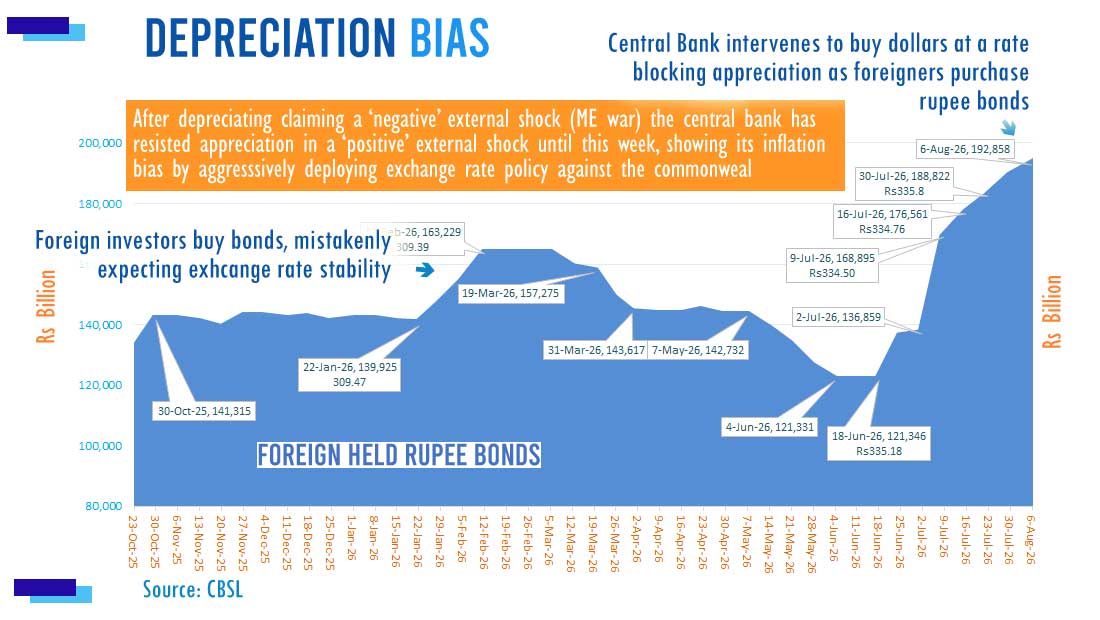
As the panic recedes, exporters may sell, and importers may repay loans after selling their stocks. Some may also avoid covering new bills, allowing the central bank to buy dollars.
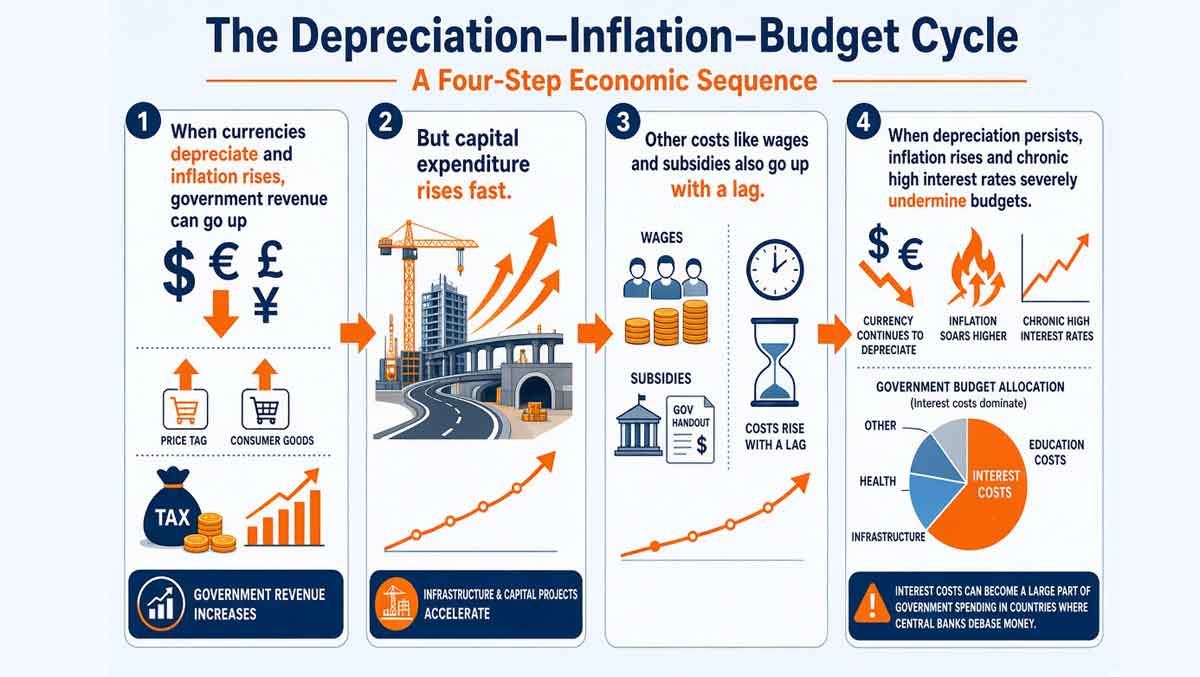
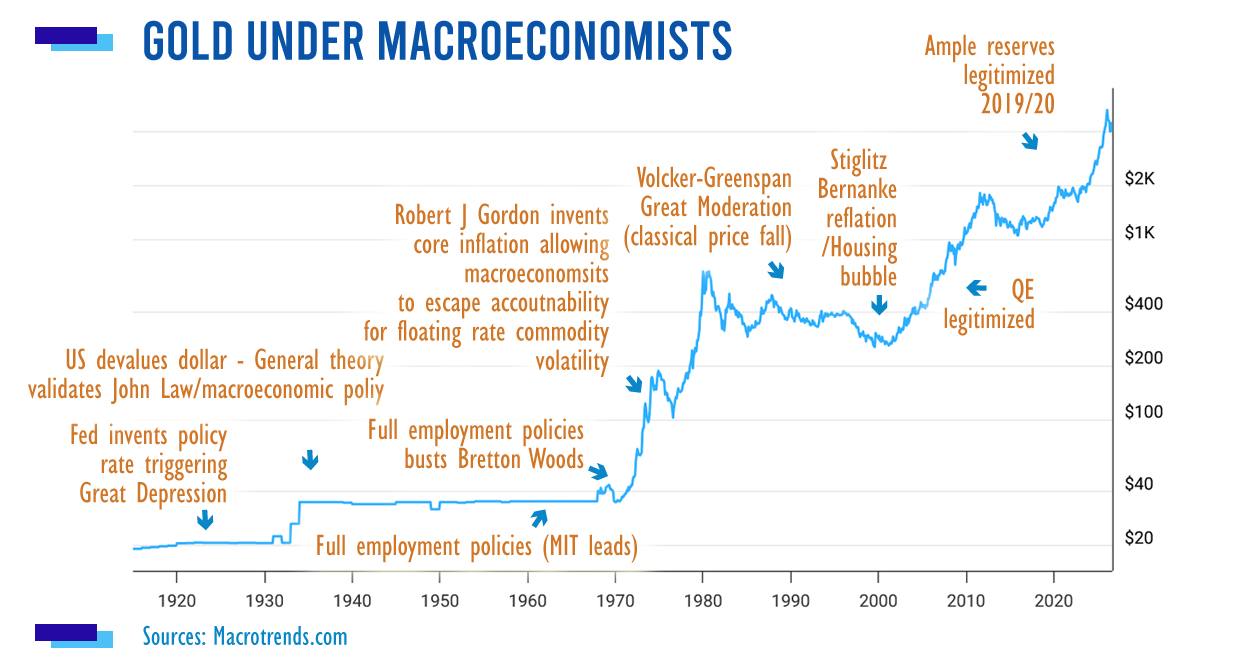
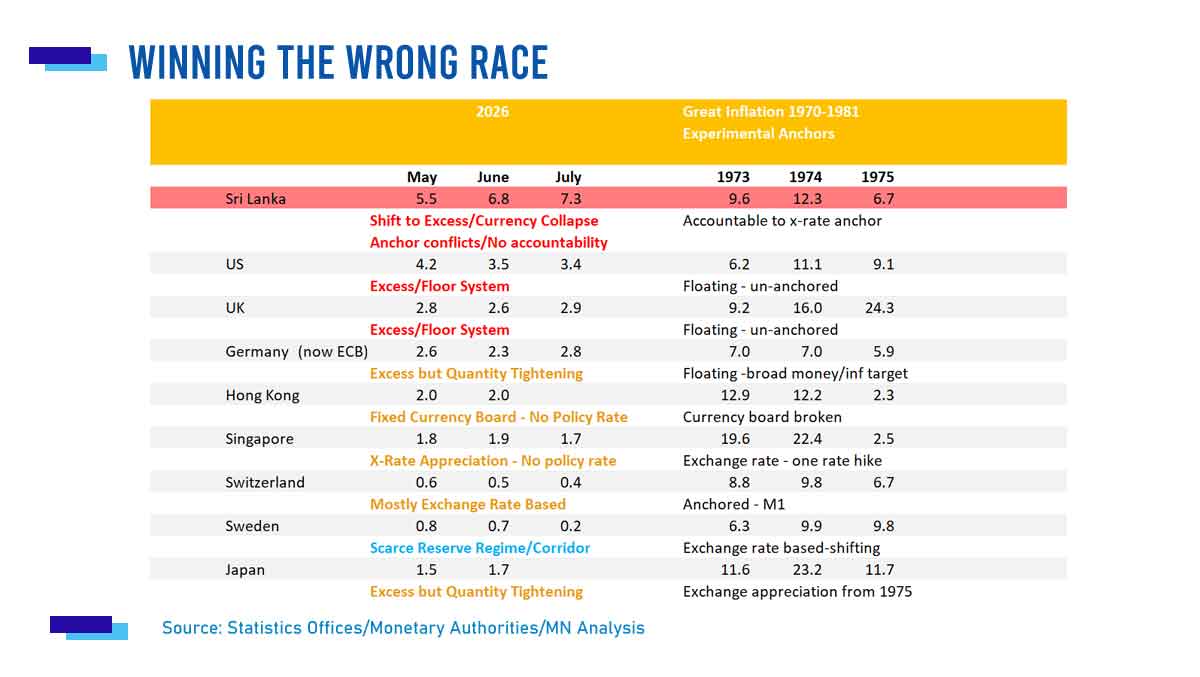
The currency collapse in 2026 from dishonoring notes under doctrine of 'exchange rate as the first line of defence' was significant, since in the past macro-economists have escaped accountability blaming budget deficits.
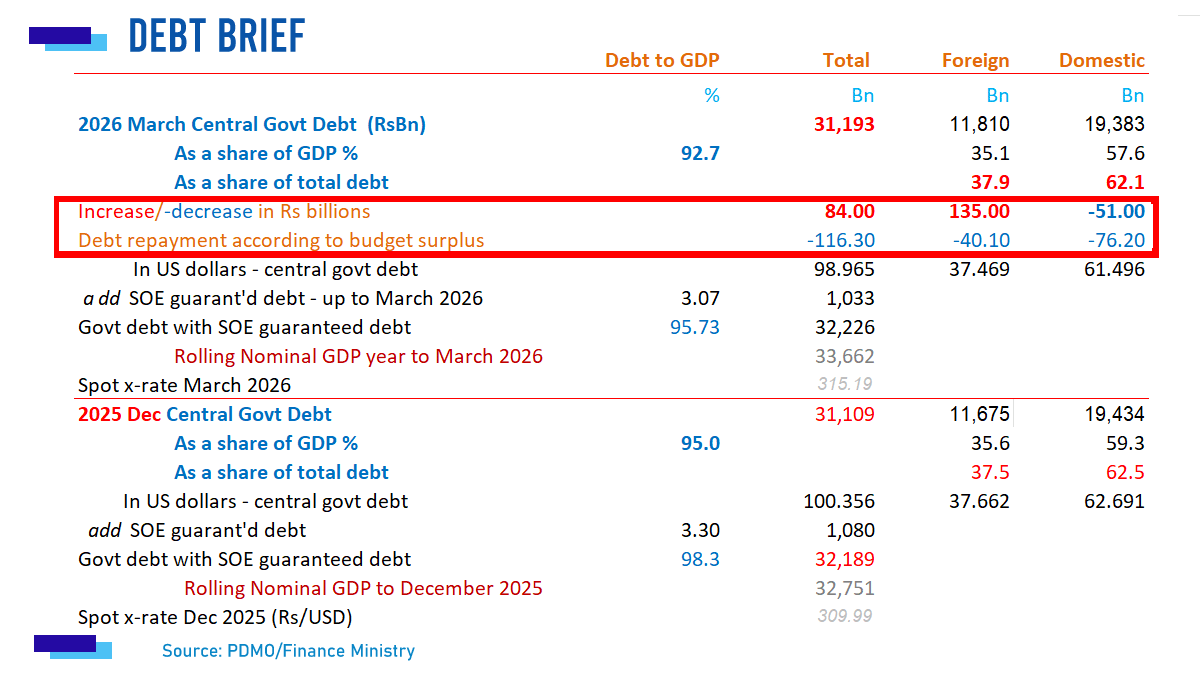
But the budgets were in surplus in the first half of 2026.
Credit to government fell 19 billion rupees, after falling 65 and 55 billion in the two previous months.
Credit to state enterprises also fell by 23.60 billion rupees.
Net central bank credit government fell 147 billion rupees, after falling 94 billion rupees a month earlier.
CB net credit to government can fall statistically due to excess liquidity from dollar purchases by the central bank, even if they are not permanently sterilized and valuations of its government bond portfolio.
There have been calls for the Treasury to purchase dollars, so that the central bank does not get an opportunity to buy dollars to build reserves push rates down and build up a war chest of excess liquidity which can be dishonored to amplify external or domestic shocks.
Treasury purchases of dollars, can generate a current account surplus and not reduce interest rates by expanding reserve money.
Reserve money, classical economists like Adam Smith have pointed out, is not capital and cannot really influence interest rates. (Colombo/Sept14/2026)








Comments
Be the first person to comment and join the debate