DEFAULT DOCTRINE : The origins of Sri Lanka's inflationist default doctrine dates back to 1920s Germany and re-emerged with the IMF's Second Amendment in Latin America
MONETABRIEF – The Chairman of Sri Lanka Parliament's Committee on Public Finance Harsha de Silva has fired second salvo against a debt trap that the Treasury had been pushed into due to central bank monopoly on dollar purchases for the agency.
All other agencies of the government including Ceylon Petroleum (for fuel), Health Ministry (medicine) can buy dollars from the market through state banks without inflating reserve money (printing money) or permanently depreciating the currency.
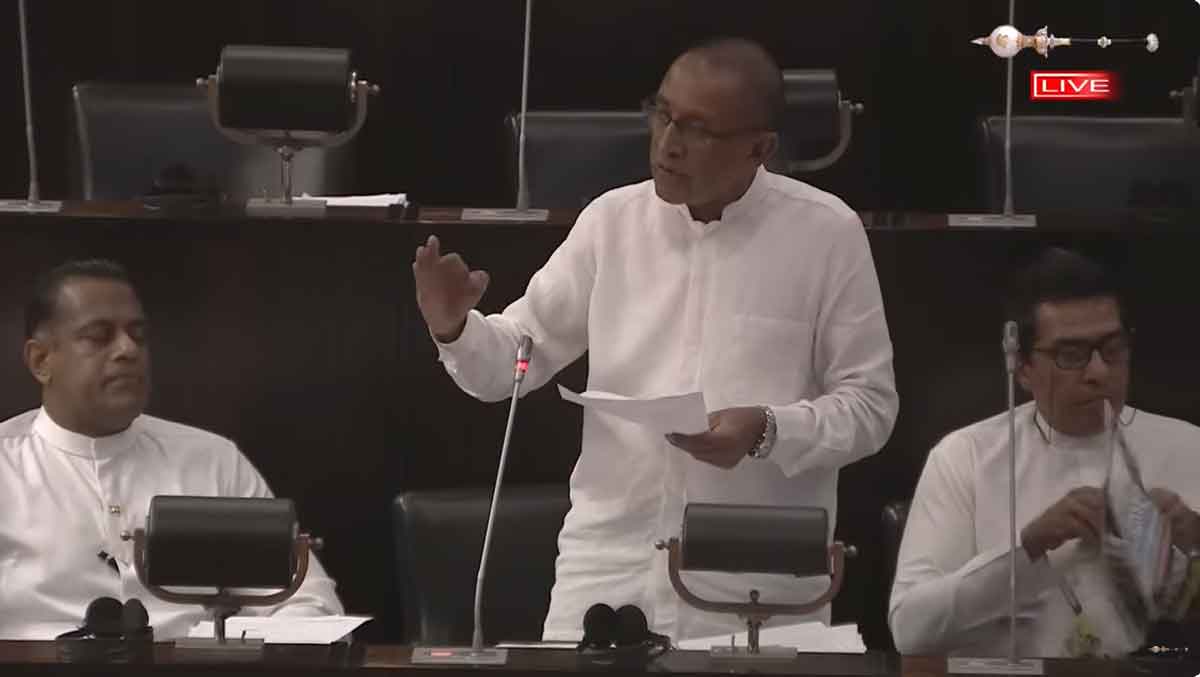
"Treasury has the ability to buy," de Silva told a meeting of COPF. "Because that day we asked you the question, remember, Mister Deputy Secretary, whether the Treasury should be allowed to purchase dollars. In my view, it should be allowed."
Supremely Unqualified
Unlike the any other agency, or importer, a central bank is supremely unqualified to build reserves (in excess of its monetary base), as it creates new money whenever it purchases dollars from a domestic market participant, like a bank.
If the central bank does not return the dollars and take back the new rupees (dishonors the notes), when the owners of the new money make purchases and import goods the currency collapses.
The Treasury could ask state banks to buy dollars (as other ministries and SoEs do) or give the cash to the central bank and ask to buy dollars ((as some other countries do) and require the dollars to be turned over to the Treasury immediately.
If the central bank is to build reserves above the notes in circulation, excess liquidity (what classical economists called redundant money) from dollar purchases has to be extinguished permanently.
However, there was no such requirement in the IMF program from 2025, leading to a direct conflict between the IMF reserve target (the QPC floor on Net International Reserves) and its target for domestic assets of the central bank (QPC ceiling on net credit to government) which was flat.
As a result of not killing liquidity from dollar purchases permanently, the central bank's ability to collect reserves was limited by coupon repayments to its government bonds and any natural growth of notes in circulation from early 2025.
Up to the end of 2024, the IMF program required the central bank to sell down its bill stock, effectively depriving it of the main tool to inflate money stocks, debase the currency, impoverish the public by destroying real wages and EPF balances and the social and political unrest that follows and the low growth from destruction of financial capital.
Conflicting QPCs
In March 2025, when the previous phase of the IMF program was published, reporters pointed out that there were conflicting targets in the IMF program.
Under 'exchange rate as the first line of defence' labelled by critics as the 'interest rate as the last line of defence' given previous episodes, the central bank can run away from the notes it had created and make the exchange rate collapse.
Since rates are corrected (eased monetary policy or guiding interest rate along the desired path is ended only after a currency crisis, the country is left with both high rates and a debased money).
As result of not killing liquidity in line with classical economic principles (Hume's price specie flow mechanism), as private credit recovered reserve targets had been missed in the 2015-2019 program as well.
"So there are many alternatives that the Central bank can use," Deputy Mission Chief for Sri Lanka Katsiaryna Svirydzenka said at the time.
"For example, they can engage in repo operations or also issue their own securities.
But in 2025 the central bank not only did failed to sell it own securities to kill liquidity from dollar purchases, but also entered into buy-sell swaps with banks and monetized their dollar holdings, doing the exact opposite, as rate cuts reduced the ability to sterilize non-debt reserves.
Inflation Above IMF Ceiling
As warned the inevitable happened as credit picked up. The IMF then had to relax reserve targets (in 2018 performance criteria on Net International Reserves were waived).
"But I guess what is important to highlight for your question is that the Central Bank so far has been able to meet the inflation target and if anything, they're a little bit undershooting as you saw with the breach of the MPCC clause in June and in December, " Svirydzenka said at the time.
"So in that sense, the central bank is quite effective in terms of reaching the inflation objectives and we think the tools they have in their, in their in their hands should be enough."
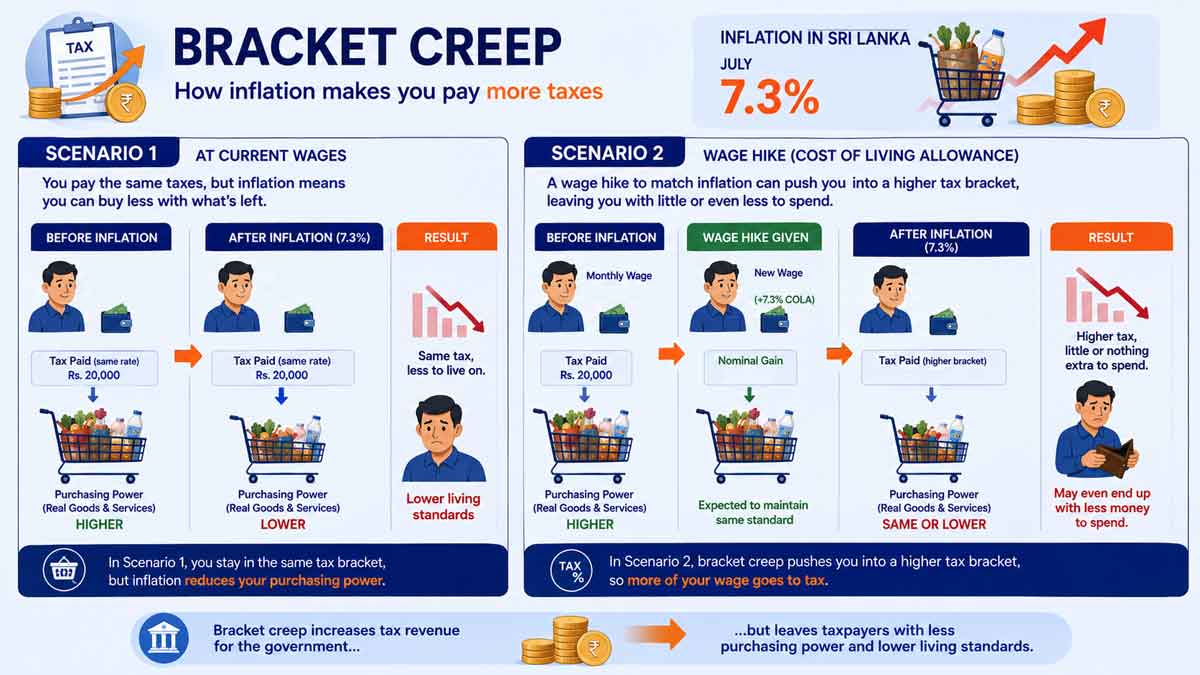
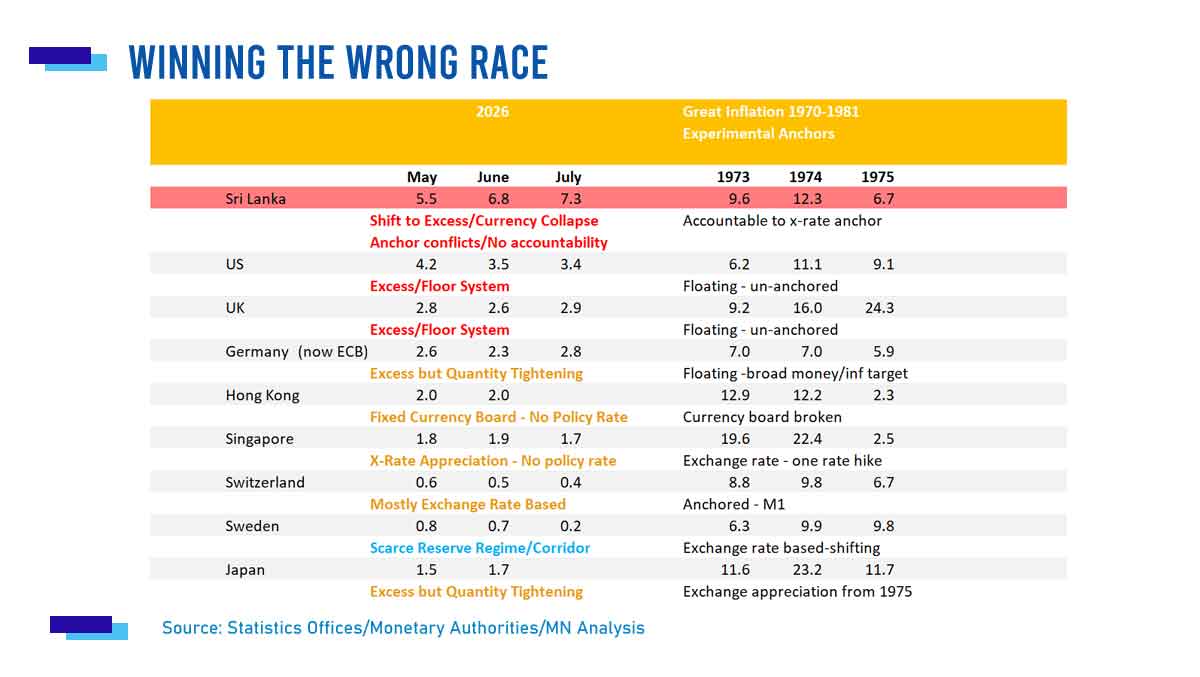
However, the currency had now collapsed and inflation had topped 7 percent and the IMF's own target of 6.5 percent.
Now that inflation has topped 7 percent.
In any case inflation targeting requires a clean float, not a reserve collecting central bank, and contradictions in the operating framework erupt when private credit picks up without or without an external shock.
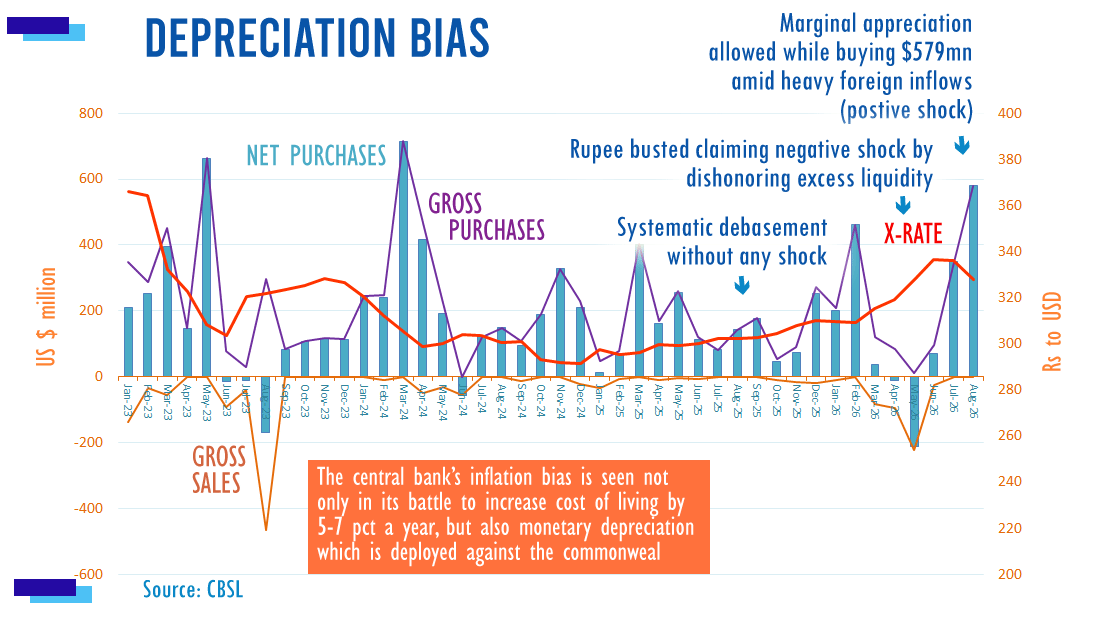
The same flaws are also in the current phase of the IMF program. This year the central bank is expected to buy 2.2 billion US dollars and the rupee has since depreciated destroying not only past savings but the ability to save as inflation picks up.
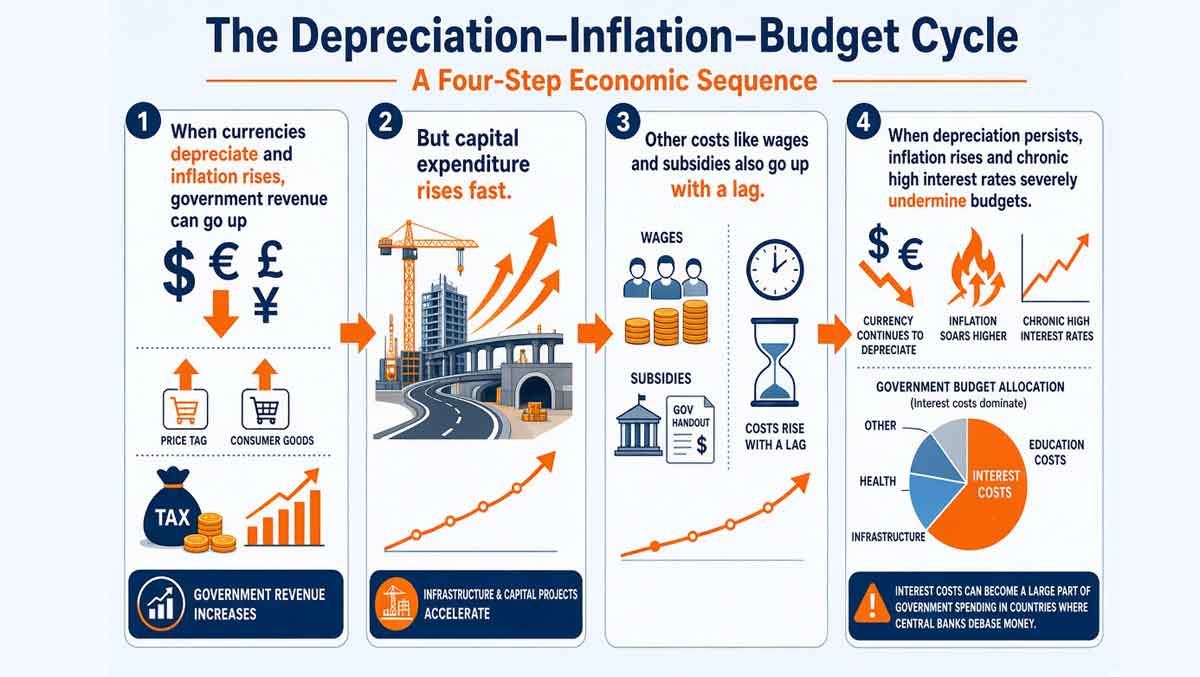
By dismantling the central bank's monopoly on supplying dollars to the Treasury a key tool of impoverishing the people (building up liquidity through dollar purchases, running away at the slightest shock and depreciating the rupee) will be denied to macro-economists.
The central bank could still over-purchase dollars above the deflationary effect of the coupons, to serve any depreciation bias (as it did in 2025 and from 1980), but the case to do so would be weakened if the Treasury buys its own dollars.
The second advantage is that the Treasury would be able to buy non-debt dollars and avoid a second default due to the 7 percent inflation target and excess liquidity build ups that pushes credit or panic is sowed by 'exchange rate as the first line of defence' (yo-yo flips from fixed to floating regimes).
Monopoly Debt Trap: Government Acceptance
Analysts had also called for a second central bank monopoly that pushes the Treasury into a debt trap of blocking taxes being charged in dollars should be dismantled, further weakening the powers macro-economists had to trigger a second default.
The practice of using the currency of one note-issue bank was given by Kings of yore to the note issue bank that found their favour as a way of giving it an advantage over others and the privilege was known as 'Government Acceptance'.
Key taxpayers that could pay in foreign currency included, exporters, hotels, banks, the airport and ports authorities and even freelancers who are now taxed.
Meanwhile De Silva had pointed out that many countries did not depend on central bank reserves to repay foreign debt and governments had sovereign wealth funds.
Floating rate central banks in any case do not have reserves, except legacy ones from the Bretton Wood days or gold standard days.
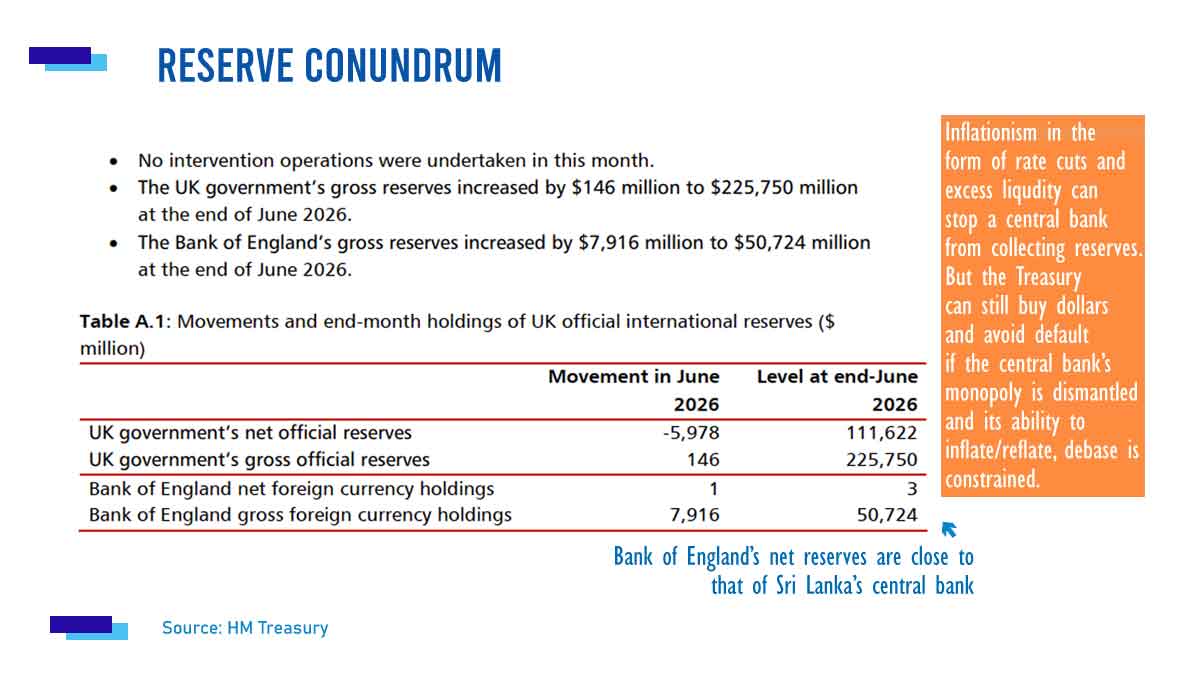
The UK for example had 225 billion dollars' worth gross reserves (113 billion in net) and the Bank of England only 50.7 billion. The Bank of England's net reserves was only 3 billion dollars, which was around the level of Sri Lanka's central bank.
Analysts have pointed out that it is childishly easy to maintain exchange rate stability and avoid a second default from a 5 percent inflation target and excess liquidity as long as the parliament is prepared to curb an inflation bias of the central bank.
The parliament had made a grave error in giving 'independence' to an agency that had lobbied for a 7 percent inflation target and had also busted the currency from 4.77 to 300 to the US dollar through various inflationist operating frameworks, critics say.
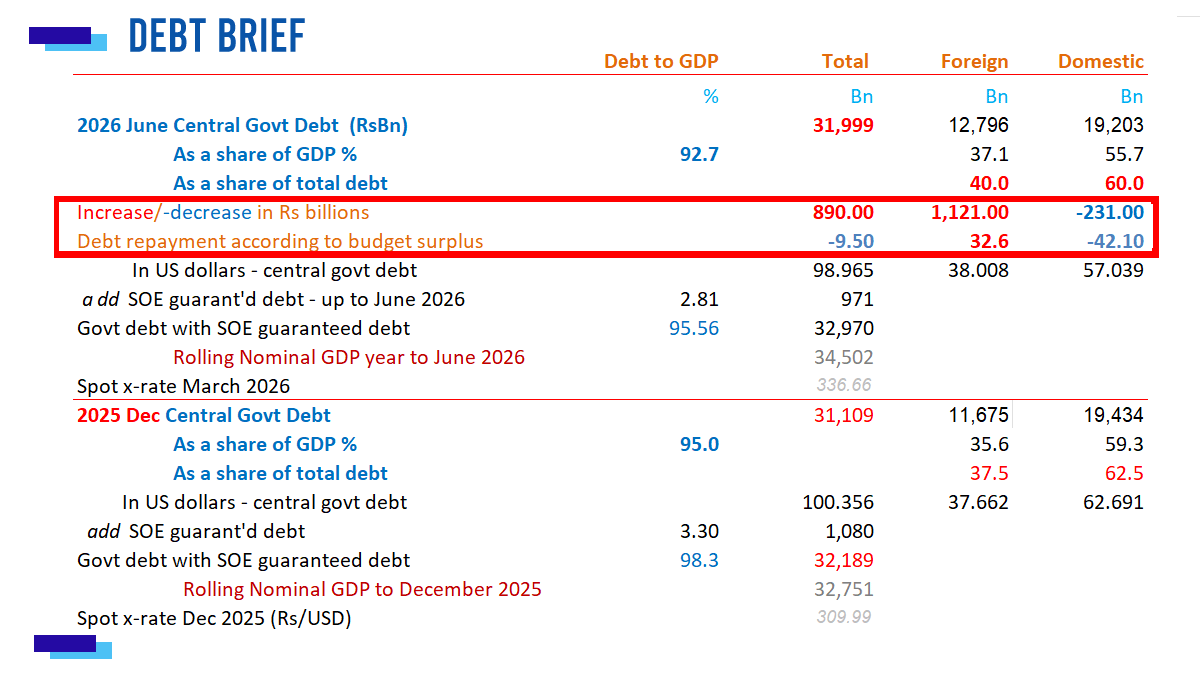
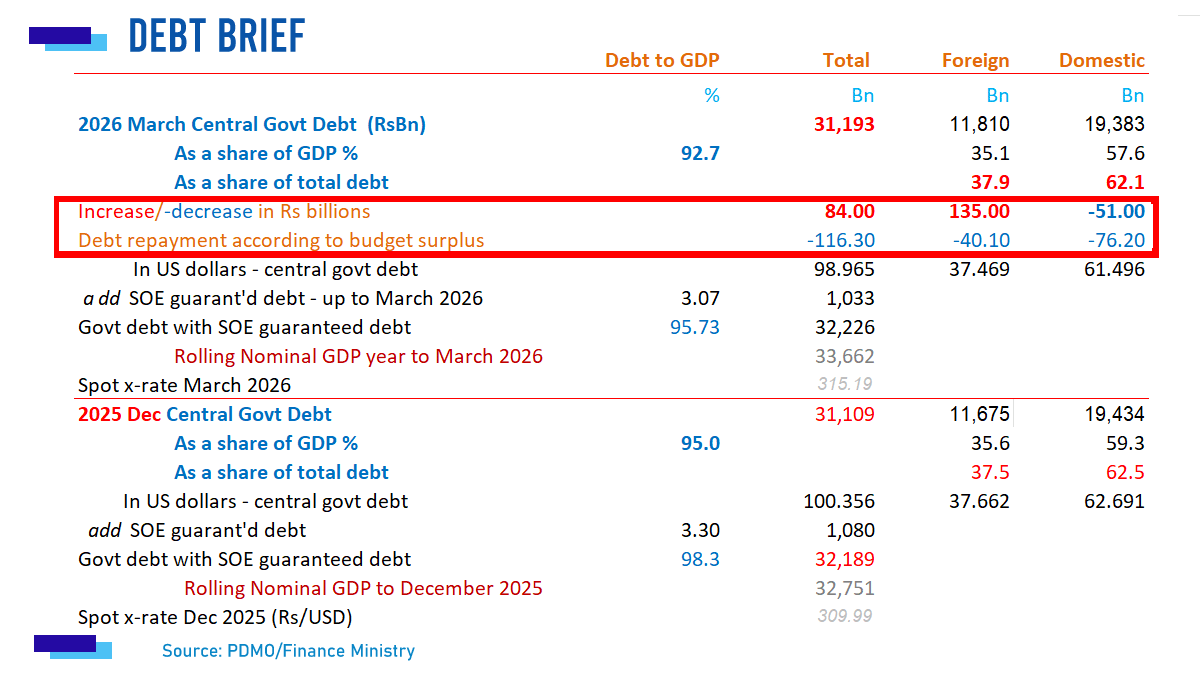
After years of blaming the budgets or the Treasury (and indirectly politicians) for monetary instability macro-economists in 2026 busted the currency and pushed up inflation above 7 percent, amid a budget surplus.
Currencies in the war zone in Dubai and Qatar and Saudi Arabia (no policy rate) had remained rock solid and inflation low.
(Colombo/Aug02/2026)
Comments
Be the first person to comment and join the
debate














Comments
Be the first person to comment and join the debate